
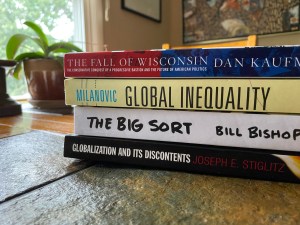
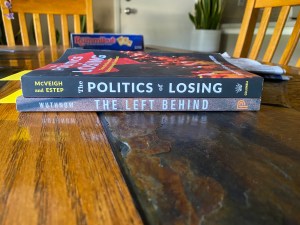
Part of a reading list on the current crisis of American democracy. (The other titles on the list were already on in my collection.) More later.
Author Archives: Nerdishly
Books
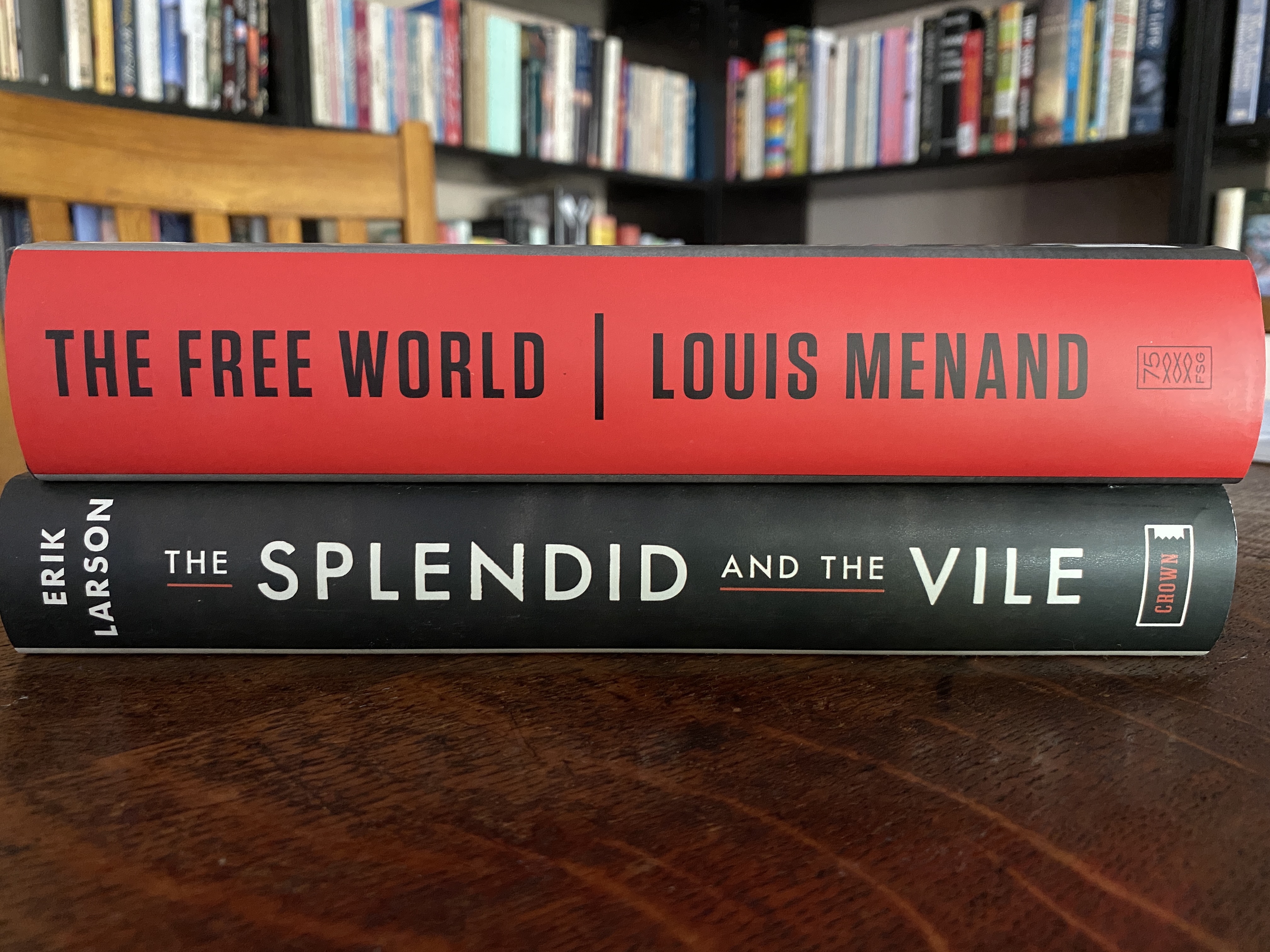
Recent acquisitions.
It has been a week, nearly to the hour since the painters rolled up the last of their dropcloths and headed to their next site. As it turns out, my assertion that the project would result in rain was correct: Last Thursday night, our area was lashed with thunderstorms. Fortunately, the painters had finished for the day about ten hours beforehand, so all was well. Despite a few showers since then, though, this area remains in severe drought conditions.
Since my last annotated list, I’ve finished eleven books, including four plays:
■ Much Ado about Nothing (William Shakespeare; 1599. Drama.)
■ The Merchant of Venice (William Shakespeare; 1599. Drama.)
■ King John (William Shakespeare; 1595. Drama.)
Part of my quest to reread all of his plays this year.
■ Titanic: Scenes from the British Wreck Commissioner’s Inquiry, 1912 (Owen McCafferty; 2012. Drama.)
In advance of watching Court Theatre’s streaming production.
The other books:
■ Harry Potter and the Deathly Hallows (J.K. Rowling; 2007. Fiction.)
As I’ve addressed in previous entries, a comfortable and comforting reread.
■ The Jungle (Upton Sinclair; 1906. Fiction.)
This was the first of two books my younger daughter and I chose for a two-person summer book club.
From Chapter III:
One could not stand and watch very long without becoming philosophical, without beginning to deal in symbols and similes, and to hear the hog-squeal of the universe. Was it permitted to believe that there was nowhere upon the earth, or above the earth, a heaven for hogs, where they were requited for all this suffering? Each one of these hogs was a separate creature. Some were white hogs, some were black; some were brown, some were spotted; some were old, some young; some were long and lean, some were monstrous. And each of them had an individuality of his own, a will of his own, a hope and a heart’s desire; each was full of self-confidence, of self-importance, and a sense of dignity. And trusting and strong in faith he had gone about his business, the while a black shadow hung over him and a horrid Fate waited in his pathway. Now suddenly it had swooped upon him, and had seized him by the leg. Relentless, remorseless, it was; all his protests, his screams, were nothing to it—it did its cruel will with him, as if his wishes, his feelings, had simply no existence at all; it cut his throat and watched him gasp out his life. And now was one to believe that there was nowhere a god of hogs, to whom this hog personality was precious, to whom these hog squeals and agonies had a meaning? Who would take this hog into his arms and comfort him, reward him for his work well done, and show him the meaning of his sacrifice? Perhaps some glimpse of all this was in the thoughts of our humble-minded Jurgis, as he turned to go on with the rest of the party, and muttered: “Dieve—but I’m glad I’m not a hog!”
■ Chicago Poems (Carl Sandburg; 1916. Poetry.)
■ The Jungle (Kristina Gehrmann; 2019. Graphic fiction.)
Several of the poems in Sandburg’s collection eloquently address the same issues Sinclair raises. The graphic adaptation, however, was pointless.
■ Outcast, Vol. 8: The Merged (Kirkman and Azaceta; 2021. Fiction.)
The conclusion of the series did not work for me. At. All.
■ Saint X (Alexis Schaitkin; 2020. Fiction.)
A satisfying summer read. Review here.
■ The Secret to Superhuman Strength (Alison Bechdel; 2021. Graphic non-fiction.)
Excellent. Related links here and here.
To be shelved

A few new books.
Depending on the hour, two to five painters are in the process of transforming the forever home’s exterior. Although beyond the scope of the original proposal, the interior of the three-season room will be updated, too. The drought continues, despite my predictions, but the temperatures have been more reasonable, at least. While I will certainly be glad when the project is completed, right now, I’m stretched out on the couch with a pile of books, a cup of coffee, and an attitude of gratitude.
Postcard Poems
I’ve reblogged the following post to encourage you to purchase Postcard Poems by Jeanne Griggs.

My book is now available for ordering from Broadstone Books! (You will be able to order it from other booksellers, including Amazon, but it will cost a little more so why not support the small press?) It will be out on July 15!
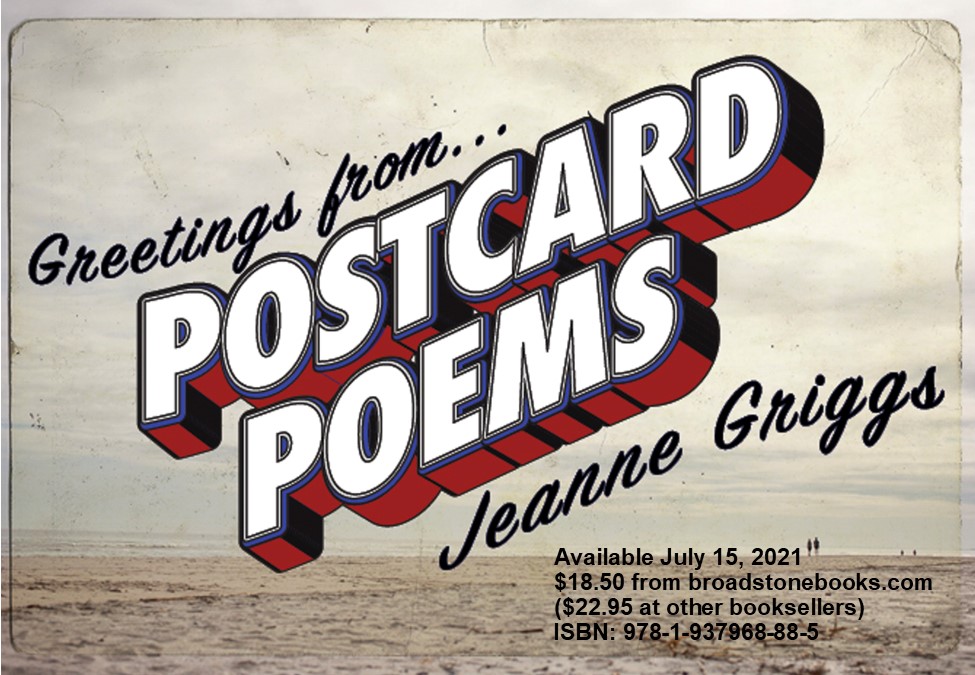
“In days before selfies and social media, postcards were a ubiquitous feature of travel, providing both means of communication with friends and family while away, and souvenirs of journeys once back home. Even if not quite gone, they seem more than a little nostalgic now, as do many of the poems in Jeanne Griggs’ new collection,Postcard Poems. By choosing to present her poems as short notes that could fit on a postcard, she has opted for a formal brevity; and the conceit of holiday communication allows her to write both about place (so that her poems are often both ekphrastic and epistolary – a…
View original post 34 more words
Riding and reading

We biked again last Saturday and hope to return to the trail this weekend.
Although the city has not yet implemented watering restrictions, our part of the world is experiencing a severe drought. It may not be apparent on the trail, but in our neighborhood, lawns are dormant, lake and creek levels are low, and new plants are dying. According to our contractor, however, this is excellent house-painting weather, so there’s that. Between you and me? I’m willing to wager that if not the snap of burlap stretched over the ornamentals then the slap of primer on the siding will be the magic rainstick that shakes some precipitation from the sky next week.
In other news, I’ve read four books since my last annotated list and am on the cusp of finishing a fifth — Invisible Man (Ralph Ellison), the June selection for the NYT’s T Book Club.
■ Know My Name: A Memoir (Chanel Miller; 2019. Non-fiction.)
“[A] devastating, immersive memoir of her sexual assault and its aftermath.“
■ Harry Potter and the Half-Blood Prince (J.K. Rowling; 2005. Fiction.)
Perhaps I was a bit harsh when writing about my HP reread last year, “[T]he flaws have become too big to hide under a long sweater of sentiment. They’re just not particularly well-stitched, are they?” This from a woman who has (speaking of sweaters), year in and year out, from the first cool-enough morning in October until the first too-warm morning in April, donned the same tatty, misshapen gray bundle of yarn with sleeves to take her first cup of coffee. Well-stitched or not, both the stories and my ugly old sweater comfort me. And that’s not a bad thing. No, not at all.
■ The Goshawk (T.H. White; 1951. Non-fiction.)
p. 23
It has never been easy to learn life from books.
p. 38
Here comes (one thought, suddenly catching oneself out) that excellent piece of work called man, with his capacity for looking before and after, his abilities to reflect upon the enigmas of philosophy, and the minted storehouse of an education that had cost between two and three thousand pounds, walking sideways to a tied bird, with his hand held out in front of him, looking the other way and meowing like a cat.
■ Leave the World Behind (Rumaan Alam; 2020. Fiction.)
“[A] disaster novel without the disaster.“
Acquisitions
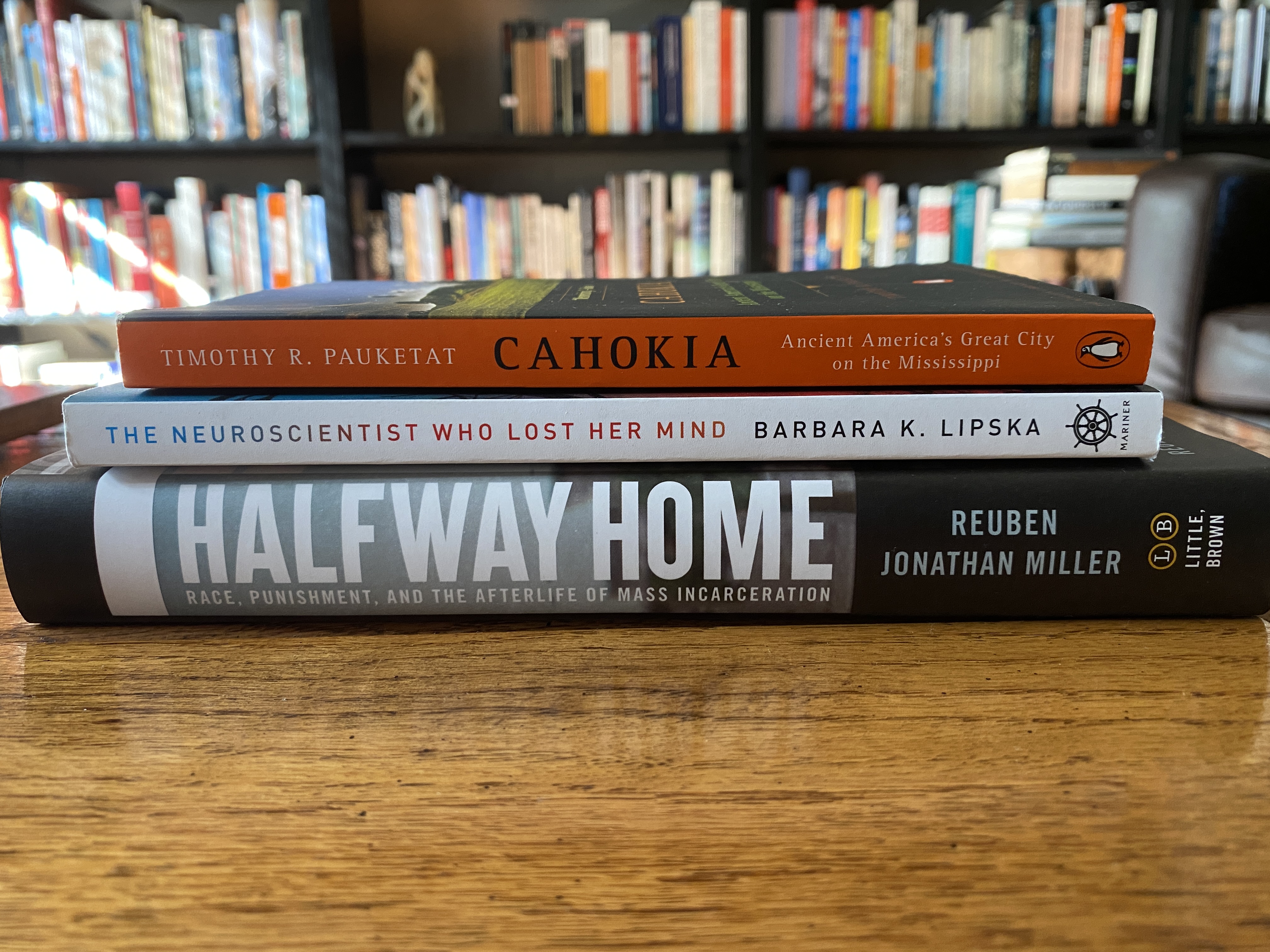
A few more for the shelves.
Of bikes and books

To the list “Things I did when I wasn’t reading this weekend,” add “Biking.” With the ghosts of two memorable spills in mind, we stuck to walks and the exercise bike last year to avoid the ER and urgent care during the pandemic. Today’s, then, was our first ride in twenty months.
Since my last annotated list, I’ve read eight books for a year-to-date total of ninety-four. At the end of next month, I’ll sort out how this positions me to meet my goals.
Three graphic works:
■ Imagine Wanting Only This (Kristen Radtke; 2017. Graphic non-fiction.)
■ Drawn to Berlin: Comic Workshops in Refugee Shelters and Other Stories from a New Europe (Ali Fitzgerald; 2018. Graphic non-fiction.)
■ The Book Tour (Andi Watson; 2019. Graphic fiction.)
A gorgeous (and highly recommended) volume of poetry:
■ Stag’s Leap (Sharon Olds; 2012. Poetry.)
Two “vacation books”:
■ The Brutal Telling (Louise Penny; 2009. Fiction.)
■ The Last (Hanna Jameson; 2019. Fiction.)
The twentieth in my quest to reread all of Shakespeare’s plays:
■ Richard III (William Shakespeare; 1594. Drama.)
For the Cardiff BookTalk:
■ To the Lighthouse (Virginia Woolf; 1927. Fiction.)
From Chapter XVII of “The Window”:
But what have I done with my life? thought Mrs. Ramsay, taking her place at the head of the table, and looking at the plates making white circles on it. “William, sit by me,” she said. “Lily,” she said, wearily, “over there.” They had that — Paul Rayley and Minta Doyle — she, only this — an infinitely long table and plates and knives. At the far end, was her husband, sitting down, all in a heap, frowning. What at? She did not know. She did not mind. She could not understand how she ever felt any emotion or affection for him. She had a sense of being past everything, through everything, out of everything, as she helped the soup, as if there were an eddy — there — and one could be in it, or one could be out of it, and she was out of it. It’s all come to an end, she thought, while they came in one after another, Charles Tansley — “Sit there, please,” she said — August Carmichael — and sat down. And meanwhile she waited, passively, for some one to answer her, for something to happen. But this is not a thing, she thought, ladling out soup, that one says.
From Chapter V of “The Lighthouse”:
And she wanted to say not one thing, but everything. Little words that broke up the thought and dismembered it said nothing. “About life, about death; about Mrs. Ramsay” — no, she thought, one could say nothing to nobody. The urgency of the moment always missed its mark. Words fluttered sideways and struck the object inches too low. Then one gave it up; then the idea sunk back again; then one became like most middle-aged people, cautious, furtive, with wrinkles between the eyes and a look of perpetual apprehension.
Recent acquisitions
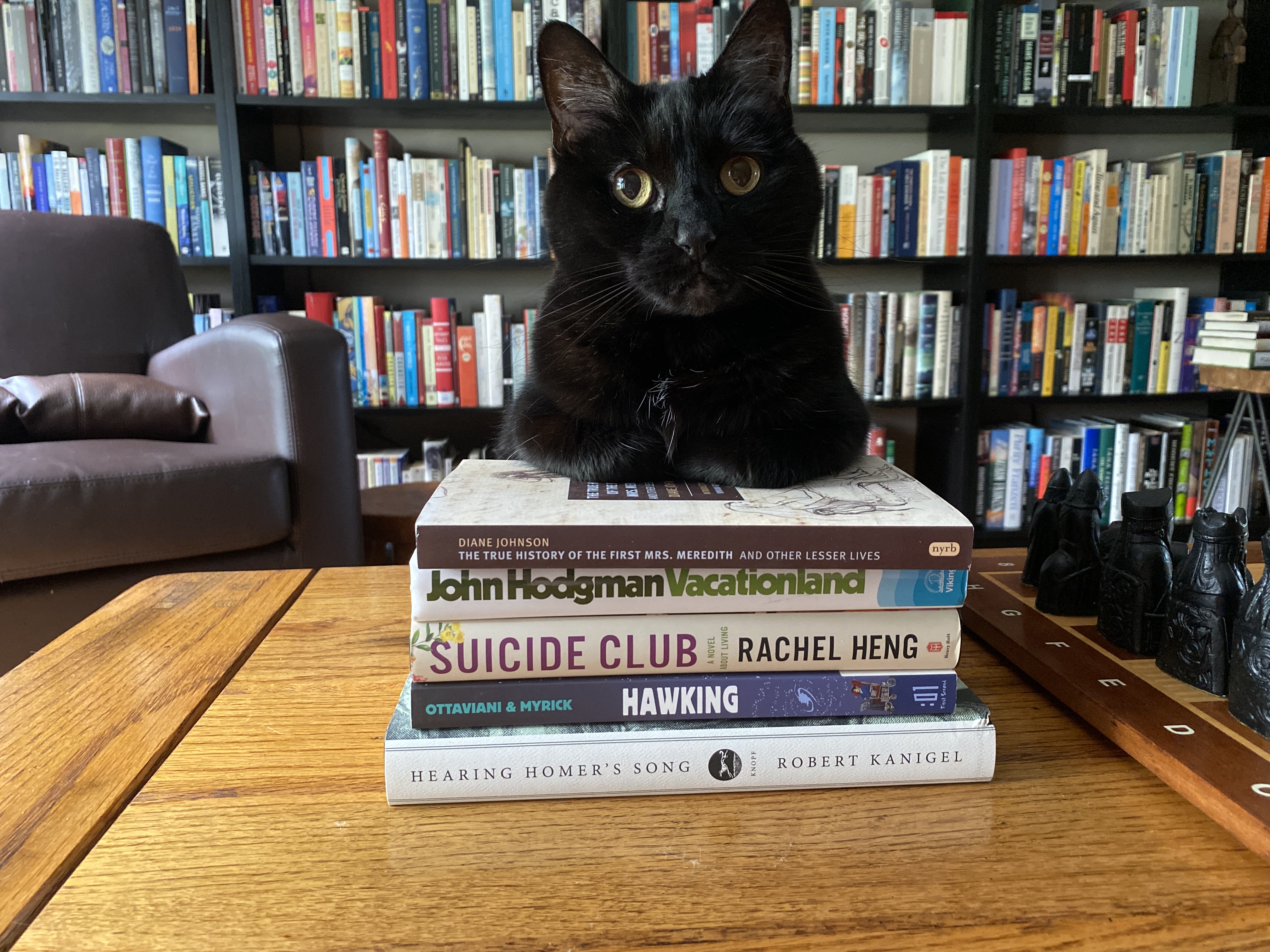
She has always done this, bellied up to a ledge, a box, a pillow, a leg, an armrest, a stack of books, then crossed her arms to hang out for a bit. That she did it when I set down my new books to photograph — and that she then looked me right in the eye as I held the camera — was unheard of.
Recently, Joseph asked how I decide which books to add to the collection. I located an entry on that topic from the archive of my original site, but much has changed in the sixteen years since that was posted. Besides, although I talk about living in a library, it really is a sort of antilibrary, as more than half of its contents are books I haven’t yet read. As I’ve written before, while this once embarrassed me, it now alternately enlivens and frightens me. From early in Nassim Nicholas Taleb’s The Black Swan: The Impact of the Highly Improbable:
The writer Umberto Eco belongs to that small class of scholars who are encyclopedic, insightful, and nondull. He is the owner of a large personal library (containing thirty thousand books), and separates visitors into two categories: those who react with “Wow! Signore professore dottore Eco, what a library you have! How many of these books have you read?” and the others — a very small minority — who get the point that a private library is not an ego-boosting appendage but a research tool. Read books are far less valuable than unread ones. The library should contain as much of what you do not know as your financial means, mortgage rates, and the currently tight real-estate market allows you to put there. You will accumulate more knowledge and more books as you grow older, and the growing number of unread books on the shelves will look at you menacingly. Indeed, the more you know, the larger the rows of unread books. Let us call this collection of unread books an antilibrary.
Souvenirs
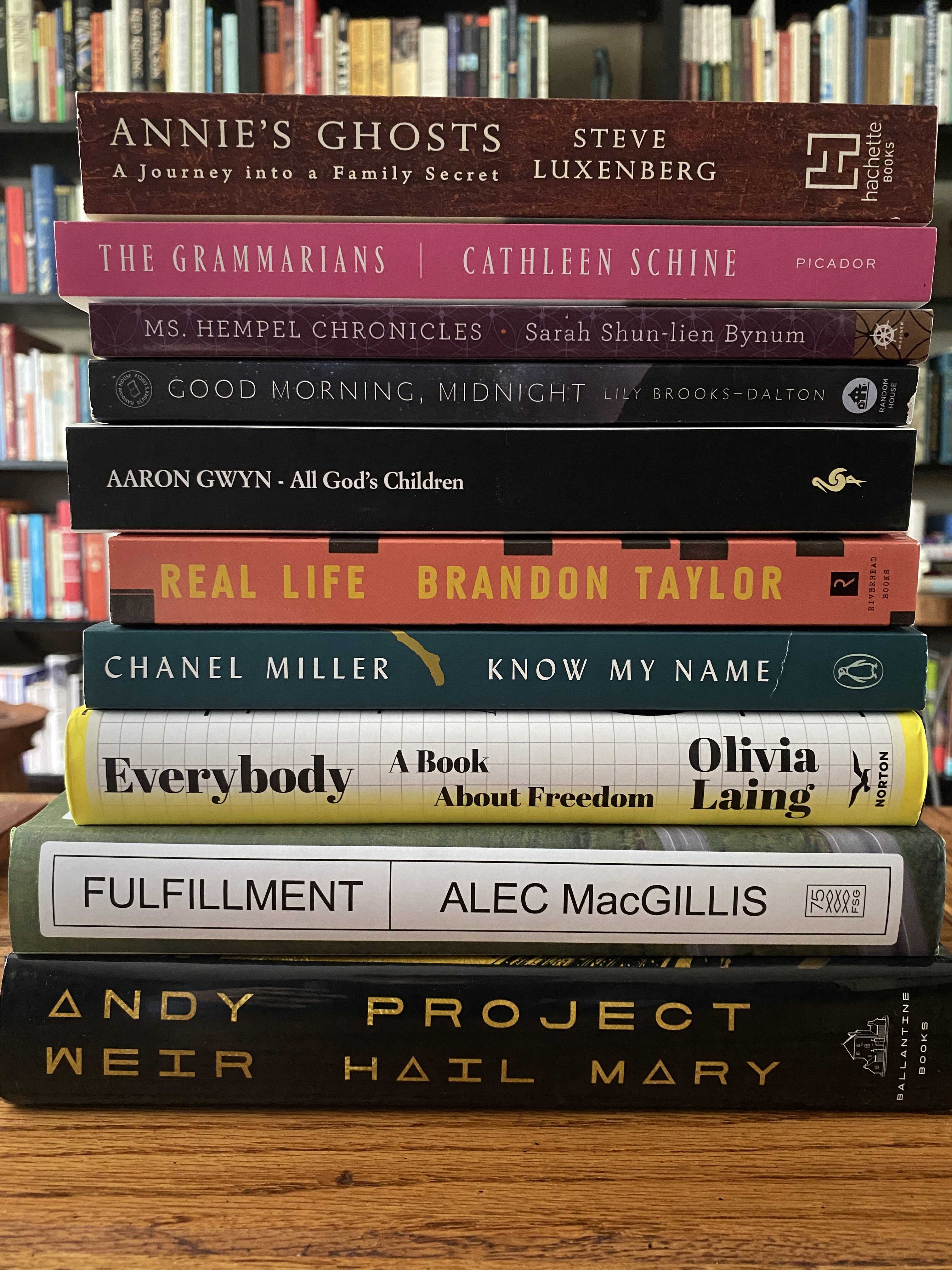
The independent bookstore we chose to visit was every bit as lovely as the reviews and local word-of-mouth had suggested, even though it had only recently reopened to the public. Apart from the garden center and an IKEA stop last summer, this adventure was the first in-person shopping I’d done since March 8, 2020.
Scenes from a week away

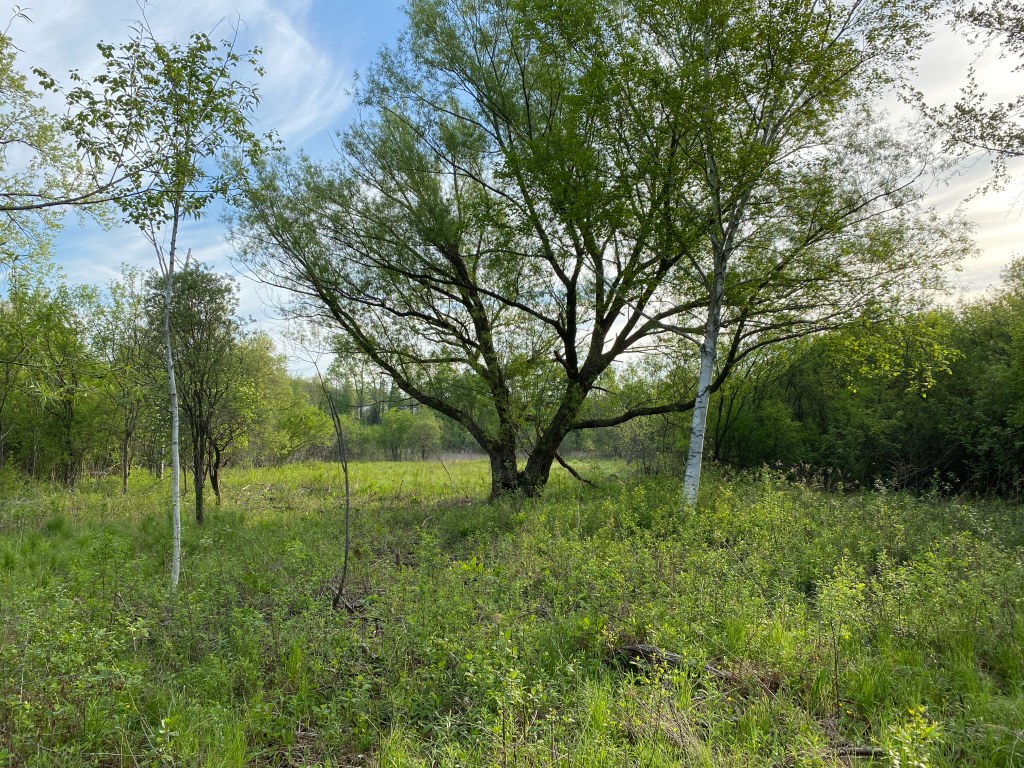


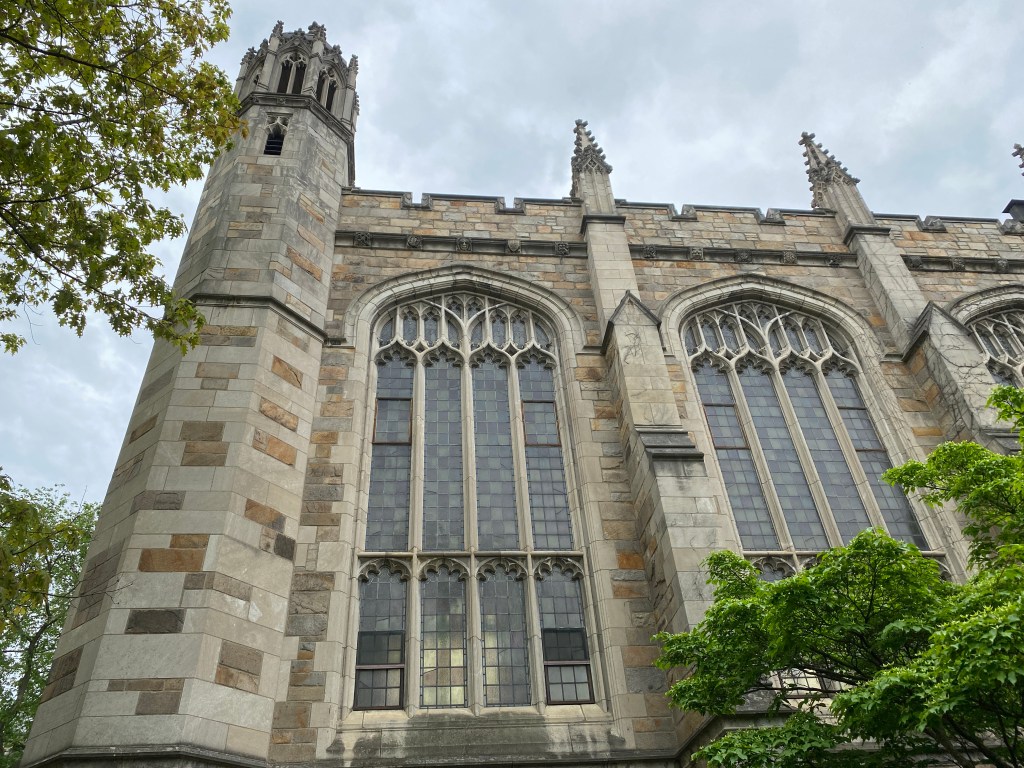


Walks in new places. Games in the evening. A few errands. Meals from new-to-us restaurants. A trip to at least one independent bookstore. And plenty of time together. That’s all we hoped for from the week. It was absolutely wonderful.

