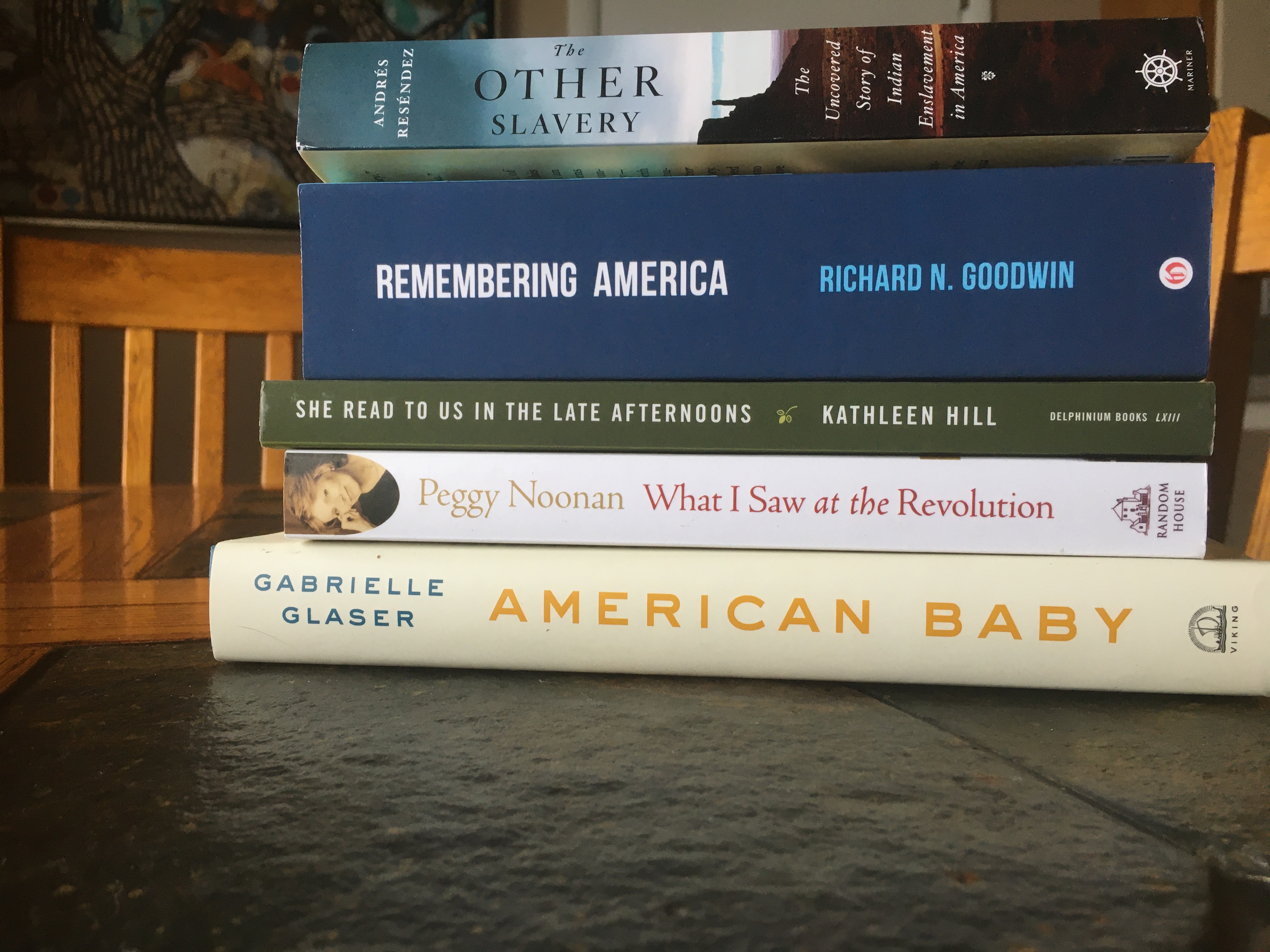
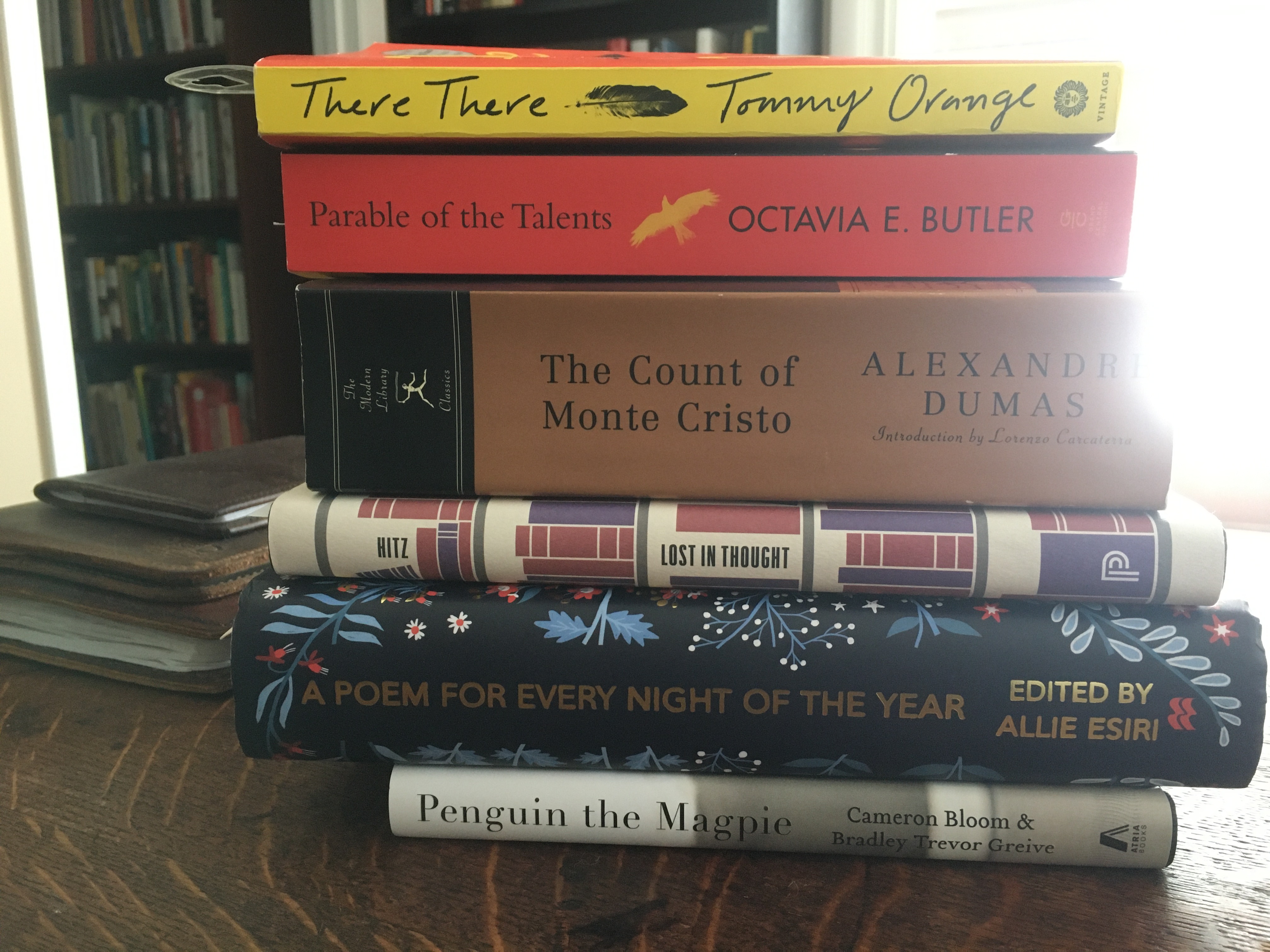
With just twenty minutes remaining before we tuned in for the season finale of All Creatures Great and Small, I savored the last page of the “thumping good read” (R.I.P., A Common Reader) that is The Count of Monte Cristo.
p. 191 “Upon my word,” said Dantes, “you make me shudder. If I listen much longer to you, I shall believe the world is filled with tigers and crocodiles.”
“Only remember that two-legged tigers and crocodiles are more dangerous than those that walk on four.”
❧ To prepare for a new book group, I read (and reread) Book I of Fyodor Dostoevsky’s The Brothers Karamazov. For a number of reasons, I’m working from the Constance Garnett translation rather than the Richard Pevear and Larissa Volokhonsky (which has languished on my shelves since 2003). Just a scant twenty-five pages in, I am wondering what took me so long to arrive at this incredible book.
❧ Now that I have reached Chapter 76 in The Count of Monte Cristo, I think I may safely report that I will finish this tome well ahead of schedule. What a face-paced (if highly improbable) tale of revenge!
❧ I finished Tommy Orange’s There There (2018) for The Deep Read. Topping a number of 2018 best-of lists, this novel needs no additional recommendations from me, but Orange’s delicate spider web of a plot really does dazzle.
p. 20 Maxine makes me read her Indian stuff that I don’t always get. I like it, though, because when I do get it, I get it way down at that place where it hurts but feels better because you feel it, something you couldn’t feel before reading it, that makes you feel less alone, and like it’s not going to hurt as much anymore. One time she use the word devastating after I finished reading a passage from her favorite author — Louise Erdrich. It was something about how life will break you. How that’s the reason we are here, and to go sit by an apple tree and listen to the apples fall and pile around you, wasting all that sweetness. I didn’t know what it meant then, and she saw that I didn’t. She didn’t explain it either. But we read the passage, that whole book, another time, and I got it.
❧ My commitment to rereading Shakespeare’s plays remains steadfast. Since my last checkin, I finished Henry IV, Part 2, and Henry V. To complement the Henriad, I plucked Harold Bloom’s 1992 meditation on the Fat Knight, Falstaff: Give Me Life, from the Shakespeare collection.
p. 50 If there can be a secular Resurrection, it would be Falstaff rising from the dead. The spirit that surges in all of us, even in the face of death, mounts to more life in the presence of the grandest personality in all of Shakespeare.
❧ As I mentioned in my last post, my reawakened Betty Broderick obsession / fascination demanded feeding, so I finished Bryna Taubman’s brisk if builder-grade Hell Hath No Fury.
❧ I’m also reading Maurice Chammah’s Let the Lord Sort Them: The Rise and Fall of the Death Penalty, which I heard about on NPR on the (long but worthwhile) drive to Ann Arbor last month.
❧ So that puts me at thirty-six books read since the beginning of the year, twenty-eight of which were read from the shelves.
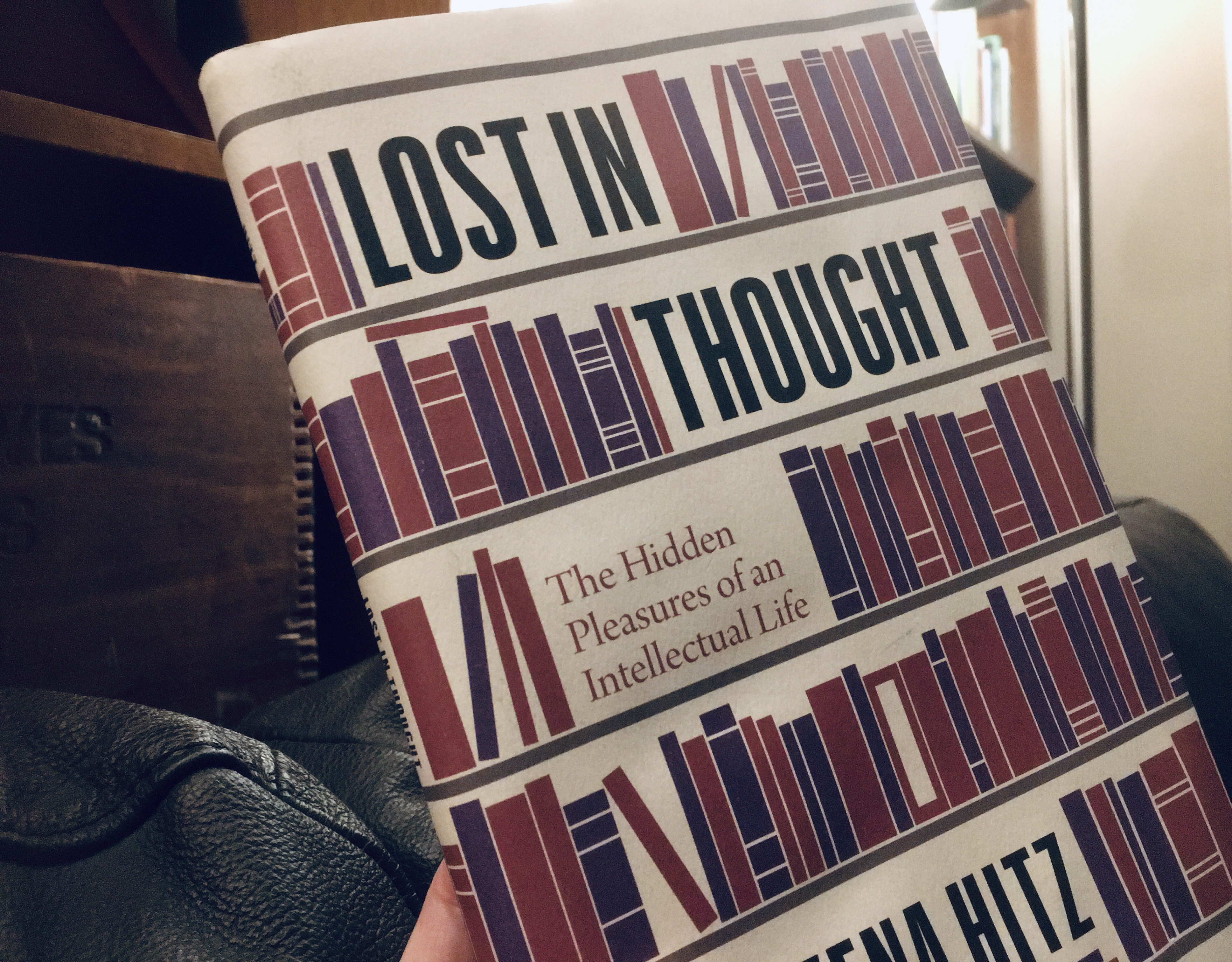
A recommendation that I look into Zena Hitz’s The Catherine Project sent me to shelves for Lost in Thought.
p. 58 Intellectual life is a way to recover one’s real value when it is denied recognition by the power plays and careless judgments of social life. That is why it is a source of dignity. In ordinary social life, knowledge is exchanged for money or for power, for approval or for a sense of belonging, to mark out superiority in status or to achieve a feeling of importance. These are our common currencies, our ways of advancing ourselves or diminishing others. But since a human being is more than his or her social uses, other, more fundamental ways of relating are possible. These forms of communion can consist in the joyful friendship of bookworms or the gritty pursuit of the truth about something together with people one would otherwise find unbearable.
p. 110 What good is intellectual life? It is a refuge from distress; a reminder of one’s dignity; a source of insight and understanding; a garden in which human aspiration is cultivated; a hollow of a wall to which one can temporarily withdraw from the current controversies to gain a broader perspective, to remind oneself of one’s universal human heritage. All this makes clear at the least that it is an essential good for human beings, even if one good among others.
Other reading notes:
I finished Octavia Butler’s Parable of the Talents (1998). If you missed this New Yorker article, when I linked it after reading Parable of the Sower, make time for it now.
I’m on Chapter 51 of The Count of Monte Cristo, which is a brisker pace than Robin proposed, but that’s all right.
I’m also reading Tommy Orange’s There There (2018) with The Deep Read.
Dirty John reawakened my dormant obsession with Betty Broderick, so I am revisiting Bryna Taubman’s Hell Hath No Fury (1992) and Bella Stumbo’s Until the Twelfth of Never (1993). Related article here. I love that showrunner Alexandra Cunningham “has been obsessed with the Broderick story since she was a teenager and read journalist Bella Stumbo’s book … so often that she stole it from the library.”
■ Titus Andronicus
■ The Comedy of Errors
■ Henry IV, Part I
And read these:
■ Culture Warlords: My Journey into the Dark Web of White Supremacy (Talia Levin; 2020. Non-fiction.)
NYT review here.
■ The Big Sleep (Raymond Chandler; 1939. Fiction.)
In So We Read On, Maureen Corrigan makes much of The Great Gatsby’s debt to hard-boiled detective stories, which led me to this classic. Thanks to Corrigan, I plan to read The Maltese Falcon, too, and, for other reasons she explores, to revisit Hemingway’s A Farewell to Arms and Salinger’s The Catcher in the Rye.
■ The Colony: The Harrowing True Story of the Exiles of Molokai (John Tayman; 2006. Non-fiction.)
This has been on my shelves for fifteen years. NPR interview here.
■ Herakles (Euripides (trans. R. Potter); 416 B.C. Drama.)
Read in anticipation of an upcoming Theater of War event, Hercules in Pennsylvania. In my search for supplementary resources, I stumbled on Reading Greek Tragedy Online.
■ The Old Guard, Book Two: Force Multiplied (Greg Rucka; 2020. Graphic fiction.)
What fun to discover a second volume of this series on Hoopla.
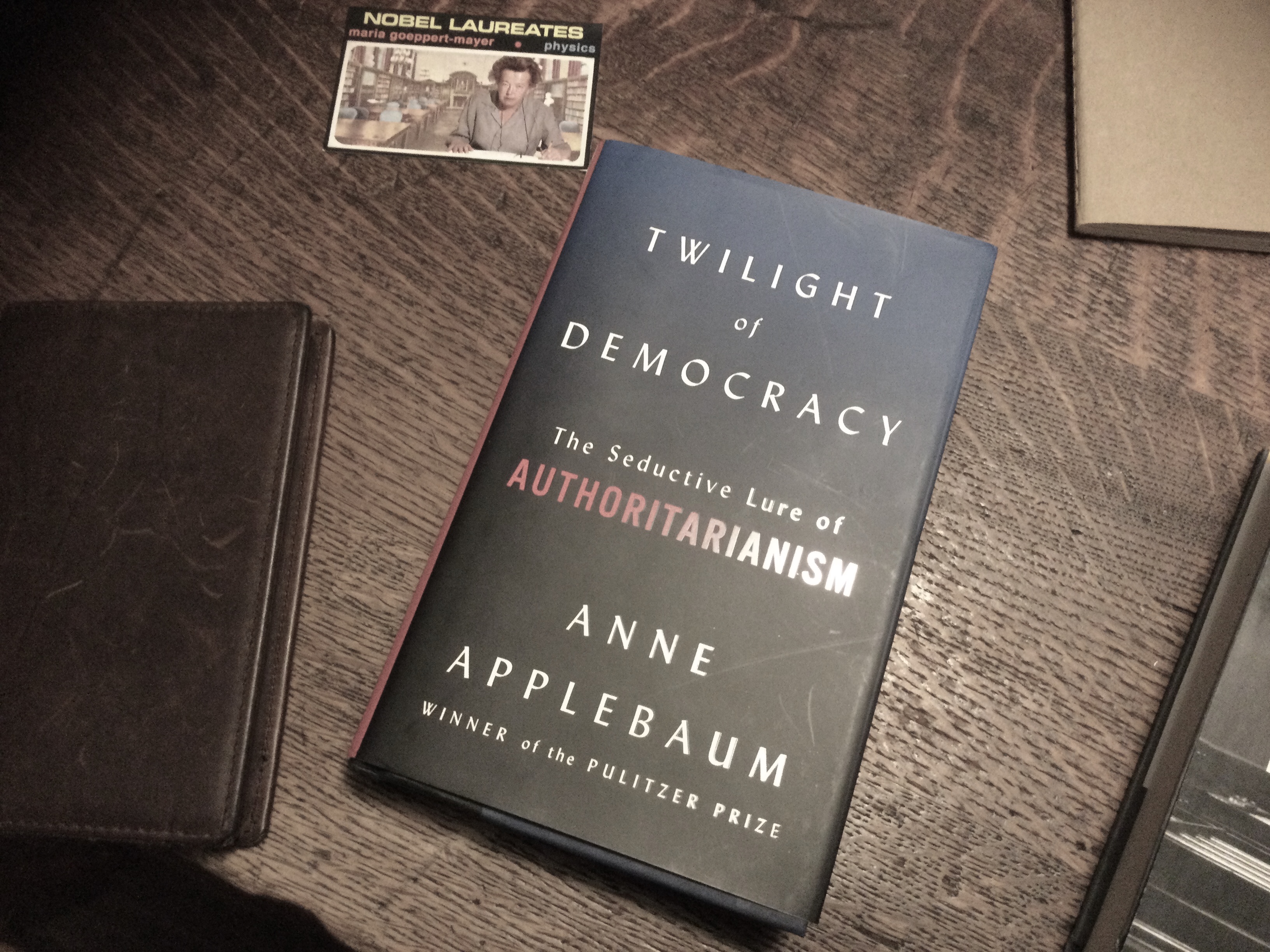
From Twilight of Democracy: The Seductive Lure of Authority by Anne Applebaum (2020):
p. 56 Unity is an anomaly. Polarization is normal. Skepticism about liberal democracy is also normal. And the appeal of authoritarianism is eternal.
p. 171 For some people, loud advocacy of Trump helps to cover up the deep doubt and even shame they feel about their support for Trump. It’s not enough to express tepid approval of a president who is corrupting the White House and destroying America’s alliances. You have to shout if you want to convince yourself as well as others. You have to exaggerate your feelings if you are to make them believable.
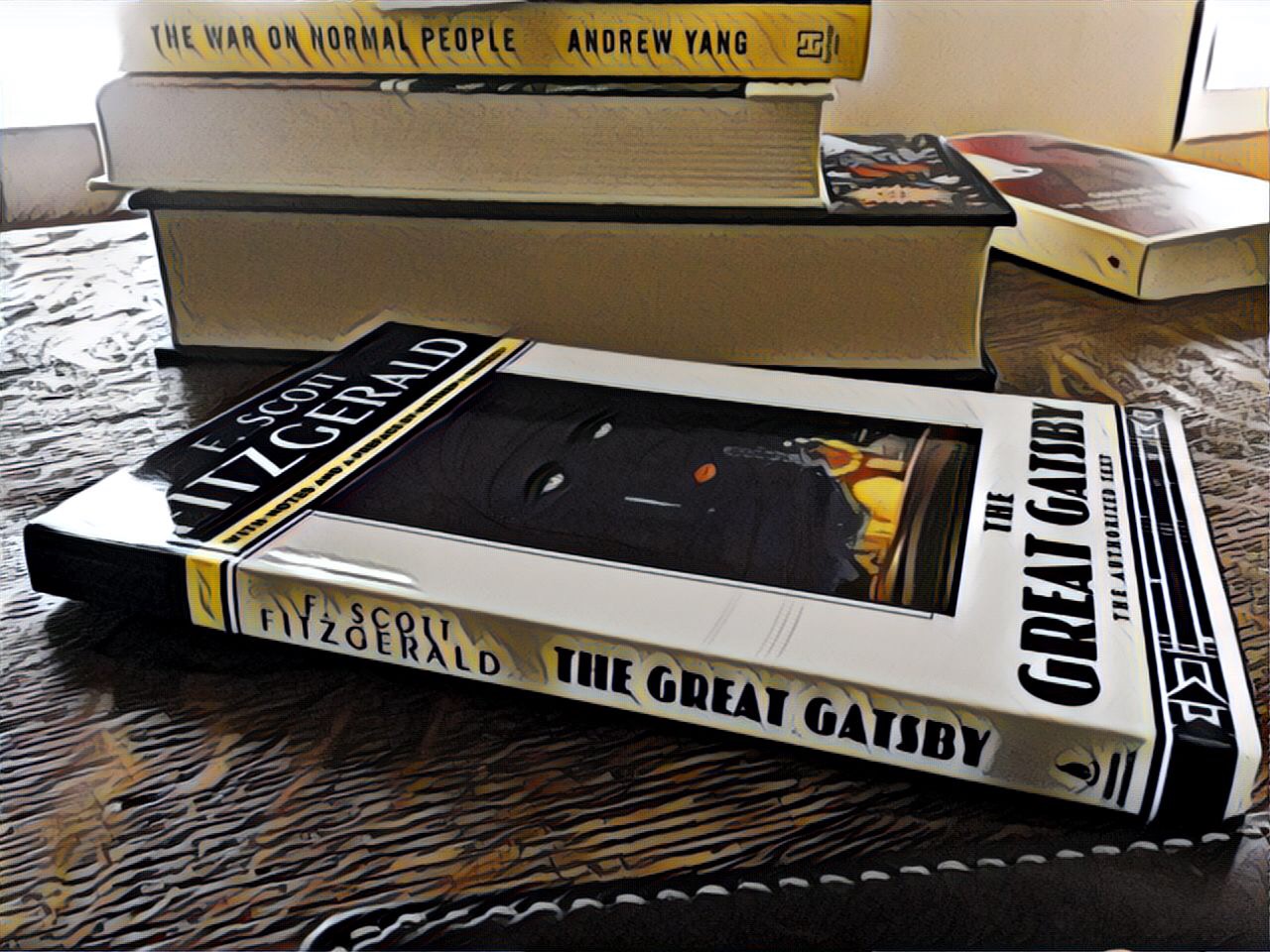
This morning, as the snow fell faintly through the universe and faintly fell, I remained burrowed in my bedcovers to finish Corrigan’s insightful book, So We Read On: How The Great Gatsby Came to Be and Why It Endures (2014).
It’s all over, Nick decrees on the very last page of the novel.
But he does so in the most beautiful sentences ever written about America. Gatsby’s fall from grace may be grim, but the language of the novel is buoyant; Fitzgerald’s plot may suggest that the American Dream is a mirage, but his words make that dream irresistible. Gatsby has it both ways. Far from being an easy read sized just right for quick digesting by our nation’s high-school students, The Great Gatsby is an elegant trickster of a novel, spinning out all sorts of inspired and contradictory poetic patter about American identity and possibilities.
My most recent reread of The Great Gatsby uncovered even more of its layers and riches, which is, as Maureen Corrigan maintains in So We Read On, as it should be. For the last week, I have tried to work some version of the following wry observation into all manner of conversations: “This was untrue. I am not even faintly like a rose.”
■ Edward III ■ The Two Gentlemen of Verona ■ The Taming of the Shrew ■ Richard II
In 2017, I participated in an online reading group that tackled all of his work over the course of a year, and I thought I might rejoin them this year, only to realize I’d be much happier rereading and studying the plays independently. Next up is Titus Andronicus.
Other books I’ve read this month:
■ This Is Your Time (Ruby Nell Bridges; 2020. Non-fiction.) Heard about this on NPR in November and wanted to check it out. It took a while for the library to bring it in.
■ Paul Robeson (Phillip Hayes Dean; 1978. Drama) Robeson was mentioned in the documentary Sighted Eyes/Feeling Heart (watched to prepare for a seminar about Lorraine Hansberry’s Les Blancs.)
■ Do the Work (Steven Pressfield; 2011. Non-fiction.) ■ The War of Art (Steven Pressfield; 2002. Non-fiction.) ■ The Scientific Method of Practicing (Timothy Hagen; 2020. Non-fiction.) Motivational reading as I prepared my practice goals for this year. Author Melissa Wiley recommended the Pressfield books.
■ The Tyranny of Merit (Michael J. Sandel; 2014. Non-fiction.) p. 104 The relentless credentialism of our day has driven working-class voters toward populist and nationalist parties and deepened the divide between those with and those without a university degree. It is also lead to increasingly partisan views of higher education, the institution most emblematic of the meritocratic project.
p. 165 More to the point, higher education in the age of meritocracy has not been an engine of social mobility; to the contrary, it has reinforced the advantages that privileged parents confer on their children.
p. 166 Though far more inclusive in terms of gender, race, and ethnicity, this meritocratic elite has not produced a fluid, mobile society. Instead, today’s credentialed, professional classes have figured out how to pass their privileges on to their children, not by bequeathing them large estates but by equipping them with the advantages that determine success in a meritocratic society.
■ One of the Good Ones (Maika and Maritza Moulite; 2021. Fiction.) Heard about this on NPR, too.
■ The Umbrella Academy, Vol. 1: The Apocalypse Suite (Gerard Way; 2008. Fiction.) My younger daughter is enjoying the Netflix series and suggested I give it a try. I can see its merits, but it didn’t “stick.”
■ What Is Populism? (Jan-Werner Müller; 2014. Non-fiction) p. 4 Populist governance exhibits three features: attempts to hijack the state apparatus, corruption and “mass clientelism” (trading material benefits or bureaucratic favors for political support by citizens who become the populists’ “clients”), and efforts systematically to suppress civil society.
p. 19 Populism, I suggest, is a particular moralistic imagination of politics, a way of perceiving the political world that sets a morally pure and fully unified — but, I shall argue, ultimately fictional — people against elites who are deemed corrupt or in some way morally inferior.
p. 32 Conspiracy theories are thus not a curious addition to populist rhetoric; they are rooted in and emerge from the very logic of populism itself.
■ Wild Swans: Three Daughters of China (Jung Chang; 1991. Non-fiction.) One of the virtual book groups I visit is reading this. I don’t know how I missed this gripping, often harrowing memoir.
p. 489 I found this environment unbearable. I could understand ignorance, but I could not except its glorification, still less its right to rule.
■ Front Row at the Trump Show (Jonathan Karl; 2020. Non-fiction.) p. xxi For Donald Trump, the taunts and personal insults are part of the game. He sees the public jousting with the press as a critical component of the Trump Show’s success. But this is a dangerous game. The president’s rhetoric, especially rhetoric that incites hatred or willfully distorts the truth, has consequences. (Boldface added.)
I think they call that prescient.
■ The War on Normal People (Andrew Yang; 2019. Non-fiction.) p. 96 In the bubble, many of us came up through the meritocracy and we’ve internalized its lessons. The underlying logic of the meritocratic system is this: If you’re successful, it’s because you’re smart and hard-working, and thus virtuous. If you’re poor or unsuccessful, it’s because you’re lazy and/or stupid and of subpar character. The people at the top belong there and the people at the bottom have only themselves to blame.
p. 185 Scarcity research indicates that the best way to improve decision-making is to free up people’s bandwidth. People won’t ever make perfect choices. But knowing that their basic needs are accounted for will lead to better choices for millions of people each day.
Last night, I finished reading Hilary Mantel’s The Mirror and the Light. The Cromwell trilogy is, as so many others have already pointed out, a remarkable achievement.
Not pictured is my first book of the year, Stephen Greenblatt Tyrant: Shakespeare on Politics (2018). Brilliant.
p. 35 Populism may look like an embrace of the have-nots, but in reality it is a form of cynical exploitation. The unscrupulous leader has no actual interest in bettering the lot of the poor. Surrounded from birth with great wealth, his tastes run to extravagant luxuries, and he finds nothing remotely appealing in the lives of under classes. In fact, he despises them, hates the smell of their breath, fears that they carry diseases, and regards them as fickle, stupid, worthless, and expendable. But he sees that they can be made to further his ambitions.
p. 41 He promises to make England great again. How will he do that? He shows the crowd at once: he attacks education. The educated elite has betrayed the people. They are traitors who will all be brought to justice, and this justice will be meted out not by judges and lawyers but in a call-and-response between the leader and his mob.
p. 43 But Shakespeare grasped something critically important: although the absurdity of the demagogue’s rhetoric was blatantly obvious, the laughter it elicited did not for a minute diminish its menace. Cade and his followers will not slink away because the traditional political elite and the entirety of the educated populace regard him as a jackass.
p. 53 Shakespeare’s Richard III brilliantly develops the personality features of the aspiring tyrant already sketched in the Henry VI trilogy: the limitless self-regard, the law-breaking, the pleasure in inflicting pain, the compulsive desire to dominate. He is pathologically narcissistic and supremely arrogant. He has a grotesque sense of entitlement, never doubting that he can do whatever he chooses. He loves to bark orders and to watch underlings scurry to carry them out. He expects absolute loyalty, but he is incapable of gratitude. The feelings of others mean nothing to him. He has no natural grace, no sense of shared humanity, no decency.
Tomorrow is New Year’s Eve, and 375 pages stand between me and the conclusion of The Mirror and the Light, so I am calling it at 233 books read this year. (As always, I have included only cover-to-covers.) Here is my complete list, here are all of the posts annotating that list, and here are a few numbers:
♦ 233 books read this year
♦ 105 fiction titles (not including graphic works)
♦ 61 non-fiction titles (not including graphic works)
♦ 6 poetry selections
♦ 37 plays
♦ 24 graphic works (three of which were non-fiction selections)
♦ 34 rereads (i.e., books that I had first read sometime in the past, not this year)
As I shared here, my goals for this year were to read 100 books from my shelves (i.e., books in my collection before the end of 2019), including at least 24 non-fiction titles and at least one book from each of the following categories: Shakespeare (by, about, retold, etc.) poetry, NYRB, Kurt Vonnegut (by or about), Joyce Carol Oates, philosophy, art, and children’s / YA. I read 148 books from the shelves, 47 of which were non-fiction titles, and I met each of the category challenges:
Shakespeare
This year, seven plays (Richard III, The Taming of the Shrew, As You Like It, The Tempest, Measure for Measure, King Lear, and Richard II) and two works from the Hogarth Shakespeare series (Vinegar Girl (Anne Tyler; 2016) and New Boy (Tracy Chevalier; 2017)) satisfied the challenge. Next year, I will not consider it complete unless I also tackle at least one of the many non-fiction works I’ve collected.
Poetry
With Aimless Love (Billy Collins; 2013) and Crow (Ted Hughes; 1970) I met the challenge, but I had also hoped to increase the amount of poetry I read this year, whether from my shelves or not. With six books, I doubled what I managed last year, but there is still much room for growth here.
NYRB Cassandra at the Wedding (Dorothy Baker; 1962)
Kurt Vonnegut Mother Night (1961)
Joyce Carol Oates Give Me Your Heart (2010)
Philosophy How to Die: An Ancient Guide to the End of Life (Seneca; ed. James Romm; 2018) How to Keep Your Cool: An Ancient Guide to Anger Management (Seneca; ed. James Romm; 2019) How to Grow Old: Ancient Wisdom for the Second Half of Life (Marcus Tullius Cicero; ed. Philip Freeman; 2016) How to Be Free: An Ancient Guide to the Stoic Life (Epictetus; ed. A.A. Long; 2018) Plato and a Platypus Walk into a Bar… Understanding Philosophy Through Jokes (Thomas Cathcart and Daniel Klein; 2006)
Art Vincent and Theo: The Van Gogh Brothers (Deborah Heiligman; 2017)
Children’s / YA I, Juan de Pareja (Elizabeth Barton de Treviño; 1965) Harriet the Spy (Louise Fitzhugh; 1964)
I rose to Robin’s challenge to read three Agatha Christie titles this year: The Mousetrap (1952), Crooked House (1949), and Endless Night (1967). And I tossed in a challenge to read a book about my bird of the year, which in 2020, was the crow: Gifts of the Crow: How Perception, Emotion, and Thought Allow Smart Birds to Behave Like Humans (John M. Marzluff; 2012).
The only goal on which I stumbled was “Read Hilary Mantel’s Cromwell trilogy,” and, gosh, I came close. In fact, I’ll return once I finish.