Bookish

2D28035B-E908-4730-8912-EC76971FBC7A

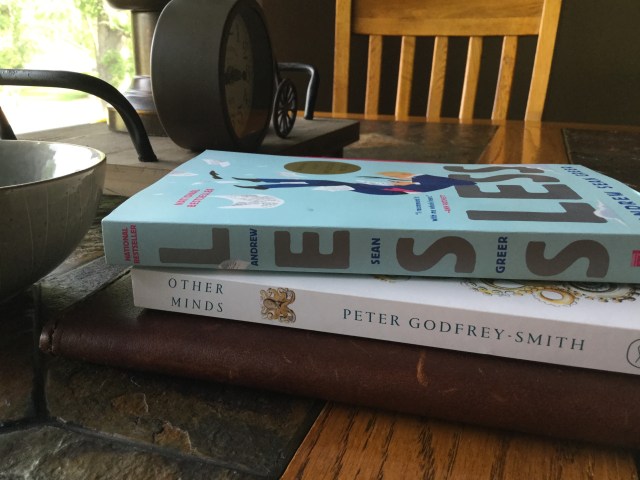
Recent acquisitions.

Last night I finished reading Book 51 of the year, Thi Bui’s illustrated memoir, The Best We Could Do. Because I’m about halfway through The Perfect Mother (Aimee Molloy), a meh recent novel, and Janesville, an excellent non-fiction work, I expect to meet the goal of Robin’s 52 Books in 52 Weeks by Thursday.

On the topic of non-fiction, I’m well positioned to meet one of my own reading goals: to read thirty-six non-fiction tiles in 2018. I’ve read seventeen, so far. In fact, here are my commonplace book entries for the sixteenth, Sarah Perry’s haunting memoir about her mother’s murder, After the Eclipse:

p. 136
As far back as I could remember, reading had been a perfect escape, an alternate universe where none of the problems were mine. When I was upset at home or school, I could always pull out a book, or know that one was waiting for me in the next quiet moment. In first grade, encouraged by my teacher, I began writing stories, and this was even better; I could create whatever escape I wanted, include whatever characters I wanted to spend time with. Writing gave me power.

p. 159
Sometimes, the scary thing about suicide was that it seemed inevitable, the only logical end to everything that had happened.

p. 250
Violence outpaced lab funding everywhere.

Our family book club is tackling The Aeneid this summer. We’ve already listened to the three introductory lectures in Elizabeth Vandiver’s course on the work and have decided to read one of The Aeneid’s twelve books each week, complemented by the appropriate lecture(s). The Girls Rule! Book Club has also tentatively scheduled Madame Bovary (Gustave Flaubert) and The Art of War (Sun Tzu), which may prove a bit ambitious with their commitments, but we’ll see.

The library’s reading program commences later this week, and frankly? My group enjoys some slightly lighter fare in the summer, too, so my assembled a pile of fiction includes Sometimes I Lie (Alice Feeney) and Red Clocks (Leni Zumas) — perfect, I think, for reading lakeside in the early morning between birdwatching and chillaxing.

Quotable


■ With or Without You (Domenica Ruta; 2013. Non-fiction.)
p. 23
Pride like this is both tyrannical and tragic, for the chief function of pride is to usher in the fall.

My parents had sufficient raw materials to achieve a level of fame in a small town, but not much more than that.

p. 119
It made sense to me. There are some things that we have to forget about in order to get through the day.

■ I’m Supposed to Protect You from All This (Nadja Spiegelman; 2016. Non-fiction.)
p. 87
According to neuroscientists, when we stir up a long-term memory, it floats in our consciousness, unstable, for a window of approximately three hours. During this time, the memory is malleable. The present infiltrates the past. We add details to fill in the gaps. Then the brain re-encodes the memory as if it were new, writing over the old one. As it sinks back down into the depths of our minds, we are not even aware of what we have gained or lost, or why.

p. 235
It had happened to me once, the unexpected resurgence of a difficult childhood memory. It had made me feel I was losing my hold on reality. It terrified me, already, that I was composed of a past that was so lonely, that was made up of memories and narratives no one else in my family could agree upon. It was too much that it might be unknowable to myself as well. I wondered often how many other memories lurked within me, dark and alien as cancers.

■ I’ll Be Gone in the Dark (Michelle McNamara; 2018. Non-fiction.)
p. 199
In their reserve and in virtually every other way, detectives differ from show-biz folks. Detectives listen. They’re getting a read. Entertainers get a read only to gauge their influence on a room. Detectives deal in concrete tasks. I once spent an hour listening to an actress analyze a three-line text that hurt her feelings. Eventually I’ll see the cracks in a detective’s veneer, but in the beginning their company is an unexpected relief, like fleeing a moodily lit cast party loud with competitive chatter and joining a meeting of determined Eagle Scouts awaiting their next challenge. I wasn’t a native in the land of the literal-minded, but I enjoyed my time there.

■ A Higher Loyalty (James Comey; 2018. Non-fiction.)
p. 118
I had never met President Obama before and was struck by two things: how much thinner he appeared in person and his ability to focus.

p. 121
On the way out the door, I told Kathy Ruemmler how surprised I was by the interesting discussion, telling her, “I can’t believe someone with such a supple mind actually got elected president.”

p. 123
Though it was a small moment, what struck me about President Obama’s remark is that it displayed a sense of humor, insight, and an ability to connect with an audience, which I would later come to appreciate in a president even more. These are all qualities that are indispensable in good leaders. A sense of humor in particular strikes me as an important indicator – or “tell” – about someone’s ego. Having a balance of confidence and humility is essential to effective leadership. Laughing in a genuine way requires a certain level of confidence, because we all look a little silly laughing: that makes us vulnerable, a state insecure people fear. And laughing is also frequently an appreciation of others, who have said something that is funny. That is, you didn’t say it, and by laughing you acknowledge the other, something else insecure people can’t do.

■ The Rules Do Not Apply (Ariel Levy; 2017. Non-fiction.)
p. 4
My lined notebooks were the only place I could say as much as I wanted, whenever I wanted. To this day I feel comforted and relieved of loneliness, no matter how foreign my surroundings, if I have a pad and a pen.

p. 5
(When we expressed subdued versions of our outrage to our elders, their responses invariably included the phrase “paying your dues.” It was not a phrase we cared for.)

p. 154
How did people do this? People who’d lost children who had existed – not for minutes but days, decades? Children who had voices, who had opened their eyes. Children with names. Did these people wake up every morning until the day they died and beg Mother Nature to return what she had given and then taken away?

I did not hate my mother. I feared her.

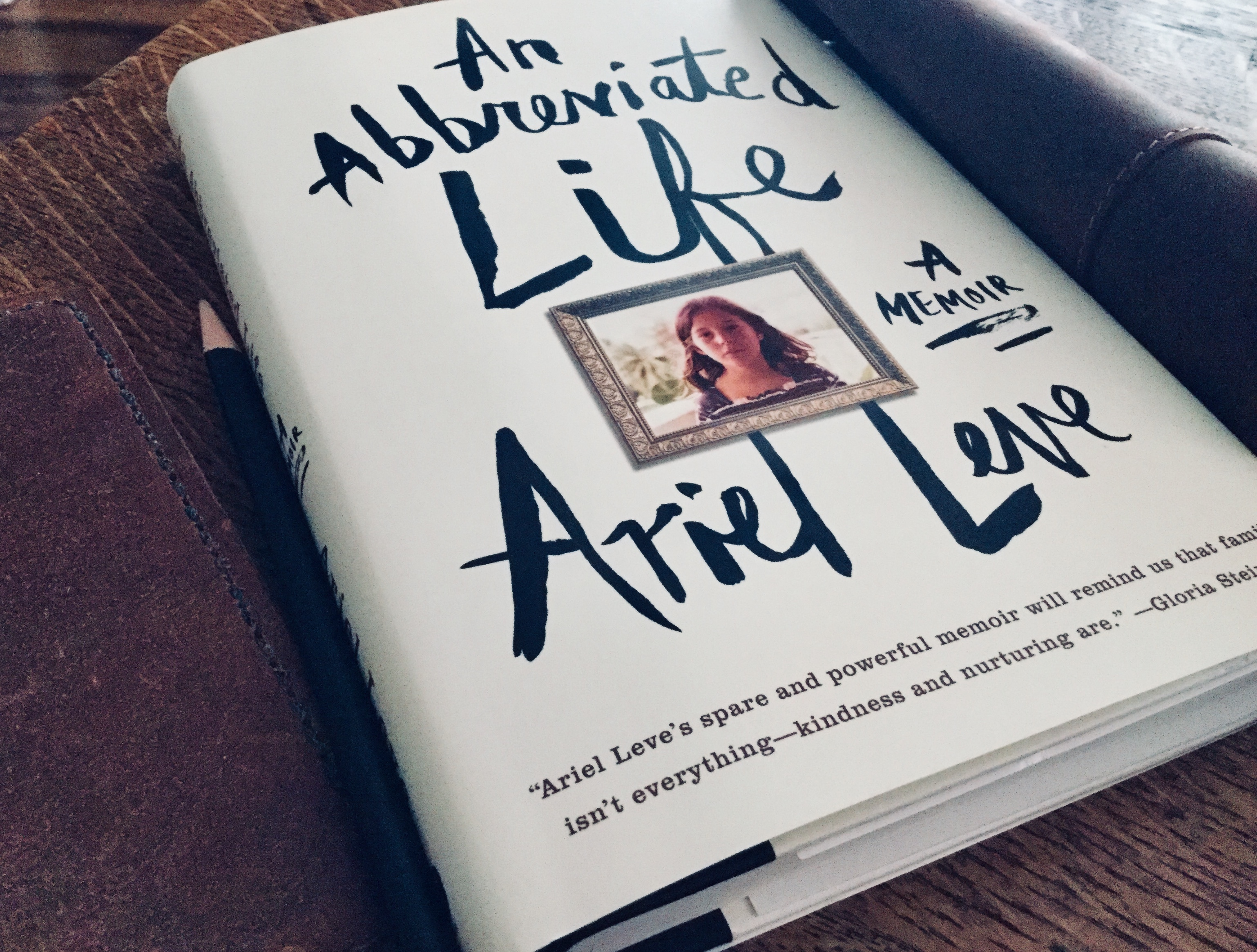
From Ariel Leve’s 2016 memoir, An Abbreviated Life:

p. 137
He tells me that scientists have found connections between children who are psychologically abused and permanent changes in the brain. We are discussing the neurological effects when a child’s rational responses are continually invalidated.

“The coping mechanisms that were adaptive in childhood become maladaptive as an adult.”

He gives an example.

“When you have an erratic, unpredictable, and aggressive parent, a child will detect signs and know when not to say something or know when to hide, so a threat-detecting sense begins to emerge early on. In the end, it wires the individual to be acutely aware and highly reactive to perceived threats.”

p. 145
The times I remember my mother most at peace is when she would stand without moving, unaware of passing time, reading or rereading passages from a book she’d picked off the shelf. Words were liberation from the frantic world she occupied. She could lose herself temporarily in the sanctuary of the lyricism. Unlike people, words were always enough.

p. 266
I did not hate my mother. I feared her. I feared her destroying my life. I feared her lies would turn others against me. I feared the incessant and unending conflict I would be forced to engage in with someone who couldn’t see past her own reality.

Watching the world as a writer

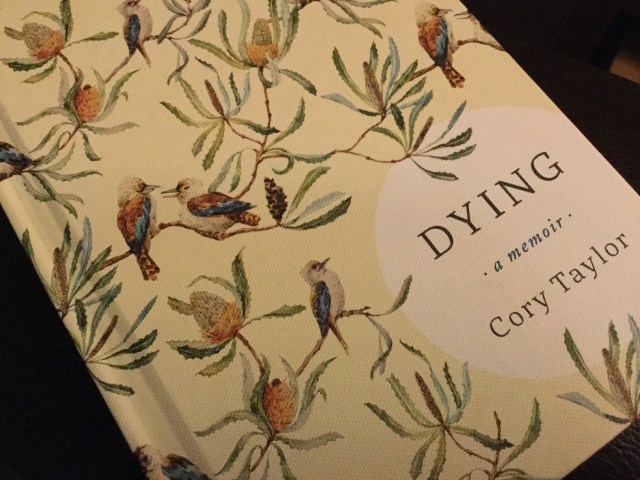
5987212D-4D8D-42DE-810F-22796A433C3DFrom Cory Taylor’s memoir, Dying:

p. 31
I don’t know where I would be if I couldn’t do this strange work. It has saved my life many times over the years, and it continues to do so now. For while my body is careering towards catastrophe, my mind is elsewhere, concentrated on this other, vital task, which is to tell you something meaningful before I go. Because I’m never happier than when I’m writing, or thinking about writing, or watching the world as a writer, and it has been this way since the start.

p. 45
No, my priorities remain the same. Work and family. Nothing else has ever really mattered to me. It might sound odd for a writer with my small output to claim work as a lifelong preoccupation, but it’s true. When I wasn’t writing, I was preparing to write, rehearsing ideas, reading, observing life and character, learning from other writers. As Nora Ephron always said, everything is copy. If I was slower than some at finding success, it isn’t because I wasn’t trying. I was trying and failing all the time. That’s what I’m doing now and I hope failing better.

People have tired of talking about it.

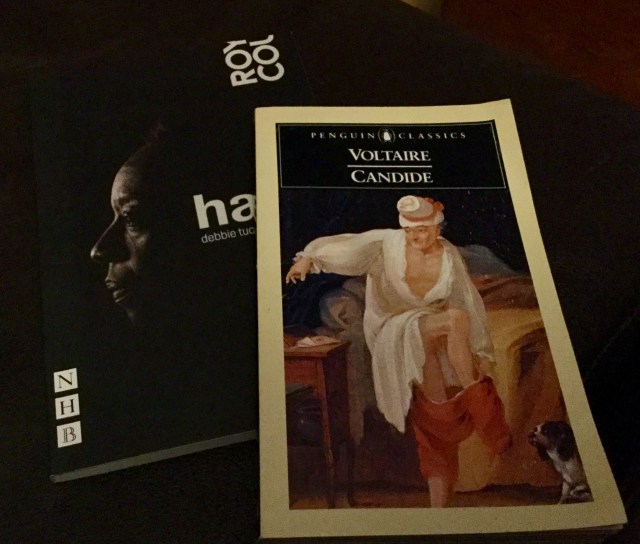
D5CF08FF-D9D1-4C3C-9939-432DE57AEEFDFrom Voltaire’s Candide:

p. 95
‘But what was this world created for?’ said Candide.
‘To drive us mad,’ replied Martin.

From debbie tucker green’s hang:

p. 24
People are too embarrassed to say anything.
To say anything of use.
To say anything of use any more.
People say nothing, presume I’ve stopped
waiting for them to say anything. To say
anything useful. People presume, I’m, over it.
Over the worst.
People have tired of talking about it,
they’re all cried out about it.

A clever girl, but lazy

From Diana Athill’s memoir Instead of a Letter (1962):

p. 40
[T]hey considered a house without books in it uncivilized.

p. 71
Lessons I saw as necessary, often interesting, and sometimes enjoyable. I made friends whose companionship I appreciated. It was the absence of things which had to be endured: the absence of freedom, the absence of home, the absence of privacy, the absence of pleasures.

p. 72
It was at school that my secret sin was first brought into the open: laziness. I was considered a clever girl, but lazy. It has been with me ever since, and the guilt I feel about it assures me that it is a sin, not an inability. It takes the form of an immense weight of inertia at the prospect of any activity that does not positively attract me: a weight that can literally paralyze my moral sense. That something must be done I know; that I can do it I know; but the force which prevents my doing it when it comes to the point, or makes me postpone it and postpone it until almost too late, is not conscious defiance of the “must” nor a deliberate denial of the “can.” It is an atrophy of the part of my mind which can perceive the “must” and the “can.” I slide off sideways, almost unconsciously, into doing something else, which I like doing.

La Marquise Du Châtelet

60CCADF4-DBD4-4652-AB7F-21F52032AC73

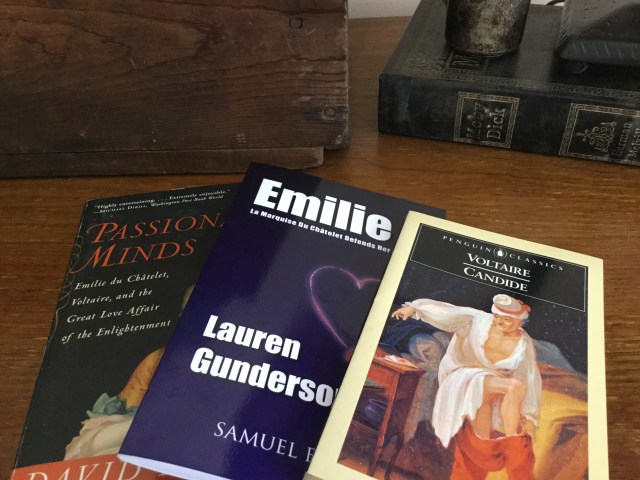
From the play Emilie by Lauren Gunderson:

Emilie and Voltaire have built “the largest library in Europe… and live in it,” but by the end of Act I, there is discord.

EMILIE: For once consider the idea that you could be mistaken, that you could be fallible in this one scenario, lonely as it may be in the immensity of your usual correctness. Science isn’t theatre, you can’t pick the ending because it sounds nice. Listen to me.

Inheritors

5B55D233-BF77-4317-9D1F-EE696799E3A5
Over the weekend, we saw Boy at TimeLine Theatre (timely, moving, worth your time) and Remy Bumppo’s staged reading of Susan Glaspell’s 1921 play, Inheritors.

From the latter:

SILAS: You took aplenty. Tell in your eyes you’ve thought lots about what’s been thought. And that’s what I was setting out to say. It makes something of men — learning. A house that’s full of books makes a different kind of people. Oh, of course, if the books aren’t there just to show off.

GRANDMOTHER: Like in Mary Baldwin’s new house.

SILAS: (trying hard to see it) It’s not the learning itself—it’s the life that grows up from learning. Learning’s like soil. Like—like fertilizer. Get richer. See more. Feel more. You believe that?

FEJEVARY: Culture should do it.

SILAS: Does in your house. You somehow know how it is for the other fellow more’n we do.

I love that… A house that’s full of books makes a different kind of people.

“You’re standing on a stage…”

71B36466-4E0D-4DAA-8A01-78E5DF4C1634
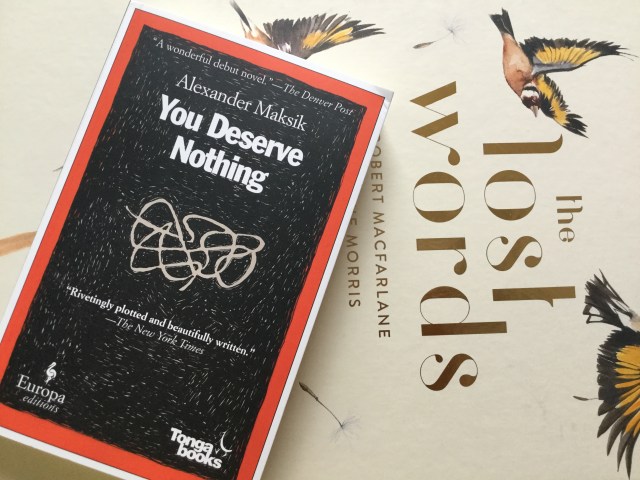
From Alexander Maksik’s novel You Deserve Nothing:

p. 87
You always begin the same way. You’re standing on stage, presenting yourself, happy to be back. Which is not to say that you don’t believe in teaching, because you do. There are few things you believe in more and you want to do something good. But along with that comes the wonder of standing before a group of people who love you, who imagine that you are strong and wise.

All that attention, it’s hard to resist. And if you’re honest you acknowledge that before you ever became a teacher you imagined your students’ reverence, your ability to seduce, the stories you’d tell, the wisdom you’d impart. You know that teaching is the combination of theater and love, ego and belief. You know that the subject you teach isn’t nearly as important as how you use it.

p. 169
That’s why the ones who stay are some of the most depressing people you’ve ever met in your life. It has nothing to do with their age. They’ve stayed because of their disposition — bitter, bored, lacking in ambition, lonely, and mildly insane. With few exceptions, these are the people who are capable of staying in a school. This is what it takes to teach for half a life-time. The ones who care, who love the subjects, who love their students, who love, above all, teaching — they rarely hang around.

An Enemy of the People

From Act IV:

Dr. Stockmann (with growing fervor). What does the destruction of a community matter, if it lives on lies? It ought to be razed to the ground. I tell you– All who live by lies ought to be exterminated like vermin! You will end by infecting the whole country; you will bring about such a state of things that the wholecountry will deserve to be ruined. And if things come to that pass, I shall say from the bottom of my heart: Let the whole country perish, let all these people be exterminated!

Voices from the crowd. That is talking like an out-and-out enemy of the people!

Billing. There sounded the voice of the people, by all that’s holy!

The whole crowd. (shouting). Yes, yes! He is an enemy of the people! He hates his country! He hates his own people!

Aslaksen. Both as a citizen and as an individual, I am profoundly disturbed by what we have had to listen to. Dr. Stockmann has shown himself in a light I should never have dreamed of. I am unhappily obliged to subscribe to the opinion which I have just heard my estimable fellow-citizens utter; and I propose that we should give expression to that opinion in a resolution. I propose a resolution as follows: “This meeting declares that it considers Dr. Thomas Stockmann, Medical Officer of the Baths, to be an enemy of the people.”

❧

By the way, if you haven’t already nabbed tickets to A Red Orchid Theatre’s Traitor — an adaptation of Henrik Ibsen’s An Enemy of the People written by Brett Neveu and directed by Michael Shannon — stop what you’re doing and get them. Elsewhere, I have described it as think-y, inventive, and, well, feckin’ brilliant.