
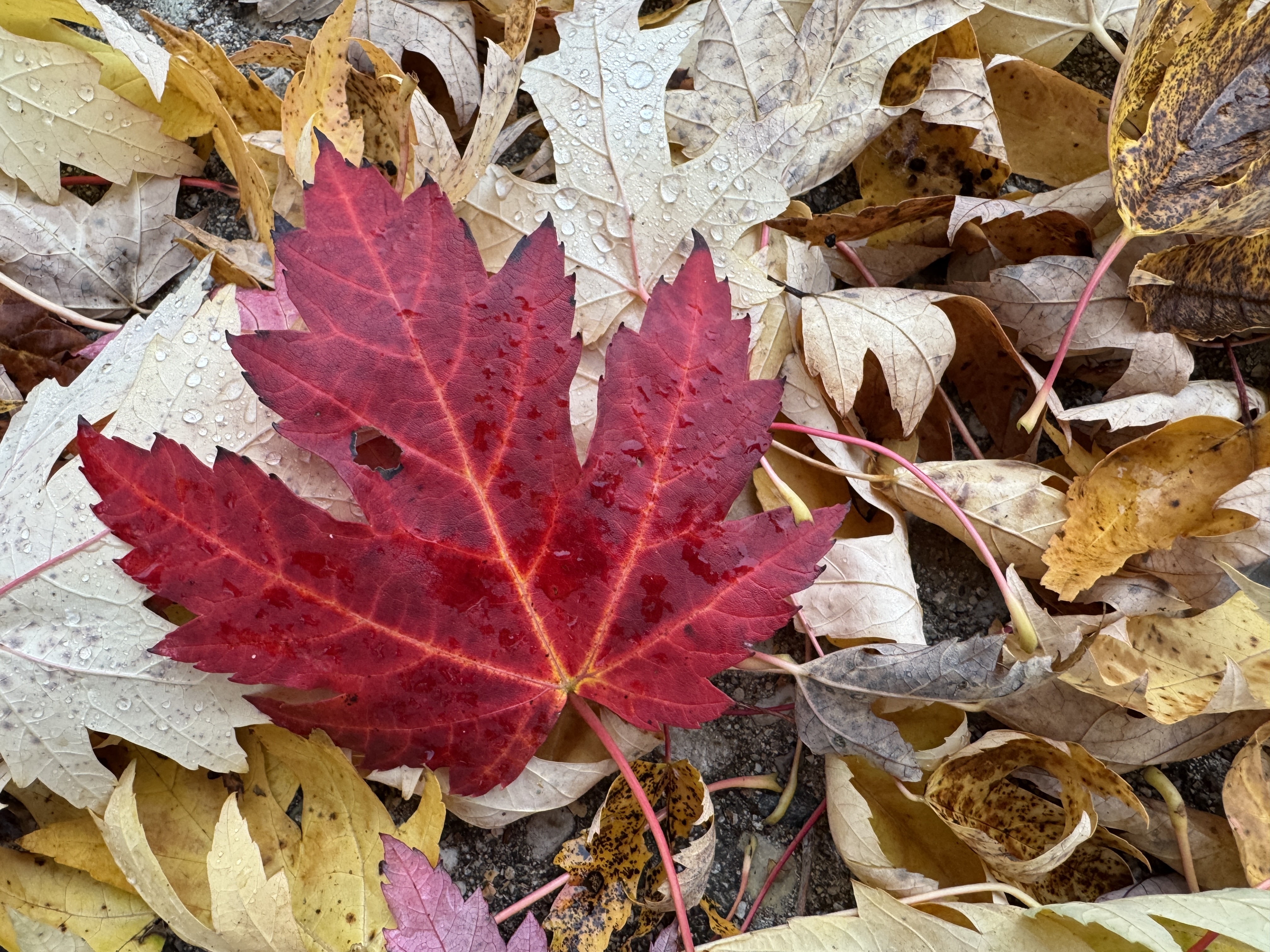
The morning has run off without me, but I will catch up to it soon enough. In the meantime, I’ve just finished some desk work and tomorrow’s chapters of Bleak House (Charles Dickens; 1853), which I’m reading with APS Together. Other reading this week includes The Dispossessed (Ursula K. LeGuin; 1974) for a short course with NYR Seminars; The Amazing Adventures of Kavalier and Clay (Michael Chabon; 2000) and the Stanley Lombardo translation of The Iliad for courses with Roundtable by The 92nd Street Y; and Moby-Dick, this time with Samantha Rose Hill.
Between this week’s lesson and next, I will attend another performance class for adult music students, the focus of which will be music for a holiday concert, but the chief part of my daily practice comprises Marcel Moyse’s 24 Little Melodic Studies and On Sonority, Art, and Technique; Taffanel and Gaubert; and M.A. Reichert’s 7 Daily Exercises. I’m also working out the second movement of Bach’s Flute Sonata in E-flat major.
Before today’s practice, though, I must do a few here-comes-winter tasks in the yards and walk. We raked and walked in snow and temps in the low twenties earlier this week; it’s sunny and 49 as I type this; the daytime highs on Friday and Saturday will be in the sixties. What is that saying about Chicago(land) weather? If you don’t like it, then just wait fifteen minutes.
What have you been reading? Studying? Thinking about? Leave a comment; I would enjoy hearing from you. Looking ahead to 2026, I am wondering if a year of “reading at whim” might not be best — fewer classes and reading groups, more pulling down some of the volumes already on my shelves. I just reached into the shelves behind and drew from them, randomly: The Hummingbird (Sandro Veronesi; 2019/2020) and The Cold Millions (Jess Walters; 2020). Unread. I looked to the left and the first title I made out was The Big Sort: Why the Clustering of Like-Minded American is Tearing Us Apart (Bill Bishop; 2009). Unread. The bookcase in front of me? Bitch: On the Female of the Species (Lucy Cooke; 2022). Unread. More than half of the books here are. As I’ve said, this once embarrassed me. Now it alternately enlivens and frightens me.
From early in Nassim Nicholas Taleb’s The Black Swan: The Impact of the Highly Improbable:
The writer Umberto Eco belongs to that small class of scholars who are encyclopedic, insightful, and nondull. He is the owner of a large personal library (containing thirty thousand books), and separates visitors into two categories: those who react with “Wow! Signore professore dottore Eco, what a library you have! How many of these books have you read?” and the others — a very small minority — who get the point that a private library is not an ego-boosting appendage but a research tool. Read books are far less valuable than unread ones. The library should contain as much of what you do not know as your financial means, mortgage rates, and the currently tight real-estate market allows you to put there. You will accumulate more knowledge and more books as you grow older, and the growing number of unread books on the shelves will look at you menacingly. Indeed, the more you know, the larger the rows of unread books. Let us call this collection of unread books an antilibrary.
 Nerdishly