There and back again

7F02401C-C7D2-4127-94E8-C805469CC17A

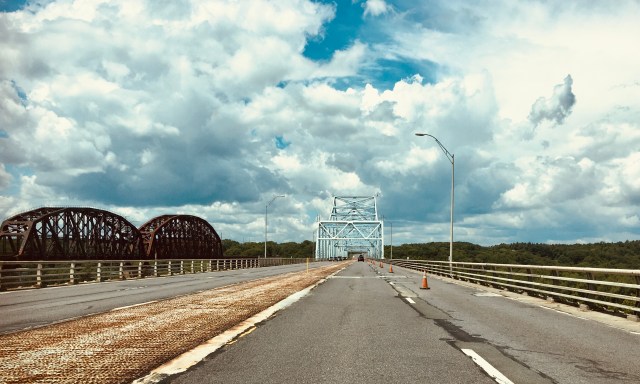
This photo was taken on the way to Michigan from Massachusetts. I think we were crossing the Hudson but freely admit that most of the trip was a well-organized blur.

Last Wednesday, we returned home after driving from Illinois to Massachusetts to Michigan and back to Illinois. The last bit was in an empty sixteen-foot rental truck, along a construction-riddled route, during a torrential rainstorm. Perhaps fickle gods thought Covid 19 too weak a trial for us and decided to strew additional challenges across our path.

Well, we persevered and have largely recovered our respective grooves, Mr. Nerdishly and I. Our cats, who were boarded at a tony kitty hotel that I once innocently (and obviously mistakenly) referred to as the Pussy Palace, recovered their equanimity much more rapidly than I could have hoped and certainly more quickly than I, who needed several sleep-ins before feeling like myself again.

F62C1B2C-117F-482F-903B-7B0BE27BEDB2

Since my last list, I’ve finished four books, bringing my total to 139 books read to date.

Too Much and Never Enough: How My Family Created the World’s Most Dangerous Man (Mary L. Trump; 2020. Non-fiction.)
This was the soundtrack of most of the second leg of our travels (Massachusetts to Michigan); I finished listening during one of our walks once we returned home. I agree with this reviewer: keenly observed, well written, and “the most convincingly empathetic chronicle of Donald Trump I’d ever read.”

A Separation (Katie Kitamura; 2017. Fiction.)
This was well-reviewed by critics but not necessarily by readers, if the mixed reviews on Amazon and Goodreads are an indication. I really liked it, though. It reminded me of The Third Hotel (Laura van den Berg), a book I read and admired in 2018.

The Sorrows of Young Werther (Johann Wolfgang von Goethe; 1774. Trans. Elizabeth Mayer and Louise Bogan; 1990. Fiction.)
Yes, he’s troubled and self-absorbed, but I don’t belong to the reading club that maintains we must like the protagonist to like the book. I will say, though, that I am old enough to have wanted to be “quite severe” with Werther, to insist that he get a grip and meet a few more suitable companions. Heh, heh, heh.

p. 9
There is a certain monotony about mankind. Most people toil during the greater part of their lives in order to live, and the slender span of free time that remains worries them so much that they try by every means to get rid of it. O Destiny of Man!

Antigone (Sophocles; 441 B.C. Trans. Ian Johnston; 2016. Drama.)
Read in anticipation of an upcoming Theater of War production.
 

“[T]he sole solution of all of the riddles of life and death”

51A0F402-C682-474E-8CFC-B8CEB90642EF

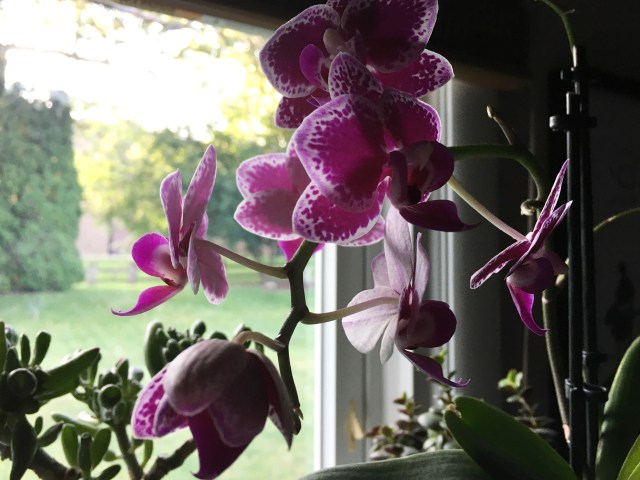
A sixth bloom has emerged, but I will instead share an image of my current stack.

With The Farm I arrived at 135 books read this year; 110 from the shelves.

The Return of the Soldier (Rebecca West; 1918. Fiction.)
In May, when I finished Willa Cather’s Alexander’s Bridge (1912), I remarked that it was difficult to believe that was her first novel; it was so assured and true. West’s first novel is even more so — remarkable and memorable.

p. 65
Even though I lay weeping at it on the dead leaves I was sensible of the bitter rapture that attends the discovery of any truth. I felt, indeed, a cold intellectual pride in his refusal to remember his prosperous maturity and his determined dwelling in the time of his first love, for it showed him so much saner than the rest of us, who take life as it comes, loaded with the inessential and the irritating. I was even willing to admit that this choice of what was to him reality out of all the appearances so copiously presented by the world, this adroit discovery of the dropped pearl of beauty, was the act of genius I had always expected from him. But that did not make less agonizing this exclusion from his life.

The Bridge of San Luis Rey (Thornton Wilder; 1927. Fiction.)
This was a reread.

p. 138
The art of biography is more difficult than is generally supposed.

The Death of Ivan Ilyich (Leo Tolstoy; 1886. Trans. Louise and Aylmer Maude. Fiction.)
This, too, was a reread, my fourth time encountering Tolstoy’s novella. The first was in AP English, thirty-nine years ago. What do typical seventeen-year-olds take away from reading Tolstoy? Oh, I was more than capable of parroting a teacher (or a study guide) on Tolstoy’s biography, the key characters, the basic plot, the essential themes and symbols, but I’m not sure I had actually read The Death of Ivan Ilyich until my third encounter, in my forties.

“Maybe I did not live as I ought to have done,” it suddenly occurred to him. “But how could that be when I did everything properly?” he replied, and immediately dismissed from his mind this, the sole solution of all of the riddles of life and death, as something quite impossible.

A Raisin in the Sun (Lorraine Hansberry; 1958. Drama.)
I had planned to read this in Spring 2003 for the “One Book, One Chicago” program. Better late than never.

The Farm (Tom Rob Smith; 2014. Fiction.)
A run of so many terrific books rendered this meh novel even more mediocre.

Still blooming

5A142B34-00A0-4313-859B-D15AFD361E52

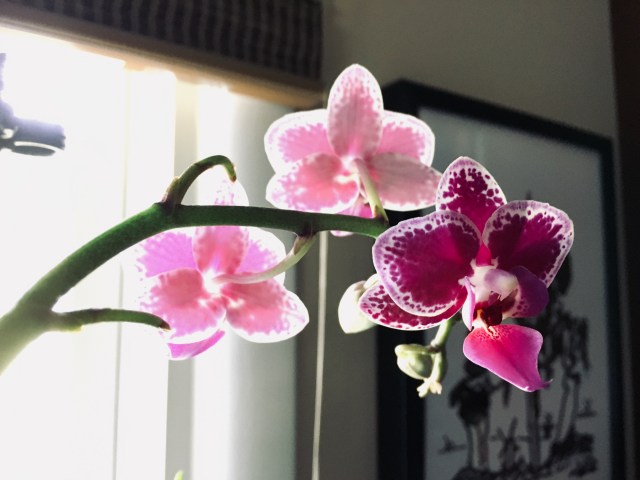
Yes, that’s a fifth flower. I am amazed. And, yes, if those two buds open, at least one, perhaps two more mediocre orchid photos will follow.

The count now stands at 130, with 105 read from my shelves.

The Amateurs (Liz Harmer; 2019. Fiction.)
Review here.

Postal: Deliverance, Vol. 2 (Brian Edward Hill; 2020. Graphic fiction.)
Ascender, Vol. 2: The Dead Sea (Jeff Lemire; 2020. Graphic fiction.)
Hoopla has enabled me to keep up on series that interest me.

The Tao of Pooh (Benjamin Hoff; 1982. Non-fiction.)
This is a somewhat different book now than it was when I first read it. The story of the author’s difficulties with the publisher are chronicled on his website.

The Pearl (John Steinbeck; 1947. Fiction.)
It seems impossible that I have not read this before, but I could not remember anything more than the horrific conclusion.

p. 25
For it is said that humans are never satisfied, that you give them one thing and they want something more. This is said in disparagement, whereas it is one of the greatest talents the species has and one that has made it superior to animals that are satisfied with what they have.

Death in Venice (Thomas Mann; 1912. Trans. Michael Henry Heim; 2004. Fiction.)
Again, how is it possible that I have not read this? The Heim translation is introduced by Michael Cunningham, who writes, in part, “All the writers I respect want to write a book so penetrating and thorough, so compassionate and unrelenting, that it can stand unembarrassed beside the spectacle of life itself. And all writers I respect seem to know (though no one likes to talk about it) that our efforts are doomed from the outset. Life is bigger than literature. We do the best we can. Some of us do better than others.”

How about this for serendipity / synthesis / synchronicity?

p. 84
The cases were kept secret. Within a week, however, there were ten of them, then twenty, thirty, and in different districts to boot. […] The Venetian authorities issued a statement to the effect that health conditions have never been better then took the most essential precautions against the disease. […] But fear of the overall damage that would be done — concern over the recently opened art exhibition in the Public Gardens and the tremendous losses with which the hotels, the shops, the entire, multifaceted tourist trade would be threatened in case of panic and loss of confidence — proved stronger in the city than the love of truth and respect for international covenants: it made the authorities stick stubbornly to their policy of secrecy and denial.

Interesting aside: The word legerdemain is used in the description of one of the pearl dealers in Steinbeck’s short novel. It’s not a common word, so it struck me when I encountered it again in the Heim translation of Mann’s work.

Blooming

EAC09A27-9B2B-4E47-A949-5897C13B70ACA third bloom! How lucky am I?

In other news…

In about two hours, I will attend my fourth Theater of War production. Warm thanks to the reader who brought this fabulous group to my attention. Today they’re doing The Book of Job Project, using the Stephen Mitchell translation. Maybe I’ll “see” you there?

Also, I finished two more books in June and wanted to add them to the count, which, at the year’s midpoint, stands at 124, with 102 read from the shelves.

Circe (Madeline Miller; 2018. Fiction.)
Read with my older daughter as part of our informal summer reading program. Both of us described it as a page-turner and finished it in one day. Related links here and here.

The Godmother (Hannelore Cayre; 2019. Fiction.)
Light and quick with a few witty observations. Perhaps it will work better as a movie?

p.16
People say I’m bad tempered, but I think this is hasty. It’s true I’m easily annoyed, because I find people slow and often uninteresting. For example, when they’re banging on about something I couldn’t give a crap about, my face involuntarily takes on an impatient expression which I find hard to hide, and that upsets them. So, they think I’m unfriendly. It’s the reason I don’t really have any friends, just acquaintances.