

It’s a gentle madness, this book “thing.”
It’s a gentle madness, this book “thing.”

Books on my table.
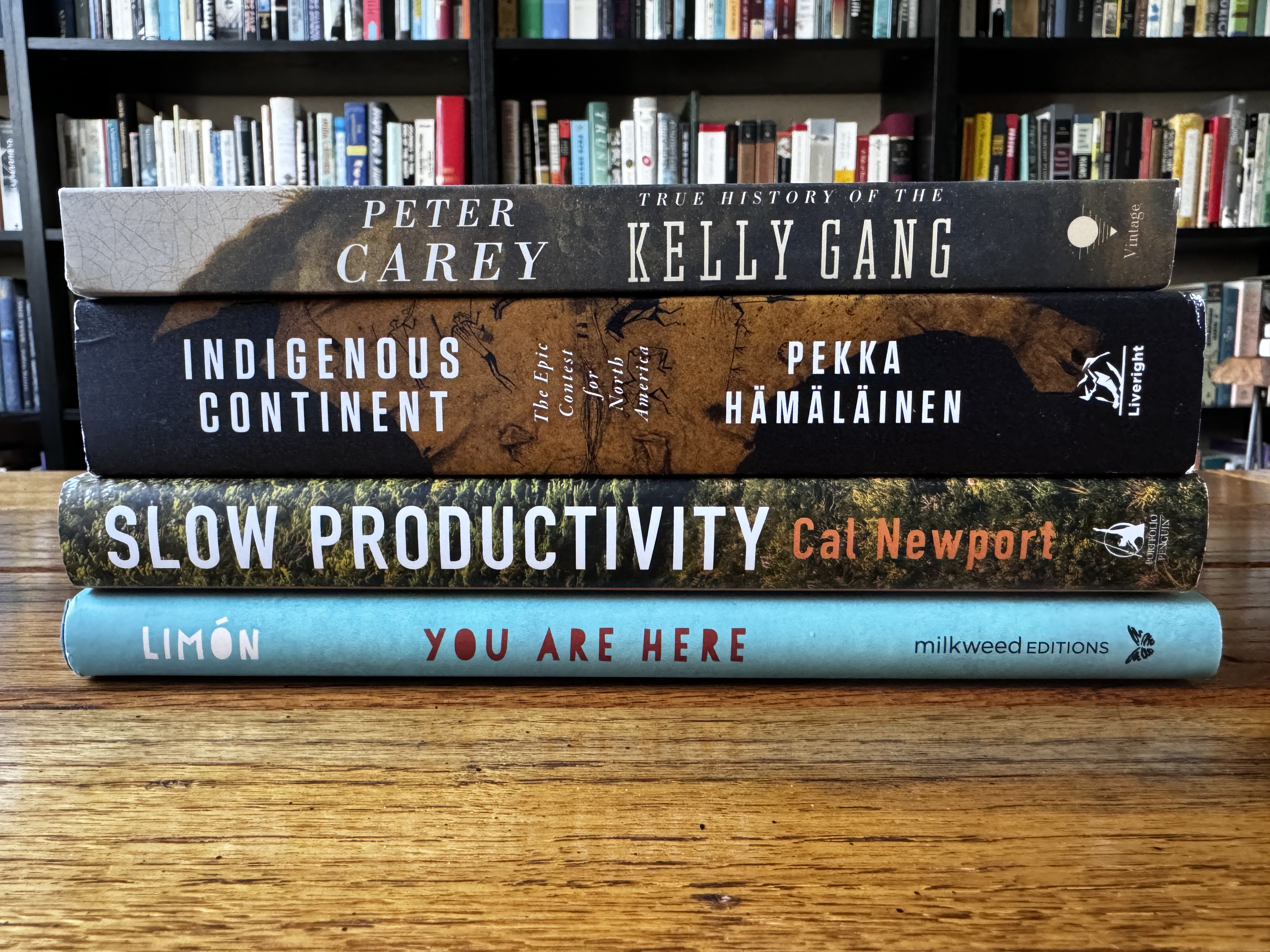
Yesterday I finished Adventures of Huckleberry Finn, which I will likely reread at least once over the six weeks of the course I’m taking through the Newberry Library. During our first meeting, so many participants expressed an interest in Percival Everett’s new novel, James, that we’ve agreed to add it to the syllabus. Today, though, I’m reading another new book, Sociopath: A Memoir by Patric Gagne.

■ Henry VI, Part 2
■ Henry VI, Part 3
■ Julius Caesar
■ The Comedy of Errors
Keeping up with my “Shakespeare a in Year” plans.
■ Poverty, By America (Matthew Desmond; 2023. Non-fiction.)
Evicted: Poverty and Profit in the American City (2016) was more penetrating, but this is an excellent primer.
■ Such a Fun Age (2019)
■ Come and Get It (2024)
Both of these novels by Kiley Reid are compulsively readable.
■ The Guest Cat (Takashi Hiraide; 2001/2014. Fiction)
What a quiet and poignant exploration of loss, grief, and marriage.
■ Girl in the Blue Coat (Monica Hesse; 2016. Fiction.)
Last month, a friend observed, “You have not said a word about the book, which perhaps is saying plenty.” It is.
■ The Song of the Lark (Willa Cather; 1915)
Fred? Why? This among other head-scratchers, including the the depiction of Thea’s professional development through the eyes of the men in her life rather than her experience. Still, my Cather project is delighting me.
■ My Brilliant Friend (Elena Ferrante; 2012)
Speaking of delight, I am reading the Neapolitan novels with a friend. These are the sort of books that define why I love to read — to learn, to discover, yes, but sometimes simply to become absorbed, even a bit lost in another place, other lives.
■ A Streetcar Named Desire (Tennessee Williams; 1951)
Read in anticipation of seeing this excellent production.
■ Beowulf: A New Translation (Maria Dahvana Headley; 2021)
I’m with this reviewer: Read it now.
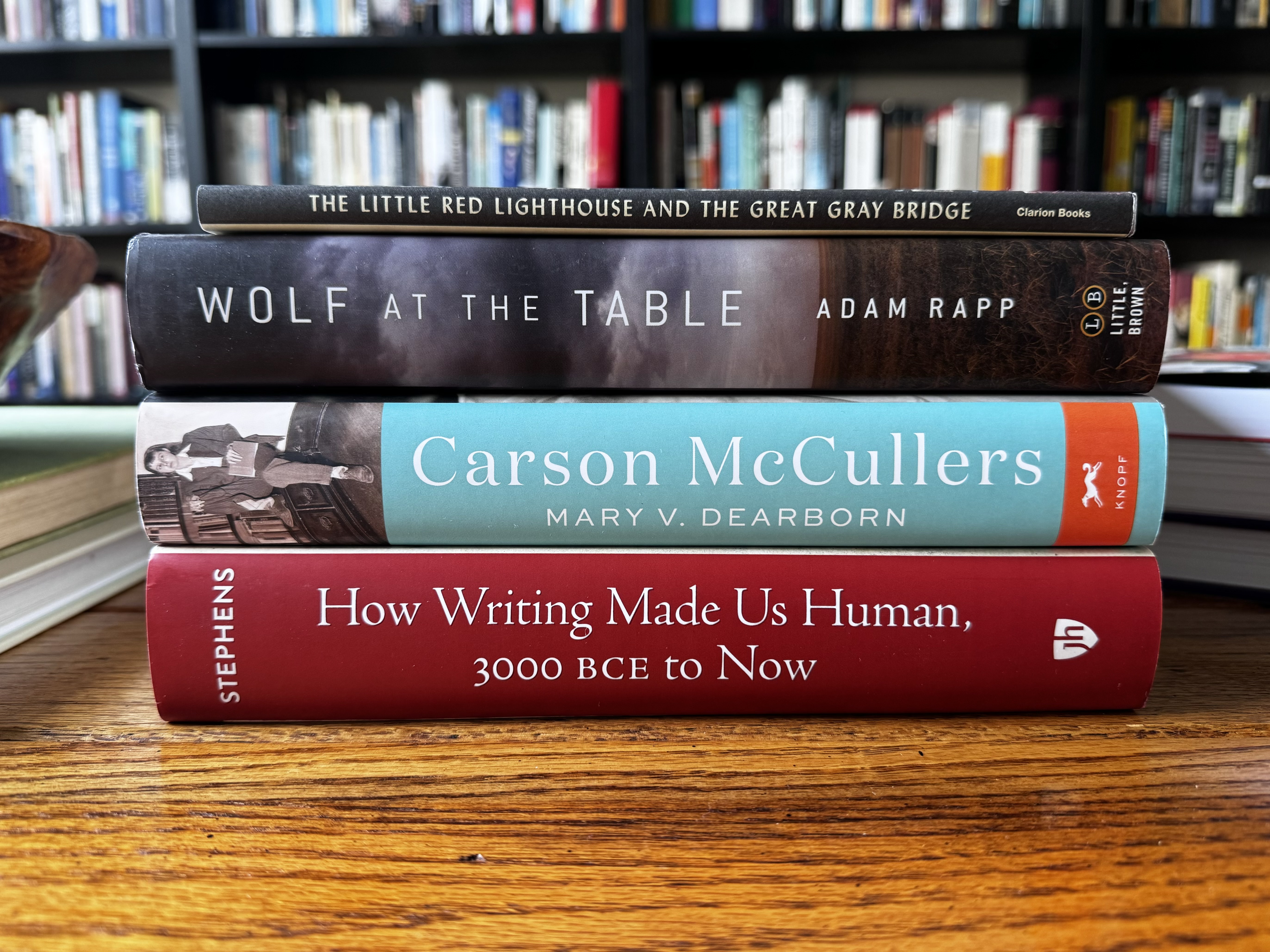
A few more for the stacks.
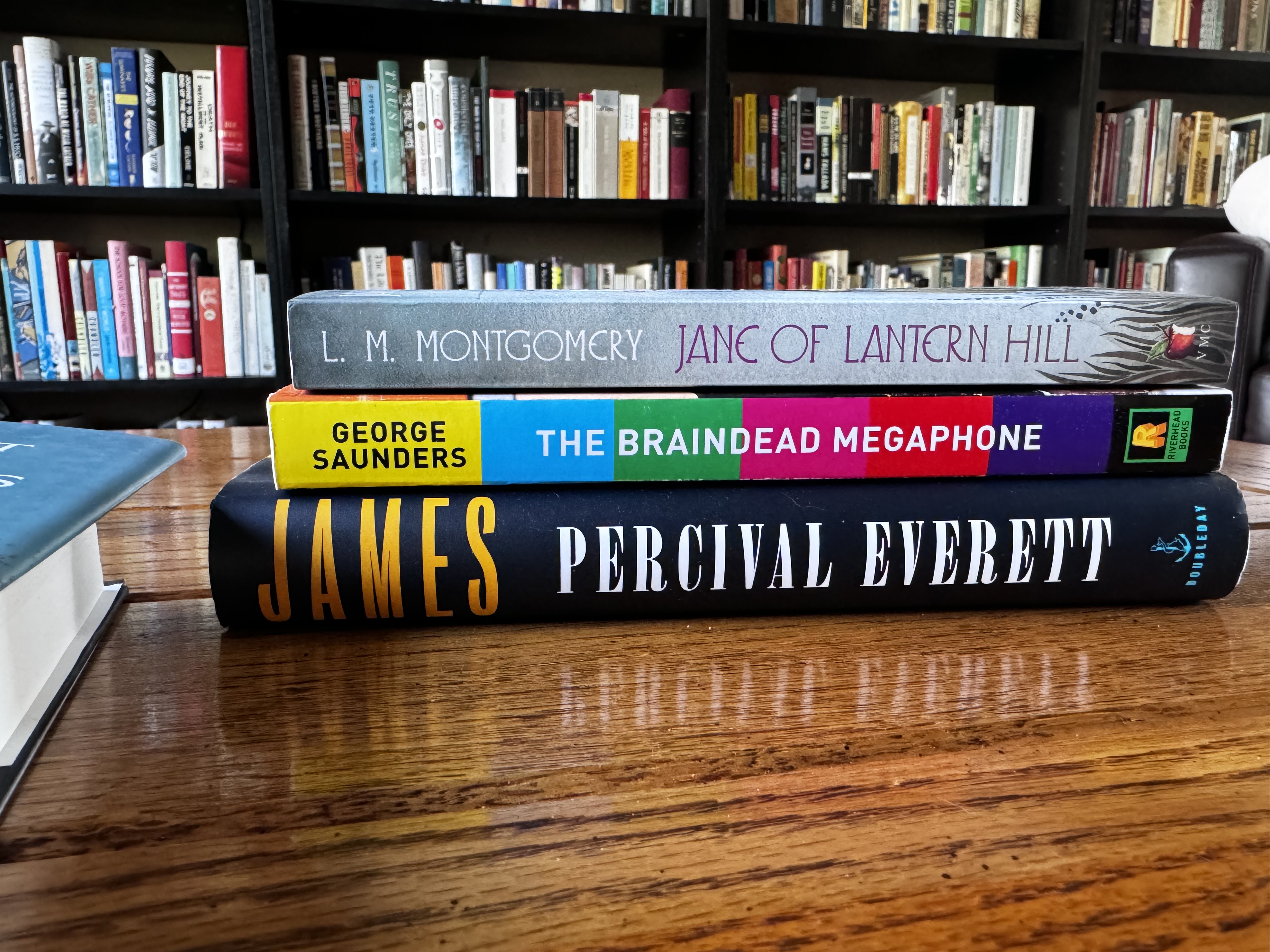
Planning to read James (Percival Everett) to complement a course
on Adventures of Huckleberry Finn.
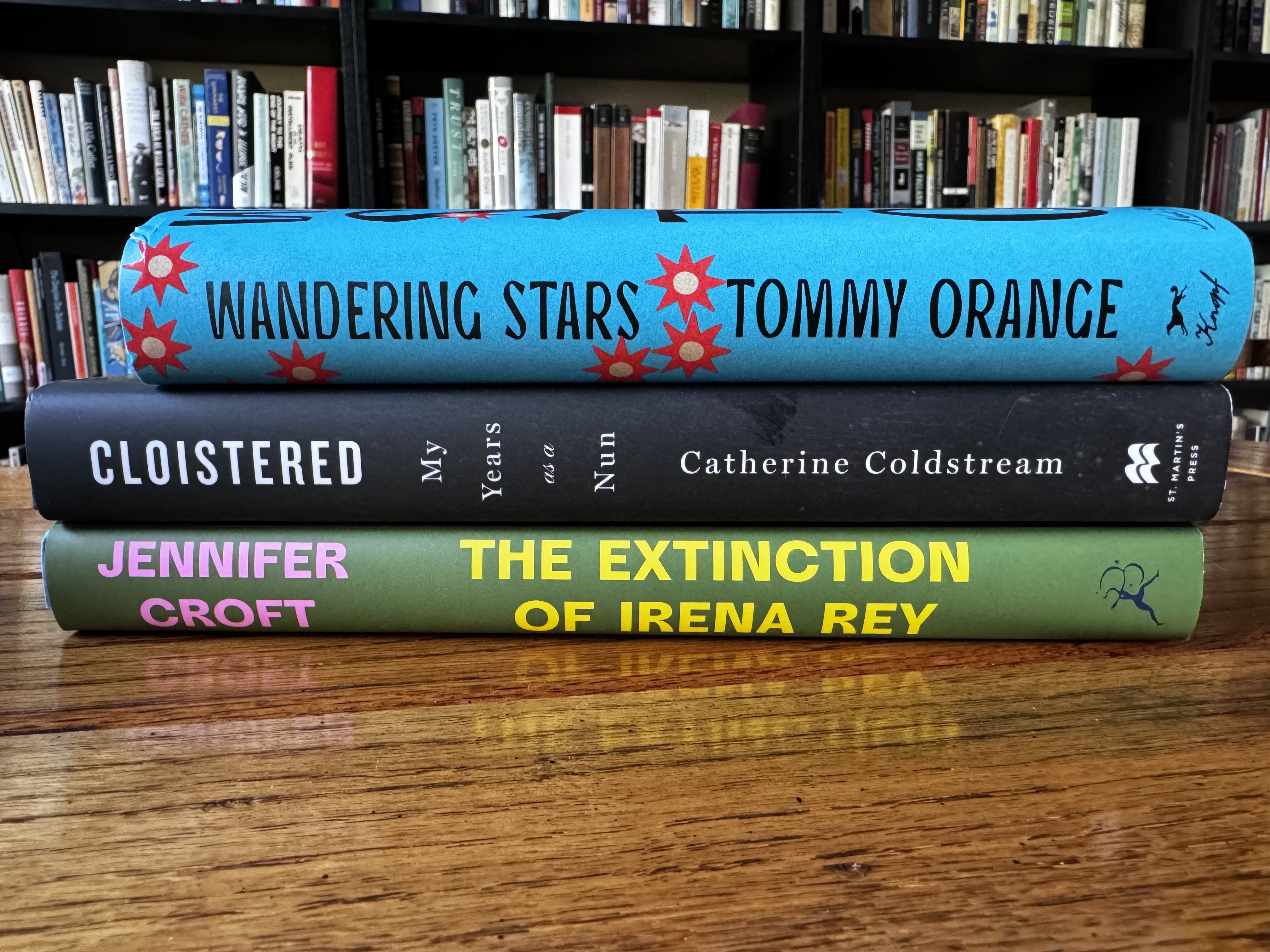
Today I’m reading SPQR (Mary Beard) and In a Flight of Starlings (Giorgio Parisi), though.
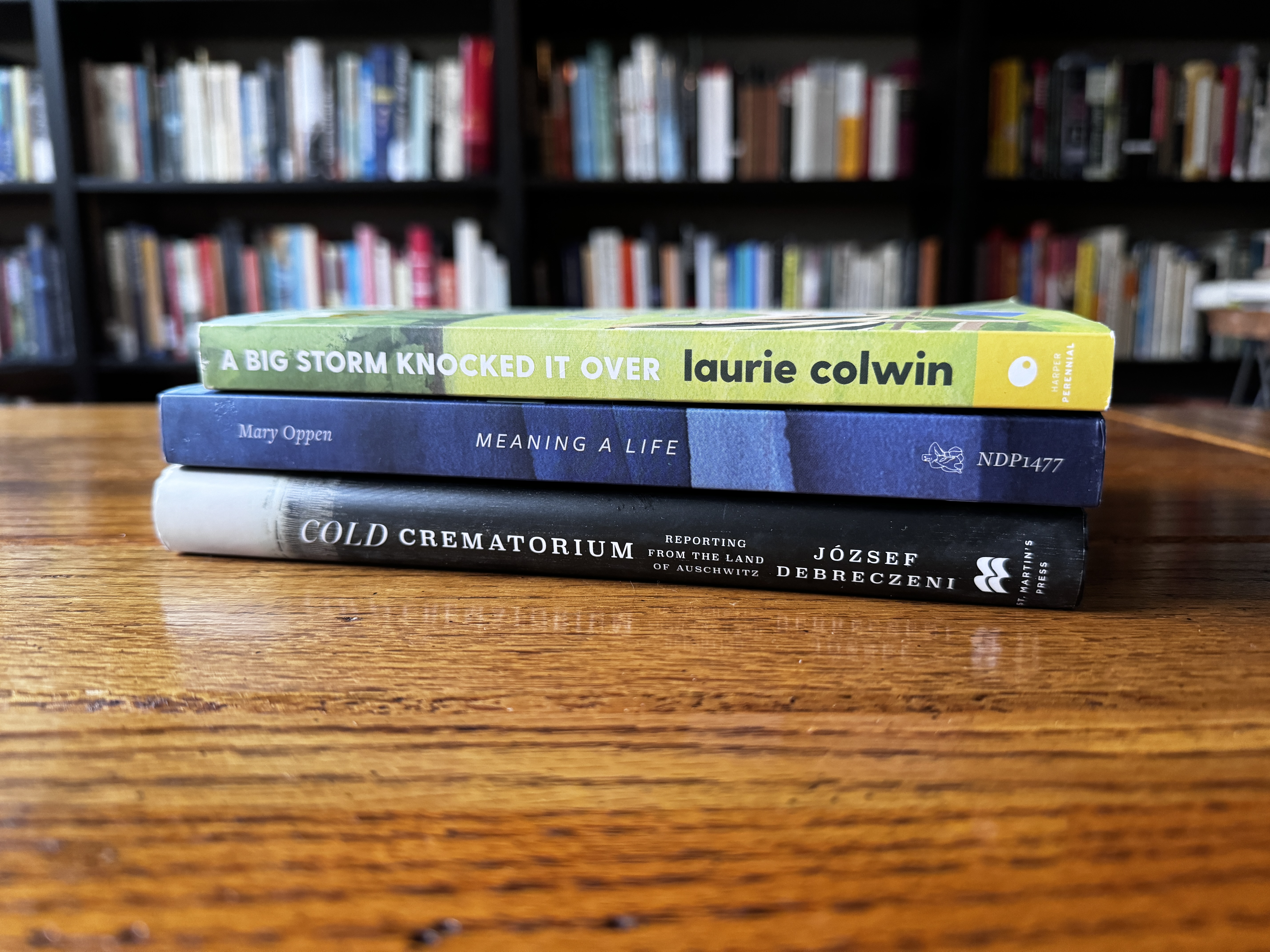
No time for these yet, but I will get to them. Eventually.

■ The Two Gentlemen of Verona (1589)
■ The Taming of the Shrew (1590)
■ Titus Andronicus (1593)
■ Henry VI, Part 1 (1591)
As I mentioned last month, Marjorie Garber’s Shakespeare After All is my guide to the 2024 edition of “Shakespeare in a Year.”
■ Women We Buried, Women We Burned (Rachel Louise Snyder; 2023. Non-fiction.)
Review here.
■ The Casebook of Sherlock Holmes (Sir Arthur Conan Doyle; 1927. Fiction.)
These are regularly referred to as the weakest of the stories, but I was well entertained by them.
■ O Pioneers! (Willa Cather; 1913. Fiction.)
This was the second in my quest to read (in some cases, reread) one of Cather’s twelve novels each month in chronological order.
■ Essays of E.B. White (E.B. White; 1977. Non-fiction.)
Earlier this month, I resurfaced from a multi-month deep dive into White’s work. We concluded with the essays in the last third of this collection, which, apart from “Once More to the Lake” and “Will Strunk,” were much less compelling (dare I say, “weaker”?) than the other selections.
■ The Elements of Style (William Strunk Jr. and E.B. White; 2000. Non-fiction.)
Of course, I reread this classic after finishing White’s essays.
■ Wrong Place, Wrong Time (Gillian McAllister; 2022. Fiction.) RFS
Predictable but entertaining.
■ The Puppets of Spelhorst (Kate DiCamillo; 2023. Fiction.)
Although I am not as big a fan of DiCamillo as the dear friend who gave me this book, I appreciated it, especially the lovely illustrations.
■ The Magic Mountain (Thomas Mann; 1924. Fiction.)
■ Thomas Mann’s The Magic Mountain: A Reader’s Guide (Rodney Symington; 2011. Non-fiction.)
The final meeting on this is next week. Among other things, my heavily annotated copy bears witness to my attempts to converse with this difficult novel of ideas.
Often I am able to chat with one or both of my daughters while I am out walking. They always inquire how I’m doing, and when the temps soar above seventy or, conversely, when the sidewalks have iced over, I routinely reply, “Today I like having walked much better than walking.” About The Magic Mountain, I will share that I like having read it much better than reading it.


 Nerdishly