
Unfinished business.
With only two evenings remaining in the year, I’m not sure if I will finish any of the seven books I’m currently reading, so I am calling it at 138 books read this year. (As always, I have included only cover-to-covers.) Here is
my complete list, and here are a few numbers:
— 51 novels (not including graphic works)
— 30 non-fiction works (32, including graphic works)
— 13 plays
— 1 poetry title
— 43 graphic works (2 of which were non-fiction titles)
Expanding on my mid-year review, then, here are the standouts:
Even better on rereading:
■ Never Let Me Go (Kazuo Ishiguro; 2005. Fiction.)
■ Childhood’s End (Arthur C. Clarke; 1953. Fiction.)
■ Daytripper (Fábio Moon and Gabriel Bá; 2011. Graphic fiction.)
■ Mrs. Caliban (Rachel Ingalls; 1983. Fiction.)
Forgot how wonderful this writer is:
■ Memento Mori (Muriel Spark; 1959. Fiction.)
For those who loved The Elementals (Michael McDowell; 1981):
■ The Reapers Are the Angels (Alden Bell; 2010. Fiction.)
Fabulous story for a long car trip:
■ American Kingpin (Nick Bilton; 2017. Non-fiction.)
Honorable mention:
■ The Idealist: Aaron Swartz and the Rise of Free Culture on the Internet (Justin Peters; 2016. Non-fiction.)
The most engrossing books I read this year (not including rereads):
■ Behold the Dreamers (Imbolo Mbue; 2016. Fiction.)
■ An American Marriage (Tayari Jones; 2018. Fiction.)
■ The Third Hotel (Laura van den Berg; 2018. Fiction.)
■ Bad Blood: Secrets and Lies in a Silicon Valley Startup (John Carreyrou; 2018. Non-fiction.)
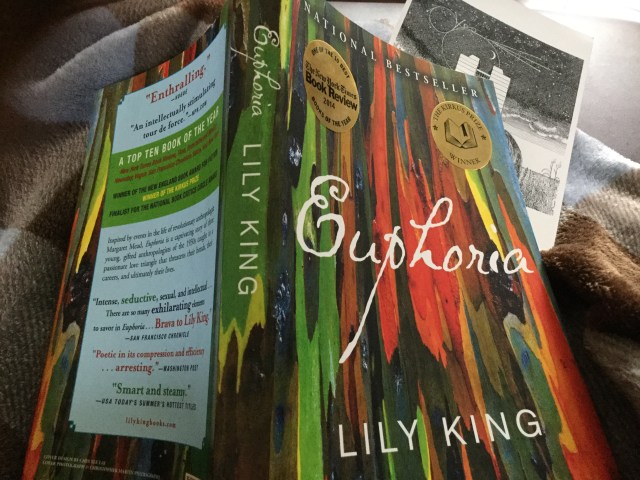
■ Euphoria (Lily King; 2014. Fiction.)
Honorable mention:
■ Killers of the Flower Moon (Dan Grann; 2017. Non-fiction.)
■ An Abbreviated Life (Ariel Leve; 2016. Non-fiction.)
■ After the Eclipse (Sarah Perry; 2017. Non-fiction.)
■ The Hole (Hye-young Pyun; 2017. Fiction.)
■ Bel Canto (Ann Patchett; 2001. Fiction.)
■ Things We Lost in the Fire (Mariana Enriquez; 2017. Fiction.)
Cannot stop talking about the ideas in these books:
■ Janesville: An American Story (Amy Goldstein; 2016. Non-fiction.)
■ Squeezed: Why Our Families Can’t Afford America (Alissa Quart; 2018. Non-fiction.)
■ Nomadland: Surviving America in the Twenty-First Century (Jessica Bruder; 2017. Non-fiction.)
■ Heartland: A Memoir of Working Hard and Being Broke in the Richest Country on Earth (Sarah Smarsh; 2018. Non-fiction.)
Even better than War and Peace:
■ Kristin Lavransdatter: The Wreath (Sigrid Undset; 1920. (Trans. Tiina Nunnally; 1997.) Fiction.)
■ Kristin Lavransdatter: The Wife (Sigrid Undset; 1921. (Trans. Tiina Nunnally; 1999.) Fiction.)
■ Kristin Lavransdatter: The Cross (Sigrid Undset; 1922. (Trans. Tiina Nunnally; 2000.) Fiction.)
Best graphic work I read this year:
■ The Three Escapes of Hannah Arendt (Ken Krimstein; 2018. Graphic non-fiction.)
Despite all of that great reading, I didn’t make much progress on my 2018 reading resolutions:
1. Read from the shelves.
Of the 138 books I read cover-to-cover, 55 were published this year. So, yeah, “Read from the shelves” was a bust in 2018, but as I wrote early last month, I have a plan: In 2019, I will read one hundred books from my shelves (i.e., the books must have been in my collection before the end of 2018), including at least twenty-four non-fiction titles and at least one book from each of the following “special collections”: Shakespeare, poetry, NYRB, Vonnegut, Joyce Carol Oates, philosophy, art, and children’s / YA. Since I’ve been finishing between 120 and 150 books annually for the last few years, this goal leaves me a little room for impulsivity.
2. Complete a close reading of Moby Dick.
Next year marks the two hundredth anniversary of Herman Melville’s birth. I’m reading serendipity/synchronicity/synthesis into missing this goal because obviously it will be more fun to complete it in 2019, right? I’ve read Moby Dick (conventionally, words on a page) once and listened to the spectacular audiobook (William Hootkins; 2004) dozens of times, but I would still like to reread it (closely) because it bears returning to. If you’re up for it, please join me!
3. Reread at least one Vonnegut novel.
Sirens of Titan is part of my unfinished business. (By the way, my (tentative) 2019 selection is Player Piano.)
4. Finish reading several books abandoned in 2017 (or *gulp* earlier).
Ayup. I am a shamelessly promiscuous reader, good books don’t deserve such treatment, and I will do better.
5. Read at least thirty non-fiction titles.
Twenty-six has been my goal in the past, so I raised the bar this year. It’s the only resolution I kept. This year, I read 32 non-fiction books, two of which were graphic works.

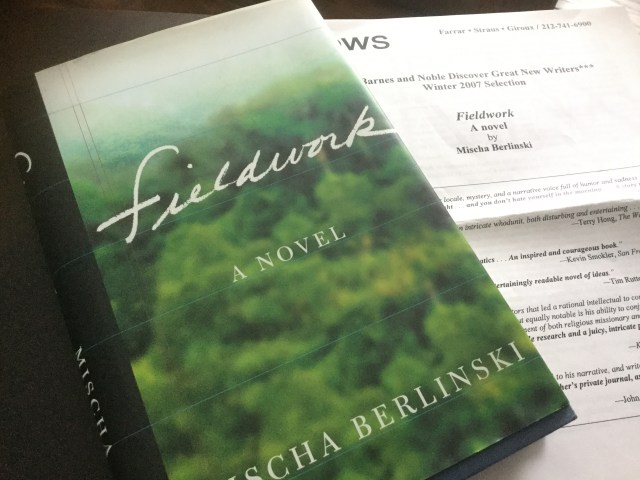 Over the winter break, my younger daughter borrowed my copy of the Halperin translation of Michael Bernanos’ wonderfully creepy and unforgettable The Other Side of the Mountain.* Mischa Berlinski’s Fieldwork caught my eye when I refiled it. What a perfect “Read from the shelves” selection: I received the review copy nearly twelve years ago! The book was good as Stephen King’s EW editorial promised, and it fits neatly onto the mental shelf where I recently placed two other novels about anthropology: Euphoria by Lily King (one of the best books I read last year) and The People in the Trees by Hanya Yanagihara (disturbing content but excellently written).
 We spent yesterday driving to and from and hiking at Starved Rock State Park, but last night, I was able to finish the first book in my “Read from the shelves” challenge — Hanya Yanagihara‘s first novel, The People in the Trees (2013).
 Yes, announcing

 I recognized the symptoms because
 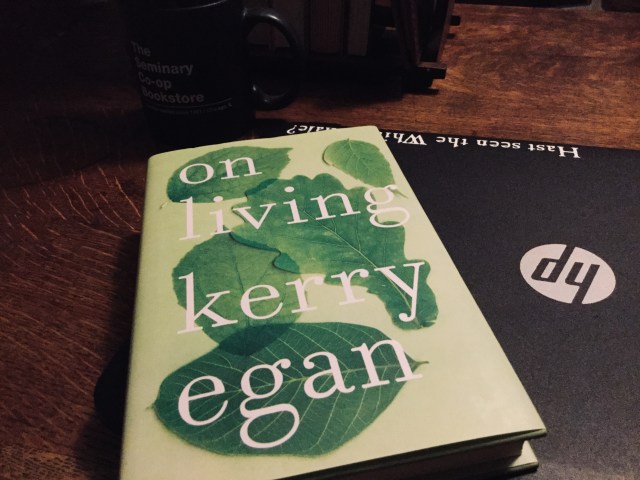 From Kerry Egan’s On Living:
 By 8:40 a.m., I had completed the morning chores, including a load of laundry. Before a walk and music practice, I granted myself a little reading break. Two hours later, I’m wondering where the morning went and whether I still have enough time to walk and practice before work.


