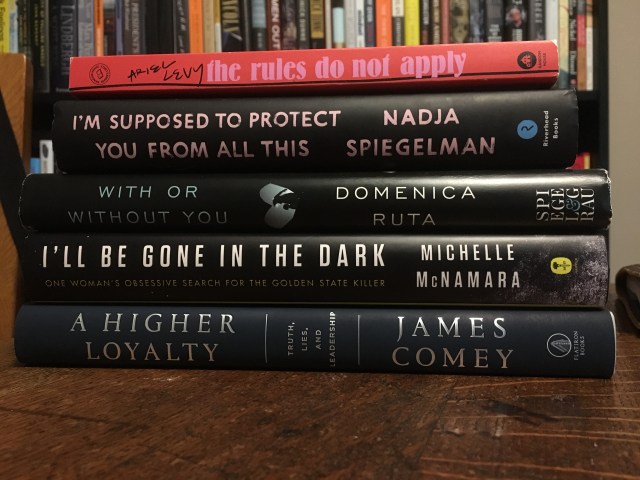
■ With or Without You (Domenica Ruta; 2013. Non-fiction.)
p. 23
Pride like this is both tyrannical and tragic, for the chief function of pride is to usher in the fall.
My parents had sufficient raw materials to achieve a level of fame in a small town, but not much more than that.
p. 119
It made sense to me. There are some things that we have to forget about in order to get through the day.
■ I’m Supposed to Protect You from All This (Nadja Spiegelman; 2016. Non-fiction.)
p. 87
According to neuroscientists, when we stir up a long-term memory, it floats in our consciousness, unstable, for a window of approximately three hours. During this time, the memory is malleable. The present infiltrates the past. We add details to fill in the gaps. Then the brain re-encodes the memory as if it were new, writing over the old one. As it sinks back down into the depths of our minds, we are not even aware of what we have gained or lost, or why.
p. 235
It had happened to me once, the unexpected resurgence of a difficult childhood memory. It had made me feel I was losing my hold on reality. It terrified me, already, that I was composed of a past that was so lonely, that was made up of memories and narratives no one else in my family could agree upon. It was too much that it might be unknowable to myself as well. I wondered often how many other memories lurked within me, dark and alien as cancers.
■ I’ll Be Gone in the Dark (Michelle McNamara; 2018. Non-fiction.)
p. 199
In their reserve and in virtually every other way, detectives differ from show-biz folks. Detectives listen. They’re getting a read. Entertainers get a read only to gauge their influence on a room. Detectives deal in concrete tasks. I once spent an hour listening to an actress analyze a three-line text that hurt her feelings. Eventually I’ll see the cracks in a detective’s veneer, but in the beginning their company is an unexpected relief, like fleeing a moodily lit cast party loud with competitive chatter and joining a meeting of determined Eagle Scouts awaiting their next challenge. I wasn’t a native in the land of the literal-minded, but I enjoyed my time there.
■ A Higher Loyalty (James Comey; 2018. Non-fiction.)
p. 118
I had never met President Obama before and was struck by two things: how much thinner he appeared in person and his ability to focus.
p. 121
On the way out the door, I told Kathy Ruemmler how surprised I was by the interesting discussion, telling her, “I can’t believe someone with such a supple mind actually got elected president.”
p. 123
Though it was a small moment, what struck me about President Obama’s remark is that it displayed a sense of humor, insight, and an ability to connect with an audience, which I would later come to appreciate in a president even more. These are all qualities that are indispensable in good leaders. A sense of humor in particular strikes me as an important indicator – or “tell” – about someone’s ego. Having a balance of confidence and humility is essential to effective leadership. Laughing in a genuine way requires a certain level of confidence, because we all look a little silly laughing: that makes us vulnerable, a state insecure people fear. And laughing is also frequently an appreciation of others, who have said something that is funny. That is, you didn’t say it, and by laughing you acknowledge the other, something else insecure people can’t do.
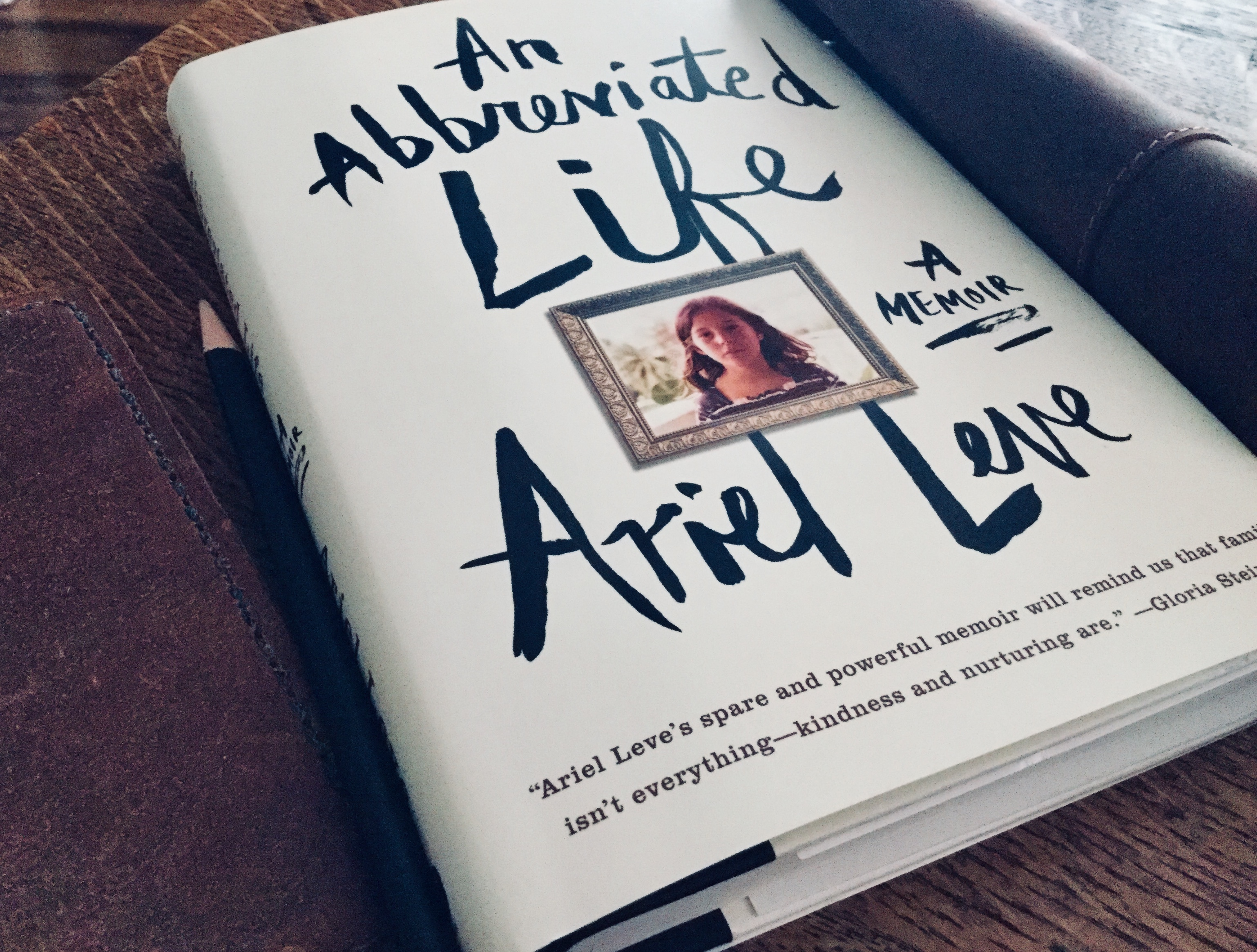
■ The Rules Do Not Apply (Ariel Levy; 2017. Non-fiction.)
p. 4
My lined notebooks were the only place I could say as much as I wanted, whenever I wanted. To this day I feel comforted and relieved of loneliness, no matter how foreign my surroundings, if I have a pad and a pen.
p. 5
(When we expressed subdued versions of our outrage to our elders, their responses invariably included the phrase “paying your dues.” It was not a phrase we cared for.)
p. 154
How did people do this? People who’d lost children who had existed – not for minutes but days, decades? Children who had voices, who had opened their eyes. Children with names. Did these people wake up every morning until the day they died and beg Mother Nature to return what she had given and then taken away?


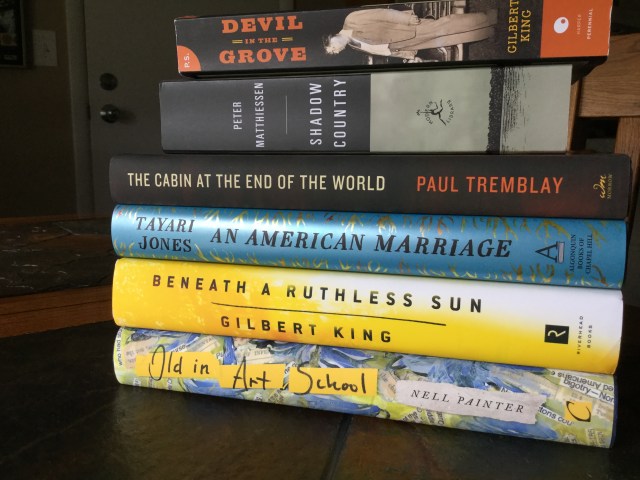 Earlier this week, I weeded my library, which means, of course, that there is room for some new books. What got yanked? Books I have read but will neither reread nor recommend. Books that were compelling at earlier stages in my life. Books I’ve outgrown.

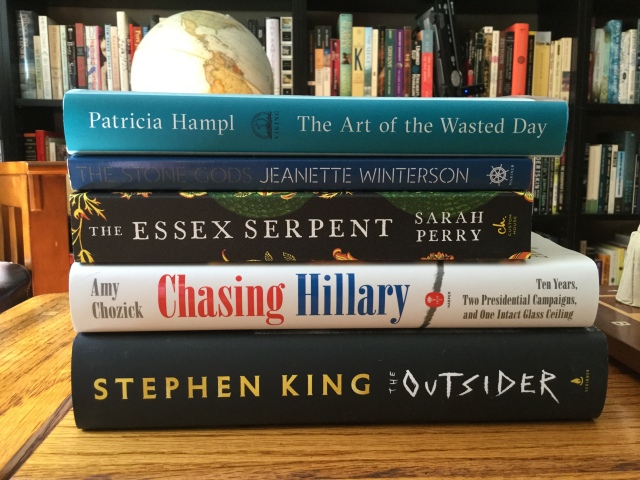
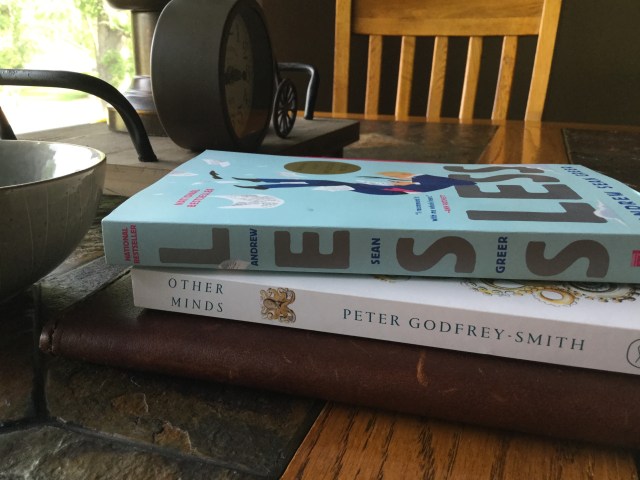


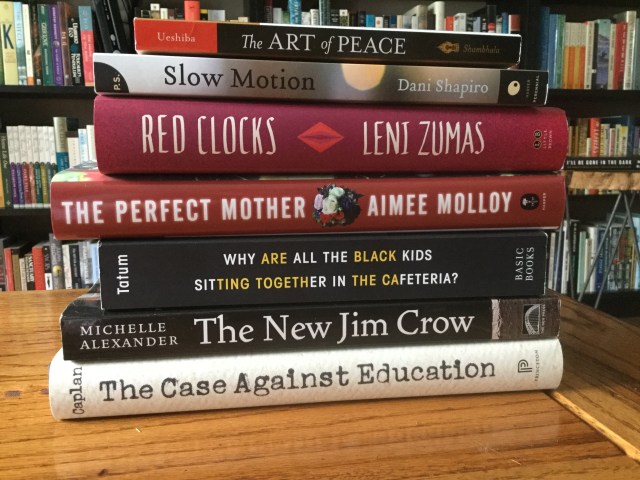 This week provides a bit of a breather between two fairly momentous events: my older daughter’s college graduation and my younger daughter’s departure for an internship at [insert name of U.S. national laboratory here]. Soon, everything will change again, but in this brief, not-quite-yet space, we have been assembling our Girls Rule! summer book club list (more about that soon), shopping for career wear (theirs), swapping work stories, planning the next few weekends of theater and museum adventures, walking, working in the yards, and simply enjoying one another’s company.
 In the week since I last posted, we have experienced temperatures ranging from the high twenties to the mid-seventies. Today, temps may reach eighty. Spring in northern Illinois is usually brief and not always beautiful, but this is one of the briefest and ugliest I’ve seen. Excessively dry, the ground has stingily offered wan blooms and pale grass. As if incredibly perplexed, the trees and bushes have budded with what can only be described as reluctance. It is 10 a.m. on May 1, and the thermometer in the shade already reads 71 degrees. If I am accorded an average life expectancy, I will see two dozen or so more springs. Is it wrong to wish that they were lush, flower-filled seasons colored daily by butter-yellow sunshine and clear, blue skies and fueled nightly by cool, gentle rains?