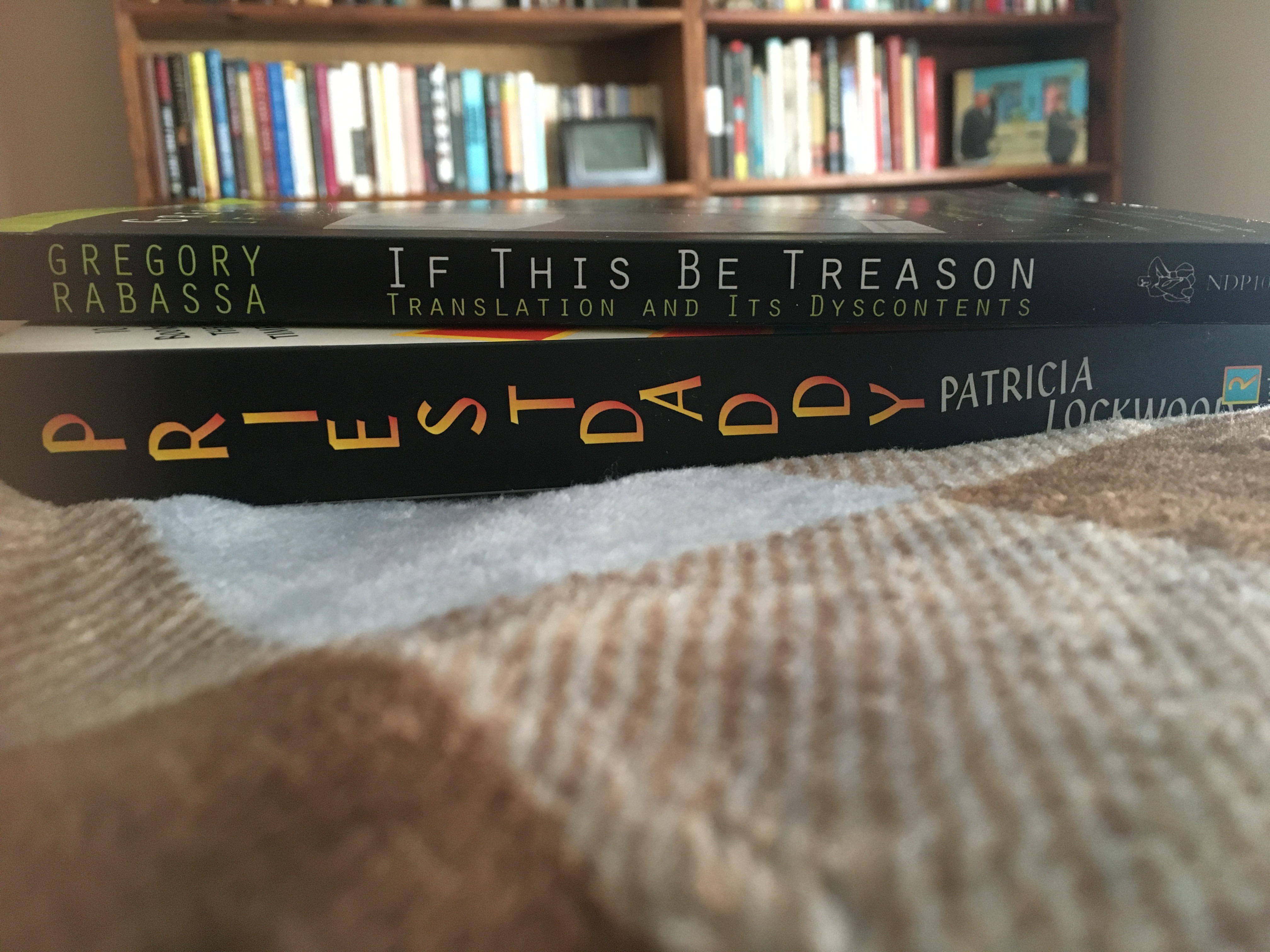
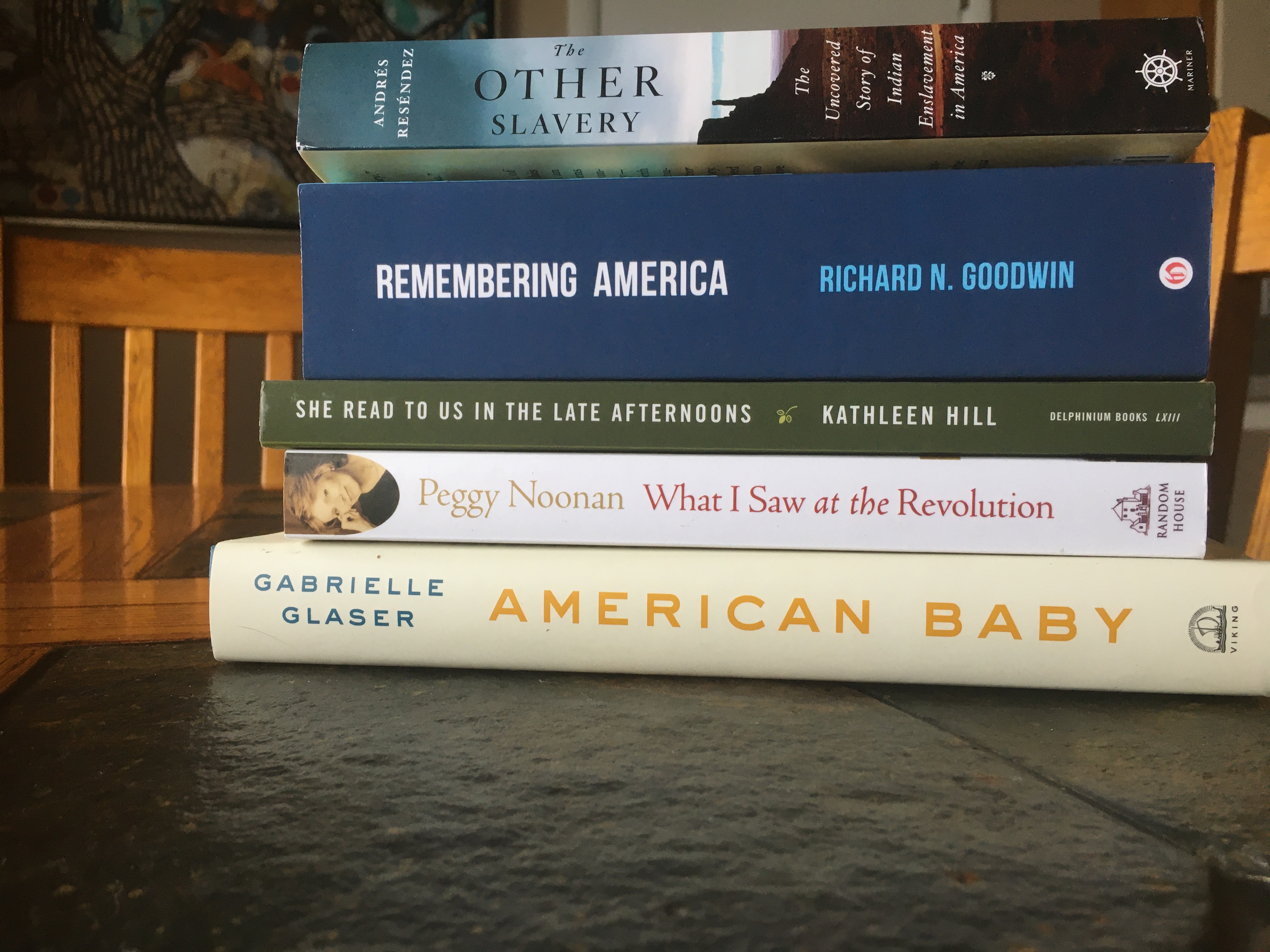
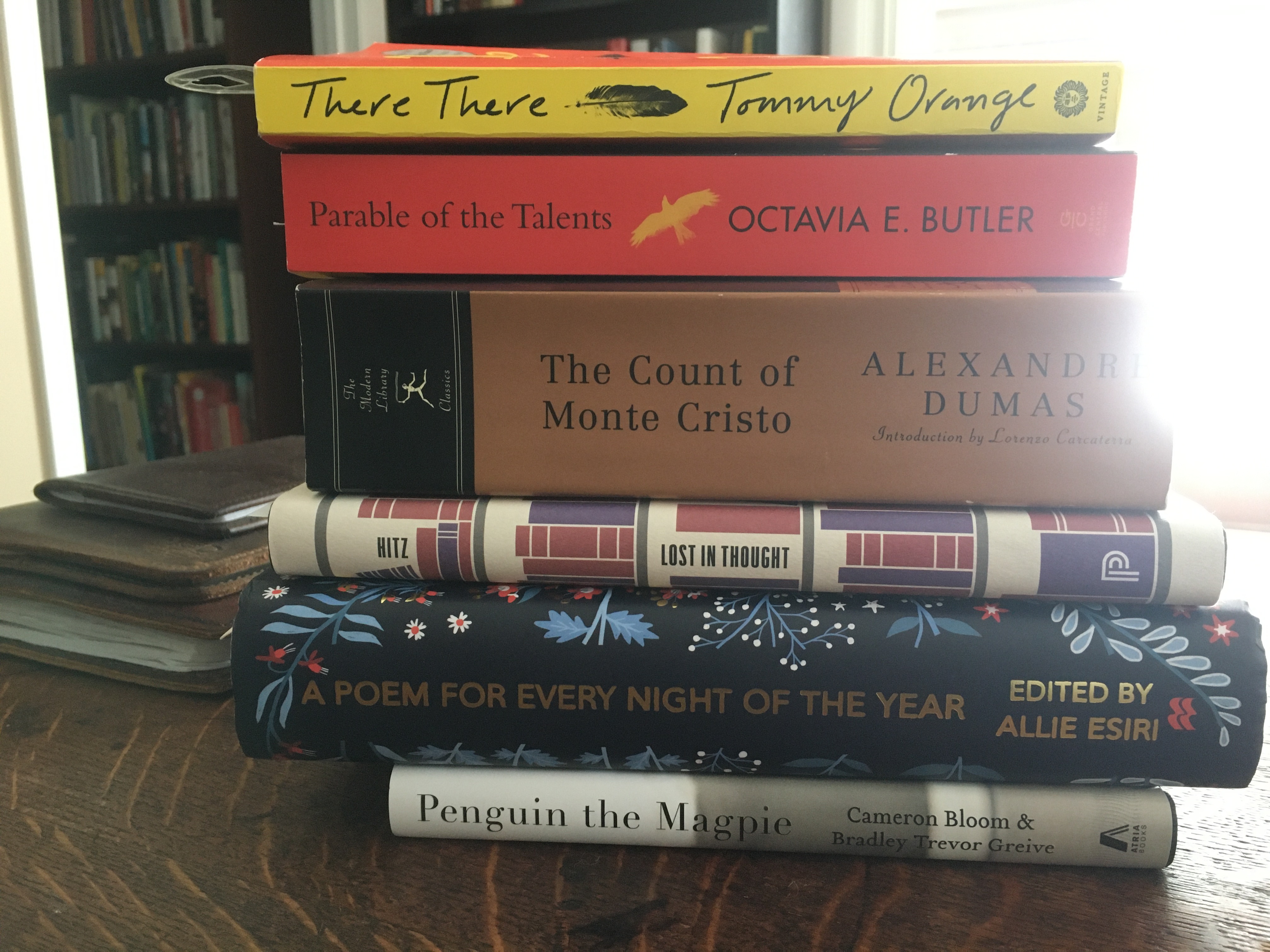
Bookshelf

My Ideal Bookshelf

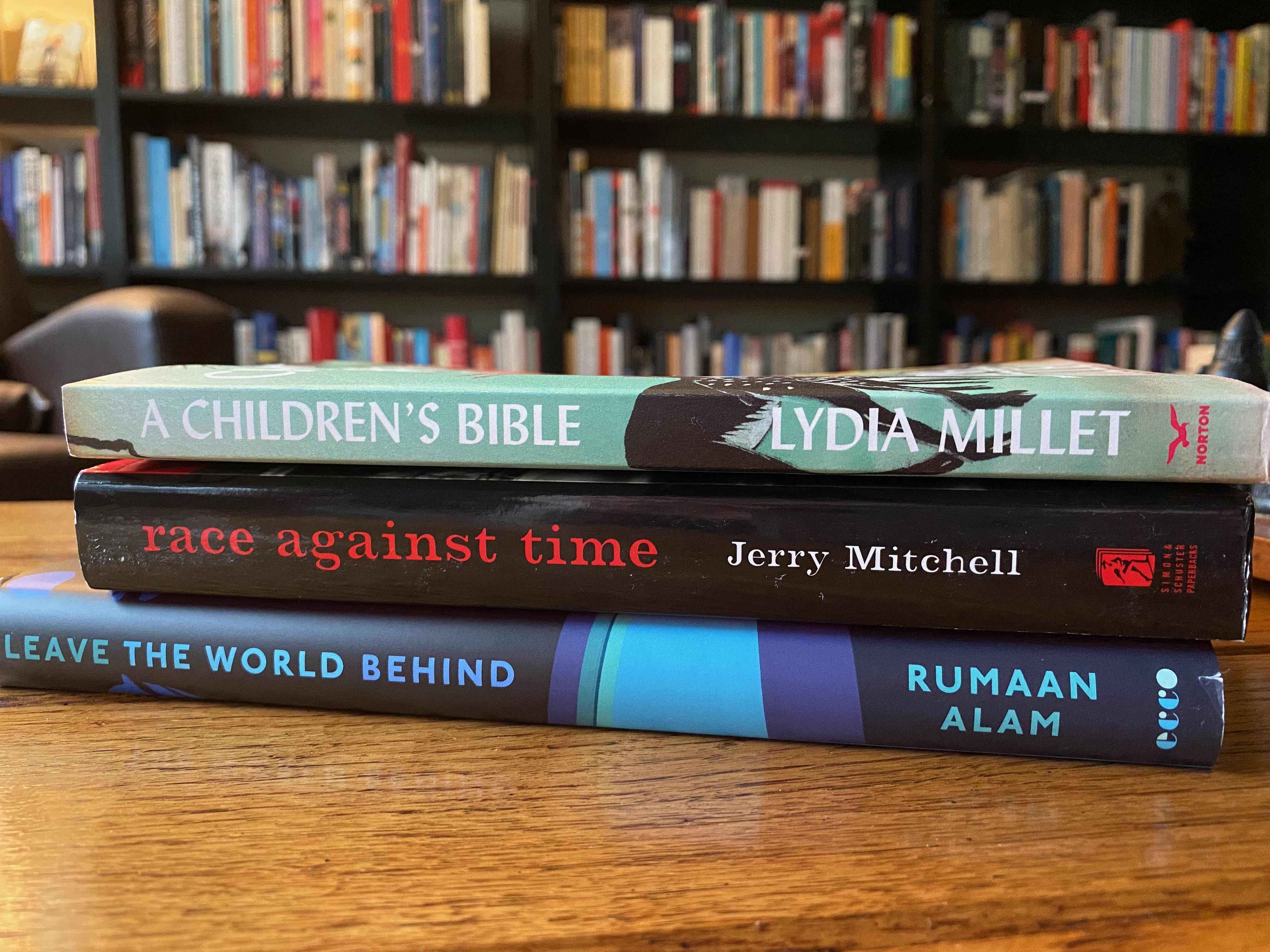
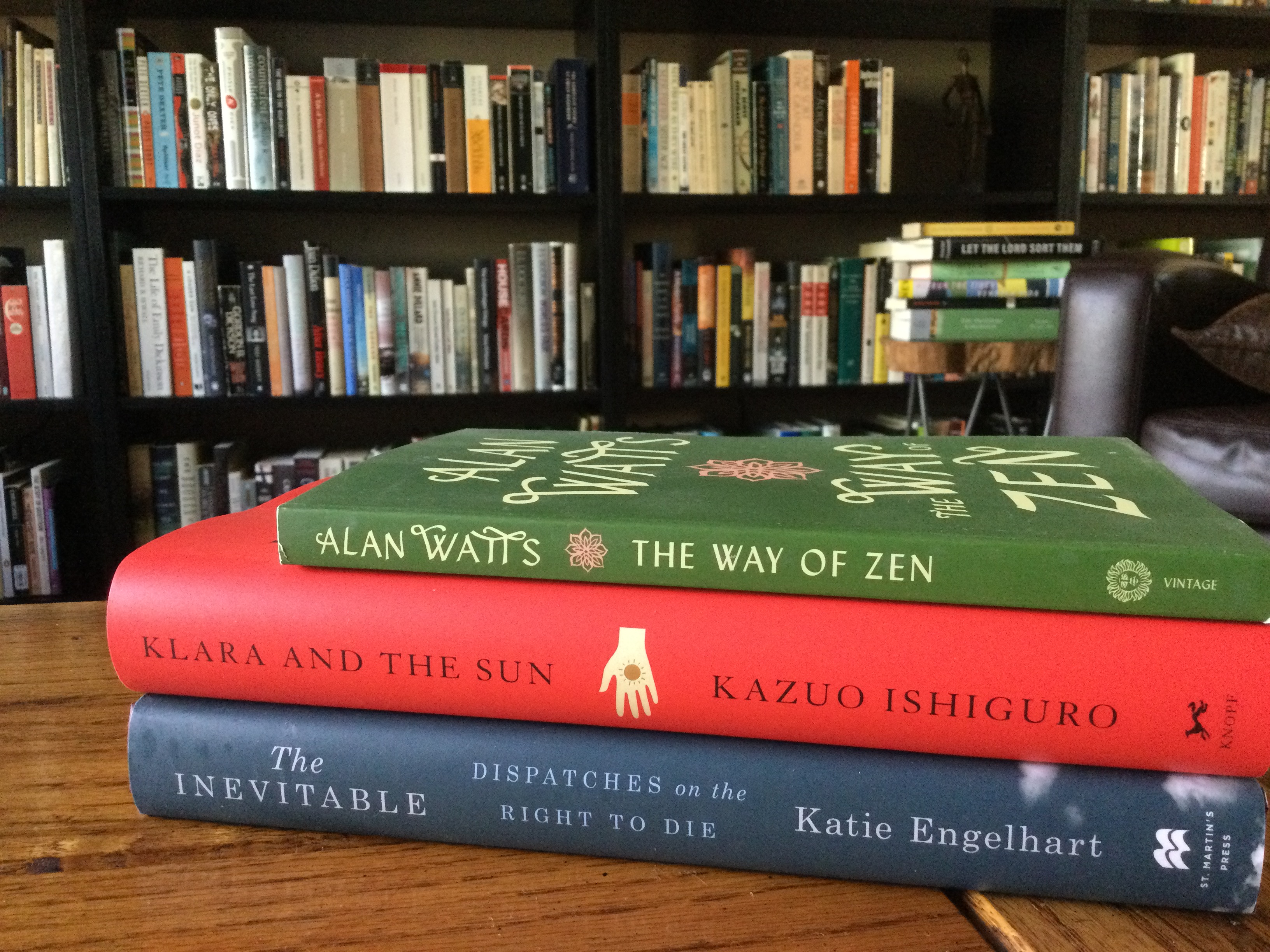
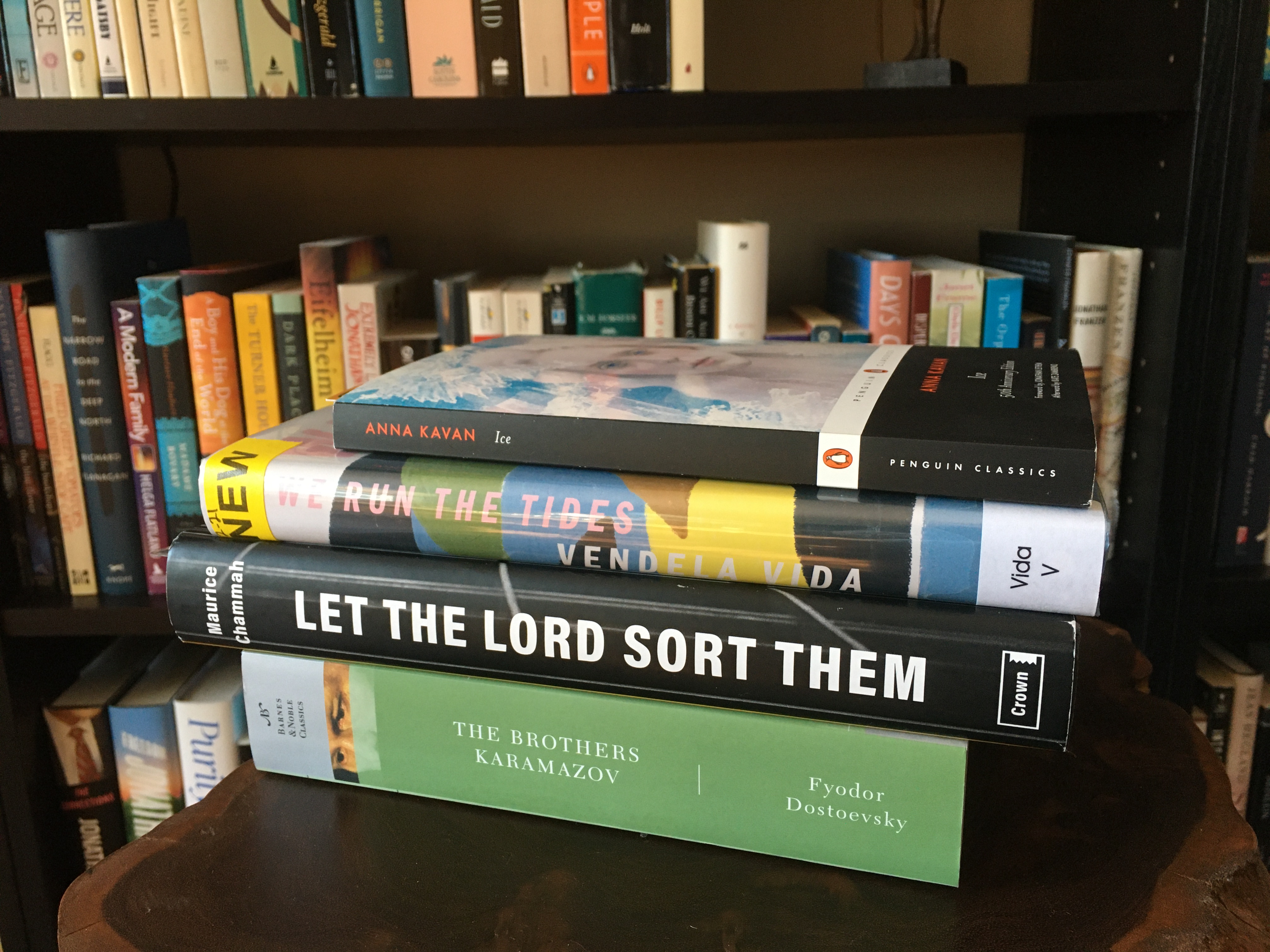
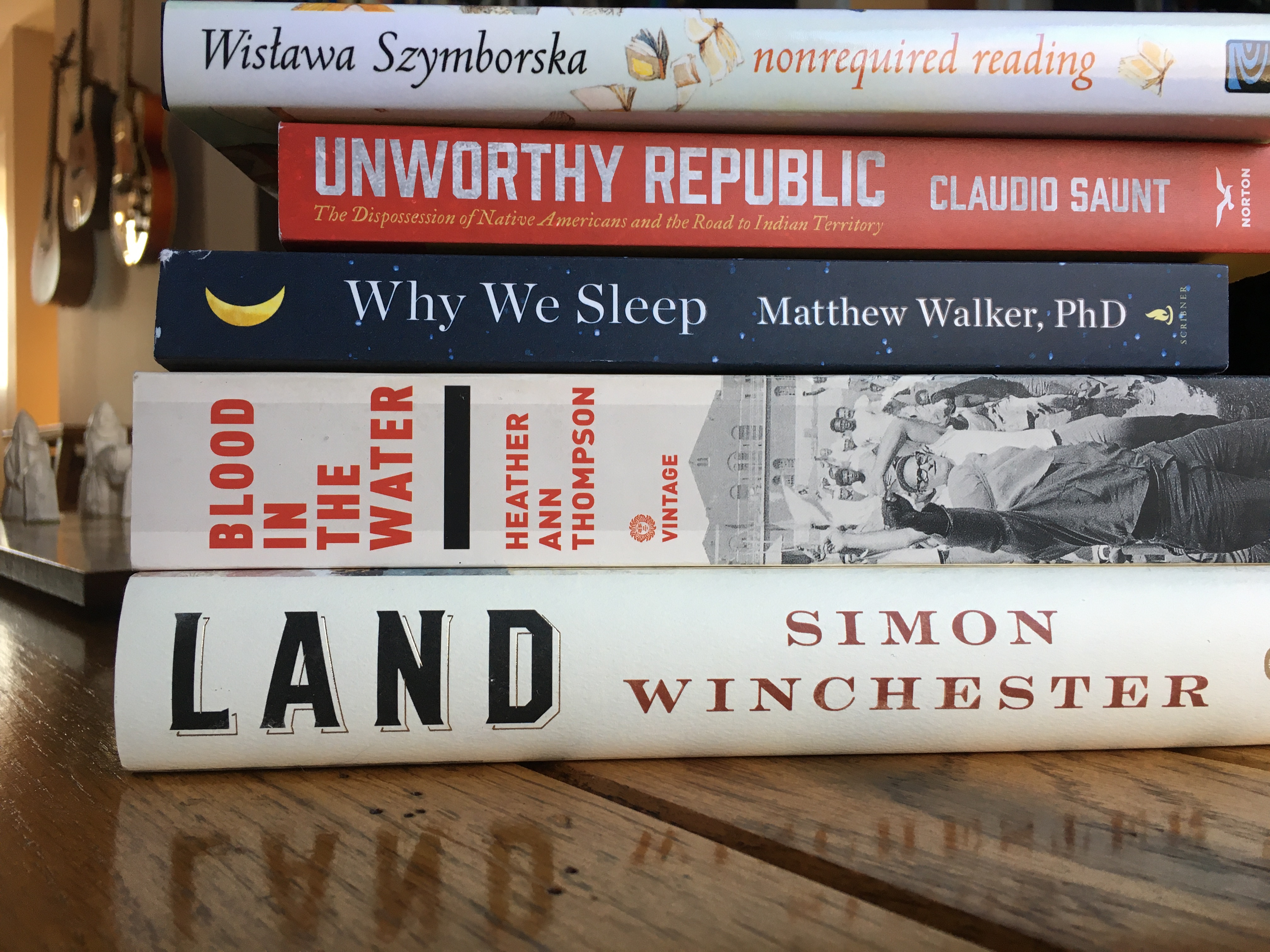
Eight years ago, when My Ideal Bookshelf was first published, I assembled the collection pictured above. Atop the stack on my desk this morning is one of those books, Harriet the Spy. Favorable reviews (e.g., here and here) of the recently published Louise Fitzhugh biography prompted me to revisit Harriet for the first time in many years; I have not been disappointed.

Most of the other books on my desk are marked with dogears and slips of paper for this entry. Since my last annotated list, I’ve read nine, bringing my 2020 total to 221.

Gideon Falls, Vol. 5: Wicked Words (Jeff Lemire; 2020. Graphic fiction.)
This series is barreling toward the conclusion.

Still Alive: A Holocaust Girlhood Remembered (Ruth Klüger; 2001. Non-fiction.)
As I mentioned, Klüger’s is “an unforgiving memoir of growing up Jewish in Nazi-occupied Vienna and escaping death in a concentration camp.” (NYT, October 16, 2020) It was recommended in the lively discussion that occurred in the comments during Court Theatre’s Deep Dive: Leopoldstadt.

p. 69
Remembering is a branch of witchcraft; its tool is incantation. I often say, as if it were a joke — but it’s true — that instead of God I believe in ghosts.

p. 150
Of course, that’s always the case: men go to war because they are drafted. They usually go with enthusiasm, which lasts as long as their side is winning, never mind if their cause is good or bad. A minority know their minds, and the rest mistake the collective mind for their own.

p. 194
I shed these prejudices quickly and quietly, as one takes off a pair of nylons under the table, secretly, so that no one will notice you’ve been wearing them.

p. 199
No one is as dependent as mothers are on the dependency of their children.

Wolf Hall (Hilary Mantel; 2009. Fiction.)
When The Mirror and the Light was released earlier this year, I quietly added “Read the Mantel trilogy” to my 2020 goals. These books are proving to be the perfect companions for long-nighted December days.

p. 499
The fate of peoples is made like this, two men in small rooms. Forget the coronations, the conclaves of cardinals, the pomp and the processions. This is how the world changes….

Memorial: A Version of Homer’s Iliad (Alice Oswald; 2011. Poetry.)
In this startling and powerful reframing of the Iliad, two similes (on facing pages in my edition) begged to be pressed into my commonplace book. The first reminded me of the most exquisite passage in all of literature written in English (see below):

Like snow falling like snow
When the living winds shake the clouds into pieces
Like flutters of silence hurrying down
To put a stop to the earth at her leafwork

The second was so poignant it hurt:

Like when a mother is rushing
And a little girl clings to her clothes
Wants help wants arms
Won’t let her walk
Like staring up at that tower of adulthood
Wanting to be light again
Wanting the whole problem of living to be lifted
And carried on a hip

The Dead (James Joyce; 1914. Fiction.)
In which one finds the most exquisite passage in all of literature written in English:

A few light taps upon the pane made him turn to the window. It had begun to snow again. He watched sleepily the flakes, silver and dark, falling obliquely against the lamplight. The time had come for him to set out on his journey westward. Yes, the newspapers were right: snow was general all over Ireland. It was falling on every part of the dark central plain, on the treeless hills, falling softly upon the Bog of Allen and, farther westward, softly falling into the dark mutinous Shannon waves. It was falling, too, upon every part of the lonely churchyard on the hill where Michael Furey lay buried. It lay thickly drifted on the crooked crosses and headstones, on the spears of the little gate, on the barren thorns. His soul swooned slowly as he heard the snow falling faintly through the universe and faintly falling, like the descent of their last end, upon all the living and the dead.

The Assassination of Brangwain Spurge (M.T. Anderson; 2018. Fiction.)
One of the most delightful books I read this year. Related article here.

In Defense of Elitism: Why I’m Better Than You and You Are Better Than Someone Who Didn’t Buy This Book (Joel Stein; 2019. Non-fiction.)
Yes, Stein’s humor is an acquired taste. Related interview here.

Antigone Rising: The Subversive Power of the Ancient Myth (Helena Morales; 2020. Non-fiction.)
Related article here.

The Theater of War: What Ancient Greek Tragedies Can Teach Us Today (Bryan Doerries; 2015. Non-fiction.)
A wonderful reader recommended Theater of War to me in late spring. Since then, I’ve watched seven readings — most recently, The Book of Job with Bill Murray. Doerries’ book is as riveting as those performances.

p. 13
It is not our job to judge the characters in Greek tragedies — to focus on their “flaws.” Tragedy challenges us to see ourselves in the way its characters stray from the path, and to open our eyes to the bad habits we may have formed or the mistakes we have yet to make. Contrary to what you may have learned in school, tragedies are not designed to fill us with pessimism and dread about the futility of human existence or our relative powerlessness in a world beyond our grasp. They are designed to help us see the impending disaster on the horizon, so that we may correct course and narrowly avoid it. Above all, the flaw in our thinking about tragedy is that we look for meaning where there is none to be found. Tragedies don’t mean anything. They do something.

Reading notes

Since my last annotated list, I’ve read ten books, for a total of 212. I am currently reading Ruth Klüger’s Still Alive, “an unforgiving memoir of growing up Jewish in Nazi-occupied Vienna and escaping death in a concentration camp.” (NYT, October 16, 2020)

Lakewood (Megan Giddings; 2020. Fiction.) LIB
Terrific premise; lackluster prose. Review here.

Disappearing Earth (Julia Phillips; 2019. Fiction.) RFS
This, on the other hand, was gorgeously told. Review here.

Parable of the Sower (Octavia Butler; 1993. Fiction.) RFS
Ordered the sequel after only three chapters. Related article about this prescient novel here.

On Immunity: An Inoculation (Eula Biss; 2014. Non-fiction.) ATY
The following passage (Chicago Tribune; September 1, 2020) prompted me to pick up some of Biss’ work:

To read Eula Biss is to remind yourself that you are relatively illiterate, have never had a clear thought in your life, can’t compose a decent sentence if you tried and should probably just shut up and go into marketing already. Or so I’ve heard. Is this the smartest writer in the Chicago area right now, on this day, in the late summer of 2020? Years ago, before Aleksandar Hemon left Chicago to teach at Princeton University, there may have been an argument. This is a parlor game, after all. But still, who else in the Chicago area, sentence for sentence, thought for thought, writes with more confidence, accessibility and provocation than Eula Biss?

For a number of (perhaps obvious) reasons, I began with On Immunity. She’s remarkable. Review here; interview here.

Theory of Bastards (Audrey Schulman; 2014. Fiction.) RFS
Review here. No question, one of the most memorable books I’ve read this year.

Devolution (Max Brooks; 2020. Fiction.) ATY
Well, it’s no World War Z, but it was a pleasant enough evening of reading. Review here.

New Boy (Tracy Chevalier; 2017. Fiction.) RFS
Part of the Hogarth Shakespeare series, this retelling of Othello is set in an elementary school. While some may think the premise strains credulity , I think it works well, almost too well.

Miracle Creek (Angie Kim; 2019. Fiction.) RFS
This appeared on a number of best-of lists last year. While I thought it was an engaging courtroom drama, I’m not sure it reached the heights its appearance on those lists suggests.

Class Trip (Emmanuel Carrère; 1999. Fiction.) RFS
The last time I was this unsettled by a work of fiction was on rereading Turn of the Screw.

Fen (Caryl Churchill; 1983. Drama.) ATY
Read to prepare for the third “Theatre & Thought” series presented by the Court Theatre and the University of Chicago, Caryl Churchill’s Fen and the Dramaturgical Process.

Old school

Over the weekend, we inventoried the Christmas decorations. As I’ve mentioned before, Christmas is not my favorite. My daughters relish the holidays, but since we adopted Rosie (a.k.a., the “crazy cat”), the ornaments we began accumulating in 1986 and the pretty tree I purchased when we moved to the forever home have remained in the attic. Now that my daughters have a place of their own, it seemed like the right time to pass Christmas along to folks who will give it a proper home.

While we were up in the attic, my husband and I ended up tidying — donating a number of items, discarding a few others, and, as in the case of my old camera kit, bringing some things back into the house proper.

The Minolta X-700, a Christmas gift in 1983, was a regular companion until about 2002, but after I received my first digital camera, well, it didn’t get out much… and then it ended up in the attic. When my interest in photography waned a few years ago, I took fewer and fewer photos, until I eventually began making do with the just the iPhone or iPad. Good enough, I reasoned.

As I unpacked the kit, though, I remembered the reliably wonderful images the Minolta yielded. Perhaps with too large a dose of nostalgia and too little of reality, I fondly recalled waiting for photos to be developed, wondering if I’d accurately captured this expression or that mood. So I ordered some film and some A76 batteries.

Maybe I can make a bit of holiday magic.

How’s the weather?

It’s been two weeks since it last rained. In that time, our weather has swung from snow to sun, from overnight frost to temperatures in the high seventies. Most folks we’ve encountered on our daily walks over the last week have remarked on the beautiful weather. My husband and I love autumn and winter proper — cold nights, short days, and all — but we nodded and waved: Yes, lovely. Weather talk is, after all, simply an acknowledgment that we’ve seen one another, a verbal wave.

Although… when we homeschooled, our family kept logs of the weather and temps, listened to Tom Skilling’s extended radio segment, and regularly reviewed ten-day forecasts. My daughters even took a meteorology course at the local college. Weather colored our days and interested us enough to learn about it, to weave it into our narrative. Even now, we regularly compare predictions and daily high and low temperatures. Weather talk is, of course, a way to bridge the distance, a verbal hug.