
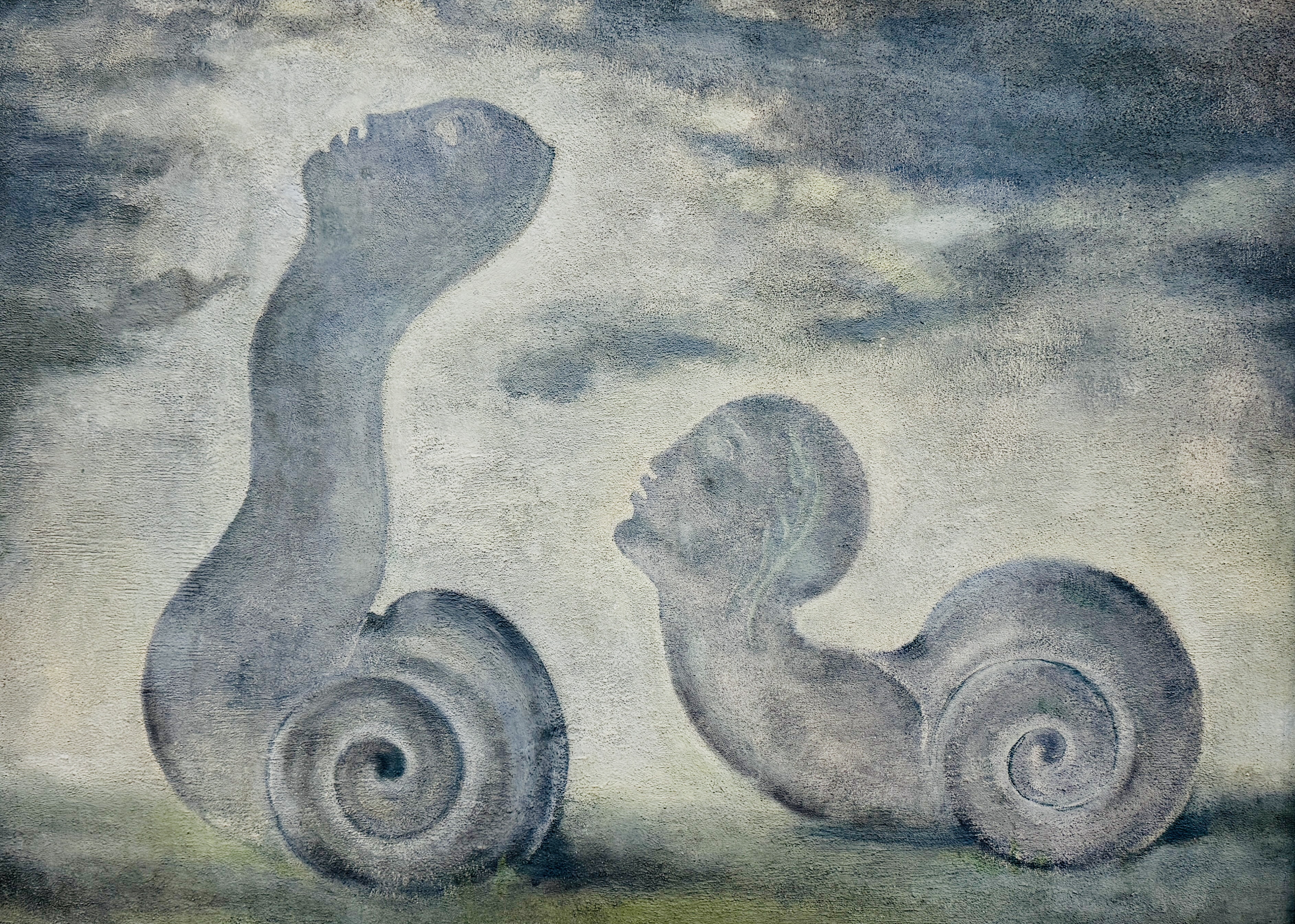
The above is my image of “The Bewitched” (1932) by Mina Loy.
Over the weekend, we headed into Chicago to celebrate my older daughter’s birthday. Our plans were upended when the Museum Campus shut down in anticipation of the cold.
When we relocated to Chicago from Southern California in the early 1990s, my husband and I, both born and raised in the Northeast, were not at all surprised by the number of adults who darted through the city in shorts and flimsy footwear in the most cutting cold and wind, nor by students who walked to class in zippered hoodies (sometimes dragging a coat). It sorted with a type we knew well from childhood — like my father, who could never abide a winter hat, or the president of the Class of 1982, who remained sockless even in six inches of uncleared snow, or the scout leader who would only wear sandals, even in January. So, Chicago, I hardly knew you when I learned that the Shedd, Field, and Adler would not open on Friday — especially in light of the many school closings.
The Art Institute remained open, though, so we spent several hours there. Particular highlights this visit included Bruce Goff: Material Worlds, Raqib Shaw: Paradise Lost, and old favorites, like the Thorne Miniature Rooms.
In the Modern Wing, “The Bewitched” put me in mind of Francesca and Paolo, perhaps because I am rereading the Inferno, this time with Samantha Rose Hill and Elias Crim. Among other pursuits this semester, I am also reading The Canterbury Tales with Marion Turner. In Friday’s meeting, she reminded us that the juxtaposition of the stories and, by extension, storytellers — for example, the Miller’s interruption when the Knight has concluded — is part of Chaucer’s rather subversive genius. Wait. A similar rubric undergirds the Inferno, right? (After all, wasn’t it one of Chaucer’s chief influences?) Doesn’t Dante describe the weaknesses of societies through the stories of characters’ sin and limitations, building toward a sort of political treatise or philosophy?
As always, I love the intersections — the serendipity, synchronicity, and synthesis.
 Nerdishly