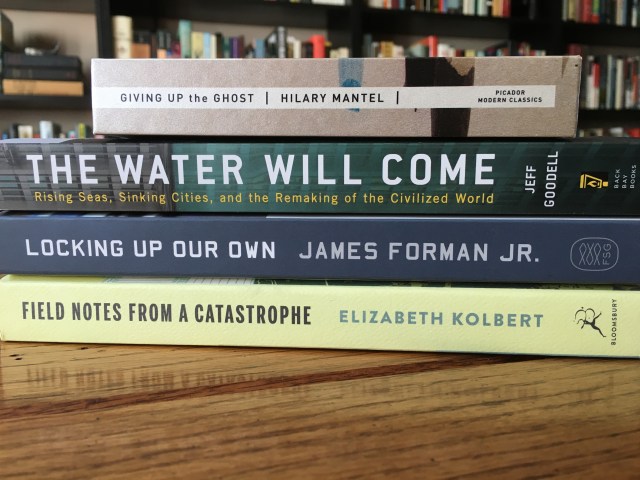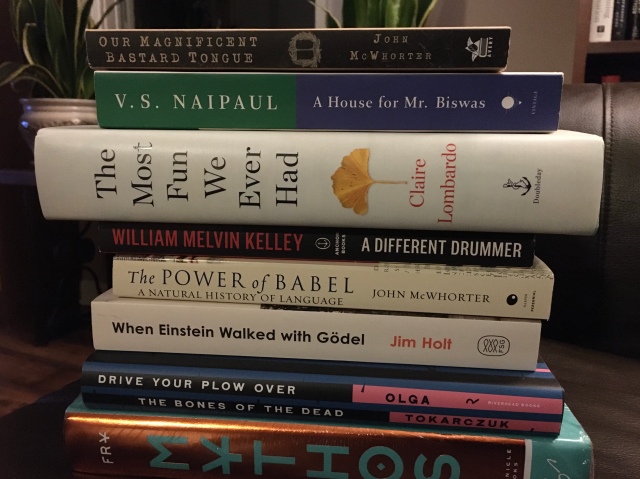
Recently acquired
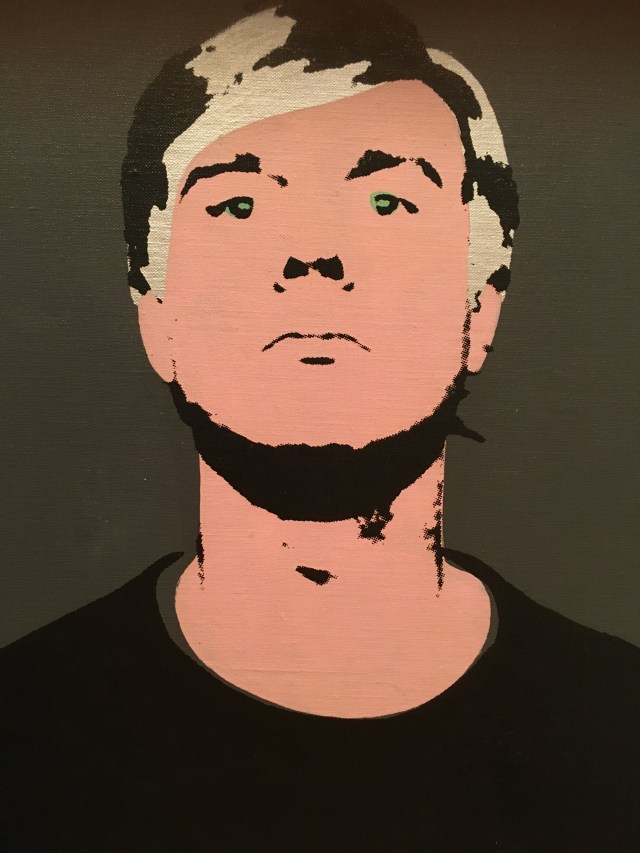

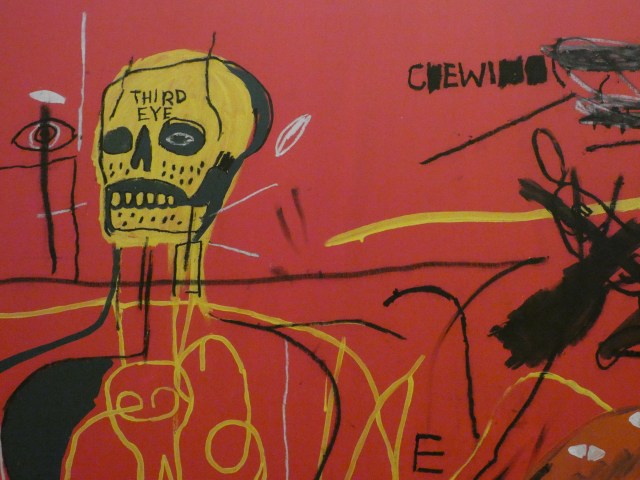 Above are three images I captured at “Andy Warhol — From A to B and Back Again,” the major retrospective at the Art Institute of Chicago.
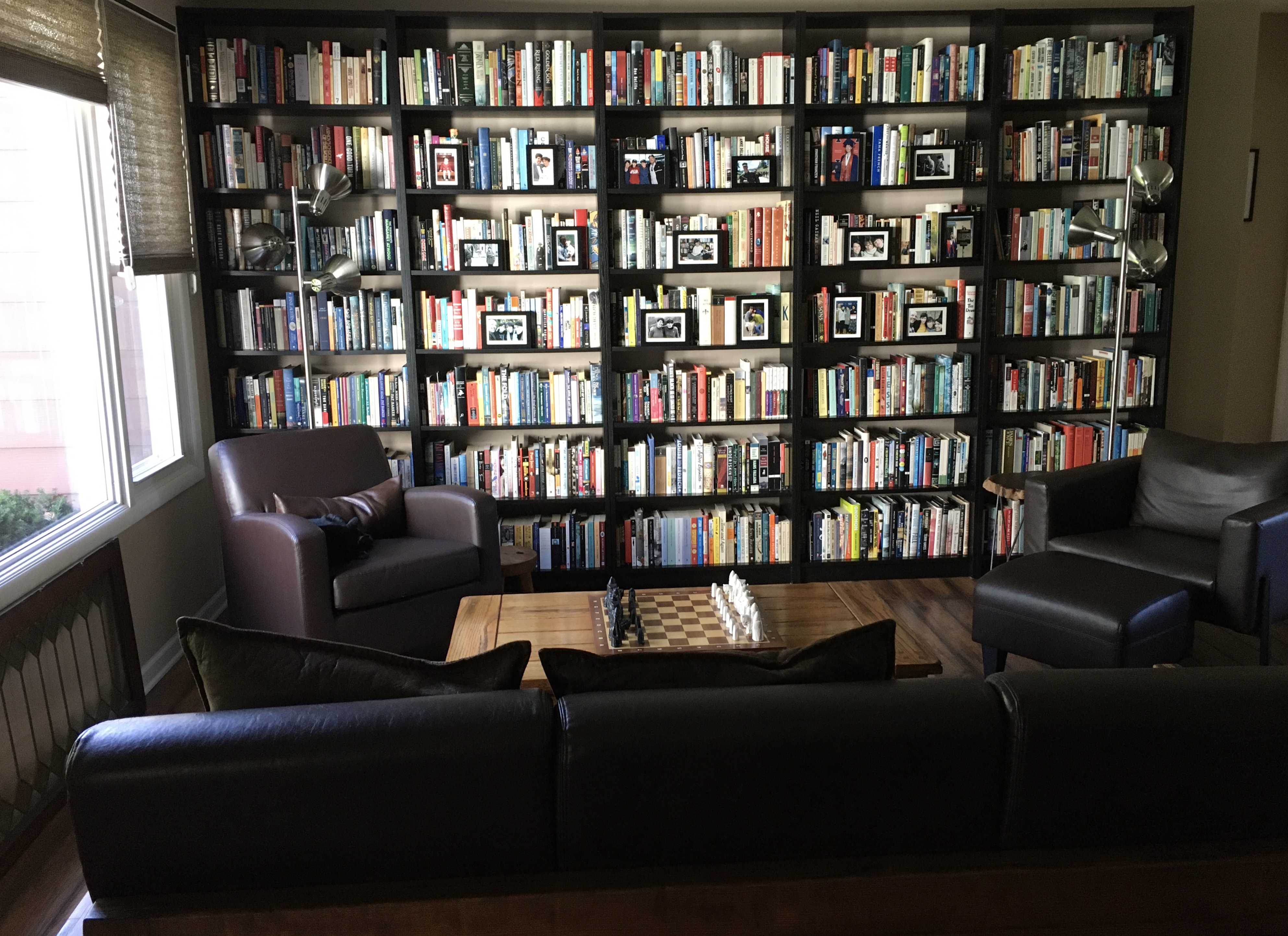
In June, we removed the television from the living room. It’s as if it were never there.
Season 3 of The Handmaid’s Tale
Seasons 1 – 3 of Harlots
Season 4 of Veronica Mars
Seasons 1 – 3 of GLOW
Season 3 of Stranger Things
Seasons 1 – 7 of Orange Is the New Black
Seasons 1 and 2 of Mindhunters
Great stuff, but this is a reading life review, so… about a year ago, I crafted a bold reading challenge for myself: Read one hundred books from my shelves (i.e., books in my collection before the end of 2018), including at least twenty-four non-fiction titles and at least one book from each of the following “special collections”: Shakespeare, poetry, NYRB, Vonnegut, Joyce Carol Oates, philosophy, art, and children’s / YA. I also planned to make short work of 2018’s unfinished business and to closely (re)read Moby Dick.
So, how am I doing so far?
Total number of books read to date: 95
Read from shelves (RFS): 42
Non-fiction RFS: 15
Shakespeare RFS: Hamlet
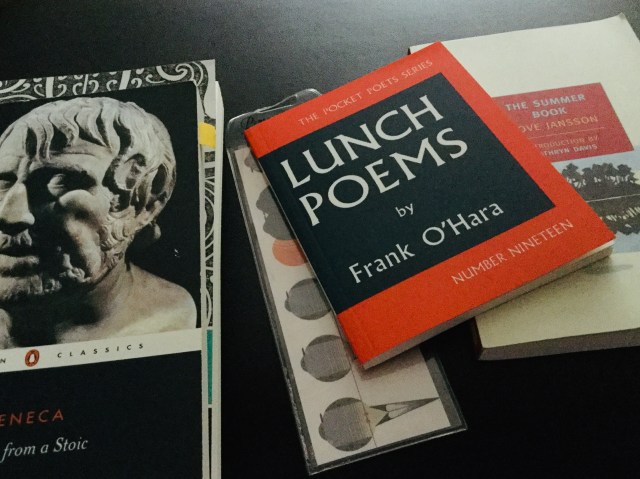
Poetry RFS: Lunch Poems (Frank O’Hara)
NYRB RFS: The Summer Book (Tove Jansson)
Vonnegut RFS: Player Piano
Joyce Carol Oates RFS: The Rise of Life on Earth
Art RFS: But is it art? (Cynthia Freeland)
Children’s / YA RFS: Milkweed (Jerry Spinelli)
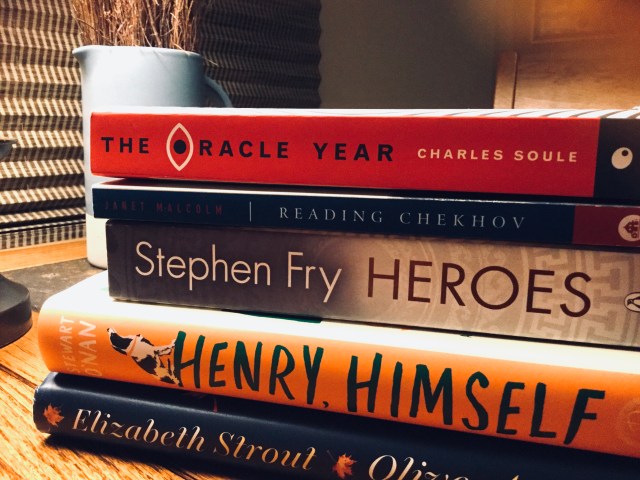
I finished the seven books I carried over from 2018, and the Melville project is slated to begin next weekend. I selected Letters from a Stoic as my philosophy RFS. By completing it and the three other non-fiction titles on my nighstand, I would reach nineteen non-fiction works RFS. It remains to be seen whether I can read another five non-fiction titles from the shelves before the end of the year. (Although it was not a goal specific to this year, it is worth noting that I have already read thirty non-fiction works this year, even before the four on the nightstand, so I am poised to outpace previous years’ goals in that area.)
Clearly, though, I will not meet the goal of one hundred books read from the shelves. The fact that so many of the books I had been reading in recent years were newly published and / or acquired in the year they were read had largely informed my “Read from the shelves” challenge (that and the embarrassment of riches that is my home library). It was never my intent to cease acquiring new books, only to acquire more thoughtfully and to make better use of the library. That said, of the ninety-five books I’ve read so far this year, only twenty-four were published this year. Twenty-three books on my 2019 list were acquired this year, ten of which were published in 2019. Twenty-three of this year’s books were borrowed from the library.


From the poem “On Rachmaninoff’s Birthday”:
You’ll never be mentally sober.
From The Summer House:
p. 80
That’s strange, Grandmother thought. I can’t describe things any more. I can’t find the words, or maybe it’s just that I’m not trying hard enough. It was such a long time ago. No one here was even born. And unless I tell it because I want to, it’s as if it never happened; it gets closed off and then it’s lost. She sat up and said, “Some days I can’t remember very well. But sometime you ought to try and sleep in a tent all night.”
p. 127
“I didn’t know that,” Grandmother said. “No one told me.” She went into the guest room and tried to read. Of course, you moved a potted plant to wherever it would get on best. It would do fine on the veranda for a week. If you were going to be gone longer than that, you had to leave it with someone who could water it. It was a nuisance. Even potted plants got to be a responsibility, like everything else you took care of that couldn’t make decisions for itself.
p. 131
“Oh, you mean he’s dead,” said Grandmother. She started thinking about all the euphemisms for death, all the anxious taboos that had always fascinated her. It was too bad you could never have an intelligent discussion on the subject. People were either too young or too old, or else they didn’t have the time.
And from George Takei’s graphic memoir, They Called Us Enemy:

 According to Goodreads, I began my reread of Ulysses on April 7 and had covered fourteen of the eighteen chapters by mid-May. Even with the accompaniment of James Heffernan’s lectures (four remaining now), however, the project was bit of a slog. My bookmark (by then a ticket from Remy Bumppo’s production of Bloomsday) camped at the boundary of the Circe episode until I had stamina to wander into Nighttown in mid-September. Once I crossed that 150-page expanse, though, completing this project was a matter of a week’s time.
Chapter 5, p. 66
Yes, bread of the angels it’s called. There’s a big idea behind it, kind of kingdom of God is within you feel. First communicants. Hokypoky penny a lump. Then feel all like one family party, same in the theatre, all in the same swim. They do. I’m sure of that. Not so lonely. In our confraternity. Then come out a bit spreeish. Let off steam. Thing is if you really believe in it. Lourdes cure, waters of oblivion, and the Knock apparition, statues bleeding. Old fellow asleep near that confessionbox. Hence those snores. Blind faith. Safe in the arms of kingdom come. Lulls all pain. Wake this time next year.
Chapter 13, p. 309
Curious she an only child, I an only child. So it returns. Think you’re escaping and run into yourself. Longest way around is the shortest way home. And just when he and she. Circus horse walking in a ring. Rip van Winkle we played. Rip: tear in Henny Doyle’s overcoat. Van: breadvan delivering. Winkle: cocks and periwinkles. Then I did Rip van Winkle coming back. She leaned on the sideboard watching. Moorish eyes. Twenty years asleep in Sleepy Hollow. All changed. Forgotten. The young are old. His gun rusty from the dew.
In anticipation of seeing A Doll’s House at Writers Theater next month, I also reread the Rolf Fjelde translation of Henrik Ibsen’s play.
Act I
HELMER: Well, but what of the people I’d borrowed from?
NORA: Them? Who cares about them! They’re strangers!
HELMER: Nora, Nora, how like a woman! No, but seriously, Nora, you know what I think about that. No debts! Never borrow! Something of freedom’s lost — and something of beauty, too — from a home that’s founded on borrowing and debt. We’ve made a brave stand up to now, the two of us; and we’ll go right on like that the little while we have to.
Act III
HELMER: Before all else, you’re a wife and a mother.
NORA: I don’t believe that anymore. I believe that, before all else, I’m a human being, no less than you — or anyway, I ought to try to become one. I know the majority thinks you’re right, Torvald, and plenty of books agree with you, too. But I can’t go on being satisfied with what the majority says, or what’s written in books. I have to think over these things myself and try to understand them.