The original version of this post was first published thirteen years ago.
“Happy Good Friday.”
For seven years, my boss at the large city parish in which I worked, a man who initialed memos and requisitions “JOB,” greeted me such on this day in the Triduum. The first time it staggered me. Happy Good Friday? Even in my child-like understanding of the Roman Catholic tradition, I couldn’t reconcile “Happy” with “Good Friday.”
“It’s the beginning of the greatest mystery of our faith,” he explained. “He dies, but we know how the story ends. He rises. It is a celebration, the greatest celebration in our tradition. Happy Good Friday.”
Happy Good Friday.
Once upon a time ago….
I was a lector in that same Catholic parish. I am a great reader-aloud, and the stories on the liturgical calendar are among the greatest ever told, aren’t they? Whether you believe or not, the stories inspire awe. And it is this reader’s opinion that they should not be thundered or mumbled or chanted. The stories must simply be told, read — with expression, not affectation. And, oh! I loved sharing those stories as much as I love reading aloud to my own children.
It happened, then, that the Triduum schedule was drafted. The liturgical director scripted the Passion readings for the evening Good Friday mass, breaking them into parts that five lectors would share. I was one of the lectors asked to read.
When I took my place at the lectern for the third time that Good Friday evening, it was to read the passages concerning Christ’s crucifixion and death.
I can affect no false drama — I laugh when it’s funny, cry when it’s sad. No pretense. Artificiality is the death of narrative. Heck, it’s the slow death of feeling, of everything, isn’t it?
And so it happened that at the sentences in which Jesus acknowledges his mother, my throat closed with silent sobs, and at “Jesus said, ‘It is finished.’ With that, he bowed his head and gave up his spirit,” I was reading through tears. Usually one to look up at my fellow parishioners while lectoring, I could no longer see and so kept my eyes down. I can’t tell you what I thought or observed in the long moment that followed my last word and my move away from the lectern to take my place among the other lectors. I knew only that these were among the most profound passages in perhaps the greatest narrative ever written, and that they overcame me.
I stood with the other lectors and, as they say, collected myself. Writers know that these moments arrange themselves and occur far more quickly than we can possibly describe. As regular awareness returned to me, though, I realized that silence was an immense roar in my ears; that “what comes next” had not begun, seemed unlikely to begin; that the hundreds of people crowded into that large, darkened church, the priests on the altar, the Eucharistic ministers behind me… we were, all of us, spellbound.
Of course, at some point, the liturgy did continue, in its power and the promise of hope and renewal.
But, for a few moments, we were, that Good Friday night, aware of terrible sorrow, the ineffable sadness that precedes a renewal or realization of a hopeful promise.
_______________
What wise man said that we must look at Christ and not Christians because Christians disappoint but Jesus himself never does? Well, if we were spellbound, then the spell did not last nearly long enough. Many parishioners felt compelled to talk with me afterward, about how this was the first time they had actually heard the words, felt them, been moved by them. A hundred, two hundred, and more thank-yous and hugs and tears. My legendary personal space issues had been lifted from me for this one evening, and I began to understand the meaning of “a community of faith.”
On the Monday after Easter, however, I learned that the parish’s newest priest was disturbed by the “drama” of the Good Friday liturgical celebration and was vehemently recommending a more traditional reading delivered by priests or deacons rather than members of the lay ministry.
I have only been to Mass three times since.
But this isn’t a story about losing religion, is it?
This is a story about Good Friday. So.
Today, Christ acknowledges his mother, giving her to his trusted friend. And today, he dies. Again. Because it is only in the repetition of the narrative that we humans get it. He will die every year. And he will be born every year.
Perhaps it’s a story that mothers understand most clearly.
And it makes us weep.
And that’s not drama, foolish priest.
It’s life. And, perhaps, the promise of something beyond it.
Happy Good Friday.

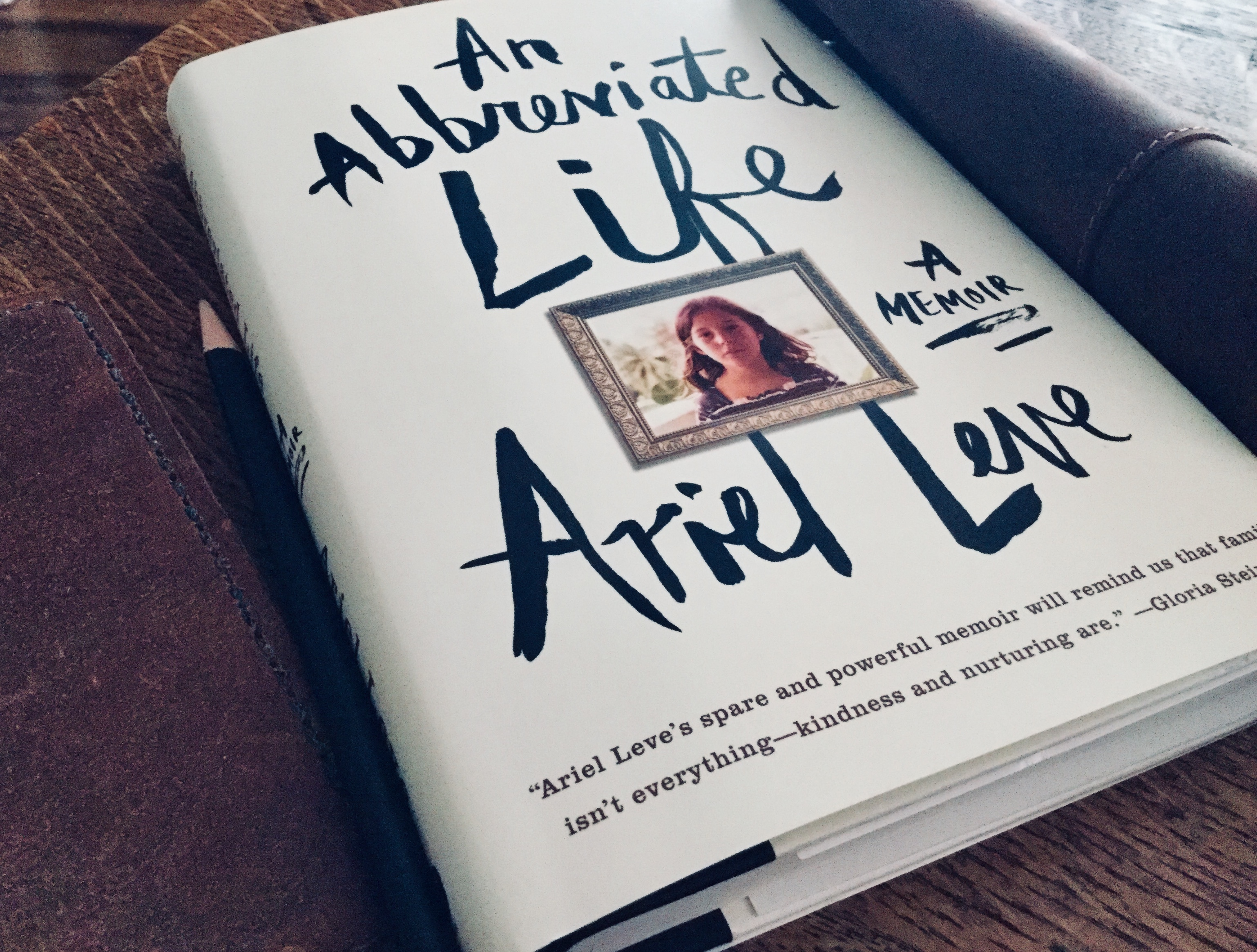 From Ariel Leve’s 2016 memoir, An Abbreviated Life:
 Last weekend was good in so many ways: On Saturday, we saw the Chicago premiere of debbie tucker green’s hang and enjoyed a quiet meal at one of our regular spots near the theater. And on Sunday, we walked in one of our favorite natural areas. (I love the transitions from one part of the park to another — for example, in the photo above, the birches herald the floating walkway.) By the time we finished our long explore, the Easter brunchers had feasted and departed from our local breakfast haunt, so we enjoyed another quiet meal out. And I had time to practice and read, while my husband had time to study.
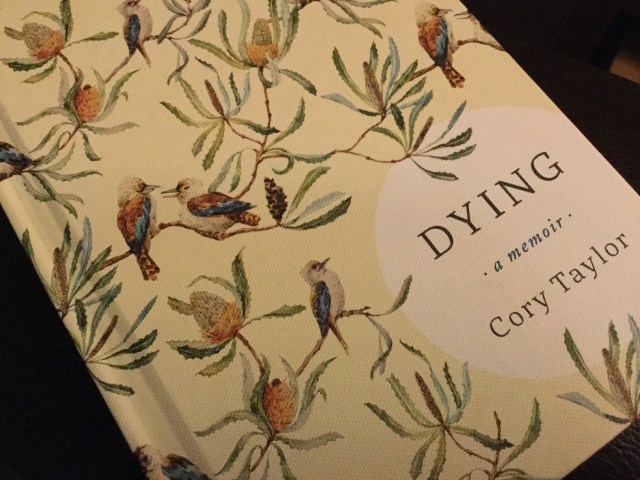 From Cory Taylor’s memoir, Dying: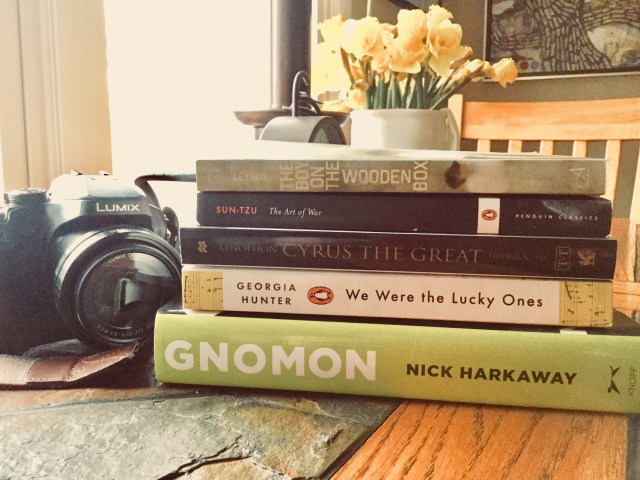

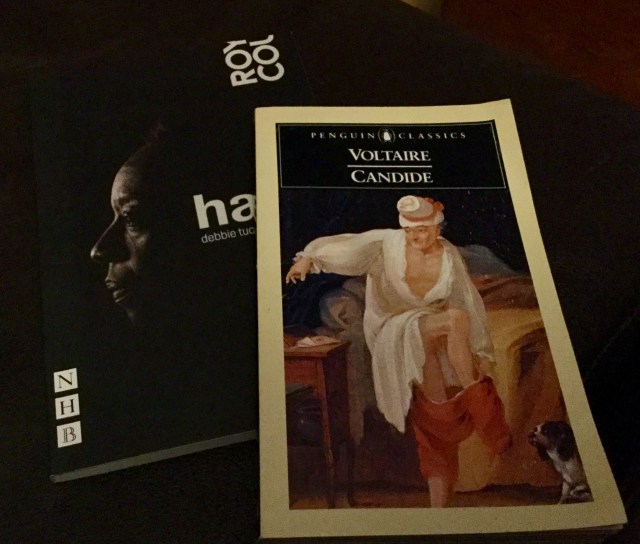 From Voltaire’s Candide:
