August reading plans

IMG_0135

A Study in Scarlet (Sir Arthur Conan Doyle; 1887. Fiction.)
Letters from a Stoic (Seneca; 1494.)
A Woman in Charge: The Life of Hillary Clinton (Carl Bernstein; 2007. Non-fiction.)
The Last Policeman (Ben Winters; 2012. Fiction.)
Shylock Is My Name (Howard Jacobson; 2016. Fiction.)
Eileen (Ottessa Moshfegh; 2015. Fiction.)
My Name Is Lucy Barton (Elizabeth Strout; 2016. Fiction.)
You Will Know Me (Megan Abbott; 2016. Fiction.)
An Astronaut’s Guide to Life on Earth (Col. Chris Hadfield; 2013. Non-fiction.)
Smarter Faster Better (Charles Duhigg; 2016. Non-fiction.)

Although I prefer to, as Sheila says, “read at whim,” I have had some luck this year with assembling small stacks and making my way through them. This one seems built to work.

Some notes: The Doyle is for the online book club / MOOC in which I participate, and I am already halfway through the Duhigg. (In 2012, I received a review copy of Duhigg’s The Power of Habit and thoroughly enjoyed it. While somewhat engaging, this latest effort seems slapped together from research assembled when that earlier book was being written.) I’m motivated to complete Jacobson’s entry in the Hogarth Shakespeare series before we see The Merchant of Venice. The Last Policeman, Eileen, My Name Is Lucy Barton, and You Will Know Me were shelved in my bedroom, which is as good as saying, “They were already on a TBR stack.” My youngest maintains that Astronaut’s Guide will be the perfect antidote to the angsty whine of Lab Girl. I put Seneca’s Letters and the Clinton bio on my summer reading shelf in May, then promptly forgot they were there! The former will be perfect for the drive home from university, eh? And the latter will probably be read in bites over this month and next.

Can you believe it’s August 1?

august
From one of my favorite Mary Schmich columns (Chicago Tribune, August 1, 2008):

If you merely count the days from summer’s official start in June until its finale in September, August 1 doesn’t even mark the summer midpoint. But it does mark the high point, which means the beginning of the end.

The light shifts, softens. The shadows on the leaves and the living room floor make you wonder: When exactly did the wane start?

People in other places may not wonder, but Chicagoans are connoisseurs of summer light. We spot the changes as surely as a foodie detects the difference between fennel and star-anise.

The light has most certainly changed, but there have been other reminders:

● This is the time of year I plan most of our theater, opera, and concert adventures for the upcoming season, and my calendar notes that single tickets are now on sale for performances at the Court Theatre and Remy Bumppo.

● My daughters have all but concluded their summer work obligations, and the younger daughter’s summer class ends this week.

● The linens, rugs, and homey touches for their university residence have been purchased and are arranged in orderly stacks in the “girl cave.”

I knew this summer would pass quickly because I so desperately wanted it to go on and on. Therefore, it should not surprise me that it is, in fact, nearly over. Still, there’s a bit more to savor, at least for a couple of weeks.

So we will sleep in.
Sit beneath the oaks and read.
Take a few more long bike rides.
Eat the cherry tomatoes we grew.
Keep an eye out for the hummingbirds and orioles that visit our yards.
Play Bananagrams. And Ticket to Ride. And Exploding Kittens.
Finish Season 9 of The X Files.
Learn something.
Talk. And talk some more.

And then we will pack. And then… Well, I will think about that later. Right now, I want to pretend the summer has just begun, that all of its hot, dew-drenched possibilities await me like the shelf of books I assembled over Memorial Day weekend with firm plans to finish everything by today.

Can you believe it’s August 1?

Reading and watching

This month, I finished seventeen books —

seven novels:

Where They Found Her (Kimberly McCreight; 2015. Fiction.)
The Hidden Child (Camilla Läckberg; 2014. Fiction.)
Wonder (RJ Palacio; 2012. Fiction.)
The Easter Parade (Richard Yates; 1976. Fiction.)
The Elementals (Michael McDowell; 1981. Fiction.)
I’m Thinking of Ending Things (Iain Reid; 2016. Fiction.)

one play:

The Merchant of Venice (William Shakespeare; 1599. Drama.)

one collection of short stories:

Dubliners (James Joyce; 1914. Fiction.)

two non-fiction titles:

The Curse of the Good Girl (Rachel Simmons; 2009. Non-fiction.)
Lab Girl (Hope Jahren; 2016. Non-fiction.)

and six works of graphic fiction:

Huck, Volume 1 (Mark Millar; 2016. Graphic fiction.)
Kill Shakespeare, Volume 3: The Tide of Blood (Conor McCreery Millar; 2013. Graphic fiction.)
Fell, Volume 1, Feral City (Warren Ellis; 2007. Graphic fiction.)
Injection, Volume 1 (Warren Ellis; 2015. Graphic fiction.)
Trees, Volume 1 (Warren Ellis; 2015. Graphic fiction.)
Skim (Mariko Tomaki; 2008. Graphic fiction.)

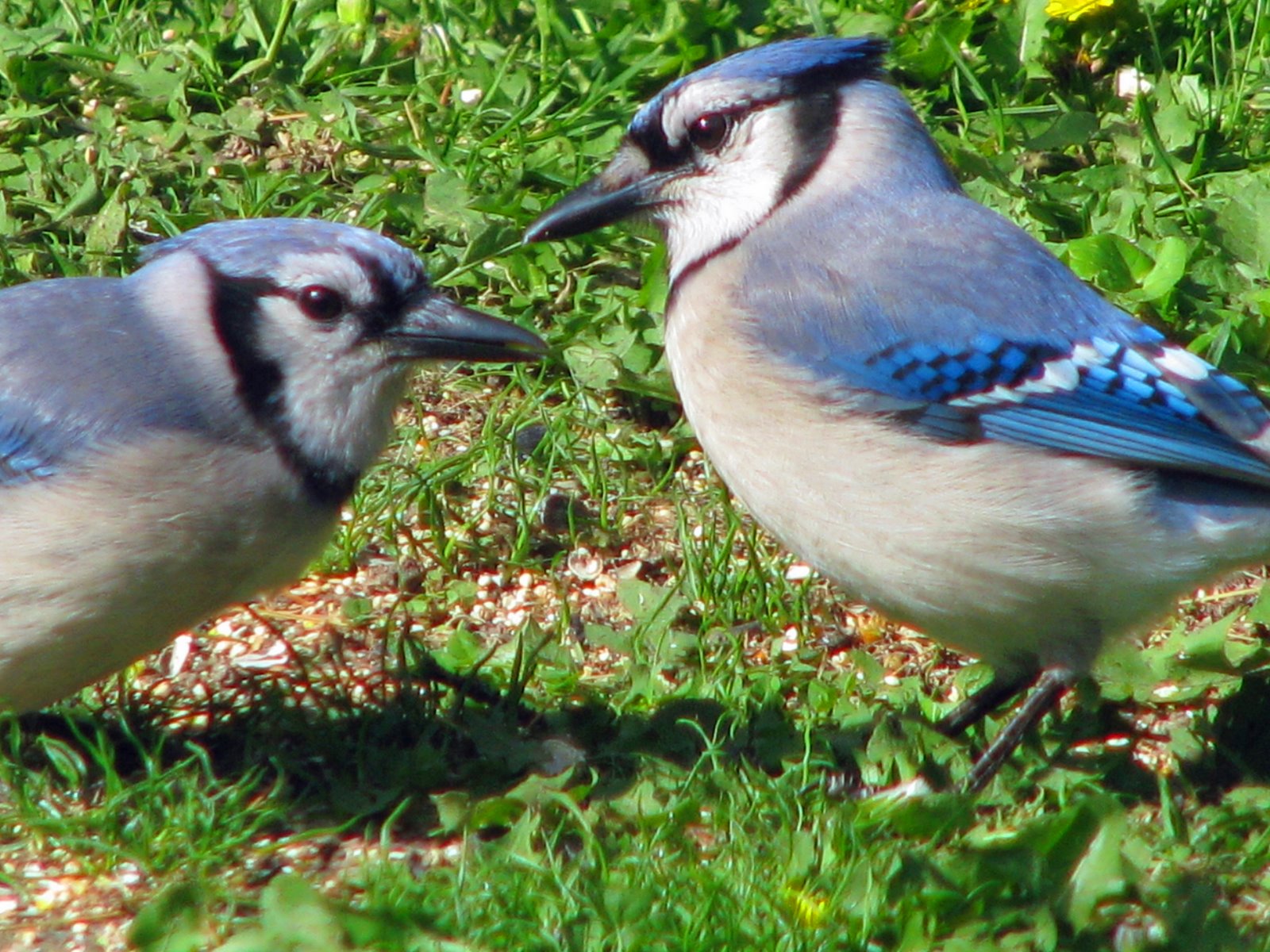
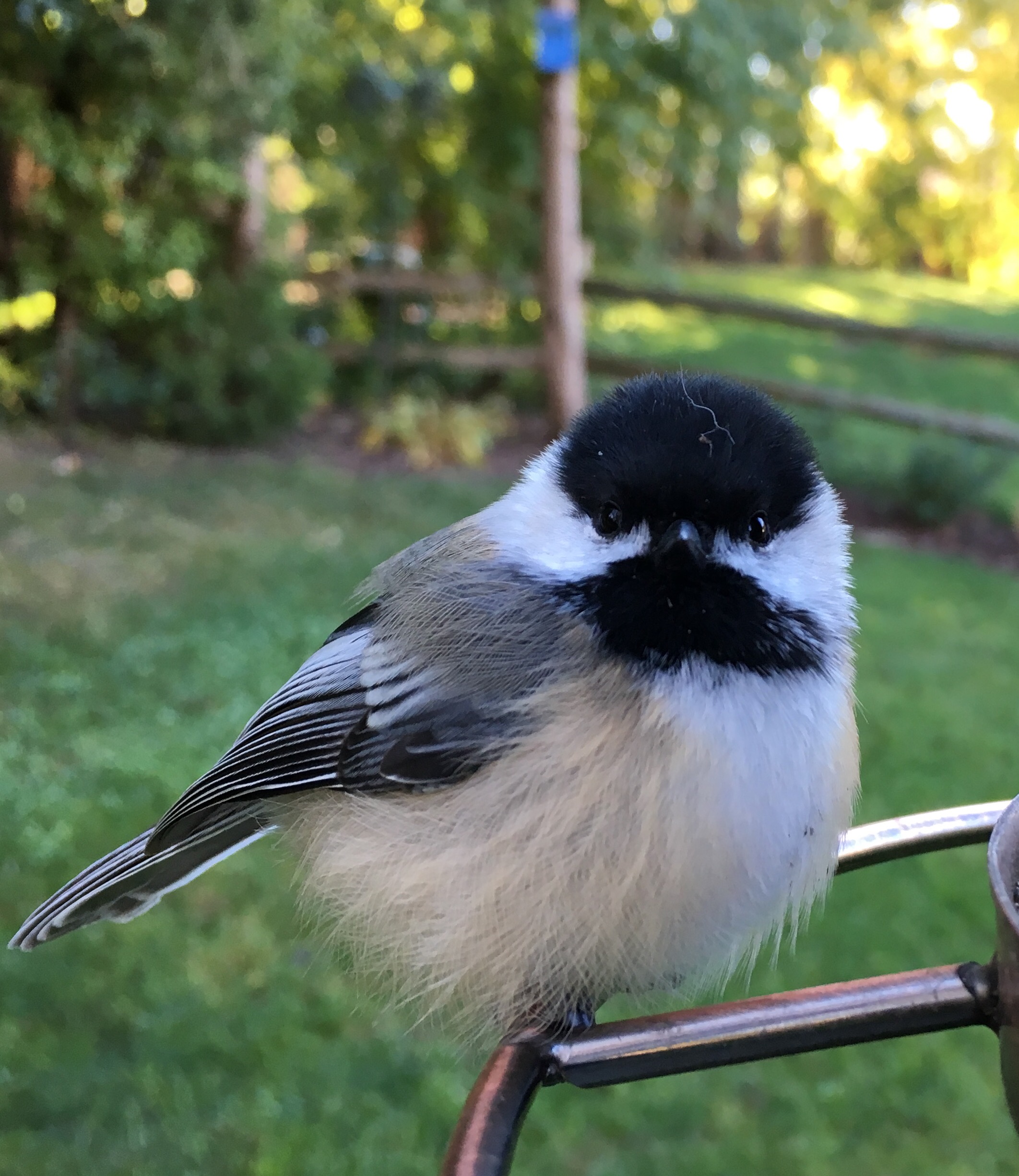
Right now, I’m in more of a watching mood than a reading mood, though. Does that ever happen to you? This afternoon, I’ve been watching the birds in our yards. We’ve had a lot of success with our latest food and feeder configuration: hummingbirds, orioles, and goldfinches, oh, my! Many of the regular visitors have been by, too — jays, cardinals, mourning doves, robins, cowbirds, house finches, black-capped chickadees, red-bellied and downy woodpeckers, and a few grackles, starlings, and house sparrows. And, of course, the Cooper’s hawks. So busy out there!

Now I am toying with watching Episode 4 of Mr. Robot. Gosh, is that a terrific show! Earlier this weekend, my daughters and I watched The Merchant of Venice with Al Pacino as Shylock. It was my second time, and it was just as excellent as the first. We will see the Shakespeare’s Globe production with Jonathan Pryce as Shylock at the Chicago Shakespeare Theater soon, and I so enjoy comparing various interpretations. The three of us are also watching The X Files. We’ve made it to Episode 9 of Season 9, and we think we will finish before they move to their university residence. That said, all of us agree that the show’s reputation outstrips its content, which how we also felt about Buffy the Vampire Slayer. Shrug. Not every program can be Slings & Arrows or LOST, though, right?

Speaking of watching things for a second time, I saw The Dead again this week. The closing paragraph of Joyce’s story is one of my favorites in all of literature, so it was with much scoffing that I first approached Huston’s film nearly thirty years ago. Of course the book will be better, I maintained. How could I have known that it would actually render the story a permanent part of my imagination? Both faithful to its source material and a work of its own many merits, the film draws much of its strength from flawless performances from the entire cast. It also benefits from meticulous attention to period detail and a score that is a character itself. Rewatching the film, I was reminded of its perfection, particularly the emotionally shattering redefinition of the Conroy marriage that occurs in the final scene.

Before I settle in with Mr. Robot I think I will assemble my proposed TBR stack for August. I already own a few of the books on the Man Booker Prize long list, and Lab Girl (which was good, really, but does anyone else wish that all of that imagination and talent had been mixed with less angst and whine?) made me pine for an upbeat if not stoic science memoir, and the Abbott book arrived last Tuesday… I’m off to assemble my pile.

From the stacks

IMG_0103
Sigh. How to explain How to Be Your Dog’s Best Friend and The Other End of the Leash, the first of which I am nearly halfway through? All right. My daughters head off to university next month, and it seemed like as good a time as any to investigate adding a dog to our little company. A project (e.g., training a new companion) would certainly keep me from dwelling on the girls’ absence (overmuch), and multiple daily walks would burn off (some of) my tendency to worry. I had thought I wanted a puppy, but at the shelter, I fell in love with a young new mother whose adorable puppies are about to be put up for adoption. Maybe she and I will work through our separation issues together. We will see….

Speaking of mothers, Cindy Rollins kindly linked my old blog several times back in the day. Her memoir of homeschooling her eight children was released last week, and I wanted to return the favor. Congratulations, Cindy!

And speaking of memoirs, my daughter and I are about halfway through Jahren’s Lab Girl. Given how busy she is and how many books I am reading, that should serve as a recommendation, but if you need more, I tweeted a Los Angeles Review of Books review earlier this week: “A Lab of Her Own.”

The MOOC / online book club in which I participate will complete Dubliners this week. In August, we tackle A Study in Scarlet. With all of the Sherlockian studies our family-centered learning project has undertaken, it’s difficult to believe I have never read this, but I haven’t.

At the bottom of the pictured stack are my flute books. I’m nearly finished with Rubank Intermediate Method, a fact that stuns me a bit, actually. I am on songs 25 and 26 in Forty Little Pieces in Progressive Order, and my teacher has begun adding assignments in the Pares Scales book.

From The Elementals:

There’s no point in advertising a circus when everybody hates the clown.

McDowell’s The Elementals, which appeared in last week’s stack, will likely make my 2016 “best” list. When I was younger, I devoured horror fiction: With my first paycheck I purchased two paperback novels, Stephen King’s The Stand and The Shining. Eventually, I believed I had outgrown the genre, but looking back, I think I had simply been selecting from too shallow a pool. The familiar writers became repetitive, and I moved on. The Elementals, with its engaging dialogue, place as character, and a pervasive sense of danger, has reminded me how good a horror novel can be.

On and near the nightstand

IMG_0083

Neither of the Grimes sisters would have a happy life, and looking back it always seemed that the trouble began with their parents’ divorce.

So begins Richard Yates’ The Easter Parade, a novel that is by turns wry and bleak. Here are two more passages for the commonplace book:

p. 47
But there was more to being an intellectual than a manner of speaking, more even than making the dean’s list every semester, or spending all your free time at museums and concerts and the kind of movies called “films.” There was learning not to be stricken dumb when you walked into a party full of older, certified intellectuals — and not to make the opposite mistake of talking your head off, saying one inane or outrageous thing after another in a hopeless effort to atone for whatever inane or outrageous thing you’d said two minutes before. And if you did make a fool of yourself at parties like that, you had to learn not to writhe in bed afterwards in an agony of chagrin.

p. 79
[B]esides, college had taught her that the purpose of a liberal-arts education was not to train but to free the mind. It didn’t matter what you did for a living; the important thing was the kind of person you were.

This week’s reading in Dubliners yielded a commonplace book entry, too:

From “After the Race”:

Rapid motion through space elates one; so does notoriety; so does the possession of money.

From “Two Gallants”:
Though his eyes took note of many elements of the crowd through which he passed they did so morosely. He found trivial all that was meant to charm and did not answer the glances which invited him to be bold. He knew that he would have to speak a great deal, to invent and to amuse, and his brain and throat were too dry for such a task. The problem of how he could pass the hours till he met Corley again troubled him a little. He could think of no way of passing them but to keep on walking.

This coming week’s reading for the Dubliners MOOC / online book club comprises “Ivy Day in the Committee Room,” “A Mother,” and “Grace,” which leaves “The Dead” for the fourth and final week. (And, yes, that is a different edition than was featured in the picture in last week’s post. What can I say? I wanted endnotes and Colum McCann’s introduction. Totally worth it.)

Later this year, I have a MOOC about the healing power of literature, a topic that has interested me for more than fifteen years. Jonathan Bate, who will lead the course, served as one of the editors of Stressed, Unstressed, a volume that posits that reading poetry (here gathered under such categories as “stopping,” “grieving,” and “living with uncertainty”) acts like a readerly balm on emotional unease. Lab Girl moved from the shelves to a TBR pile because my daughter chose the title as her “prize” for the local library’s summer reading program. We’re hoping to shoehorn it into the four weeks before she and her sister depart for university. Fingers crossed! The Gaiman and Ackerman titles in the stack above are also recent acquisitions, and The Elementals (from the shelves) will be this evening’s companion, as I have already finished the following (unpictured) books from my (unpictured) stacks:

Wonder (RJ Palacio; 2012. Fiction.)
Fell, Volume 1, Feral City (Warren Ellis; 2007. Graphic fiction.)
Injection, Volume 1 (Warren Ellis; 2015. Graphic fiction.)
Trees, Volume 1 (Warren Ellis; 2015. Graphic fiction.)
The Curse of the Good Girl (Rachel Simmons; 2009. Non-fiction.)

Wonder, like Holes (Louis Sachar) and A Long Way from Chicago (Richard Peck) is one of those books for young-ish readers that begs to be a family read-aloud. Tender and touching, the story is being brought to the big screen next year.

Officially mad about Ellis, I am so looking forward to the second volumes of both Injection and Trees. Alas, there is no Volume 2 of Fell, which was easily the best graphic work I’ve read this year. (Speaking of graphic works, did you hear the nerd girl Squeeeeeeee! when I finished Issue #156 of The Walking Dead? “Wait until Rick gets a look at you…” Heh, heh, heh.)

More soon.

Book notes

IMG_0071
Here are a few from the piles, stacks, and shelves.

Shylock Is My Name (Howard Jacobson; 2016. Fiction.)
We will see The Merchant of Venice with Jonathan Pryce at the Chicago Shakespeare Theater next month, so I am reading the Hogarth Shakespeare retelling and rereading the play.

p. 16

He knew what she was nudging him about. One of the traits of his character she had always disliked was his social cruelty. He teased people. Riddled them. Kept them waiting. Made them come to him.

Dubliners (James Joyce; 1914. Fiction.)
I am rereading this for an online book club / MOOC and am once again reminded that many books were wasted on younger versions of me. Of the many valuable resources the club / course has provided so far, I thought the link to Mark O’Connell’s “Have I Ever Left It?” (Slate, May 2014) was particularly worthwhile.

From the conclusion of “Araby”:

Gazing up into the darkness I saw myself as a creature driven and derided by vanity; and my eyes burned with anguish and anger.

Hillbilly Elegy: A Memoir of a Family and Culture in Crisis (J.D. Vance; 2016. Non-fiction.)
I picked this up after reading after reading Vance’s piece on The Huffington Post.

p. 7
The problems that I saw at the tile warehouse run far deeper than macroeconomic trends and policy. Too many young men immune to hard work. Good jobs impossible to fill for any length of time. And a young man with every reason to work — a wife-to-be to support and a baby on the way — carelessly tossing aside a good job with excellent health insurance. More troublingly, when it was all over, he thought something had been done to him. There is a lack of agency here — a feeling that you have little control over your life and a willingness to blame everyone but yourself. This is distinct from the larger economic landscape of modern America.

p. 9
But I love these people, even those to whom I avoid speaking for my own sanity. And if I leave you with the impression that there are bad people in my life, then I am sorry, both to you and to the people so portrayed. For there are no villains in this story. There’s just a ragtag band of hillbillies struggling to find their way — both for their sake, and by the grace of God, for mine.

Fell, Vol. 1: Feral City (Warren Ellis; 2007. Graphic fiction.)