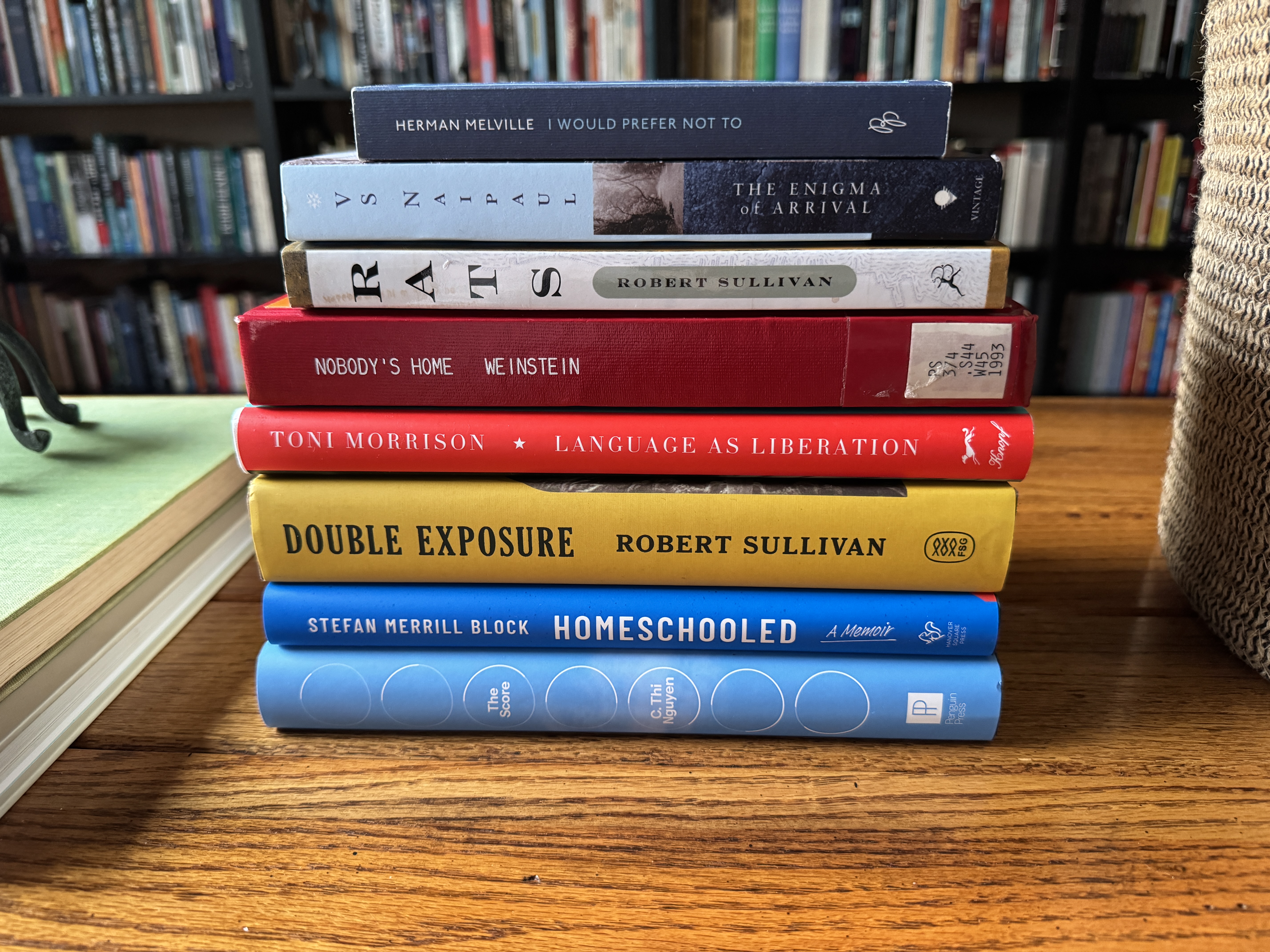
Over the weekend, I finished two books for the Wilder seminar — By the Shores of Silver Lake and The Long Winter. I also finished rereading Beloved for a Roundtable course. Today I began The Enigma of Arrival (V.S. Naipaul; 1987) with APS Together and worked on the first section of Mrs. Dalloway (Virginia Woolf; 1925) for a new Roundtable course. This evening, before the final meeting of the seminar on the Old Testament with Marilynne Robinson, I set aside the required reading list for a bit and read another hundred pages in The Every (David Eggers; 2021), the follow-up to The Circle (2013), which I reread with the Commonplace Philosophy book club last month. Several participants recommended the sequel, and after a slow opening, I am now engaged (if pretty certain that this can conclude in only one way). I will catch up on this month’s book club selection, You and Your Profile: Identity After Authenticity (Hans-Georg Moeller and Paul D’Ambro; 2021), tomorrow.
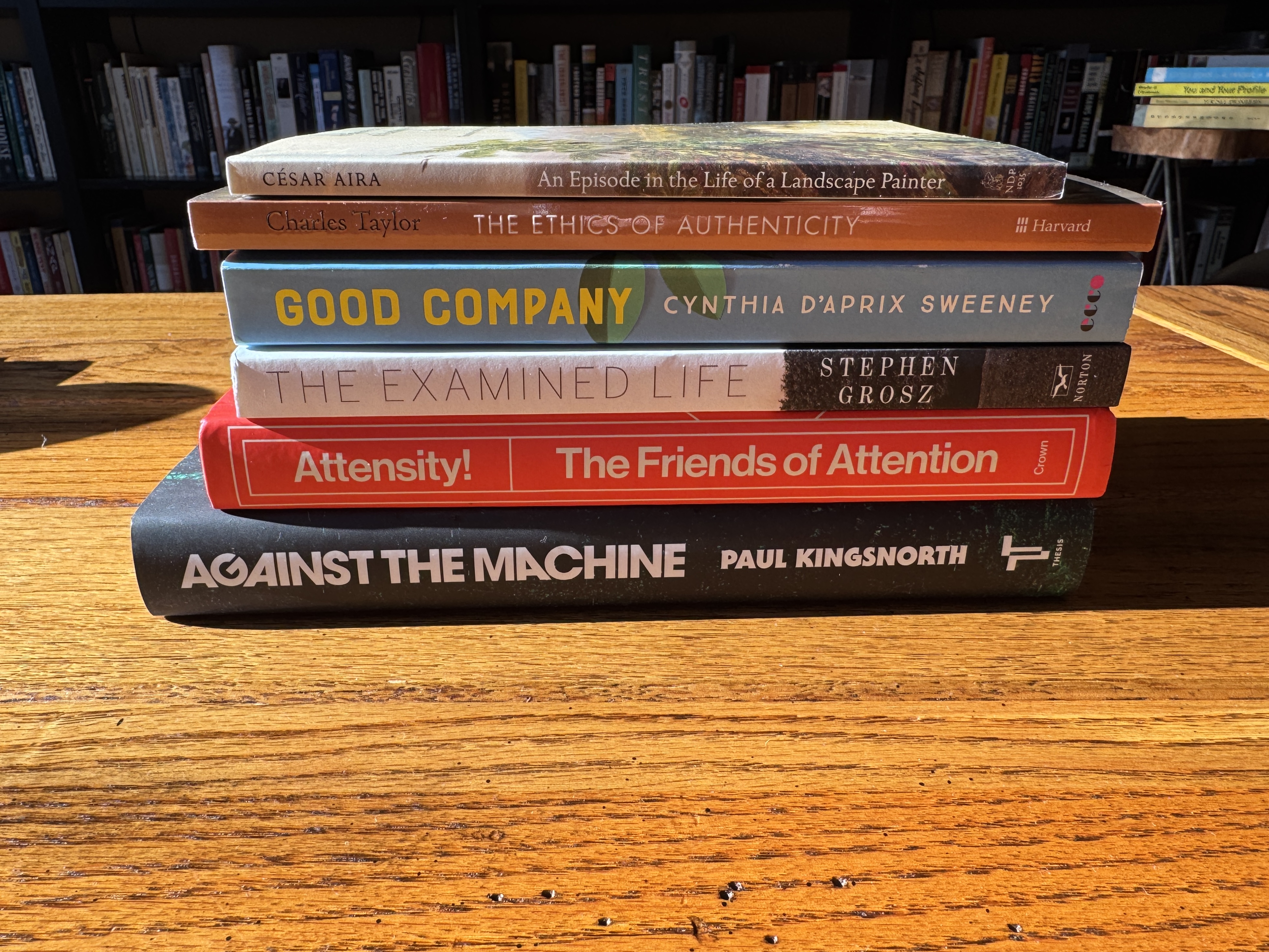
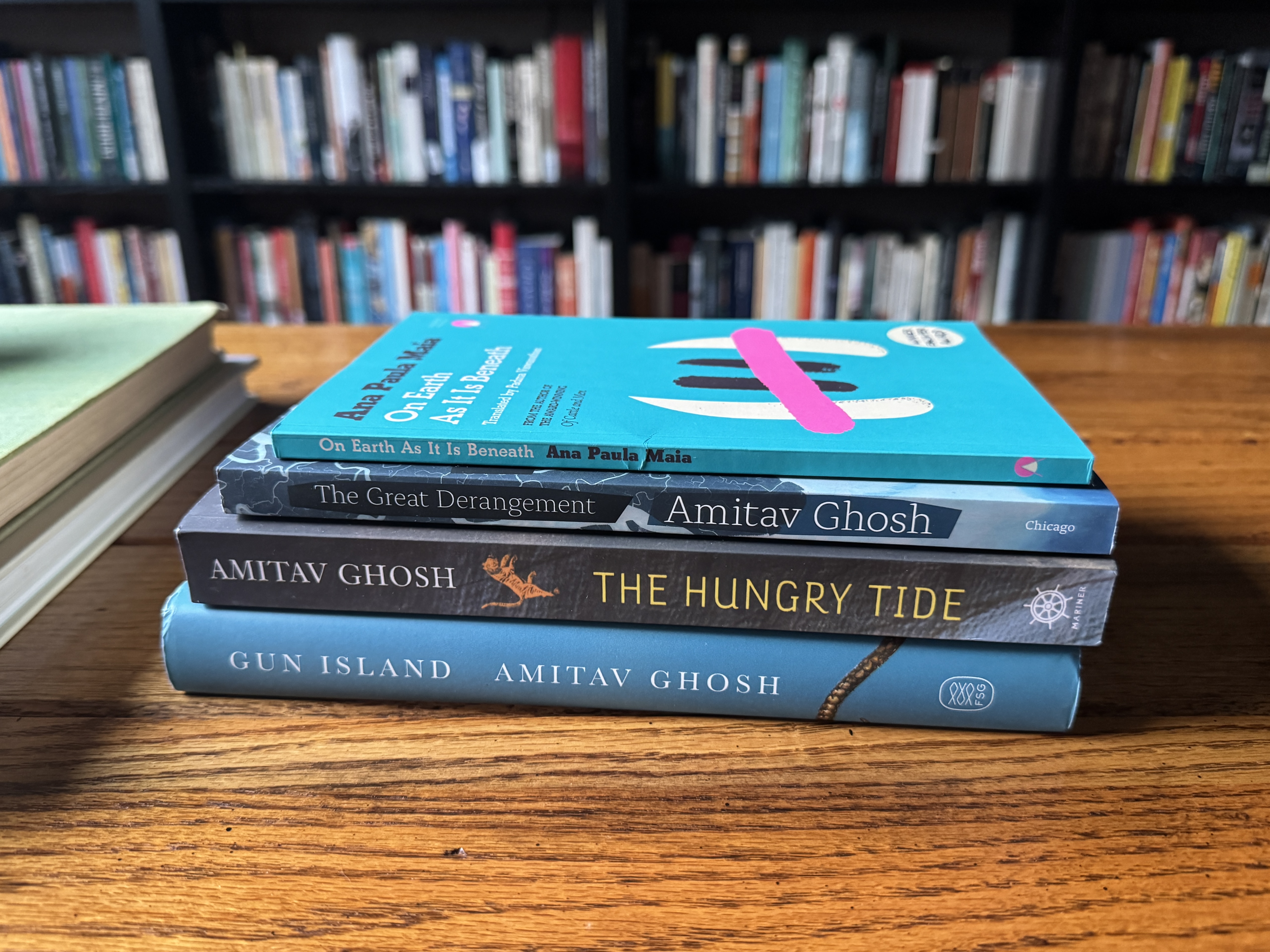
Pictured above are a few books I ordered after reading about an in-person Graham School course that interests me. I won’t be able to participate, but I plan to ask the instructor to share the syllabus.
A blizzard warning just sounded on my emergency alert app. Coffee? Check. Books? Check. All will be well. In a neat readerly intersection of life and books, I just finished By the Banks of Plum Creek (Laura Ingalls Wilder; 1937) for a Newberry Library seminar. This, the fourth in Wilder’s series, ends not long after a three-day blizzard. Next up? On the Shores of Silver Lake (1939).
Lately among other projects, I’ve been making my way through the reading list for the Roundtable course “Fictions of the Self in American Literature” — currently, The Great Gatsby.
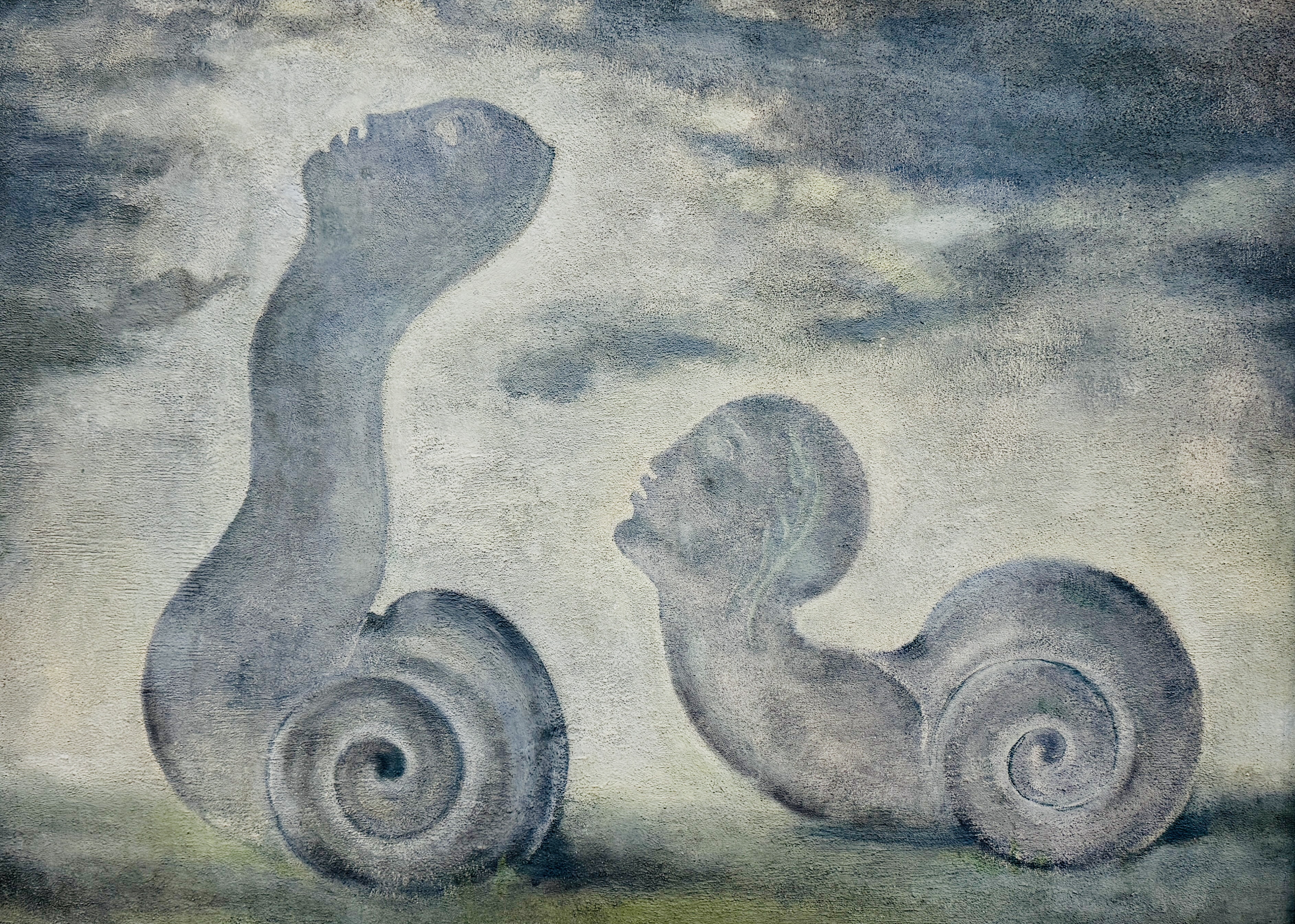
The above is my image of “The Bewitched” (1932) by Mina Loy.
Over the weekend, we headed into Chicago to celebrate my older daughter’s birthday. Our plans were upended when the Museum Campus shut down in anticipation of the cold.
When we relocated to Chicago from Southern California in the early 1990s, my husband and I, both born and raised in the Northeast, were not at all surprised by the number of adults who darted through the city in shorts and flimsy footwear in the most cutting cold and wind, nor by students who walked to class in zippered hoodies (sometimes dragging a coat). It sorted with a type we knew well from childhood — like my father, who could never abide a winter hat, or the president of the Class of 1982, who remained sockless even in six inches of uncleared snow, or the scout leader who would only wear sandals, even in January. So, Chicago, I hardly knew you when I learned that the Shedd, Field, and Adler would not open on Friday — especially in light of the many school closings.
In the Modern Wing, “The Bewitched” put me in mind of Francesca and Paolo, perhaps because I am rereading the Inferno, this time with Samantha Rose Hill and Elias Crim. Among other pursuits this semester, I am also reading The Canterbury Tales with Marion Turner. In Friday’s meeting, she reminded us that the juxtaposition of the stories and, by extension, storytellers — for example, the Miller’s interruption when the Knight has concluded — is part of Chaucer’s rather subversive genius. Wait. A similar rubric undergirds the Inferno, right? (After all, wasn’t it one of Chaucer’s chief influences?) Doesn’t Dante describe the weaknesses of societies through the stories of characters’ sin and limitations, building toward a sort of political treatise or philosophy?
As always, I love the intersections — the serendipity, synchronicity, and synthesis.

 Nerdishly