

Image captured at the conservation area this weekend.
In May, I noted that we were averaging about three miles daily on our morning walks. By mid-October, we had nudged that average to 3.5 miles with a four-plus-mile walk or two on the weekend. Just a month later, we had settled into a 4.1-mile daily average, and that seems to be about the right commitment for the time and light available to us before my husband begins work. The benefits are many, including a clear head, quality sleep, and an improved mood, even as the light continues to wane. Our neighborhood is wonderfully walkable, but at least once a week (usually on the weekend), we head to one of the conservation areas or state parks, something for which our feet and knees thank us. From Anna Botsford Comstock’s Handbook of Nature Study:
In my belief, there are two and only two occupations for Saturday [or Sunday] afternoon or forenoon […]. One is to be out-of-doors and the other is to lie in bed, and the first is best. Out in this, God’s beautiful world, there is everything waiting to heal lacerated nerves, to strengthen tired muscles, to please and content the soul that is torn to shreds with duty and care.
Arguably, I walk (and ride the exercise bike, do some weight work, and stretch) to ensure I can curl up and read (sans guilt and remorse) for long spells. Since my last annotated list, I finished, among other things, Linda Lear’s excellent biography of Beatrix Potter, which satisfied one of my reading challenges. As I wrote in August, my 2021 reading plan is to read no fewer than 100 books from my personal library (i.e., books acquired before the end of 2020), including 24 or more non-fiction titles and at least one book from each of the following categories: Shakespeare (by, about, retold, etc.), poetry, NYRB, Kurt Vonnegut (by or about), Joyce Carol Oates, philosophy, art, and children’s / YA. At this writing, I’ve read 196 books, 118 of which were read from my shelves (RFS). Twenty-three of those RFS were non-fiction titles, so I must read at least one more non-fiction work from my shelves, a challenge that will likely be met with either Daniel Kahneman’s Thinking, Fast and Slow, which I began reading in advance of attending The Guardian Live event last month, or Joseph Luzzi’s In a Dark Wood: What Dante Taught Me About Grief, Healing, and the Mysteries of Love, which complements my participation in 100 Days of Dante. (By the way, we are only six cantos into Purgatorio, so it’s not too late to join the project.)
Here is how I met the other RFS category challenges:
Shakespeare (by, about, retold, etc.):
With The Winter’s Tale, The Tempest, and King Lear, I finished rereading all the plays last month. Earlier this year, I also read Maggie O’Farrell’s Hamnet and Matthew Haig’s The Dead Fathers Club, but, as I mentioned in last year’s summary, this year’s challenge is only satisfied if I have read at least one of the many non-fiction works I’ve collected. I’ve read three:
■ Tyrant: Shakespeare on Politics (Stephen Greenblatt; 2018.)
■ How to Think Like Shakespeare: Lessons from a Renaissance Education (Scott Newstok; 2020.)
■ Falstaff: Give Me Life (Harold Bloom; 1992.)
Poetry:
■ War Music: An Account of Homer’s Iliad (Christopher Logue; 2015.)
■ Stag’s Leap (Sharon Olds; 2012.)
■ Chicago Poems (Carl Sandburg; 1916. Poetry.)
■ The Inferno of Dante (Dante Alighieri; 1320. (Trans. Robert Pinsky; 1995.))
■ Sir Gawain and the Green Knight (Unknown; 14th century. (Trans. J.R.R. Tolkien; 1975.) Poetry.)
NYRB:
■ The Goshawk (T.H. White; 1951. Non-fiction.)
Kurt Vonnegut (by or about):
■ God Bless You, Mr. Rosewater (Kurt Vonnegut; 1965. Fiction.)
Joyce Carol Oates:
■ Pursuit (Joyce Carol Oates; 2019. Fiction.)
■ The Collector of Hearts (Joyce Carol Oates; 1998. Fiction.)
Philosophy:
■ Lost in Thought: The Hidden Pleasures of an Intellectual Life (Zina Hitz; 2020. Non-fiction.)
■ Meditations (Marcus Aurelius; 180 A.D. (Trans. Gregory Hays.) Non-fiction.)
■ The Gospel According to Jesus: A New Translation and Guide to His Essential Teachings for Believers and Unbelievers (Stephen Mitchell; 1993. Non-fiction.)
Art:
■ Beatrix Potter: A Life in Nature (Linda Lear; 2007. Non-fiction.)
■ The Complete Tales (Beatrix Potter; 2002 edition. Fiction.)
Children’s / YA:
■ The Absolutely True Diary of a Part-Time Indian (Sherman Alexie; 2007. Fiction.)
■ The Mouse and His Child (Russell Hoban; 1967. Fiction.)
■ Harry Potter and the Sorcerer’s Stone (J.K. Rowling; 2001. Fiction.)
■ Harry Potter and the Prisoner of Azkaban (J.K. Rowling; 1999. Fiction.)
■ Harry Potter and the Goblet of Fire (J.K. Rowling; 2000. Fiction.)
■ Harry Potter and the Order of the Phoenix (J.K. Rowling; 2003. Fiction.)
■ Harry Potter and the Half-Blood Prince (J.K. Rowling; 2005. Fiction.)
■ Harry Potter and the Deathly Hallows (J.K. Rowling; 2007. Fiction.)
In more recent reading news… Tolstoy Together 2021 concludes tomorrow, but, for a number of reasons, I decided to read the two epilogues of War and Peace and finish Yiyun Li’s companion volume late last week. As I noted in my October 7 tweet, the short readings coupled with the reflections in Tolstoy Together: 85 Days of War and Peace became a sort of secular daily devotional for me. What will I do on December 9? Well, 100 Days of Dante continues, and tomorrow is another Cardiff BookTalk, for which I read J.R.R. Tolkien’s translation Sir Gawain and the Green Knight.
Yesterday I read the fifteenth book in Louise Penny’s Chief Inspector Gamache series, and late last month I finished reading Akwaeke Emezi’s 2020 novel, The Death of Vivek Oji, which was heart-breaking. (Reviews here and here.)

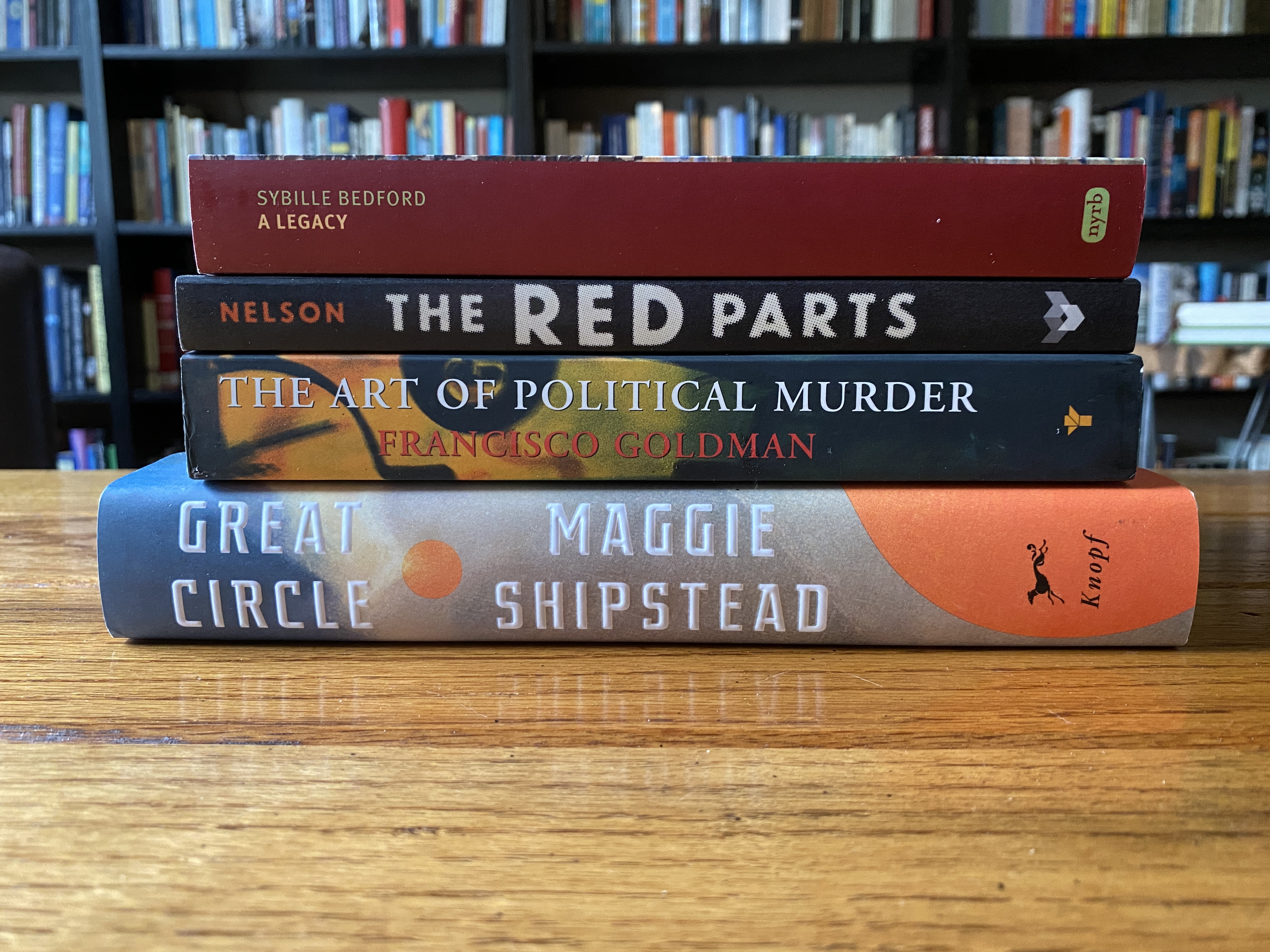

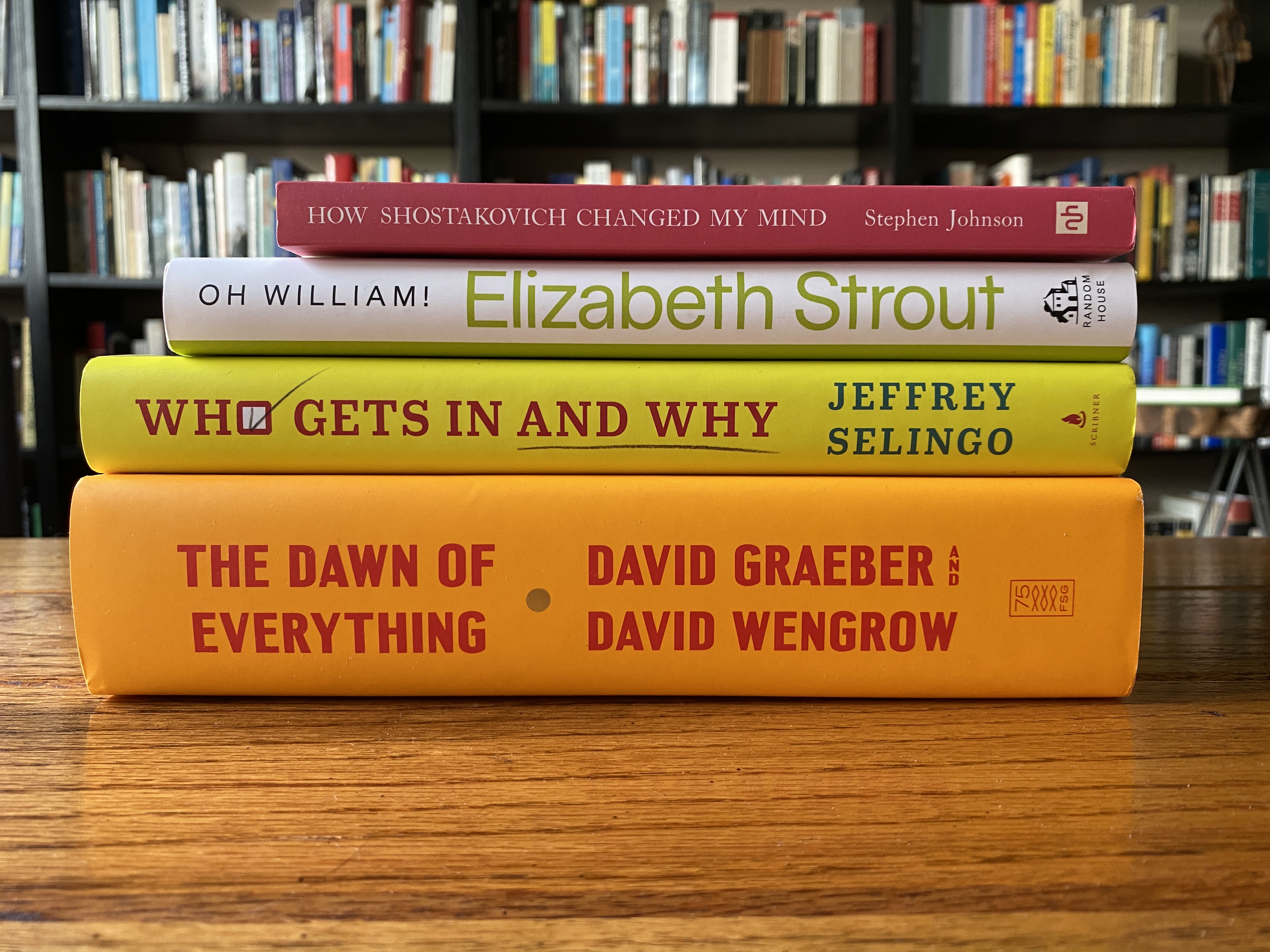
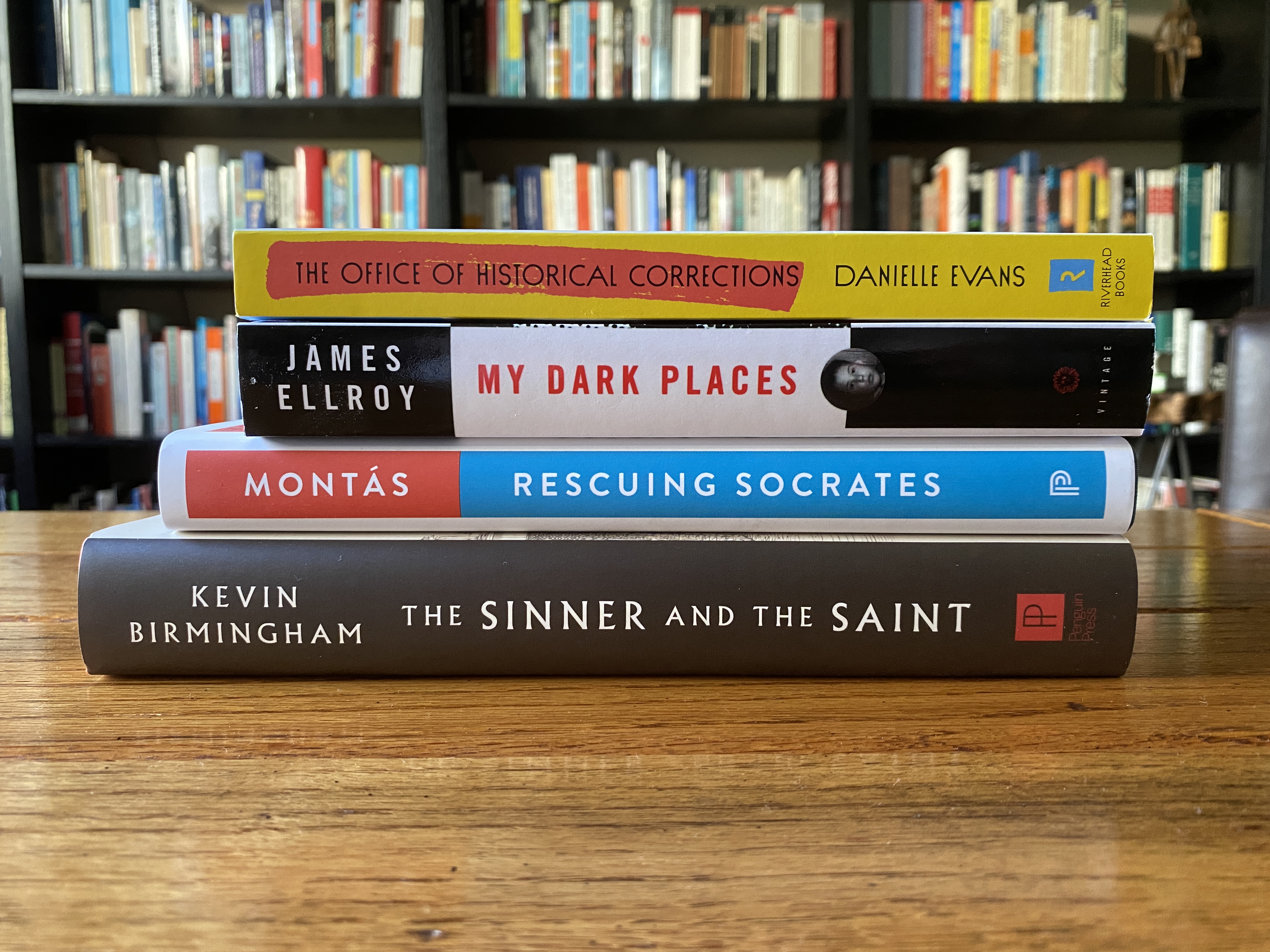
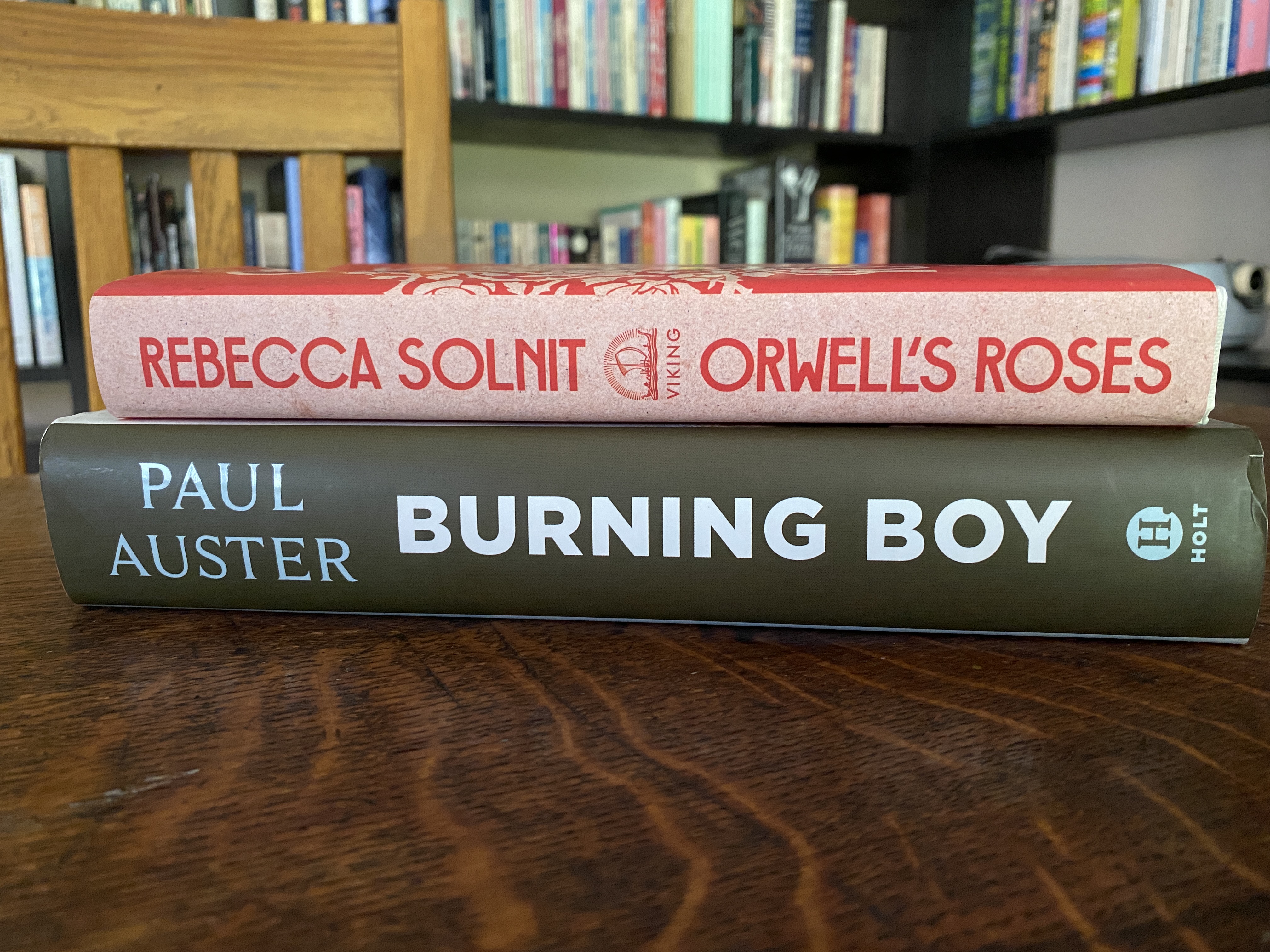

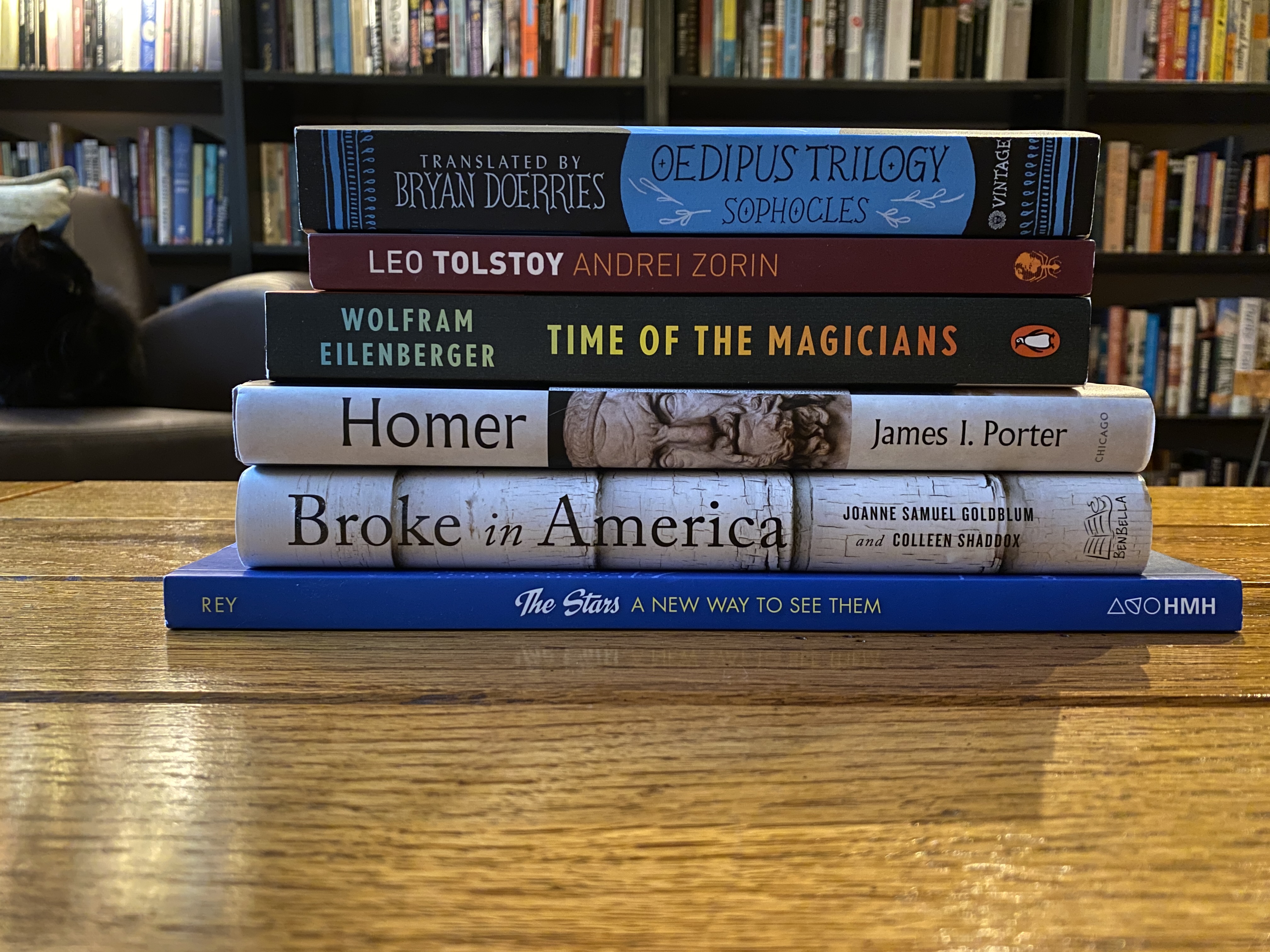

 Nerdishly