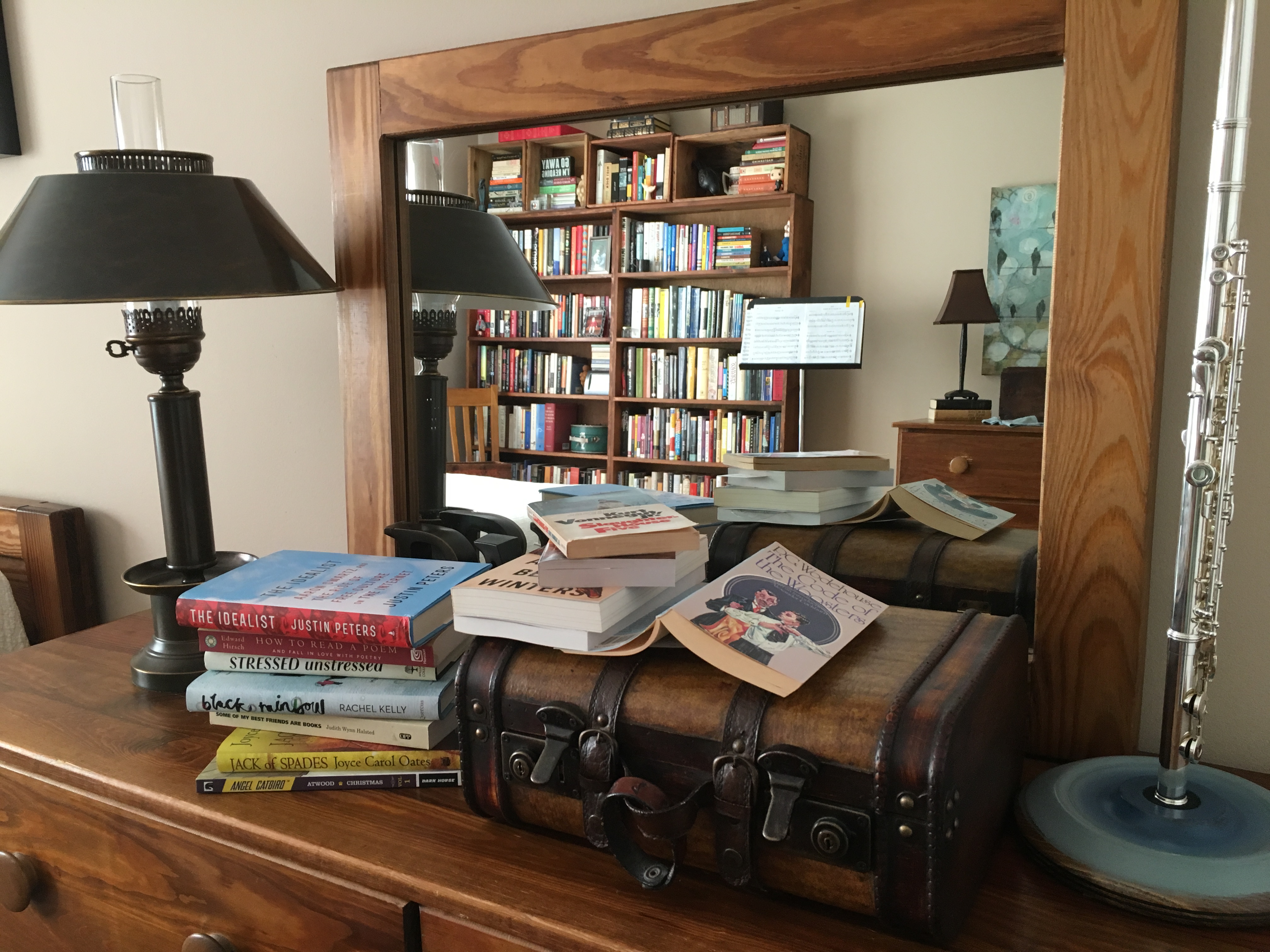
Only five more days…

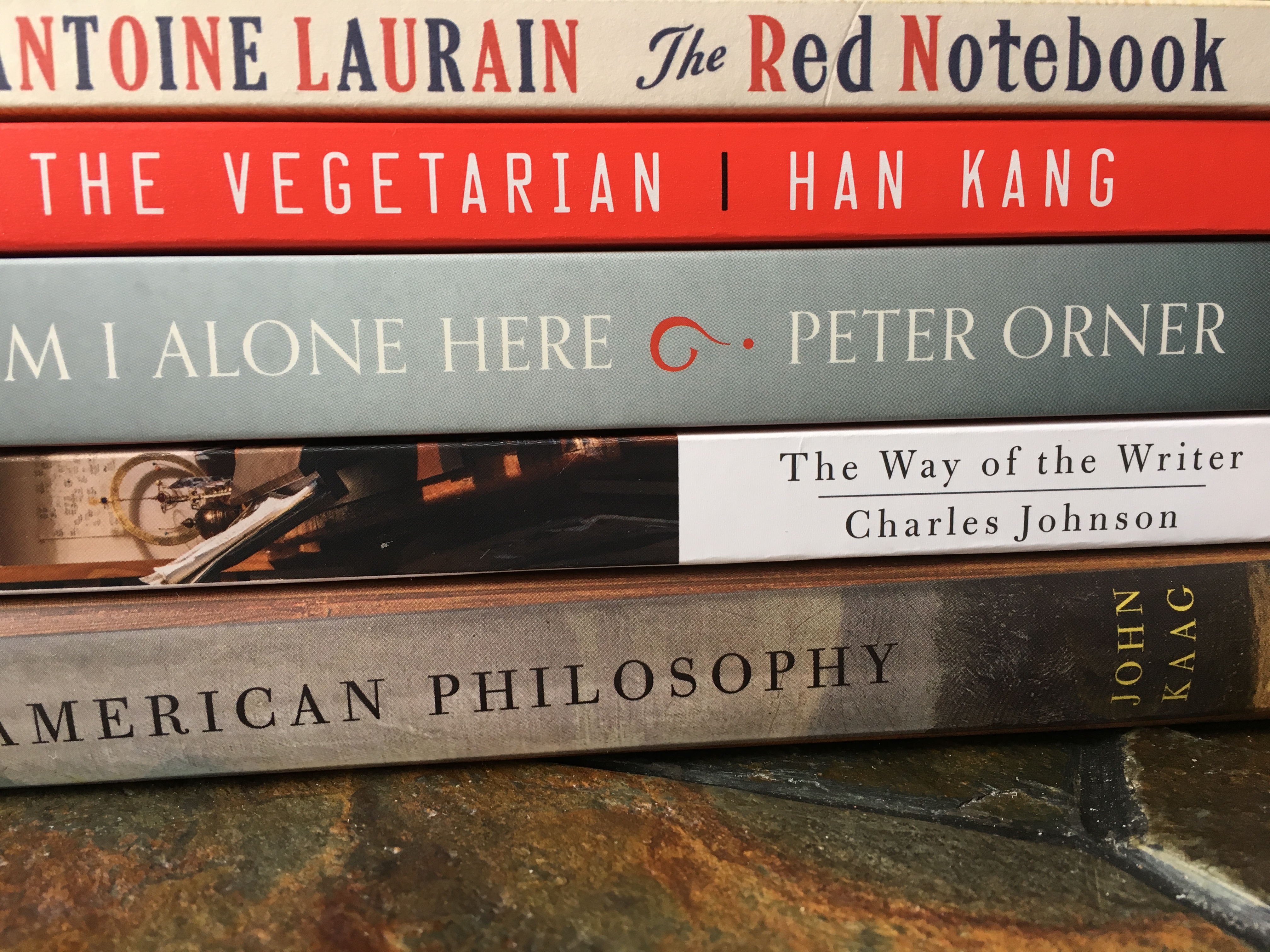
Recent acquisitions.

Recent acquisitions.

… until jólabókaflóð!. As I shared last year, it delights me that the way in which we have celebrated Christmas Eve for more than thirty years has a name, “Christmas book flood.”

A flurry of coupons, gift cards, and textbook sellbacks has meant that I’ve experienced a bit of a flood before the flood, so to speak. Speaking of recent acquisitions, The Vegetarian is a fine book, but it has, in my opinion, been rather over-praised. The “Kafka-esque” description, for example. Really? It reminded me more of Josephine Hart’s Damage (1991) — fraught, erotic, offbeat, memorable even; but, ultimately, slight.

Soon it will be time for my annual reading life review. At this writing, I’ve completed 120 119 118 books, of which thirty were graphic works and seventeen were plays. Interestingly, at least a dozen were rereads, including a number of books first read in high school or earlier (e.g., The Call of the Wild (Jack London) and The Turn of the Screw (Henry James)).

What have you been reading? What books do you hope to receive this holiday?

The year of the house sparrow

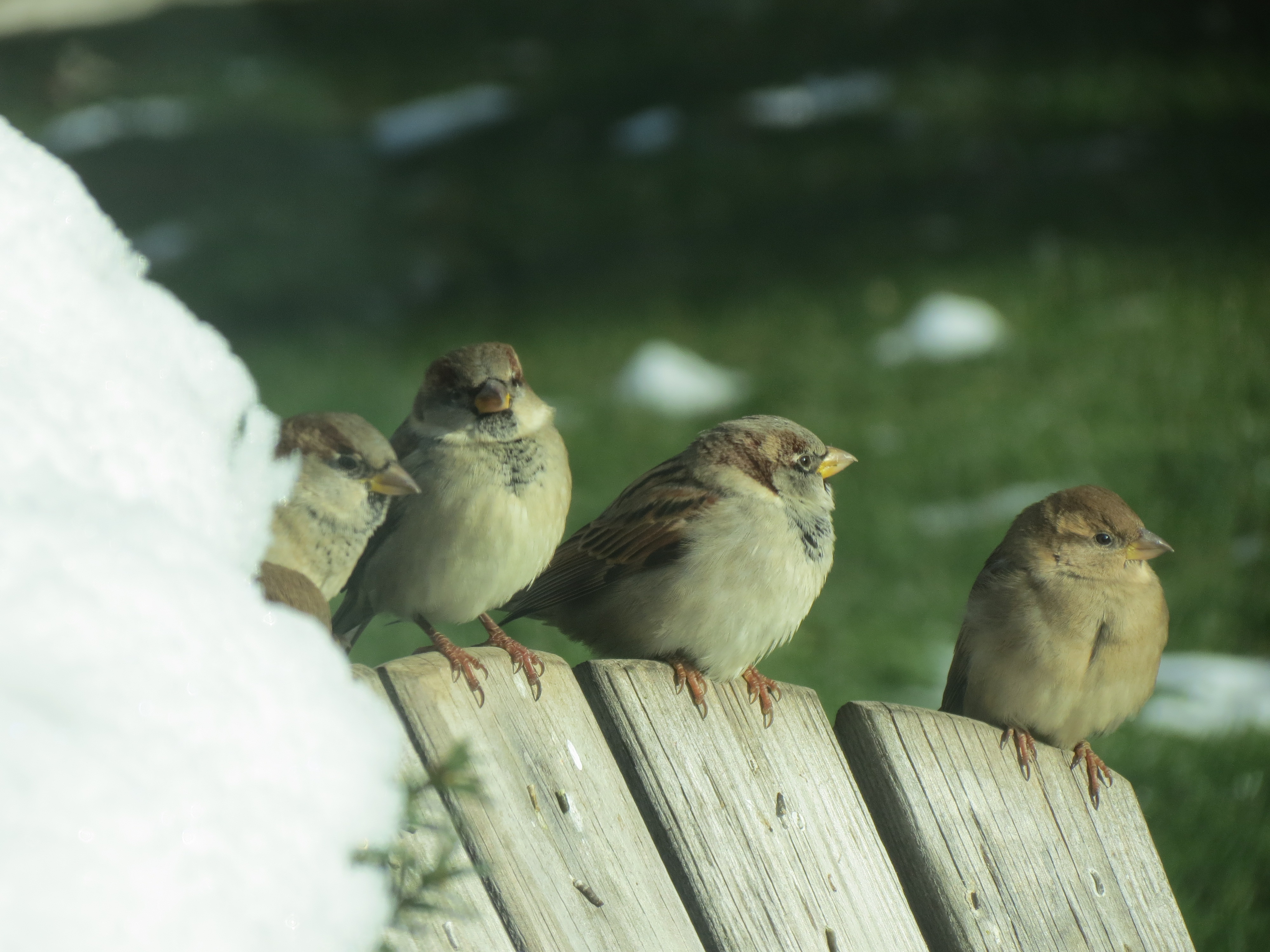
img_6858img_6870As I shared here, the bird I first espied this New Year’s Day was a house sparrow — one of a sizeable tribe that calls our yards home. After making my Project FeederWatch observations this week, I captured a few images. Would that I had had the camera out when the hawk chased several birds into the picture window and then stunned itself on it! (All survived the mishap.) It has been cold, so I have not yet removed the ghostly bird prints etched into the glass surface.

Random bits:

■ We first saw the Q Brothers more than three years ago at the Chicago Shakespeare Theater (CST). Their Othello: The Remix, an “ad-rap-tation” of Shakespeare’s play, rendered us immediate and forever fans of the Brothers and their crew. We have seen The Remix six times and A Q Brothers’ Christmas Carol three times; and we traveled more than three hours to see Q Gents at the 2015 Illinois Shakespeare Festival. So, yes, I am biased, but from the moment Hamilton first edged into the news, I have thought, “GQ and JQ have been robbed.” Make no mistake. I believe Lin-Manuel Miranda is wildly talented, but he was working ground the Brothers had already broken. It delights me that someone else thinks so, too:

Lest anyone think these B-boys are riding on Hamilton’s red coattails, writers-directors-stars-siblings GQ and JQ pioneered hip-hop theater back in 1999 with their uproarious The Bomb-itty of Errors, inspired by Shakespeare’s similarly titled romp.

Othello: The Remix is currently playing at the Westside Theatre in NYC, and folks are enjoying it. (NYT review here.)

■ Even though I think the Q Brothers should be recognized for their role in transforming the American musical, I would be lying if I said we weren’t all beyond excited about seeing Hamilton over winter break. And, no, I haven’t any “How we scored tickets” stories. Ticketmaster. Straightforward and simple. None of us can believe our good luck. We will also see The Winter’s Tale and King Charles at the CST, that latter of which has been well reviewed (here and here). Oh, and Pygmalion at Remy-Bumppo. These adventures may well be the exclamation marks that punctuate our staycation.

■ A couple of other things we think will shape our break: The Hollow Crown: The Wars of the Roses.Master Drawings Unveiled: 25 Years of Major Acquisitions.” Quirkle Cubes and Ticket to Ride. The weather!

■ Early in the semester, my daughter wanted a copy of Arrowsmith (Sinclair Lewis) because it is one of her physics professor’s favorite books. Later in the semester, it was The Forever War (Joe Haldeman). Both were on our shelves, so when I heard she was reading the latter during her mini study breaks, I pulled it down. I cannot wait to hold our informal book club meeting. In other reading news…

The perseverance in this world, despite it all, of things done right.

That sentence describes the “point” of The Last Policeman (Ben H. Winters) perfectly. I so adored the first of the trilogy that I’ve actually prevented myself from turning to the second book; I don’t want to be disappointed.

While my husband continues to study for his certification exams this weekend, I hope to finish (finally) Life Reimagined (Barbara Bradley Hagerty). I also have this week’s comics and a stack of magazines.

■ I cannot believe I never mentioned that The Americans became my small-screen obsession (s-so) when I finished with Mr. Robot. Wow! Amazing acting, compelling storytelling. Highly recommended. My next s-so will likely be Rectify but not until mid-January, when my daughters head back to university.

On reading

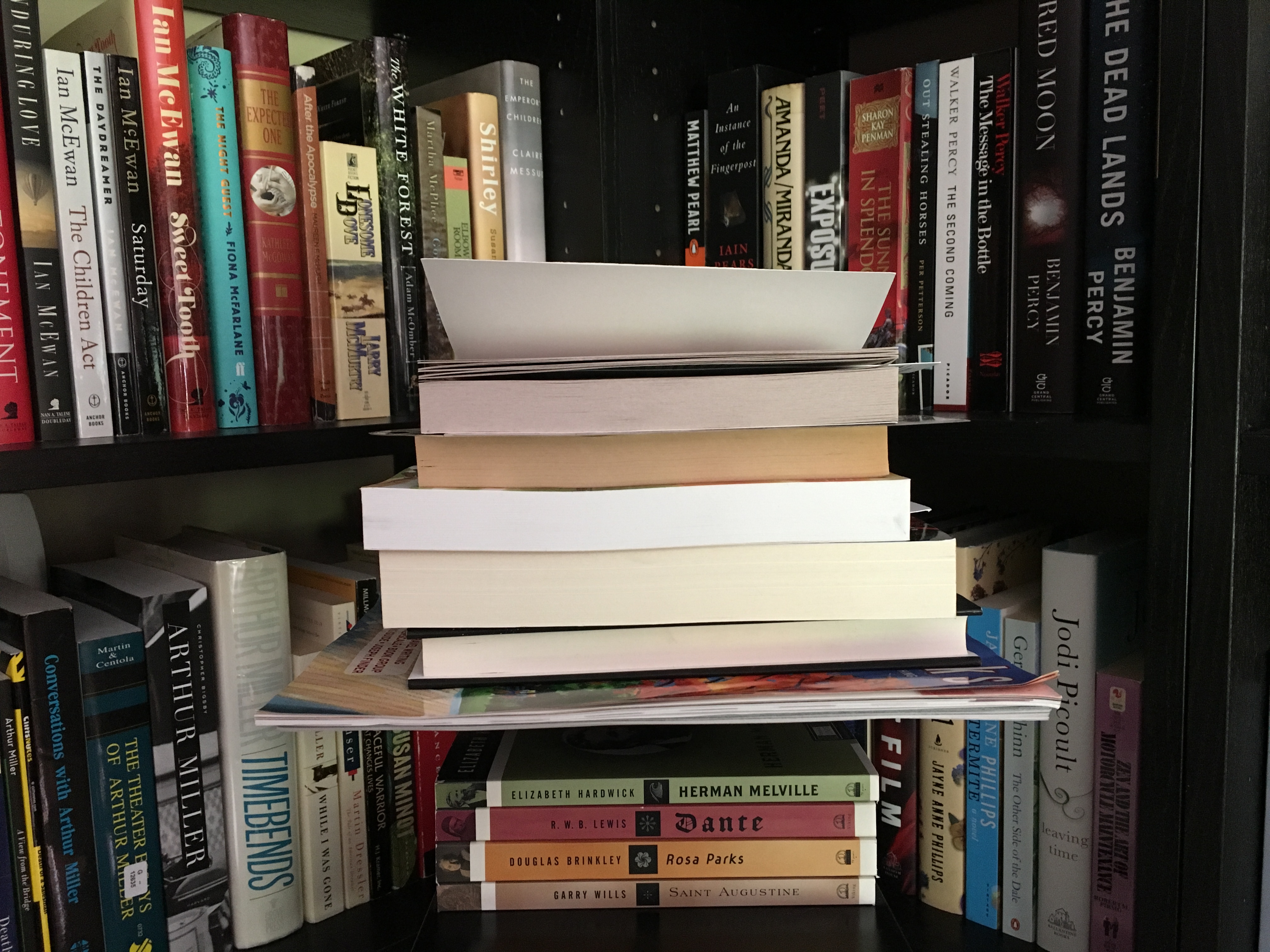
Recent acquisitions.

Recent acquisitions.

Two articles about reading captured my attention this week. The first, Will Schwalbe’s essay “The Need to Read” (WSJ, November 26), begins:

We all ask each other a lot of questions. But we should all ask one question a lot more often: “What are you reading?”

One of my favorite questions! Unfortunately, it can yield a crop of disappointing answers, including, “Oh, I don’t have much time for reading.”

Receiving a title or genre in response to the query is no guarantee that disappointment won’t soon follow, either. “I just read for entertainment” and “Oh, don’t over-analyze it” are two of my least favorite follow-up responses. Both seem designed not only to end what could have been a vibrant interaction but to dismiss and disparage me for being keen to explore. “Over”-analyze? Because I compared one novel to another? Because I wondered if you’d seen so-and-so’s review? Because I quoted a line or asked if you thought the closing paragraphs were effective?

Bosh.

My family spends a great deal of time talking about books — and, for that matter, movies, plays, art, television programs, and music. We describe what works for us and what doesn’t. We compare one book (or author or director or actor or artist) to another and stitch thematically similar works together — all in an ongoing conversation about what each of us is reading, thinking, learning, doing, and seeing. Over the last decade, we have been able to approach some works multiple times: Shakespeare’s plays, for example; LOST and Sherlock; Fargo and Soylent Green; the exhibits of many museums. This deepens and colors our discussion. More valuable to me than nearly all that we own is this mental treasure map of our shared experiences and memories, complete with its legend, comments, and annotations.

If that’s “over”-analysis, I am guilty, I guess. It’s funny, though, because, to me? That’s just good talking.

Here is another passage:

Books are uniquely suited to helping us change our relationship to the rhythms and habits of daily life in this world of endless connectivity. We can’t interrupt books; we can only interrupt ourselves while reading them. They are the expression of an individual or a group of individuals, not of a hive mind or collective consciousness. They speak to us, thoughtfully, one at a time. They demand our attention. And they demand that we briefly put aside our own beliefs and prejudices and listen to someone else’s. You can rant against a book, scribble in the margin or even chuck it out the window. Still, you won’t change the words on the page.

The other article is “A Plea for Reading in College” (Forbes, November 30):

I’m not saying that everyone should read a prescribed core of “great books” or that not enjoying reading automatically makes you suspect. However, one of the great advantages of reading, aside from the activity itself, is how it develops one’s imaginative powers. Whether in fiction or non-fiction, entering into a dialogue with characters and authors widens a reader’s perceptions of the world, a condition that greatly increases an individual’s ability to grasp the complexities that surround us, at the same time interacting with them and creating new forms and ideas.

Both articles compare the act of reading to a discussion: “They speak to us…” “You can rant against a book…” “[E]ntering into a dialogue with character and authors widens a reader’s perceptions of the world….”

So. I’m not “over”-analyzing. I’m reading, thinking, learning, and talking.

And you? What are you reading?

Where have I been? Where am I going?

img_8474Early voting, and, oh, have I ever learned a lot as an election judge — about myself, my town, and, yes, even the world. The stories I could tell, too! But that seems indiscreet, so I will confine myself to a confession: I have not made a bit of progress on my ornithology studies since the post in which I asserted that I would bring the book to my assignment. On the morning of my first day as an election judge, I rightly guessed that I would not have much time for reading, so I left the tome at home. As it turned out, I did not move from my ePollBook until 2:15 p.m. that first day, and the subsequent days allowed no time for attentive study or deep reading. During the storms last week, though, I was able to read the newspapers, and on other days, I caught up on some of my magazine subscriptions and finished the last few pages of a graphic work. That’s all right. Once the election is decided, I can (re)turn my attention to the birds – both Project FeederWatch, which begins November 12, and the course.

On my free days these last couple of weeks, I’ve been practicing my music, winterizing the forever home, lavishing attention on the cats (who are not accustomed to spending eight- and ten-hour days without a human lap; thank goodness my husband is working from home this week!), and slurping down fast-paced thrillers like Dark Matter (Blake Crouch) and The Strain (Guillermo de Torro and Chuck Hogan). The first novel might appeal to fans of The Martian, although Matter is light on the science and problem-solving that make Martian a brainier book. As for the second novel, twenty minutes of a television series reminded me that I already owned the book, the first in a trilogy. Over the weekend, curled under a blanket in my capacious-bottomed Adirondack chair in the backyard, I enjoyed the butter-yellow light, the decidedly not-November weather, and the somewhat predictable vampire tale. I’m undecided about finishing the trilogy.

At this writing, then, I’ve completed 109 books, which is five above my goal in a year of reading slowly. Twenty-six of those are graphic works; sixteen are non-fiction. If those numbers were flip-flopped, I would have met one of my objectives: to read more non-fiction. Seven or so weeks remain in the year, and I am knee-deep in the delightfully informative Life Reimagined (Barbara Bradley Hagerty), so there is still (some) hope of meeting that objective. Similarly, inspired by my work in the six-week MOOC “Literature and Mental Health: Reading for Wellbeing,” I am hopeful about meeting another of my objectives: to read more poetry.

Speaking of bibliotherapy, in a neat bit of serendipity / synthesis / synchronicity, I ran across the subject last week while catching up on my magazine subscriptions. From “Read a Novel: It’s Just What the Doctor Ordered” (Time, October 27):

Even the greatest novel cannot, by itself, cure clinical depression, erase posttraumatic stress or turn an egomaniac into a self-denying saint. But it might ease a midlife crisis or provide comfort in a time of grief.

The MOOC I completed – led by Jonathan Bate and Paula Byrne and featuring excellent interviews and discussions with Stephen Fry, Ben Okri, Ian McKellen, and Mark Haddon, among others – focused on the way that literature, particularly poetry, can illuminate certain aspects of the human condition and proffer insight or succor during times of emotional upheaval. More, quite apart from the subject, the cadence or form of a poem might also speak to the reader, serving as an incantatory emotional salve. To me, the MOOC provided a responsible and fascinating way to apply reading. The Novel Cure, on the other hand, a book in my TBR and one featured in the Time article above, seems like embarrassingly oversimplified application of the ideas – as in, Feeling blue? Read this. As Bate and Burns and the doctors, writers, professors, actors, etc. they featured pointed out, though, it simply doesn’t work that way. Literature may prove powerfully effective for some people experiencing emotional distress, but the works cannot be prescribed.

Other reading notes… After a long hiatus, I accepted three ARCs: The Lion in the Living Room: How House Cats Tamed Us and Took Over the World (Abigail Tucker) was released last month; Running (Cara Hoffman) will be released in February; and The Jersey Brothers: A Missing Naval Officer in the Pacific and His Family’s Quest to Bring Him Home (Sally Mott Freeman) is due out in May. Already familiar with Hoffman’s novel Be Safe I Love You, I was engaged by the opening pages of Running, so it has secured a place in my knapsack this week along with the last two weeks’ worth of comics. (Darn this brief stint of working! It’s wreaking havoc on my reading life.)

Speaking of comics, I finally succumbed: I created a pull list at Comixology and linked it to the shop partway between home and my husband’s work. The owner not only most reliably carries copies of the titles I read, he recommended titles based on my buying patterns, including one I took – Eden’s Fall. (I know some of you think I should just get the issues electronically, but I am still hopelessly in love with hard copies.)

More when this election is (finally!) behind us. In the meantime, what are you reading?

In which ten days pass

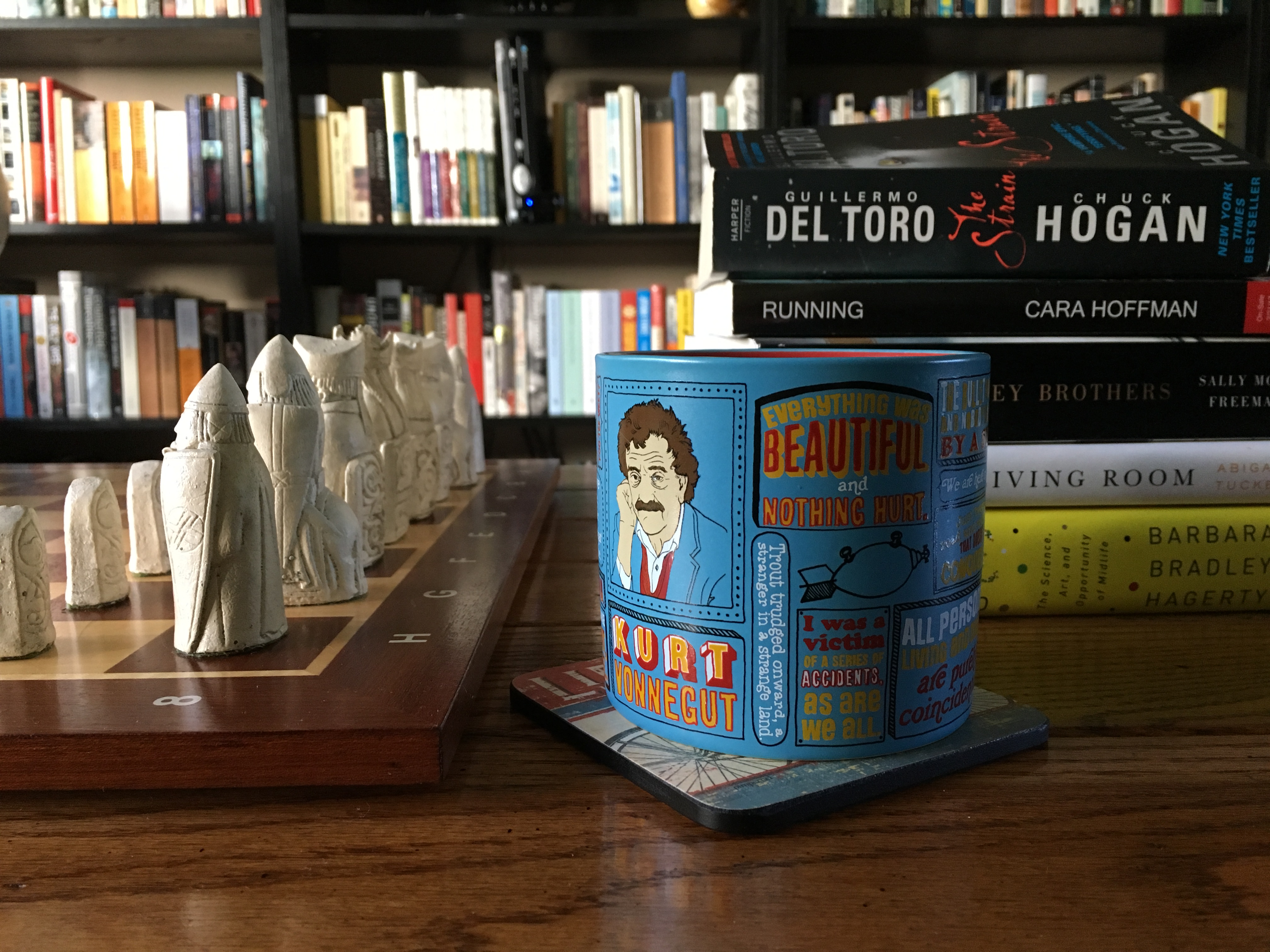
img_8091■ In anticipation of Banned Books Week (September 26 through October 1), I reread Slaughterhouse-Five earlier this month. I must have known I was entering a reading slump, during which I touch books; I think about books; heck, I even acquire books. But read them? Meh. Not so much. My mind has been restless, and regaining the required focus has felt a bit like bathing two cats at the same time — messy and misguided. I am glad I reacquainted myself with Vonnegut’s charms, though, because he reminded me that, slump or not, I am a reader.

■ I am also something of a watcher, and I’ve not had any difficulty focusing on that pursuit. Heh, heh, heh. After catching up on the sensational Mr. Robot, I chose The Americans as my next small-screen obsession. Terrific stuff.

■ Speaking of watching… Despite a strong cast and some stagecraft wizardry, the performance of Julius Caesar we saw at the Writers Theatre this week was missing… something. I’d have put it down to simply being an off day, but the Trib sensed a lack, too.

Our next theater adventure is part two of the Chicago Shakespeare Theater’s bard binge, Tug of War. (Reviews here and here.)

“Science fiction was a big help.”

imageHas is it really been two weeks since my last post?

■ Only a few pages in the Rubank Intermediate book remain, so I was advised to bring Advanced, Vol. 1 to my October lessons. I’ve been assigned Haydn’s “Serenade” as my new solo piece, and one of my instructor’s colleagues has suggested that two of his students and I form a trio jointly supervised by the two instructors. A year ago, this idea would have made me shudder. Now? I am excited to begin!

■ In forty-eight days, I will be an election judge at a nearby precinct. Earlier this month, on a whim, I looked over our county’s website, made a call, emailed an application, and registered for training. What a lot to remember! Fortunately, the training included several hands-on exercises, and if I am chosen to work early voting, I will gain experience prior to the big day.

■ This is Week 3 of the University of Warwick’s rerun of “Literature and Mental Health,” and it has been every bit as compelling as I had hoped.

■ Like any over-fifty, my husband and I make a number of annual health appointments, and this year, we decided to schedule all of these in September and October. Waiting rooms have this to recommend them: They give one time to finish a couple of books.

From Slaughterhouse-Five:
p. 4

And even if wars didn’t keep coming like glaciers, there would still be plain old death.

p. 101

So they were trying to re-invent themselves and their universe. Science fiction was a big help.

From The Code of the Woosters:
p. 221

“You can’t be a successful Dictator and design women’s under-clothing.”
“No, sir.”
“One or the other. Not both.”
“Precisely, sir.”

Because I only include cover-to-covers, ninety-three titles appear on my list to date. In these years of reading slowly, my goal is usually a minimum of two books per week, and I am positioned to exceed that next month.

What am I reading today? A Fair Maiden (Joyce Carol Oates) and the poetry volume, Stressed, Unstressed. My husband and I will see Julius Caesar at the Writers Theatre later this month — our first just-us theater adventure in thirty years — so I am also rereading that, one of my favorite works of Shakespeare. (“Would he were fatter!”) And I am savoring Kij Johnson’s The Dream-Quest of Vellitt Boe, which features an over-fifty woman with a “never-absent pain in her back.” I think I may love the fictional Vellitt Boe as much as love the non-fictional and now ninety-eight-year-old Diana Athill, whose latest memoir is winging its way toward the forever home.

■ Speaking of the forever home, how much I love it! Although my daughters regularly contributed to its care, over the last two years, they had increasingly less time for all of the tasks that ensure a property doesn’t succumb to “kipple,” so I often worked solo, on the yards, for example. And now that they are at university, it is generally me alone performing the daily, weekly, monthly, seasonal, and annual home rituals. When he can, my husband helps, of course, as when he made the end-of-season inspection of the crawlspace. And we have services for some tasks — for example, soil aeration; tree care; furnace, air-conditioning, and appliance maintenance; and critter control. But often, it is just the cats and I, which means that the rituals take a bit more time and that I must perform more of them (including pet care, which was once the exclusive domain of my older daughter). What I had thought might prove annoying, though, has mostly represented only a slight tempo change in my life’s regular rhythms. In fact, I find that being needed in these new ways is oddly comforting, as if the forever home is enveloping me while I continue to adjust to my latest “new normal.”

“What is this life if, full of care…

image

…We have no time to stop and stare?”

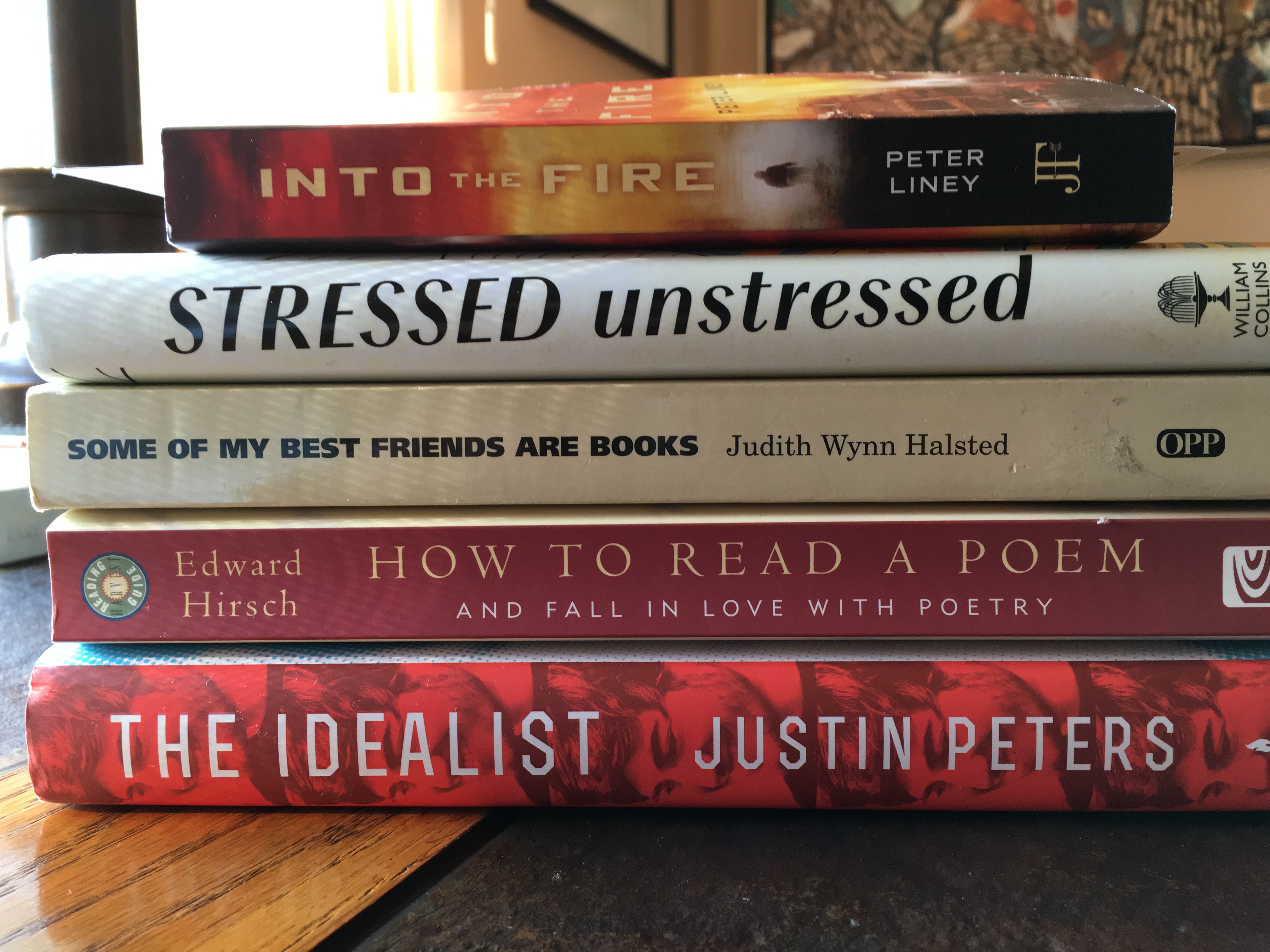
It absolutely delights me that the MOOC I’ve anticipated all summer uses the W.H. Davies poem “Leisure,” the source of the opening quote, to make several points about mindfulness, the healing power of literature, and our need to clear a mental corner for contemplation. Said MOOC accounts for three of the books on this weekend’s pile: Some of My Best Friends Are Books, How to Read a Poem, and Stressed, Unstressed.

Liney’s Into the Fire is the second book in a trilogy, the first of which I read on vacation two years ago. I remember The Detainee as a gripping story that suffered from uneven writing. In the end, though, story won. I have, however, contemplated flinging the follow-up across the room, it’s that badly written. Is it vacation nostalgia that keeps me reading?

The Idealist ended up in the pile when I heard Rick Kogan’s interview with author Justin Powers two weekends ago. The book began as a long Slate profile of Aaron Swartz.

We visited our daughters this holiday weekend, which gave us time to listen to NPR and P.G. Wodehouse’s The Code of the Woosters, every other sentence of which I could press into my commonplace book. We also took two bike rides, the first of which was the most memorable: At the turnaround point, we paused for water, coffee, and some nuts. Swallows swooped and darted overhead. Prairie grasses and flowers bent in the breeze. The trees and underbrush thrummed with the sounds of animals and birds making the most of summer’s end. We had no choice. We simply stopped and stared.

Late August book notes

imageDespite my best intentions, I have only finished four of the ten books I assembled for this post):

You Will Know Me (Megan Abbott; 2016. Fiction.)
My Name Is Lucy Barton (Elizabeth Strout; 2016. Fiction.)
A Study in Scarlet (Sir Arthur Conan Doyle; 1887. Fiction.)
Eileen (Ottessa Moshfegh; 2015. Fiction.)

This puts me at only six books for August, a number that makes sense when I consider that (1) we spent most of the month preparing for our daughters’ departure; (2) we’re all adjusting to new routines and communicating (phone, text, email, packages, etc.) takes much longer now that we all spend most days apart; and (3) I’ve been under the weather for a week… which reminds me: When I was much younger, I had an idea — crafted from a complete misunderstanding of the subtext of stories about genteel characters recovering in sanatoriums — that illness translates into more time to read. I clung to this misinformed idea into my early twenties, when a bout with sinusitis and later with the flu (not a really bad head cold but influenza) taught me that I can’t read — At. All. — when I’m sick. This may be because I am the world’s worst patient, but it may also be that everyone finds it difficult to focus when feverish, congested, drowsy, in pain, coughing, or [insert symptom(s) here].

So, six books this month — although if I’m feeling particularly motivated later this afternoon, I may be able to finish Duhigg’s Smarter Faster Better. My current plan for September, though, is simply to return to reading at whim — hence, the rather anonymous-looking stack pictured above.

Regarding the only book I’ve finished this week: I understand how Eileen made the Man Booker Prize longlist, but it was a claustrophobic read for me — too small, too sordid. Two passages made it into my commonplace book, though:

p. 65
Nobody missed me. I know other young women have suffered far worse than this, and I myself went on to suffer plenty, but this experience in particular was utterly humiliating. A psychoanalyst may term it something like a formative trauma, but I know little about psychology and reject the science entirely. People in that profession, I’d say, should be watched very closely. If we were living several hundred years ago, my guess is that they’d all be burned as witches.

p. 256
I don’t know where we went wrong with my family. We weren’t terrible people, no worse than any of you. I suppose it’s the luck of the draw, where we end up, what happens.

Mid-month reading notes

imageWell, we’ve arrived at the month’s midpoint. My reading plans (described in this post) included:

A Study in Scarlet (Sir Arthur Conan Doyle; 1887. Fiction.)
Letters from a Stoic (Seneca; 1494.)
A Woman in Charge: The Life of Hillary Clinton (Carl Bernstein; 2007. Non-fiction.)
The Last Policeman (Ben Winters; 2012. Fiction.)
Shylock Is My Name (Howard Jacobson; 2016. Fiction.)
Eileen (Ottessa Moshfegh; 2015. Fiction.)
My Name Is Lucy Barton (Elizabeth Strout; 2016. Fiction.)
You Will Know Me (Megan Abbott; 2016. Fiction.)
An Astronaut’s Guide to Life on Earth (Col. Chris Hadfield; 2013. Non-fiction.)
Smarter Faster Better (Charles Duhigg; 2016. Non-fiction.)

From the above list, I have already completed:

You Will Know Me (Megan Abbott; 2016. Fiction.)
My Name Is Lucy Barton (Elizabeth Strout; 2016. Fiction.)
A Study in Scarlet (Sir Arthur Conan Doyle; 1887. Fiction.)

Although I have not been following the Games, I couldn’t help but wonder, after reading Abbott’s novel, if I now understand the grim-faced masks women gymnasts don. As for questions about whether Strout’s novel deserves its place on the Man Booker Prize long list, I’d say yes. From My Name Is Lucy Barton:

p. 14
This must be the way most of us maneuver through the world, half knowing, half not, visited by memories that can’t possibly be true. But when I see others walking with confidence down the sidewalk, as though they are free completely from terror, I realize I don’t know how others are. So much of life seems speculation.

p. 170
When Chrissie left for college, then Becka the next year, I thought — and it’s not an expression, I’m saying the truth — I did think I would die. Nothing had prepared me for such a thing. And I have found this to be true: Certain women feel like this, that their hearts have been ripped from their chests, and other women find it very freeing to have their children gone. The doctor who makes me not look like my mother, she asked me what I did when my daughters went to college, and I said, “My marriage ended.” I added quickly, “But yours won’t.” She said, “It might. It might.”

I finished A Study in Scarlet well in advance of the online book club / MOOC outline because much of the rest of the month is already spoken for.

From A Study in Scarlet, Part I, Chapter V:
“It was magnificent,” he said, as he took his seat. “Do you remember what Darwin says about music? He claims that the power of producing and appreciating it existed among the human race long before the power of speech was arrived at. Perhaps that is why we are so subtly influenced by it. There are vague memories in our souls of those misty centuries when the world was in its childhood.”

From Part I, Chapter VII:
“All this seems strange to you,” continued Holmes, “because you failed at the beginning of the inquiry to grasp the importance of the single real clue which was presented to you. I had the good fortune to seize upon that, and everything which has occurred since then has served to confirm my original supposition, and, indeed, was the logical sequence of it. Hence things which have perplexed you and made the case more obscure, have served to enlighten me and to strengthen my conclusions. It is a mistake to confound strangeness with mystery. The most commonplace crime is often the most mysterious because it presents no new or special features from which deductions may be drawn. This murder would have been infinitely more difficult to unravel had the body of the victim been simply found lying in the roadway without any of those outré and sensational accompaniments which have rendered it remarkable. These strange details, far from making the case more difficult, have really had the effect of making it less so.”

From Part II, Chapter VII:
“I hardly expected that you would. Let me see if I can make it clearer. Most people, if you describe a train of events to them, will tell you what the result would be. They can put those events together in their minds, and argue from them that something will come to pass. There are few people, however, who, if you told them a result, would be able to evolve from their own inner consciousness what the steps were which led up to that result. This power is what I mean when I talk of reasoning backwards, or analytically.”

I think I will finish Eileen later today, after which I plan to carry on with Shylock Is My Name. Related aside: We saw the Shakespeare’s Globe production of Merchant at the Chicago Shakespeare Theater over the weekend. Haunting. Reviews here and here. And because I so thoroughly disagreed with Steven Franks, I appreciated this bit from Chris Jones’ review:

And yet, just last week, my own newspaper published an editorial, penned by a Washington attorney, arguing, in essence, that “The Merchant of Venice” should never be performed again, on the grounds that it is incurably anti-Semitic.

That’s ridiculous, of course, not least because it is only in performance that the play proves its worth. In the hands of a competent director like Jonathan Munby, “The Merchant of Venice” can and does play as a cautionary tale of the perils of anti-Semitism. His work here in concert with the designer Mike Britton is the best I’ve seen from this oft-in-Chicago director. Only in performance can this be a work about how hate can poison an otherwise prosperous and privileged community, extracting a price on victims and perpetrators alike, destroying all that is good, really. This particular production, which features an especially devastating coda, is especially rich in the painting of that picture.

The other books I have finished this month are

You’re Never Weird on the Internet (Almost) (Felicia Day; 2015. Non-fiction.)
Injection, Volume 2 (Warren Ellis; 2016. Graphic fiction.)

On the shelves

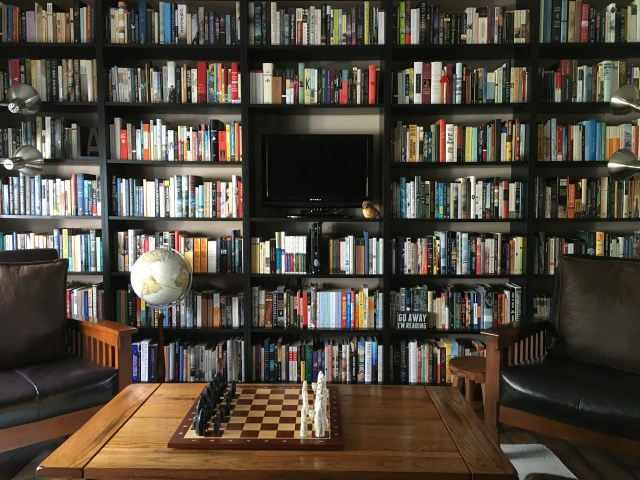
imageEarlier this week, my daughters helped me with yet another large book reorganization project. For the last 5.5 years, the shelves in the master bedroom (three pine bookcases my husband finished for me — complete with our heart-enclosed initials on the back — in 1983, 1985, and 1986) housed my Joyce Carol Oates and Kurt Vonnegut collections, as well as the remnants of my Arthurian literature obsession and my stash of mass paperbacks. The remaining shelves held new acquisitions, which, after being read, would be sold, donated, or blended into the main library.

The obvious flaw in this system was, of course, that my acquisition rate continued to outpace my reading rate — this despite the radical reduction of the former and the uptick in the latter. We were, therefore, routinely shifting “new” acquisitions into the main library before a verdict (Sell? Donate? Keep?) had been rendered. Why? In order to make room for newer and newest acquisitions.

As we prepared to shift and file, my youngest suggested that the bedroom become a more static collection. Brilliant! Shakespeare, Sherlock, Melville, Fitzgerald, poetry, and the volumes of Lyttleton / Hart-Davies Letters joined Oates, Vonnegut, and Arthur; the smallest (and oldest) of the original bookcases, which serves as my nightstand, became a true TBR station; and the main library, which stretches from the living room, over to the piano room, down the hallway, and into the so-called “girl cave” (essentially, a second living room) was shifted to accommodate all of the rest. Several boxes of books were donated, and we brought three large bags of books and movies to Half-Price Books over the weekend.

Between that project and preparing my daughters for their move to university, I haven’t read as much as I had planned this week, but I will be able to post some notes tomorrow.