


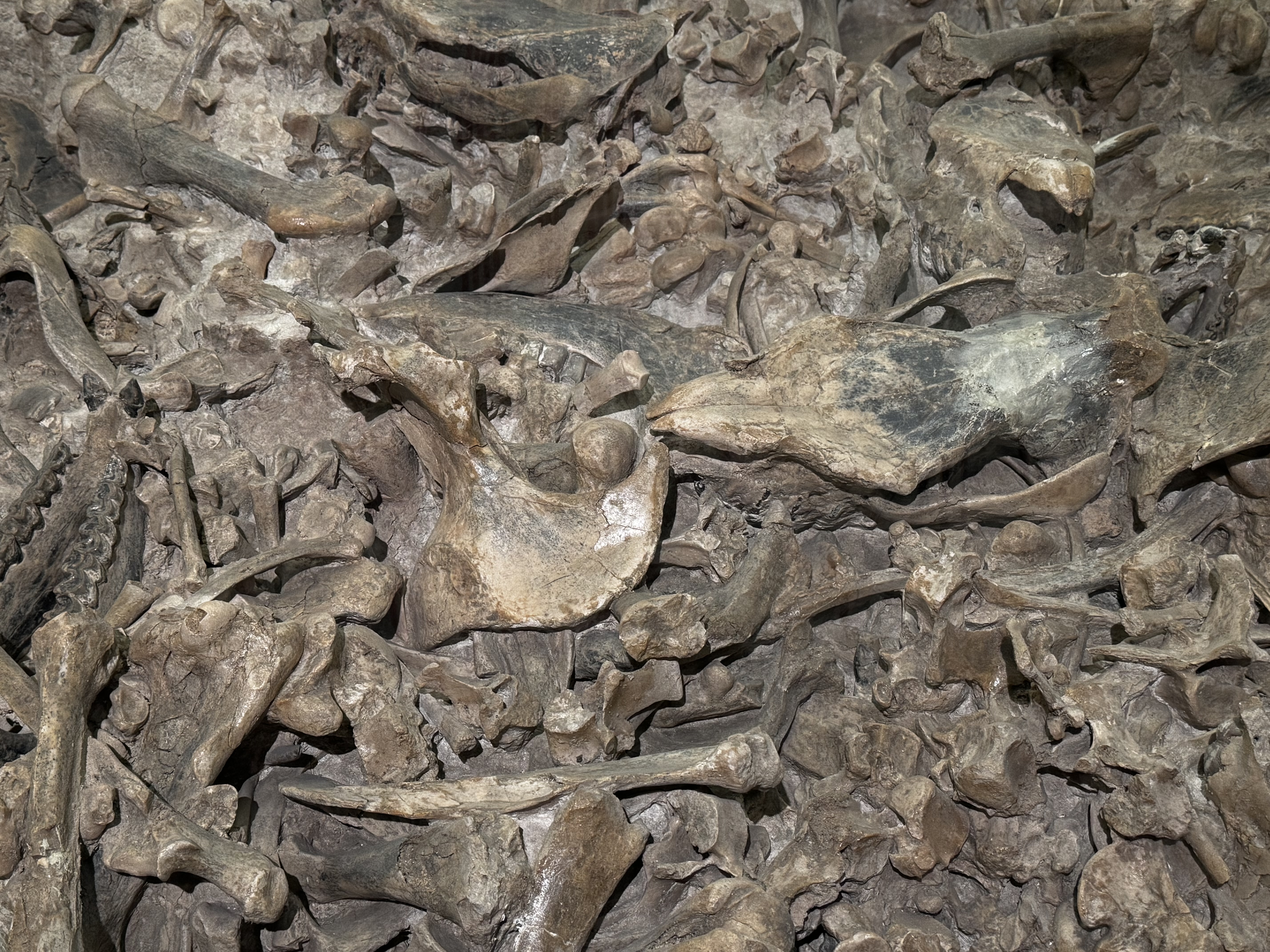
Saturday at the Harvard Museum of Natural History.
Saturday at the Harvard Museum of Natural History.
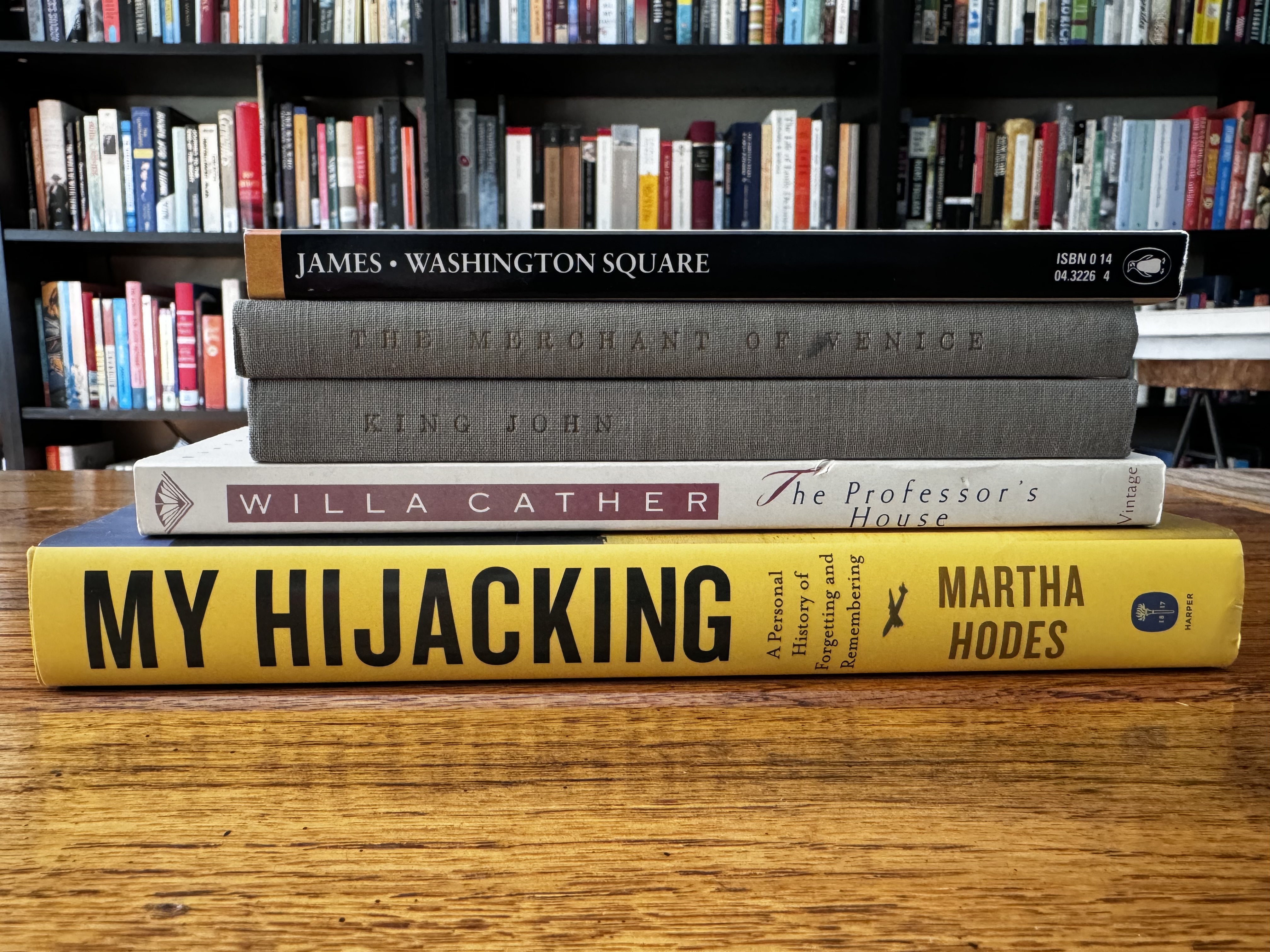
With that settled, I can choose a couple of outfits, toss in my slippers, and call it a carryon.
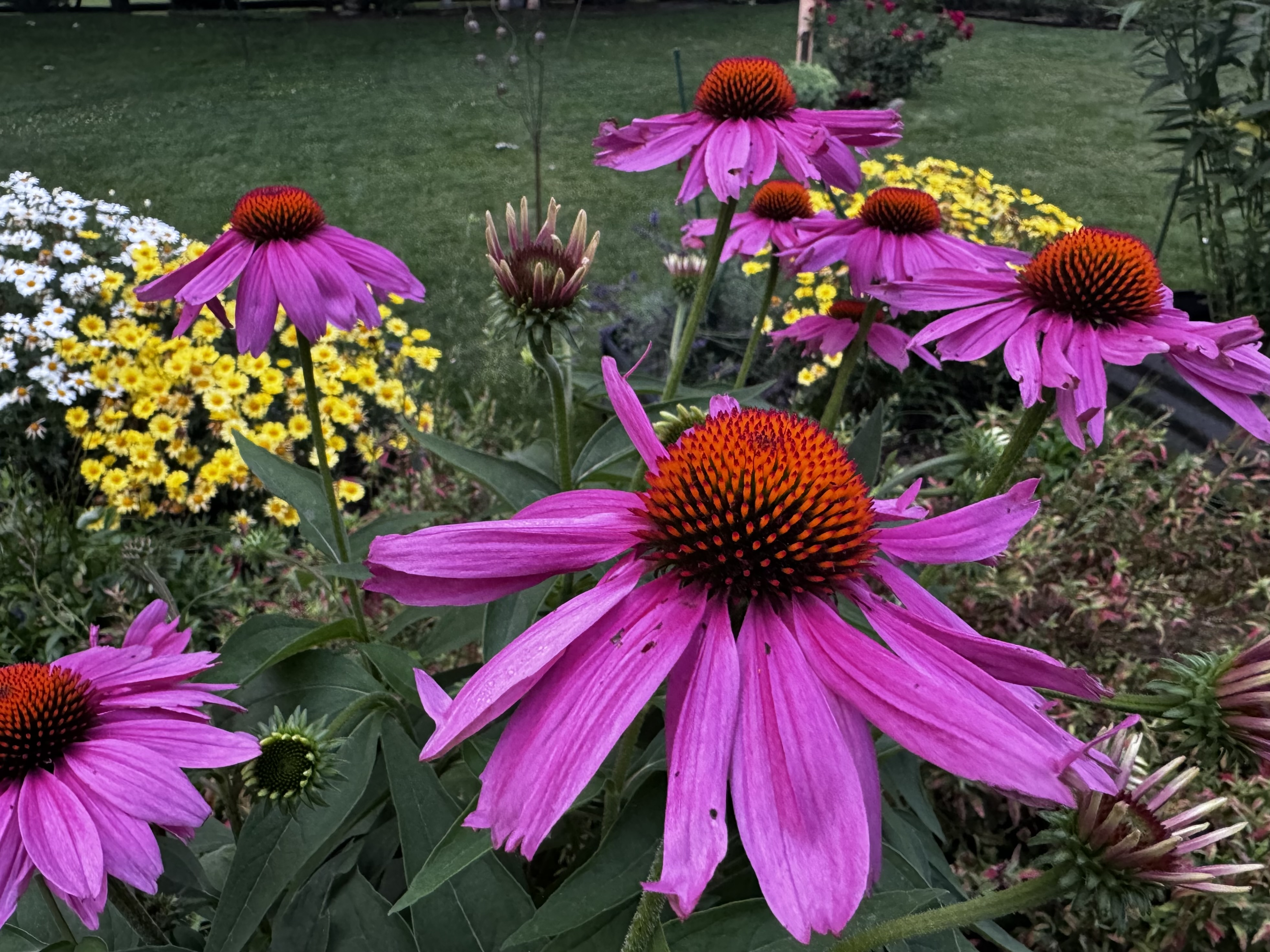
That green expanse behind the pollinator pockets is an anomaly. Most years, by this time, the lawns are shades of orange and brown — dormant or nearly burnt. Elsewhere, people are experiencing dangerous and damaging weather, I know; but here? It has mostly been beautiful, and I’ve only needed to water twice since May.

■ Atomic Habits (James Clear; 2018)
The instructor of a body mapping class I took through the Chicago Flute Club recommended this. If the topic of habits — how they are developed, how they are reformed or changed — interests you, Charles Duhigg’s The Power of Habit: Why We Do What We Do in Life and Business (2012) is a much better choice.
■ Strangers to Ourselves: Unsettled Minds and the Stories That Make Us (Rachel Aviv; 2022)
I am not sure what prompted me to pull this down; it has been on the shelves since it was first published. What a compelling read, though. Review here.
■ Those Who Leave and Those Who Stay (Elena Ferrante; 2013)
As I’ve mentioned, a reading friend and I are making our way through the Neapolitan novels. So. Much. Drama.
■ A Lost Lady (Willa Cather; 1923)
This was a reread and so far the weakest entry in my Cather project. That is not to say it wasn’t worthwhile — just not as good as, say, My Ántonia. Next up is The Professor’s House.
■ A Midsummer Night’s Dream (1595)
With half the year behind me and only about a month of summer remaining (most of my activities follow an academic year calendar), I must work out a new plan for completing my Shakespeare in a Year project. Until then… I paired my reread of Dream with the Bridge Theatre production streaming on National Theatre at Home. Good stuff.
■ Georgia O’Keeffe: A Life (Roxana Robinson; 1989)
This is a dense but readable biography. I am looking forward to seeing Georgia O’Keeffe: “My New Yorks” next month.
■ Oranges Are Not the Only Fruit (Jeanette Winterson; 1985)
Read with my daughter, who now shares my affection for Winterson’s wordsmithery.
■ The Magician’s Elephant (Kate DiCamillo; 2009)
Recommended by a friend.
■ Endgame (Samuel Beckett; 1957)
In June, we scored tickets to see Michael Shannon in Turret. (Reviews here and here.) Of course, he delivered a riveting performance, as did Lawrence Grimm and Travis Knight. But the play, written and directed by A Red Orchid ensemble member Levi Holloway, attempted to say and do so much, too much, and resolved nothing. Even the absurd should make a sort of sense, right? Turret really did not. Realizing that Beckett’s play was the inspiration, I picked up the script and followed my reading with the production featuring Michael Gambon and David Thewlis (streaming on YouTube). I would have loved to see Shannon, Grimm, and Knight in a production of Endgame.
■ The Hearing Trumpet (Leonora Carrington; 1974)
Last September I fell in love with the work of Remedios Varo. In October while at MoMa, I was struck by similarities in work by Carrington. A friend sent me this book, which strikes me as the novel version of her art — surreal, complex, mythic but also oddly familiar. Recommended.
■ A Deadly Wandering (Matt Richtel; 2014)
The dangers of texting while driving are no longer news, of course, but this excellent book provides a compelling exploration of attention, justice, and trauma.
■ Liliana’s Invincible Summer: A Sister’s Search for Justice (Cristina Rivera Garza; 2023)
At first the lyrical writing of this account of a thirty-year-old murder jarred me. Eventually, though, the contrast of style and content knocked me out.

What a difference a day makes! Yesterday was so hot and humid, but today it has not yet gotten to seventy.

Recent acquisitions.
The drone of the cicadas has subsided, but the damage to the trees remains. The oaks, which are the hardest hit in our area, are susceptible to other issues, so the flagging certainly cannot be good for them. I am trying not to borrow trouble, though, so I will share that it was a delight to tend to the yards and gardens this morning’s cool quiet.

It had been two months since my last music lesson, and my practice time was limited during those months. But somehow I pulled it together for a productive hour-long lesson today.
🎶 Having completed work on Hans Köhler’s Sonatina for Two Flutes in Album of Flute Duets, revised and annotated by Louis Moyse, we have selected Jean-Jacques Naudot’s Sonata for Two Flutes in the same collection. For my late-July lesson, I will prepare the Adagio and the first part of the Allegro (the first page of the four-page piece).
Over the spring semester, we completed the fifteen pieces in Interval Duets by Thomas Filas. The deceptively simple collection focused on achieving a clear, beautiful sound. Over the next fifteen lessons, then, we have decided to work through the book again; this time, I will play second part. We are also revisiting the Adagio and Allegro from Jean-Baptiste Loeillet’s Sonata No. 1 in Selected Duets for Flute, Vol. II (Advanced); again, I am playing the second part.
🎶 Today I finished (if that is correct verb) the third of Köhler’s “moderately difficult pieces as studies for flute” from Op. 33, Book 2, in Robert Cavally’s Melodious and Progressive Studies from Andersen, Gariboldi, Koehler, and Terschak for Flute, Book 2. In April, I shared with my teacher that pieces like this feel needlessly difficult for an adult learner whose chief goals are (1) to do well in community band and (2) to always be learning and improving. She has now moved me into his Twenty-Five Romantic Etudes (Op. 66), and for my next lesson I will prepare the “The Swing.”
🎶 In April, I finished 116 in P. Bona’s Complete Method for Rhythmical Articulation, and my teacher provided excellent notes and examples to help me approach 120, my last assignment in the book; however, I have no plans to tackle this until after I present the first movement of the Stamitz Concerto in G major, Op.29, in August. Because I chose to work on the three movements out of order, this will conclude my work on the concerto, freeing me to focus on the Bona.
🎶 For my scales and long tone work, I have primarily relied on Parès Scales for Flute or Piccolo and ILMEA Senior HS Band Audition Scales sheet. My teacher now recommends that I begin working in Maquarre’s Daily Exercises for the Flute.
🎶 For my piccolo studies, in addition to exercises in Danielle Eden’s Piccolo! Piccolo! method books, my teacher recommended revisiting Köhler’s Op. 33, Book 1.
🎶 My July practice sheet:
— 15 minutes: long tones, scales, exercises
— 20 minutes: Twenty-Five Romantic Etudes (Op. 66), “The Swing”
— 10 minutes: Interval Duets, No. I
— 15 minutes: Album of Flute Duets, Jean-Jacques Naudot’s Sonata for Two Flutes
— 15 minutes: Selected Duets for Flute, Vol. II (Advanced), Jean-Baptiste Loeillet’s Sonata No. 1
— 15 minutes: piccolo
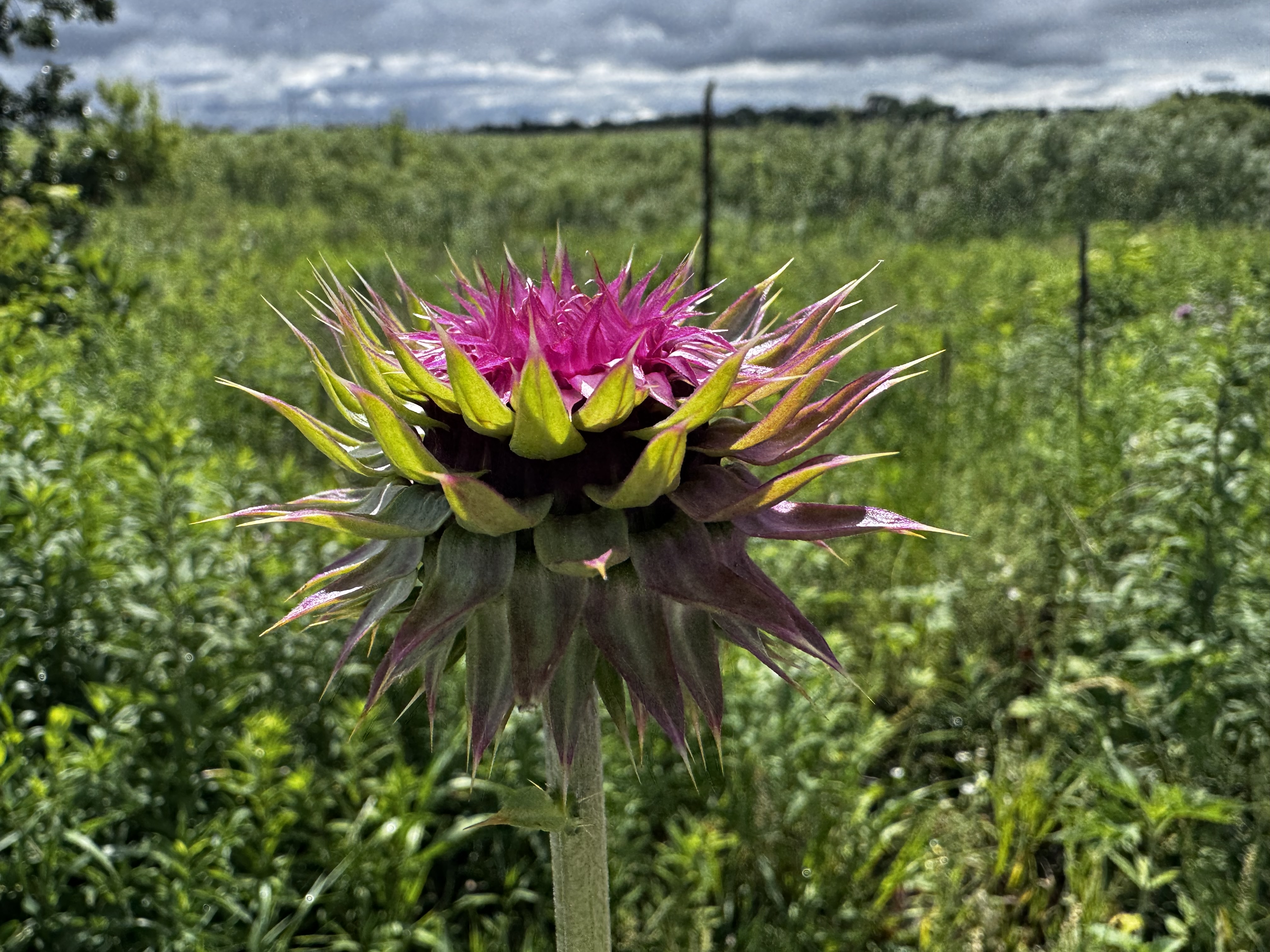
At a conservation district this morning.
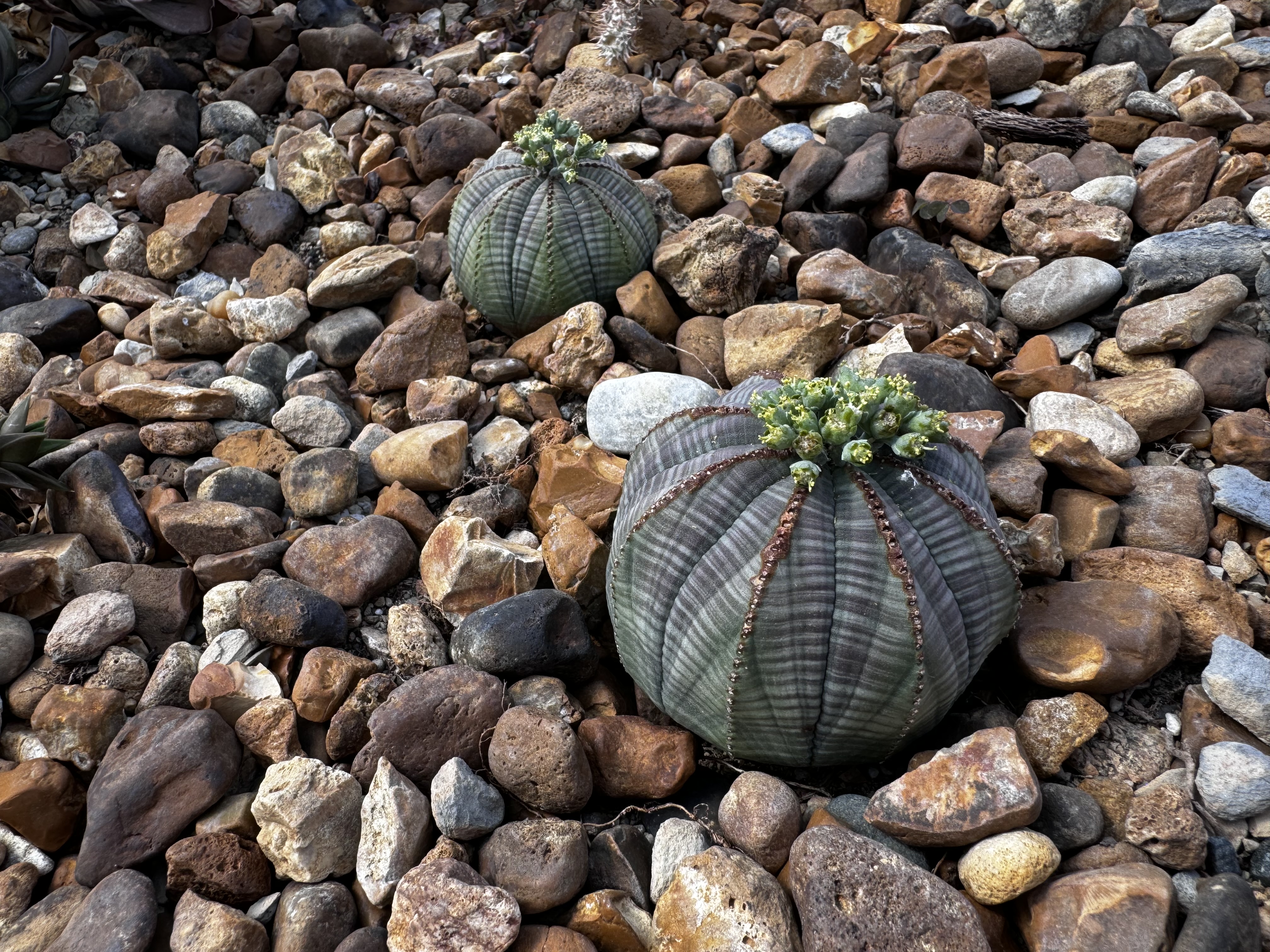
Seen at Matthaei Botanical Gardens.
Most of the reasons I have been so busy since late April fall under the heading “Not necessarily my story to tell,” but the next few days should adhere to a more regular schedule of walking, studying, practicing, and reading. Of course, simply writing that sentence may ensure disruption. And so it goes.
Until the next alarum, then, I am finishing A Midsummer Night’s Dream today, having resumed my Shakespeare in a Year project, and I hope to finish Roxana Robinson’s biography of Georgia O’Keeffe over the next few days. My first music lesson since April is scheduled for next week, and maybe I’ll have time for my Latin studies, which have been too long neglected.
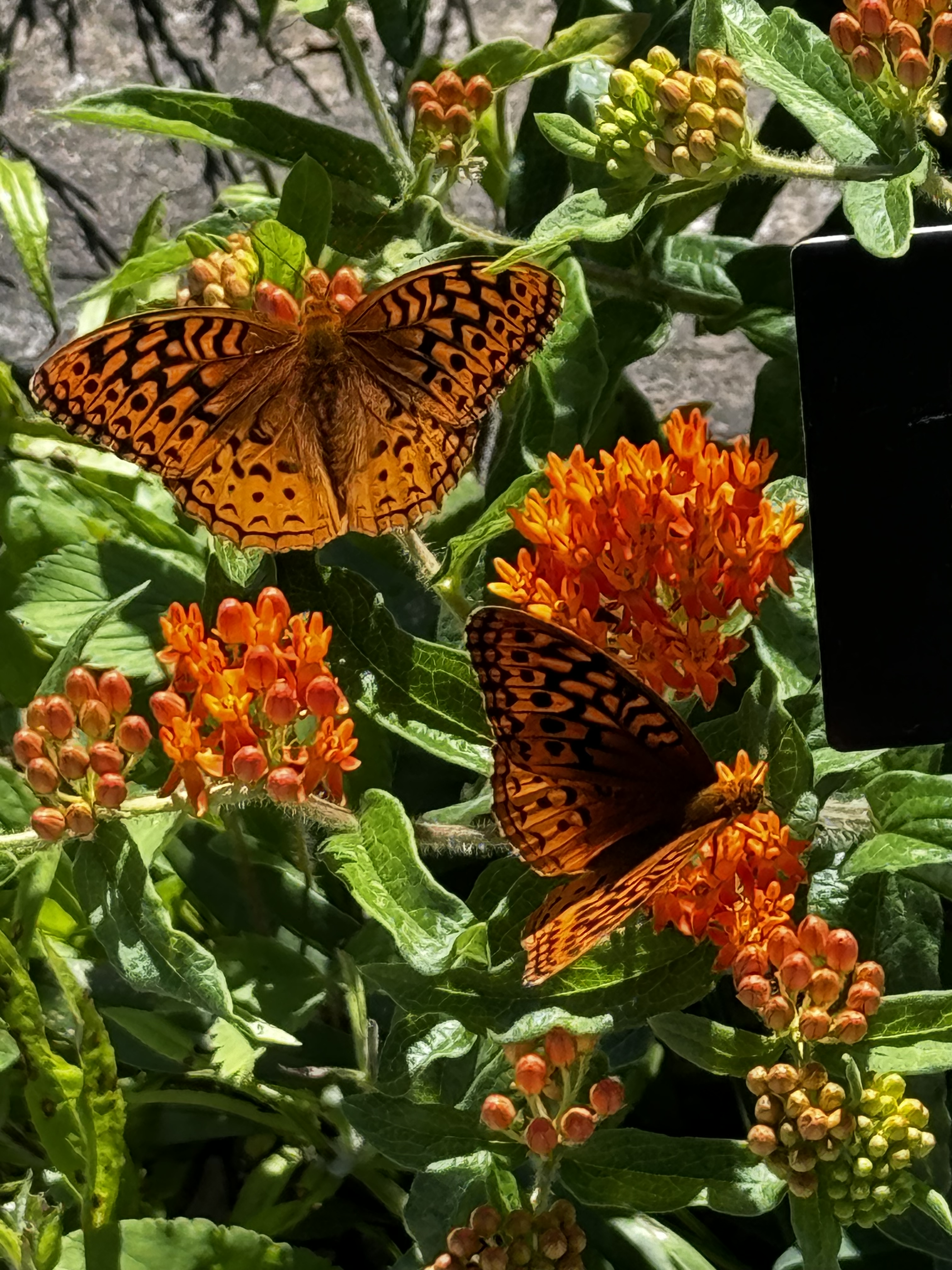
 Nerdishly