

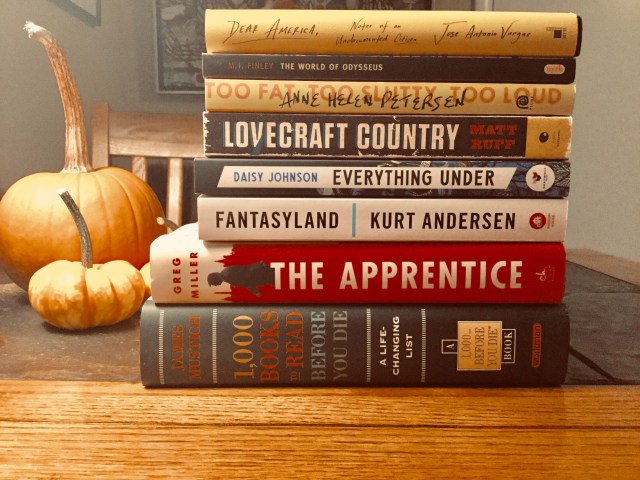
Recent acquisitions.
This is the avid reader’s “Lose weight” or “Join a health club” goal, isn’t it? A resolution made to be broken before Valentine’s Day with rueful chuckles and the nodding acceptance of most fellow readers.
Although my rate of acquisition has certainly slowed, my commitment to reading from the shelves has been something less than steadfast. (Evidence: More than forty of the titles I’ve finished this year were published this year.) As I made room for new friends this morning, I was struck afresh by how many wonderful books already await my attention. Frankly, walking through my house is not unlike wandering through a tiny but well curated bookstore, replete with the same, “Oooo, that looks interesting!” and “Hmmmm, now what’s that about?” discoveries. The abundance of riches is both wildly cool and a little embarrassing. So although we’re a bit out from the “I resolve” time of year, I have been contemplating a personal reading challenge for 2019, something with a bit more stick-to-it-ness than the designed-to-be-broken, “Read from the shelves.”
I began with, “Read one book from every shelf in my library.” Because there are more than two hundred shelves, though, and because it’s been more than a decade since I last finished more than two hundred books in a year, the goal needed refinement. I have decided on one hundred books from my shelves, including at least twenty-four non-fiction titles and at least one book from each of the following “special collections”: Shakespeare, poetry, NYRB, Vonnegut, Joyce Carol Oates, philosophy, art, and children’s / YA. Since I’ve been finishing between 120 and 150 books annually for the last few years, this goal leaves me a little room for impulsivity. My current plan requires nothing more than that the book have been in my collection before the end of 2018, but I will add more details if or when it becomes less random.
How about you? Do you have any reading plans or goals or challenges for the coming year?
 Vote. The local and state races directly affect you.
 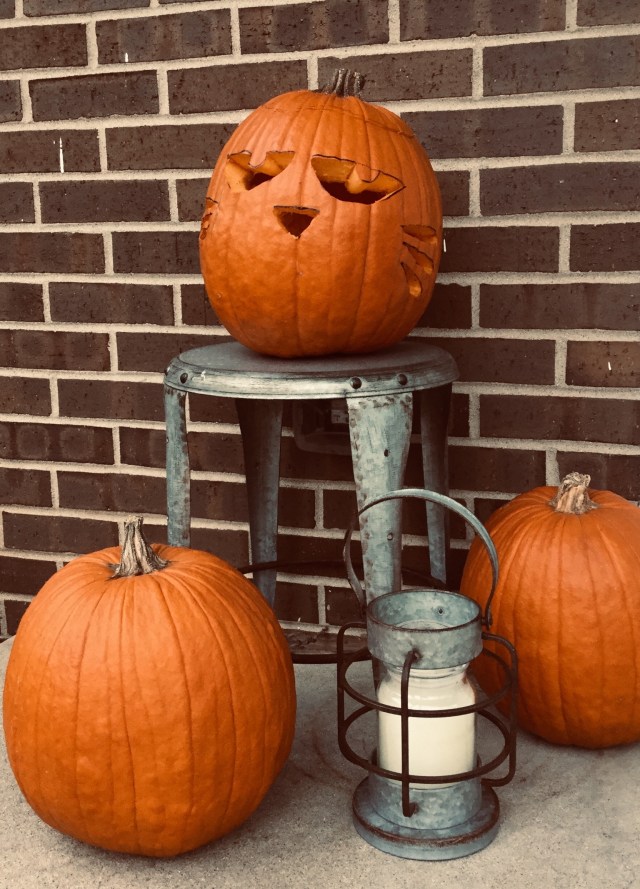 We haven’t carved a pumpkin in several years, so it’s sort of sweet to put one out again.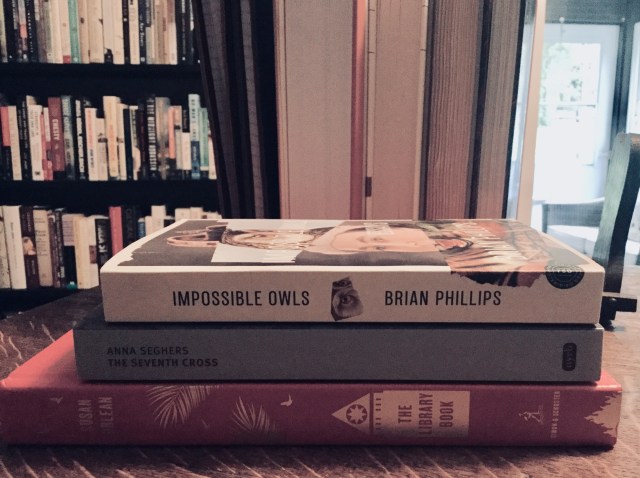
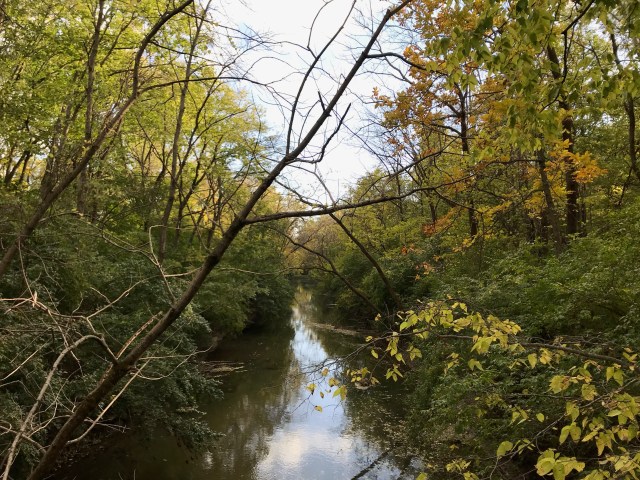
 The weather has been so odd, and the trees and plants are taking it hard. For example, the ginkgo in our front yard dropped all of its leaves this morning — they were still green. The forsythia rebloomed and then froze. The same with both rose bushes. Although fall colors have been difficult to find, however, some autumn gold glimmered during our walk in a new-to-us park near campus yesterday.

 I grew tired of waiting for my holds to come in at the library, so I ordered two books I wanted. After borrowing another, I decided I must own it. And the other two? Leapt into my cart. *wink*
 About a third of the students in the first aid and CPR course we completed over the summer were, as my older daughter and I are, employed by schools. The instructor remarked that, like the certification we earned that afternoon, basic ASL skills are also a terrific asset to educators, both in emergency situations and in the classroom. Naturally, then, when the local college posted a fall course schedule that included a four-semester sequence of ASL classes, it seemed like one of those serendipity / synthesis / synchronicity moments, and we enrolled.
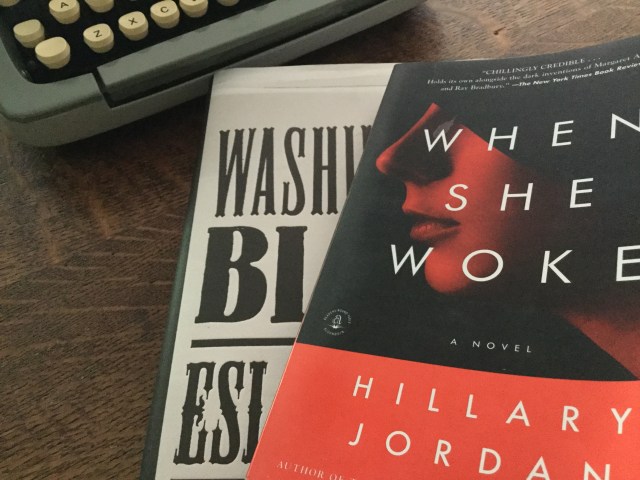 From Hillary Jordan’s When She Woke:
