
 After lunch on Friday, I stopped at one of my favorite walking spots and was rewarded with beautiful views and a brief appearance by an indigo bunting.
Monthly Archives: July 2018
I have issues.

Books

Some recent acquisitions… already had a copy of Verne,
which I read nearly seventeen years ago. This is the Anthony Bonner translation,
with an introduction by Ray Bradbury.
Theater of the absurd
We have what are arguably some of the hottest tickets in town.
From Eugène Ionesco’s play Victims of Duty (1953):
CHOUBERT: It’s quite interesting. The Government’s urging all the citizens of the big towns to cultivate detachment. According to this, it’s our last hope of finding an answer to the economic crisis, the confusion of the spirit and the problems of existence.
MADELEINE: We’ve tried everything else, and it hasn’t done any good, but I don’t suppose it’s anyone’s fault.
CHOUBERT: For the time being the Government’s merely recommending this ultimate solution in a friendly manner. They can’t fool us; we know how a recommendation has a way of turning into an order.
MADELEINE: You’re always so anxious to generalize!
CHOUBERT: We know how suggestions suddenly come to look like rules, strict laws.
MADELEINE: Well, my dear, you know the law is necessary, and what’s necessary and indispensable is good, and everything that’s good is nice. And it really is very nice indeed to be a good, law-abiding citizen and do one’s duty and have a clear conscience! …
CHOUBERT: Yes, Madeleine. When one really thinks about it, you’re right. There is something to be said for the law.
MADELEINE: Of course there is.
CHOUBERT: Yes, yes. Renunciation has one important advantage: it’s political and mystical at the same time. It bears fruit on two levels.
A day at the zoo


The beginning of the end
From page 219 of The Cabin at the End of the World (Paul Tremblay; 2018):
Andrew has taught literature for years, calling his course How the World Ends. The course has occasionally included a literary analysis of the Bible’s Book of Revelation and the Four Horsemen of the Apocalypse riding their red, black, white, and pale horses. Over the years the course syllabus has evolved, but one of the main arguments / discussions he has with his students remains a constant. No matter how bleak or dire, end-of-the-world scenarios appeal to us because we take meaning from the end. Aside from the obvious and well-discussed idea that our narcissism is served when imagining we, out of all the billions who will perish, might survive, Andrew has argued there’s also undeniable allure to witnessing the beginning of the end and perishing along with everyone and everything else. He has impishly said to a classroom, to the scowl of more than a few students, “ Within the kernel of end-times awe and ecstasy is the seed of all organized religions.”
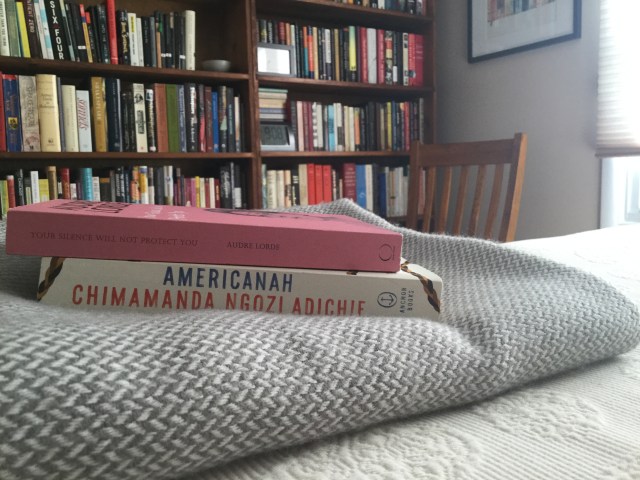
Recent acquisitions

New books
At the Art Institute

 “John Singer Sargent and Chicago’s Gilded Age” drew me to the Art Institute this week, and it’s a beautiful exhibition. But it was “Flesh: Ivan Albright at the Art Institute of Chicago” that captured my imagination. I will post more images from my visit later; the above are my photos of two of the Albright self-portraits.
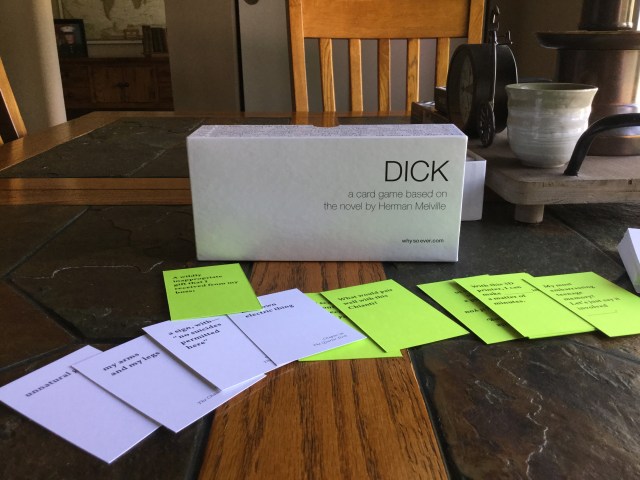
A card game
 Nerdishly