
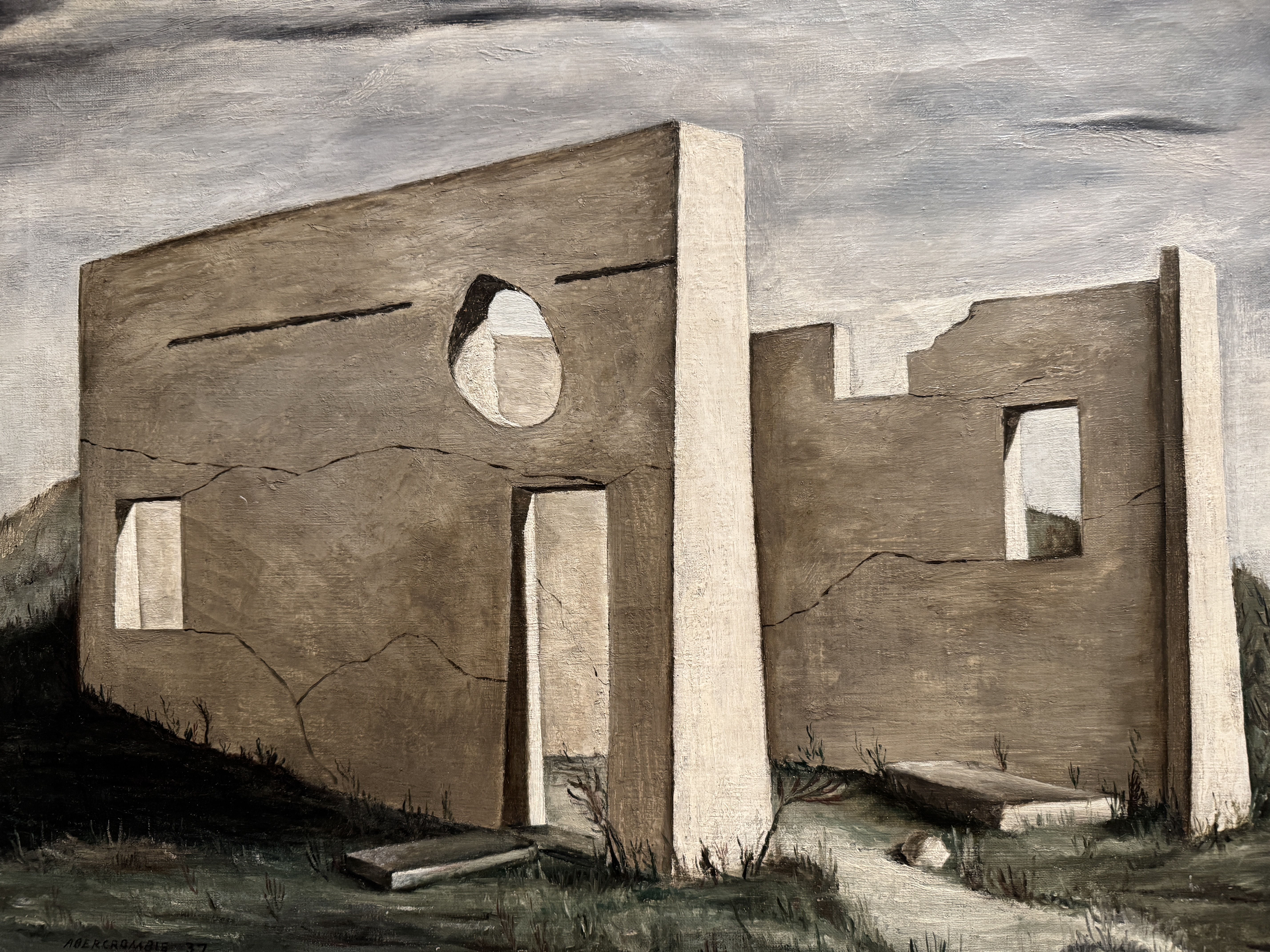
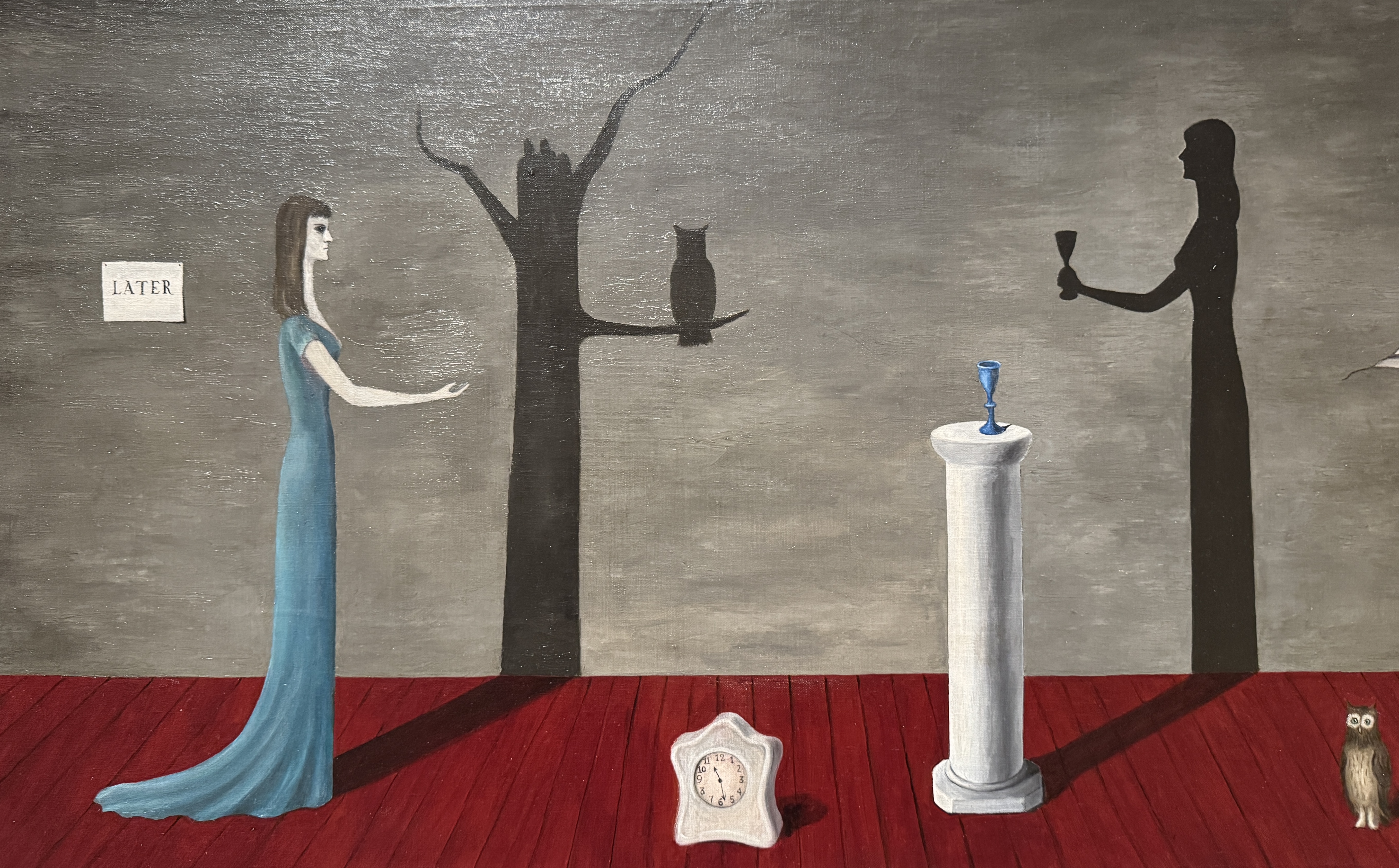
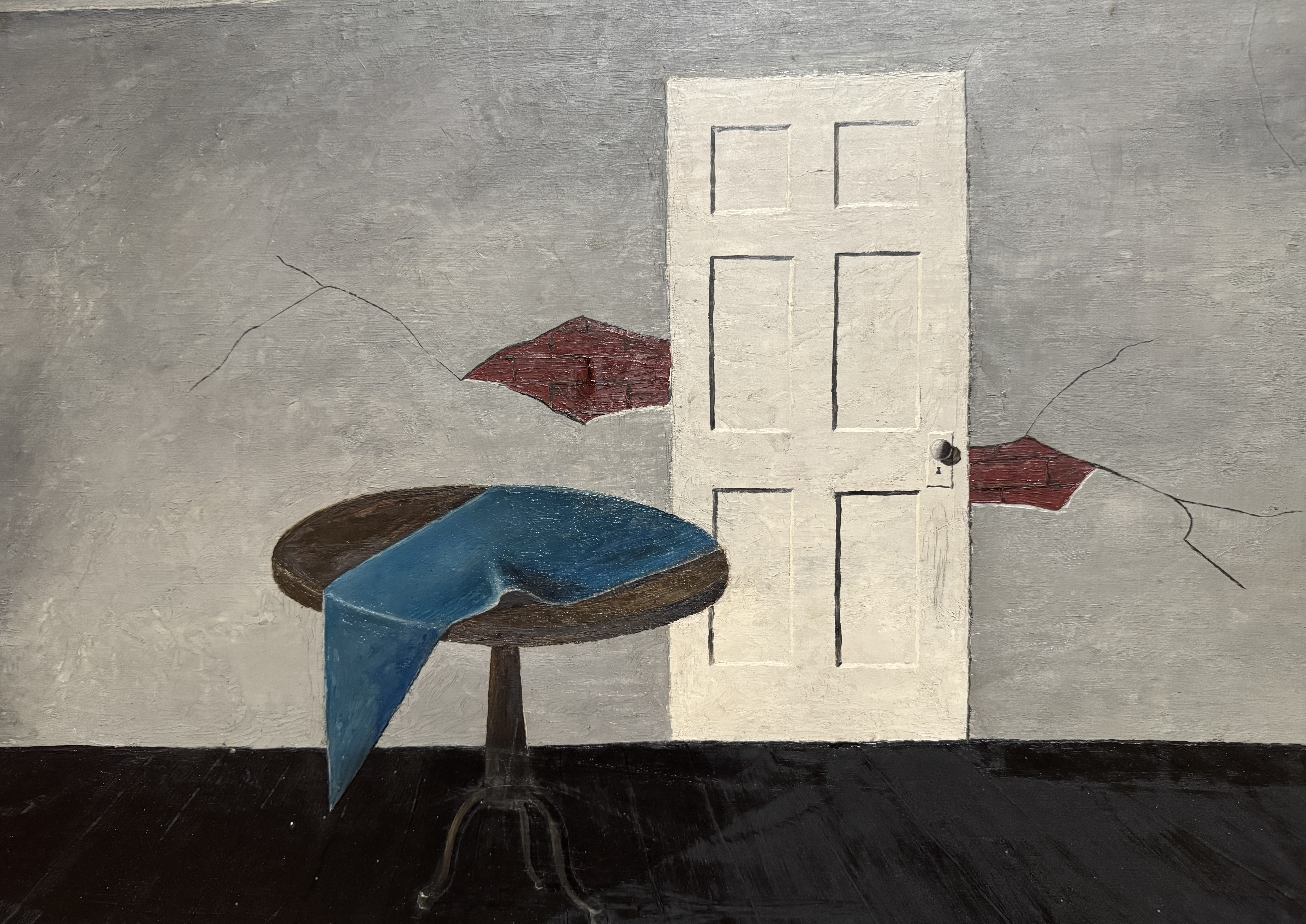
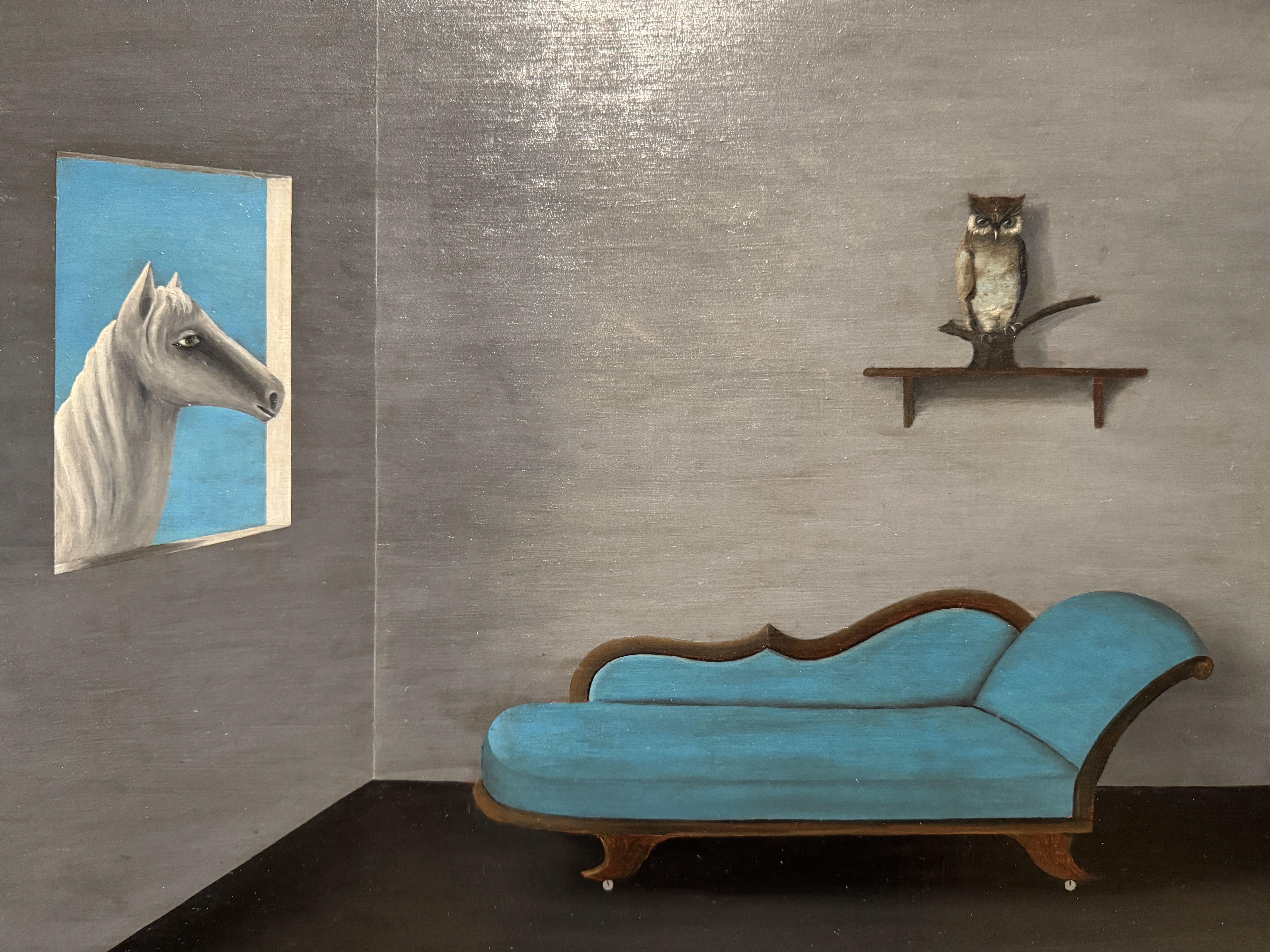
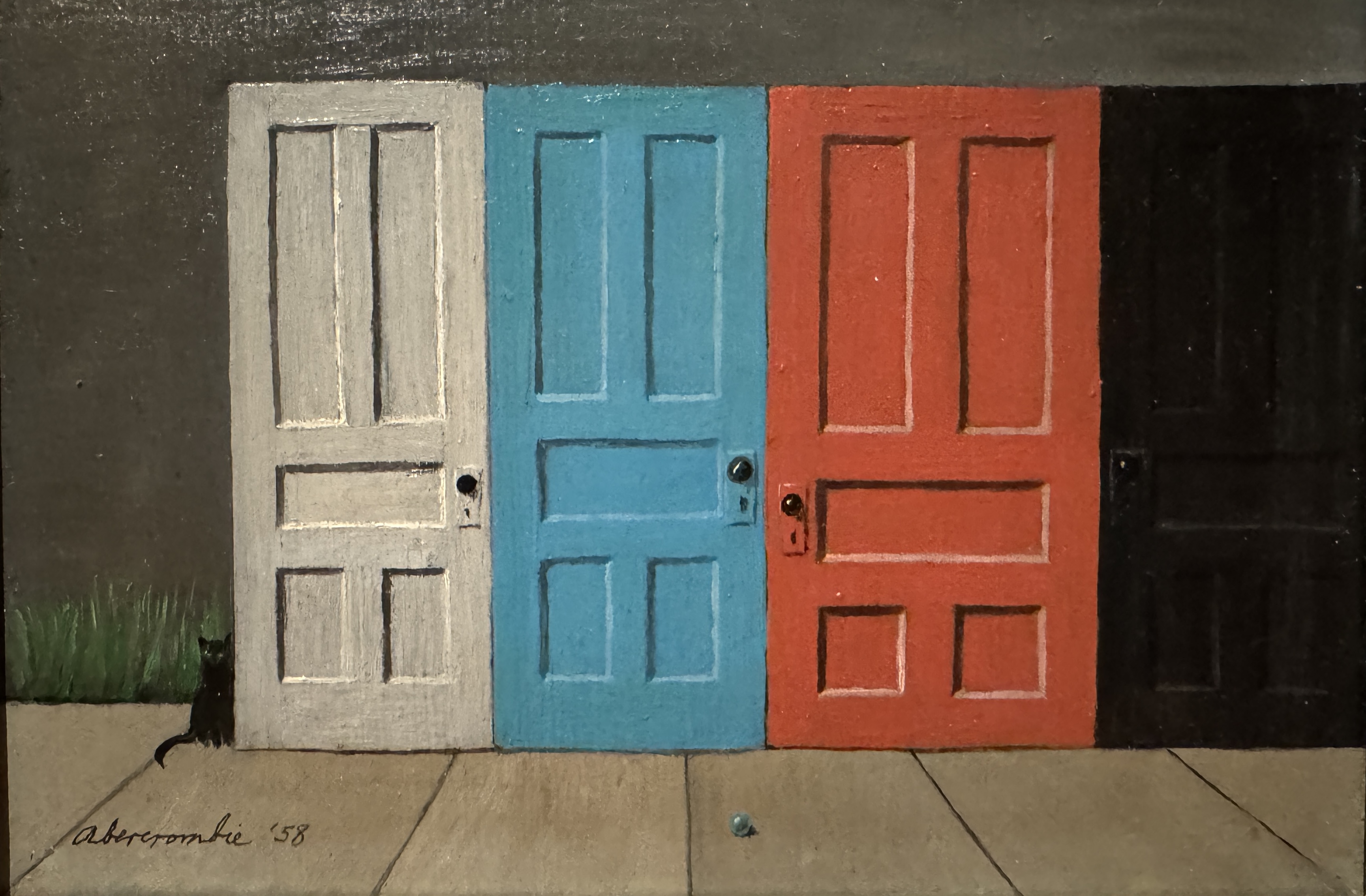
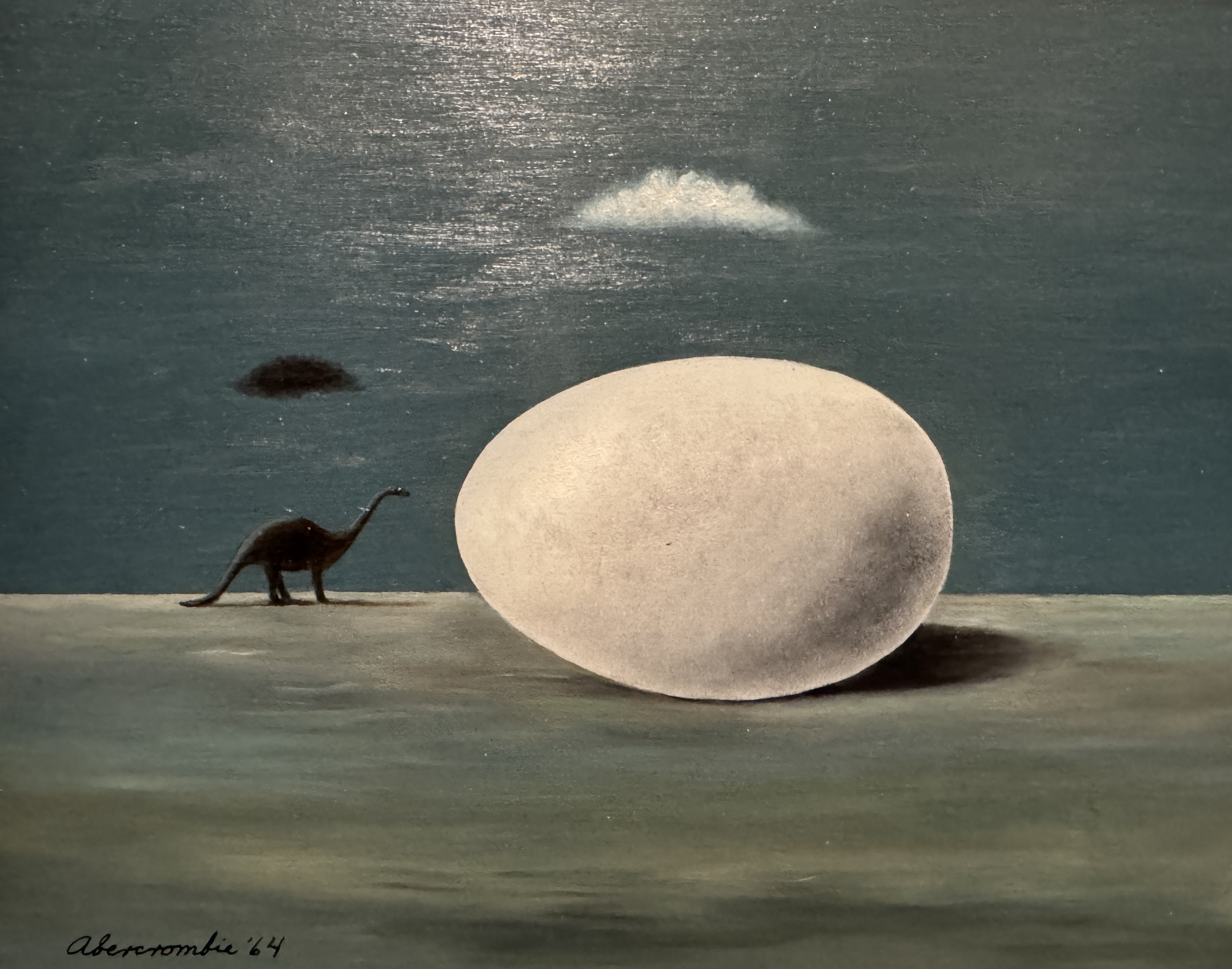
The above are images I captured yesterday at the member preview of “Gertrude Abercrombie: The Whole World Is a Mystery.”
The above are images I captured yesterday at the member preview of “Gertrude Abercrombie: The Whole World Is a Mystery.”

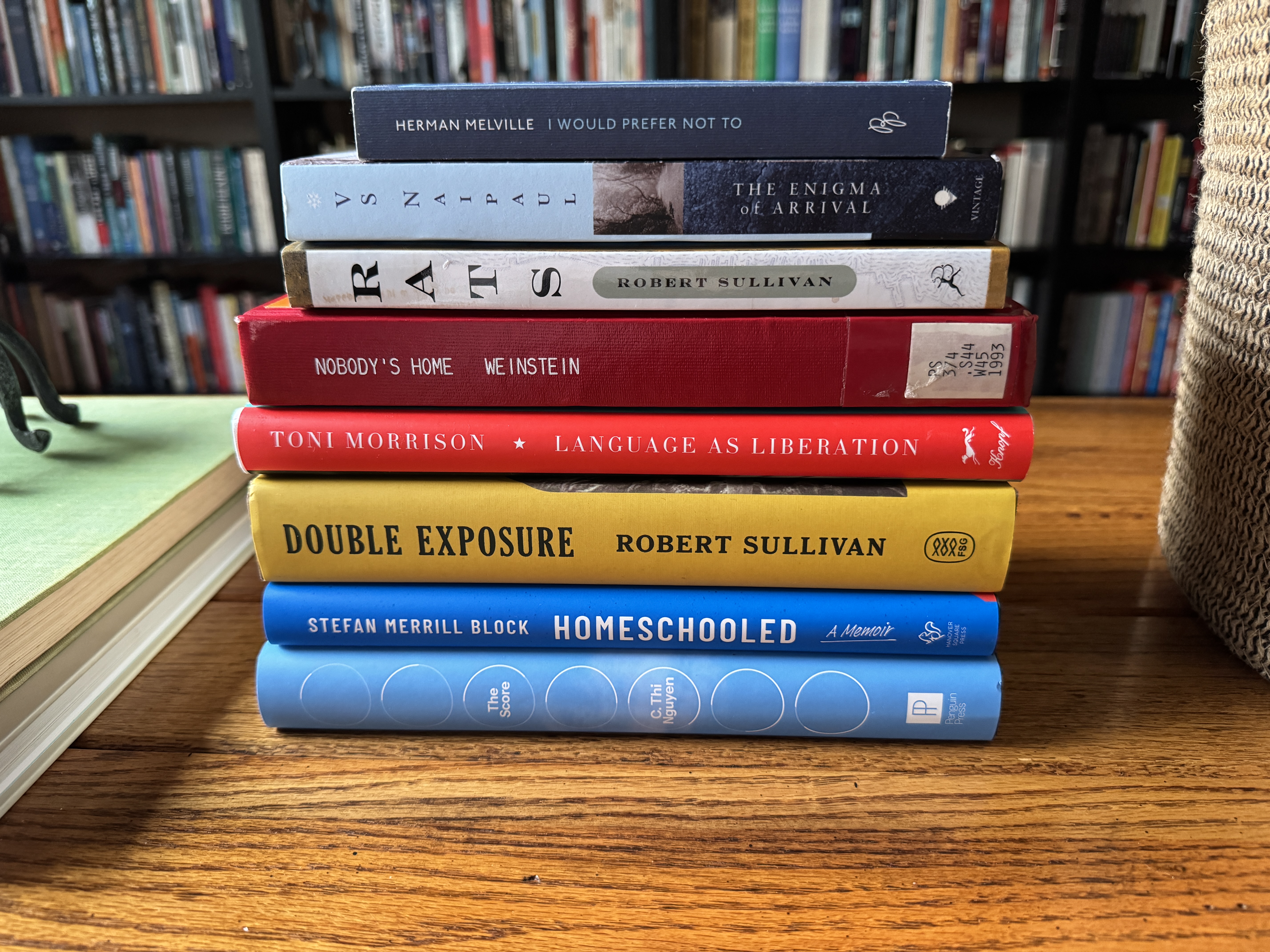
It has been warm enough to do some more spring clean-up in the yards and to continue expanding our grid of raised beds and pollinator pockets. The books pictured above, then, have been shelved for now.
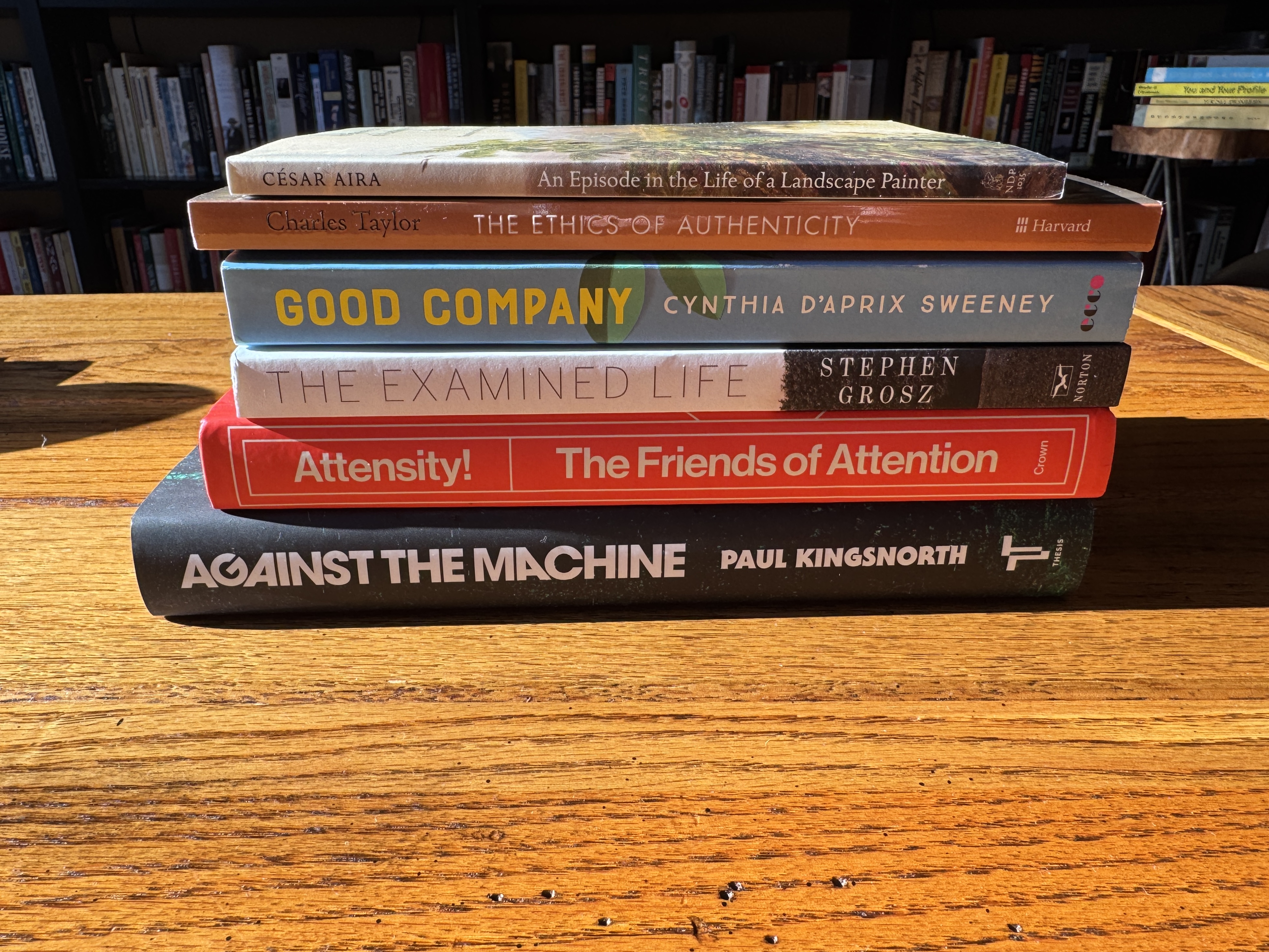
Over the weekend, I finished two books for the Wilder seminar — By the Shores of Silver Lake and The Long Winter. I also finished rereading Beloved for a Roundtable course. Today I began The Enigma of Arrival (V.S. Naipaul; 1987) with APS Together and worked on the first section of Mrs. Dalloway (Virginia Woolf; 1925) for a new Roundtable course. This evening, before the final meeting of the seminar on the Old Testament with Marilynne Robinson, I set aside the required reading list for a bit and read another hundred pages in The Every (David Eggers; 2021), the follow-up to The Circle (2013), which I reread with the Commonplace Philosophy book club last month. Several participants recommended the sequel, and after a slow opening, I am now engaged (if pretty certain that this can conclude in only one way). I will catch up on this month’s book club selection, You and Your Profile: Identity After Authenticity (Hans-Georg Moeller and Paul D’Ambro; 2021), tomorrow.
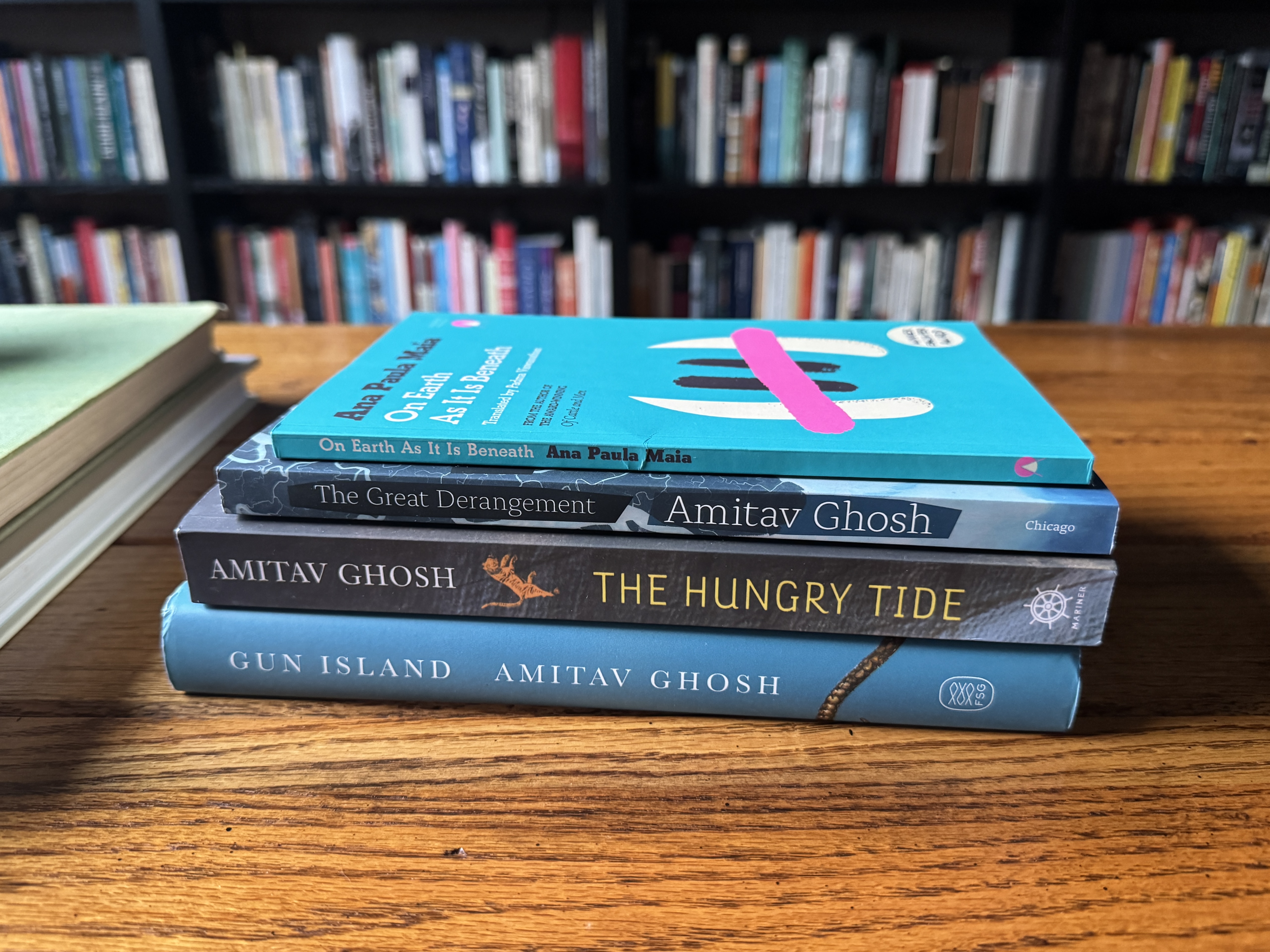
Pictured above are a few books I ordered after reading about an in-person Graham School course that interests me. I won’t be able to participate, but I plan to ask the instructor to share the syllabus.
Tomorrow night is the penultimate meeting of an NYR Seminar with Marilynne Robinson. This week’s reading focused on psalms. I’m also keeping up with the reading for Jared Henderson’s philosophy book club and the assorted courses I’m taking with Roundtable.
A blizzard warning just sounded on my emergency alert app. Coffee? Check. Books? Check. All will be well. In a neat readerly intersection of life and books, I just finished By the Banks of Plum Creek (Laura Ingalls Wilder; 1937) for a Newberry Library seminar. This, the fourth in Wilder’s series, ends not long after a three-day blizzard. Next up? On the Shores of Silver Lake (1939).
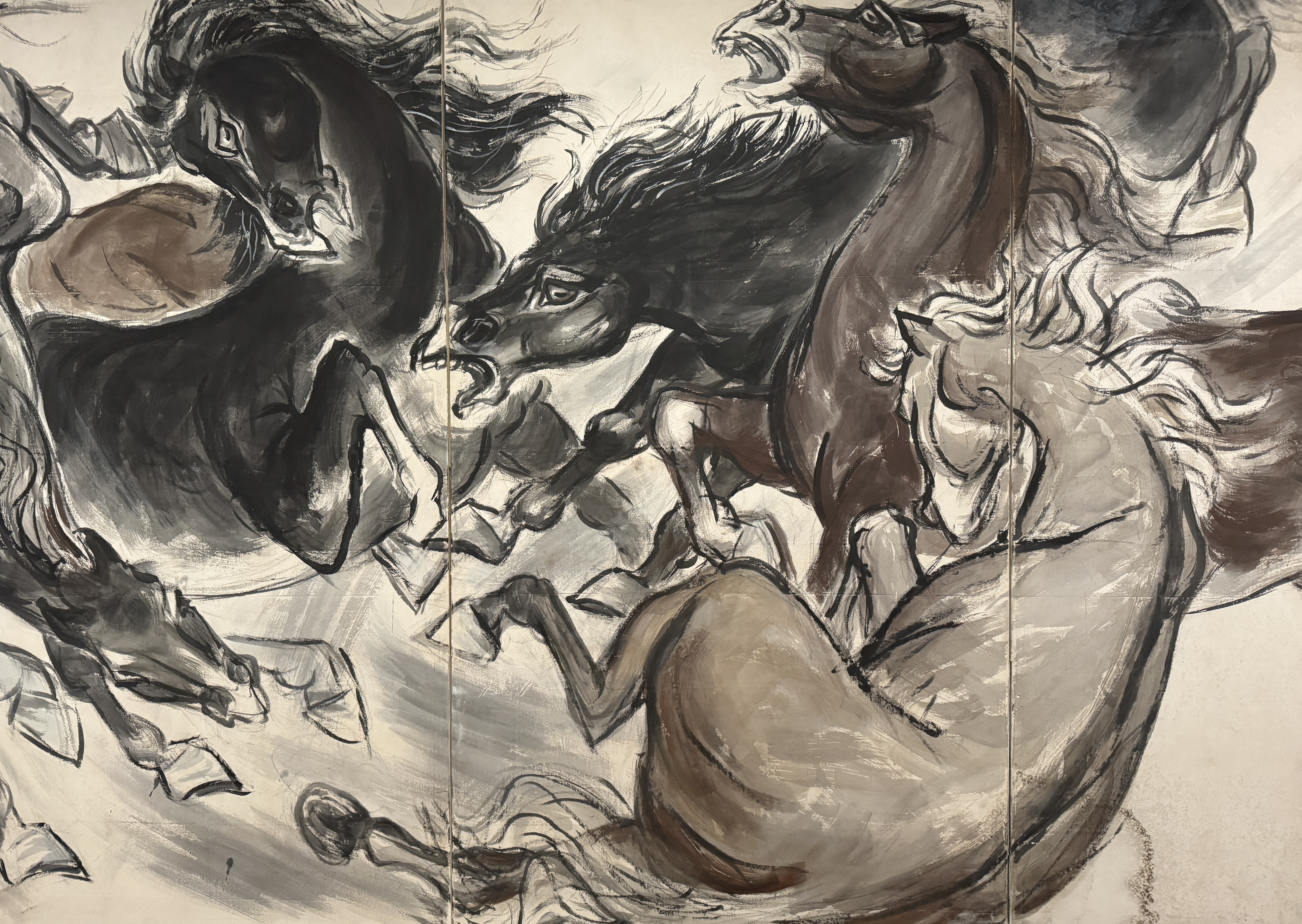
My image of one of the works of art at “Korean National Treasures: 2,000 Years of Art.”
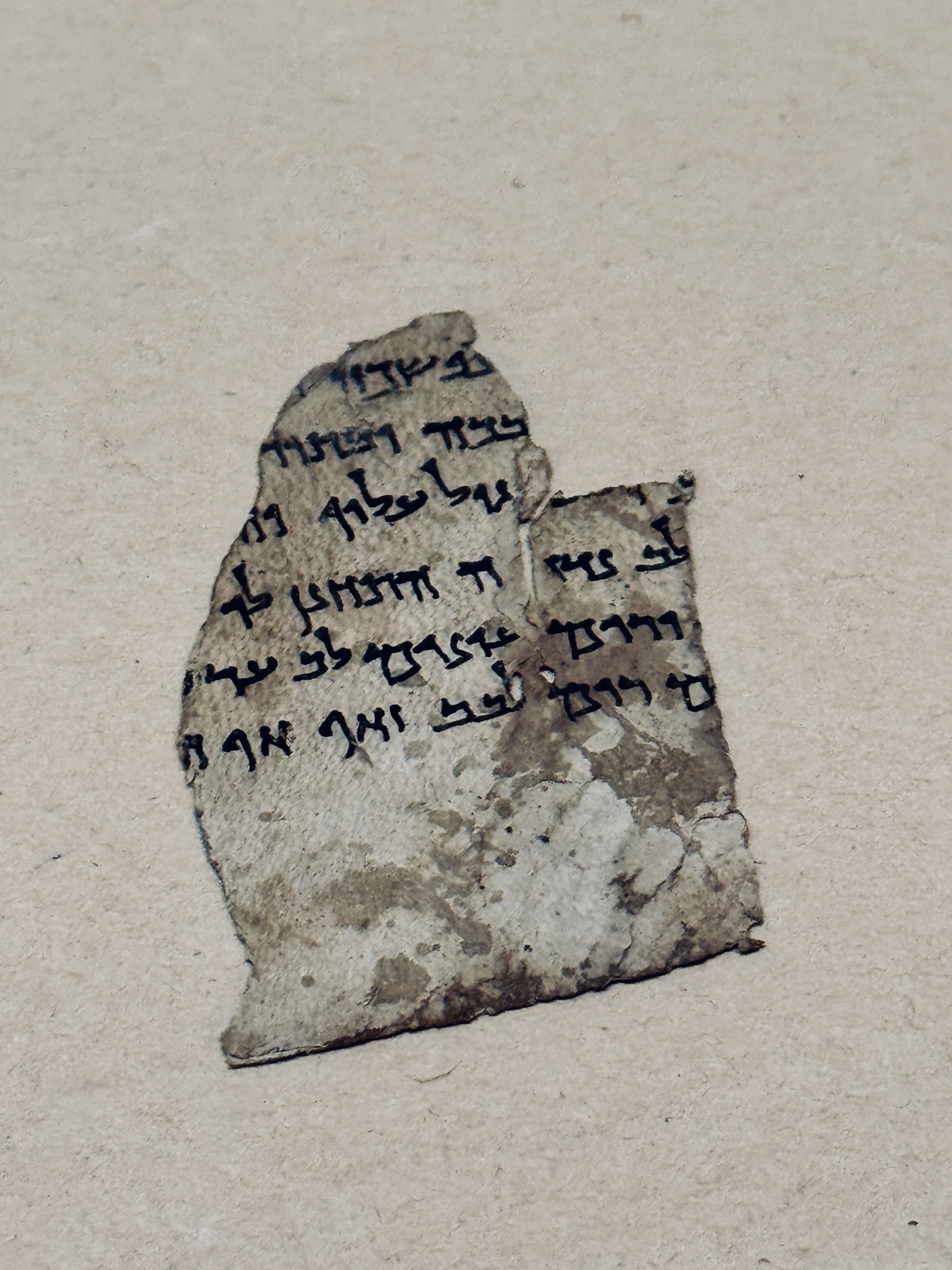
Parchment fragment on exhibit at the Institute for the Study of Ancient Cultures.
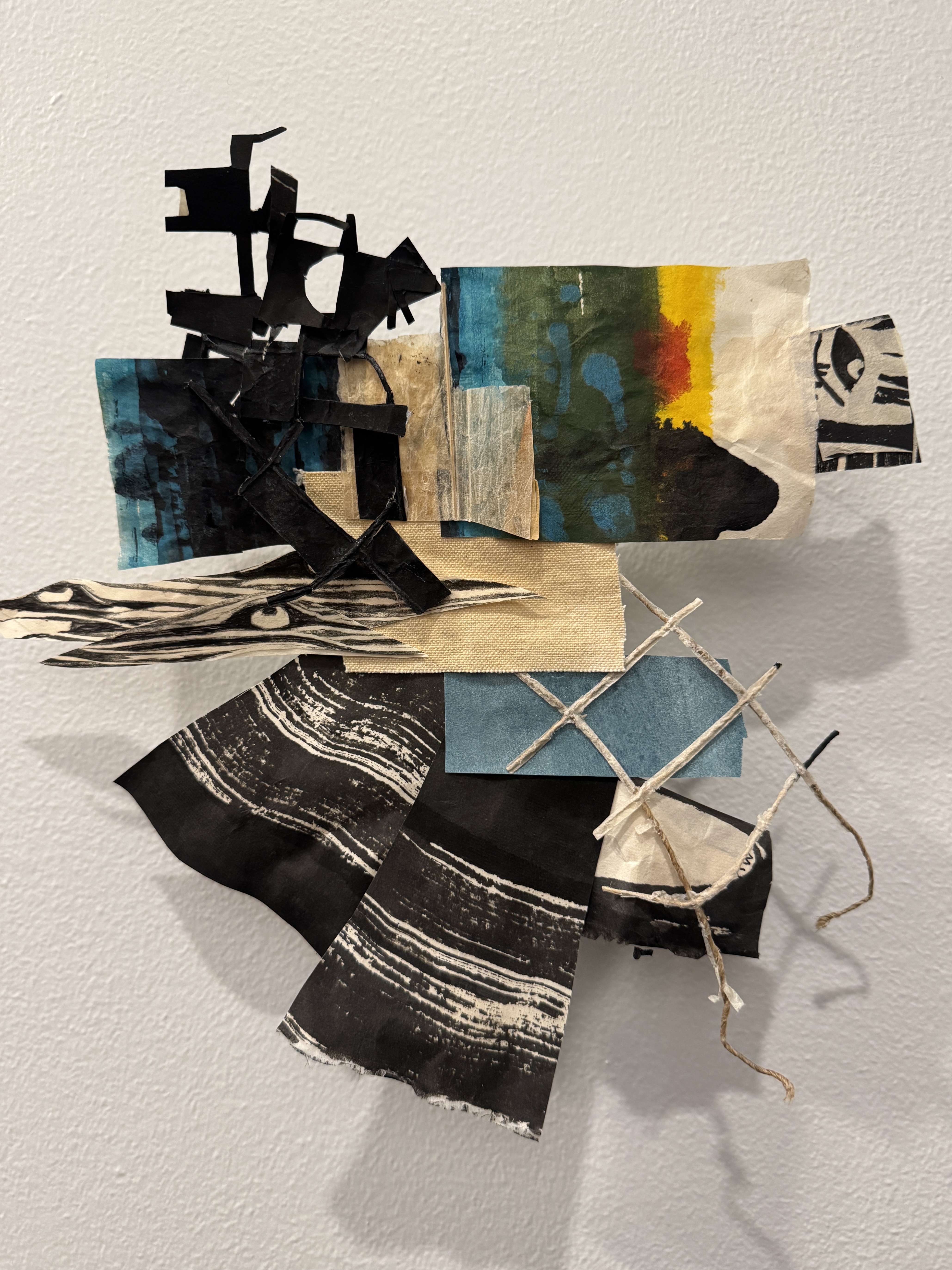
“Queequeg” by Heidi Whitman (2025); seen at the New Bedford Whaling Museum.
From Chapter V. Breakfast:
But as for Queequeg—why, Queequeg sat there among them—at the head of the table, too, it so chanced; as cool as an icicle. To be sure I cannot say much for his breeding. His greatest admirer could not have cordially justified his bringing his harpoon into breakfast with him, and using it there without ceremony; reaching over the table with it, to the imminent jeopardy of many heads, and grappling the beefsteaks towards him. But that was certainly very coolly done by him, and everyone knows that in most people’s estimation, to do anything coolly is to do it genteelly.
And, yes, I will have reread Moby-Dick twice before the first quarter of the new year is behind us.
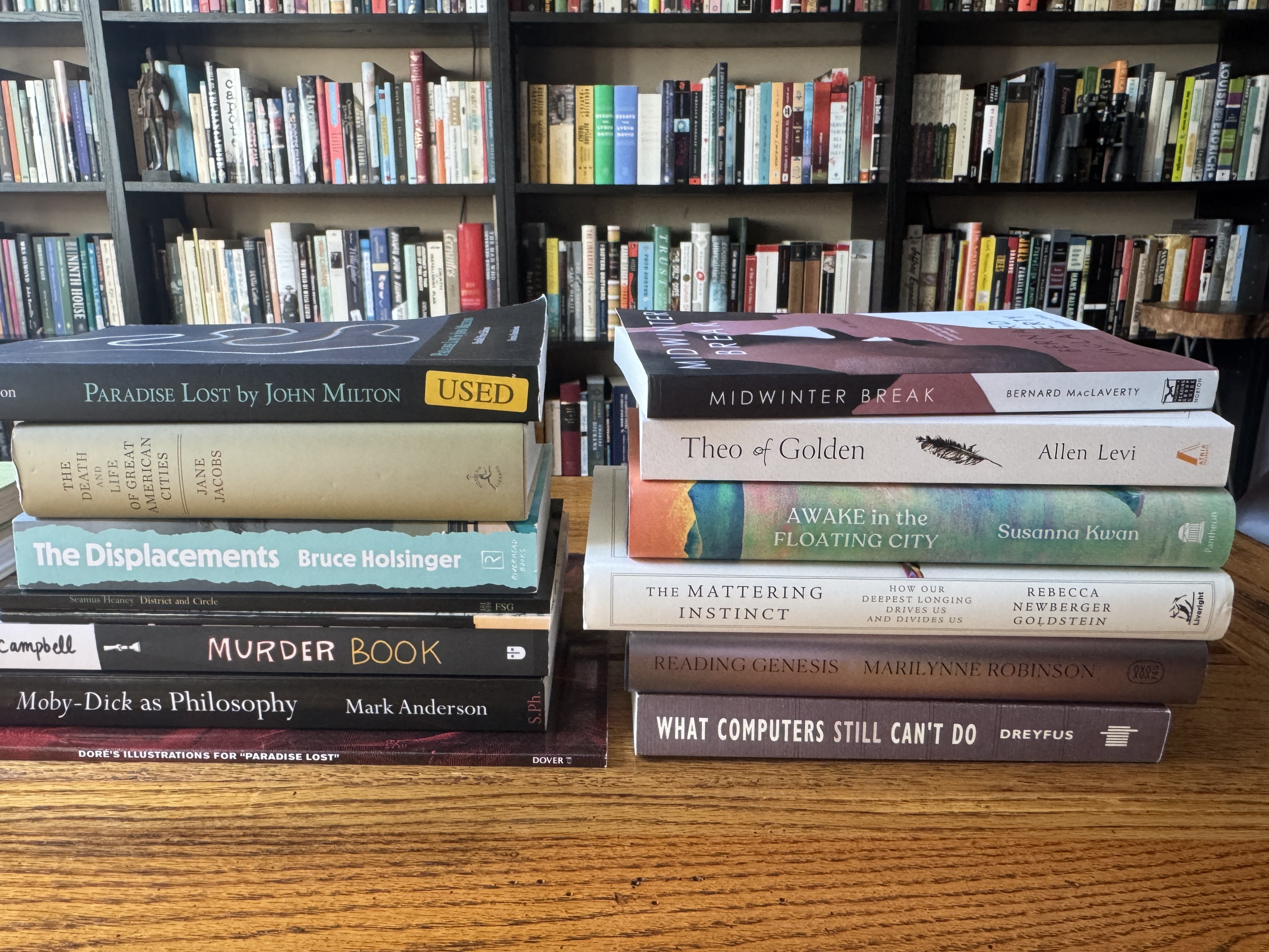
Some recent acquisitions.
Today I am finishing my reread of Faulkner’s As I Lay Dying for the Roundtable course “Fictions of the Self in American Literature,” among other assignments for assorted courses and seminars. Before my Sunday afternoon runs away from me, though, I should also walk in the cold sun and practice my music.
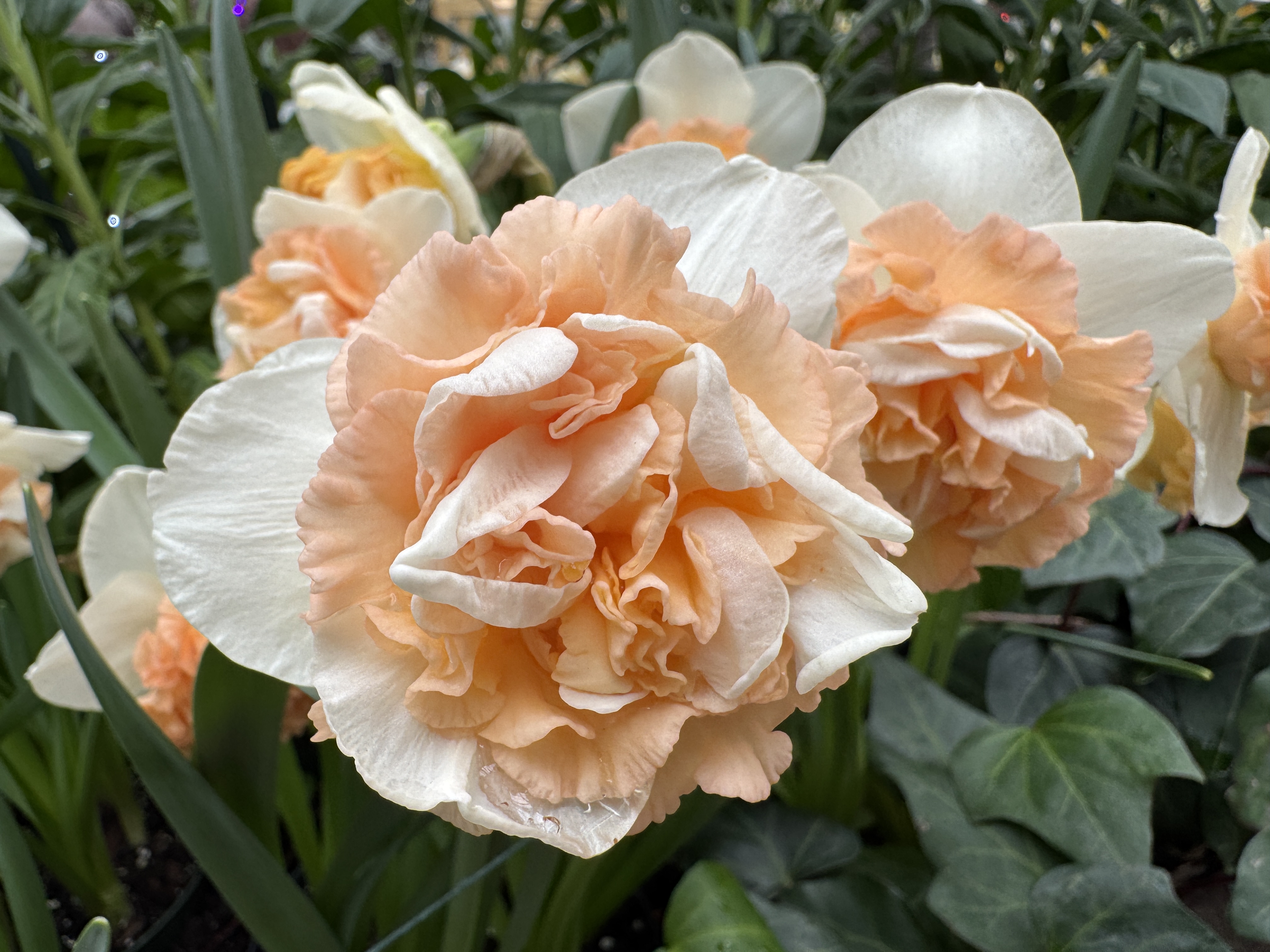
At the Lincoln Park Conservatory for the flower show.
Lately among other projects, I’ve been making my way through the reading list for the Roundtable course “Fictions of the Self in American Literature” — currently, The Great Gatsby.
 Nerdishly