

On one of our walks over the weekend, we saw several Eastern bluebirds, as well as many sandhill cranes and robins. We also logged two geocaches.
On one of our walks over the weekend, we saw several Eastern bluebirds, as well as many sandhill cranes and robins. We also logged two geocaches.
■ The Two Gentlemen of Verona (1589)
■ The Taming of the Shrew (1590)
■ Titus Andronicus (1593)
■ Henry VI, Part 1 (1591)
As I mentioned last month, Marjorie Garber’s Shakespeare After All is my guide to the 2024 edition of “Shakespeare in a Year.”
■ Women We Buried, Women We Burned (Rachel Louise Snyder; 2023. Non-fiction.)
Review here.
■ The Casebook of Sherlock Holmes (Sir Arthur Conan Doyle; 1927. Fiction.)
These are regularly referred to as the weakest of the stories, but I was well entertained by them.
■ O Pioneers! (Willa Cather; 1913. Fiction.)
This was the second in my quest to read (in some cases, reread) one of Cather’s twelve novels each month in chronological order.
■ Essays of E.B. White (E.B. White; 1977. Non-fiction.)
Earlier this month, I resurfaced from a multi-month deep dive into White’s work. We concluded with the essays in the last third of this collection, which, apart from “Once More to the Lake” and “Will Strunk,” were much less compelling (dare I say, “weaker”?) than the other selections.
■ The Elements of Style (William Strunk Jr. and E.B. White; 2000. Non-fiction.)
Of course, I reread this classic after finishing White’s essays.
■ Wrong Place, Wrong Time (Gillian McAllister; 2022. Fiction.) RFS
Predictable but entertaining.
■ The Puppets of Spelhorst (Kate DiCamillo; 2023. Fiction.)
Although I am not as big a fan of DiCamillo as the dear friend who gave me this book, I appreciated it, especially the lovely illustrations.
■ The Magic Mountain (Thomas Mann; 1924. Fiction.)
■ Thomas Mann’s The Magic Mountain: A Reader’s Guide (Rodney Symington; 2011. Non-fiction.)
The final meeting on this is next week. Among other things, my heavily annotated copy bears witness to my attempts to converse with this difficult novel of ideas.
Often I am able to chat with one or both of my daughters while I am out walking. They always inquire how I’m doing, and when the temps soar above seventy or, conversely, when the sidewalks have iced over, I routinely reply, “Today I like having walked much better than walking.” About The Magic Mountain, I will share that I like having read it much better than reading it.

The traffic gods were kind yesterday: We returned from Chicago — where we saw Antigone at the Court Theatre — in time to walk a bit before it grew too dark. The view above was our reward for sticking to our movement plan.
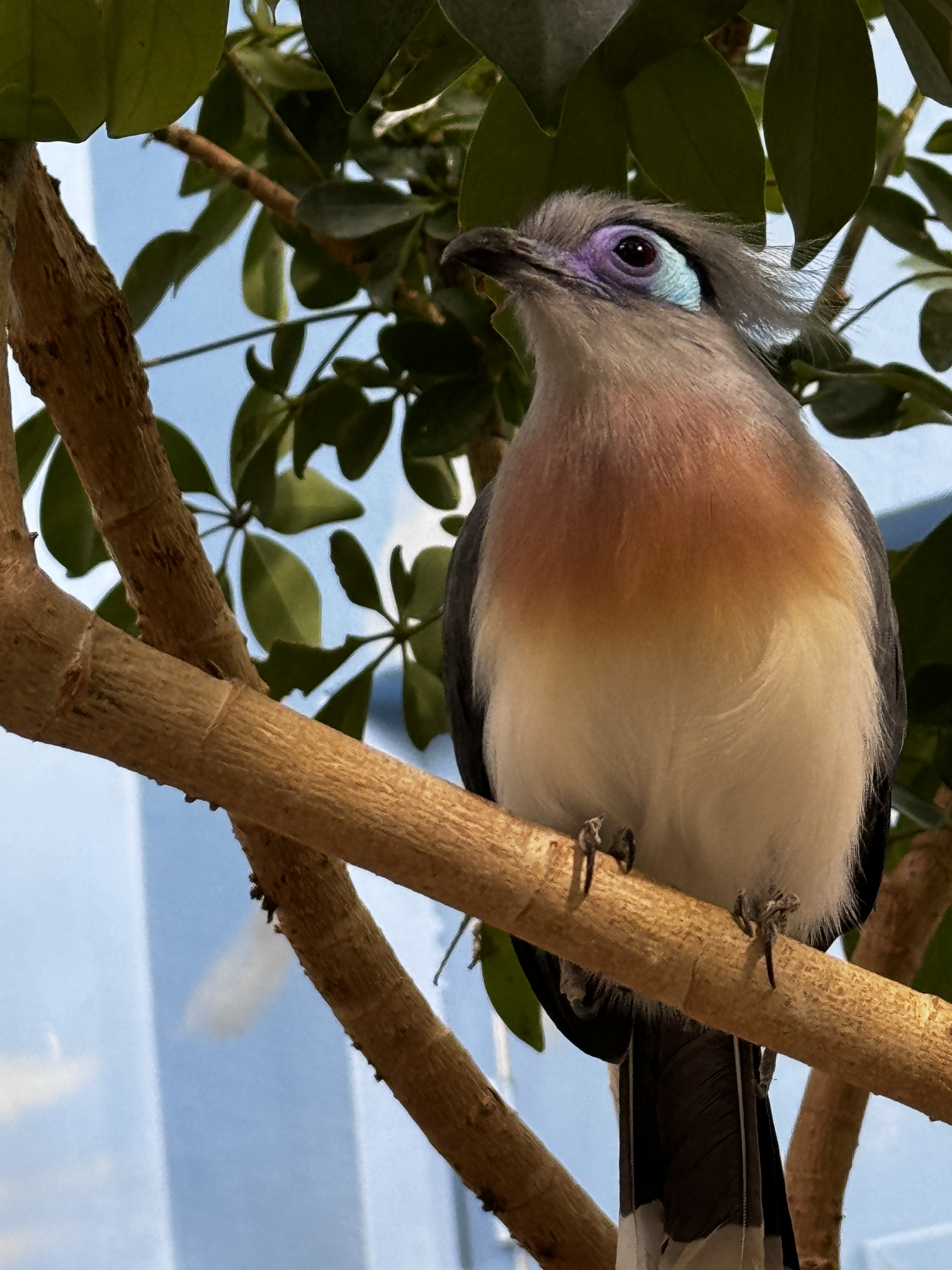


At the Toledo Zoo and Aquarium.

🎶 Earlier this month, my instructor and I completed Johann Christian Schultze’s Sonata for Two Flutes in Album of Flute Duets, revised and annotated by Louis Moyse, and moved on to Hans Köhler’s Sonatina for Two Flutes in the same collection. This week, I am focused on the second page of the Allegro.
We are also working in a new-to-us book: Interval Duets by Thomas Filas, which appears to be out of print. “[T]he playing of duets is the starting rung of the ladder which leads to higher musicianship,” the introduction gently chides. Truth. While providing a respite in a challenging program of study, these deceptively simple pieces have reminded this adult student that while “speed” (or “velocity”) may be difficult to achieve, a clear, beautiful sound is always achievable.
🎶 In Robert Cavally’s Melodious and Progressive Studies from Andersen, Gariboldi, Koehler, and Terschak for Flute, Book 2, I am now working on the third of Köhler’s “moderately difficult pieces as studies for flute” from Op. 33, Book 2.
🎶 Speaking of difficult, this semester’s band selections… so, yes, P. Bona’s rhythmical articulation studies has sunk to the bottom of my daily practice roster again. As I have mentioned, though, only two assignments remain in this book, 116 and 120. I will get to them eventually.
🎶 This week, having successfully presented the third movement, I began practicing the first movement of the Stamitz Concerto in G major, Op.29. (Yes, I chose to work on them out of order.)
🎶 I am not playing piccolo in band this semester, so my instructor has added short piccolo duets to my practice sheet, as well as a solo: “L’oiseau du bois” by Charles le Thiere. Yes, this is all quite a lot, but right now, I am exhilarated, undaunted. Check back with me over spring break, though; the Köhler study could break me.


At the Museum of Contemporary Art.
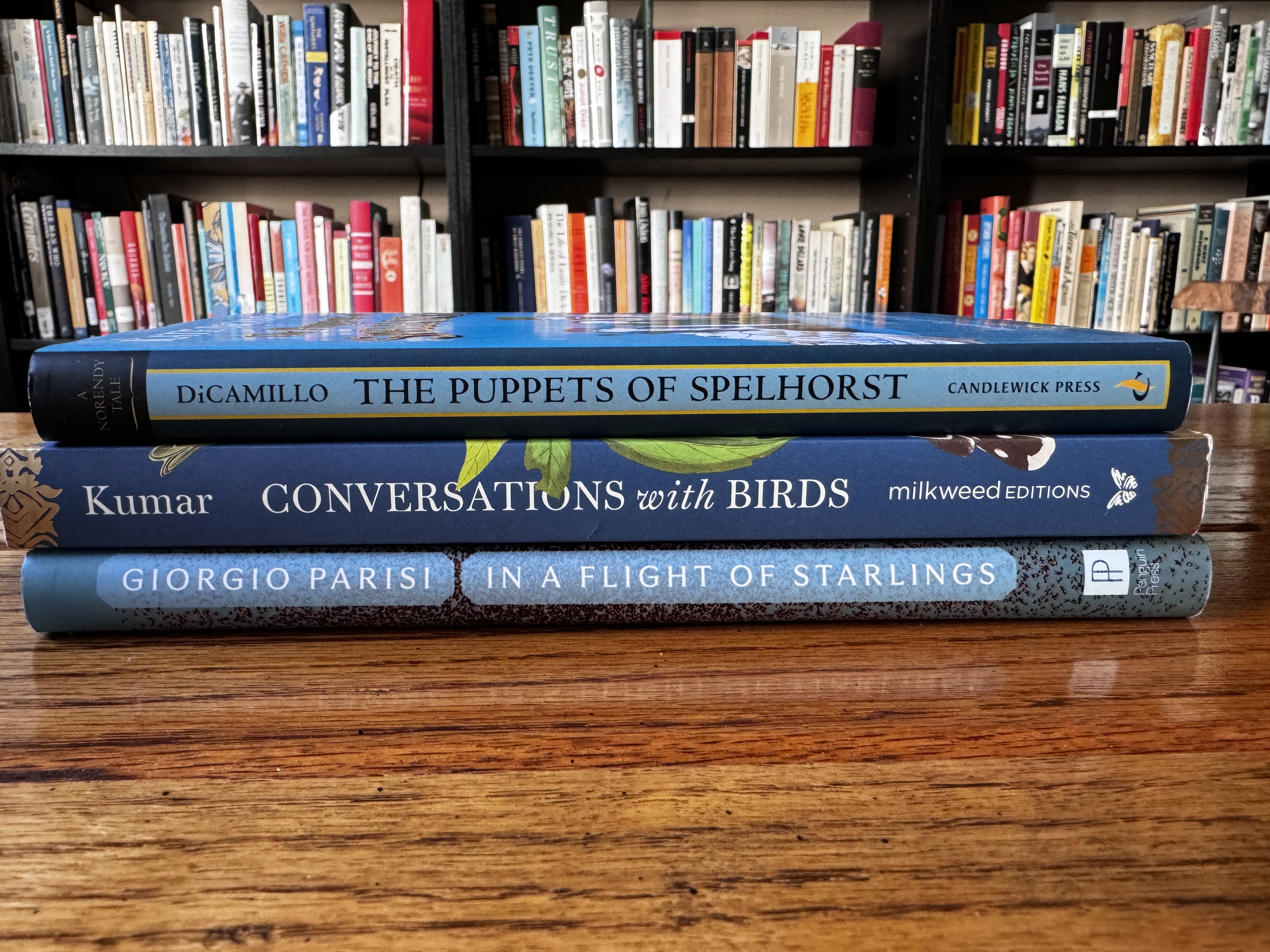
Sent by my reading friend.

Picked up a few of these at Exile in Bookville.

Beautiful light.
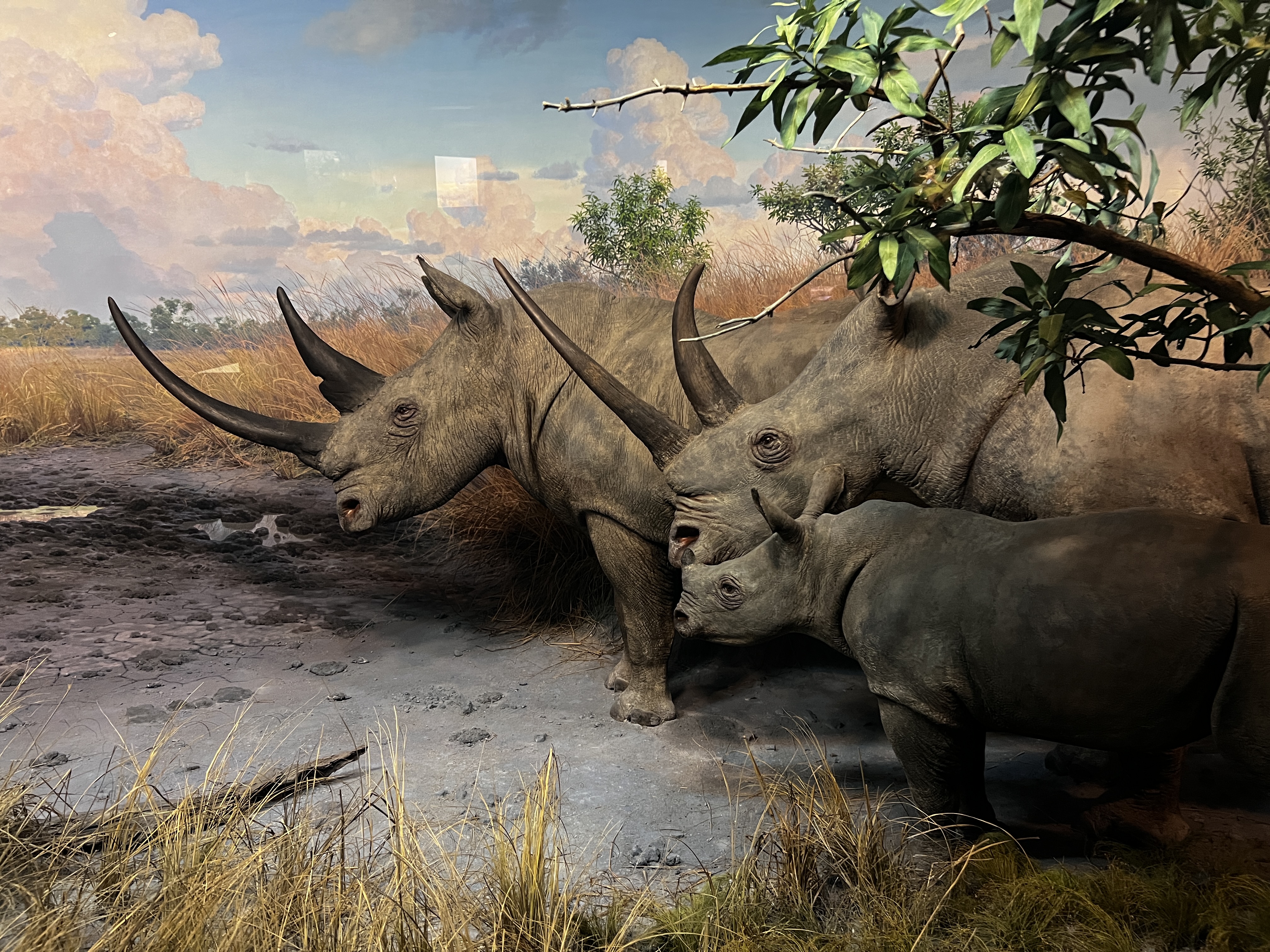
Image taken at the American Museum of Natural History in October 2023.
 Nerdishly