In between walking and leaf-raking, I have been reading and studying. Yesterday the Roundtable by 92nd Street Y course on the Iliad began, and the Library of America (LoA) course on Joan Didion ended. (With one exception, I have greatly appreciated the Roundtable courses and recommend them.) The NYR Seminar led by Daniel Mendelsohn concluded last week, and it was so terrific, I signed up for another (shorter) seminar with them. My two-person study group has moved on to our third Forster novel, A Room with a View (1908), and I’m participating in two other slow-read groups: Bleak House with APS Together (underway) and Moby-Dick with Samantha Rose Hill (beginning November 9). (Speaking of the White Whale, my daughter and I are once again slated to read at the marathon.)
I continue to work in Marcel Moyse’s 24 Little Melodic Studies and On Sonority, Art, and Technique; Taffanel and Gaubert; and M.A. Reichert’s 7 Daily Exercises. My lessons are now complemented by a performance class, at the first meeting of which, I presented Germaine Tailleferre’s “Pastorale for Flute and Piano” and at the second, the James Galway arrangement of “Ashokan Farewell.” My new solo is Bach’s Flute Sonata in E-flat major.
A star-filled sky featuring Orion and a moon-sliver greeted me on my son’s birthday, and as I walked in the morning dark, I remembered… When he was ten, he asked to attend an introductory course at the Adler Planetarium — telescopes, asterisms, astronomy basics. Because it was not a “kid” or family program, I called to inquire about their policies, and they granted permission with the understanding that I would accompany him.
What a collage of memories from that shared experience: learning the constellations, discovering binocular astronomy, doing jumping jacks outside the small observatory to get warm while awaiting our turn at the ‘scope. How young he was. I was.
Time bends and folds.
And the blur of the sword hanging from Orion’s belt bends into an image of my ten-year-old son talking to the planetarium scientist then folds into one of his sister — now older than his forever-21 by seven years — on a research assignment at an international astronomical observatory.
Time bends and folds.
Like one of the origami cranes he loved to make, some of which are preserved in a mason jar on a shelf near my music stand.
This summer’s drought and the continued warm temperatures have delayed autumn’s arrival: Most trees are reluctant to release their leaves; the weekend’s rain reinvigorated the grass. It remains just cool enough to walk with a jacket at sunrise.
Last night marked the halfway point of an NYR Seminar led by Daniel Mendelsohn on his translation on The Odyssey. Fabulous — the seminar and the translation. Last week, I finished Edith Hall’s Aristotle’s Way: How Ancient Wisdom Can Change Your Life in anticipation of a course I am taking through Roundtable by 92nd Street Y. Today I’m continuing to reacquaint myself with Joan Didion’s work for a course with the Library of America.
For my next lesson, I’m preparing the seventh of Marcel Moyse’s 24 Little Melodic Studies and its variations. Having worked through Exercise 4 of Taffanel and Gaubert, I am becoming acquainted with Michel Debost’s scale game. We’ve added the first of M.A. Reichert’s 7 Daily Exercises to my practice routine, and I continue to use Moyse’s On Sonority, Art, and Technique. My current solo piece is Germaine Tailleferre’s “Pastorale for Flute and Piano.”
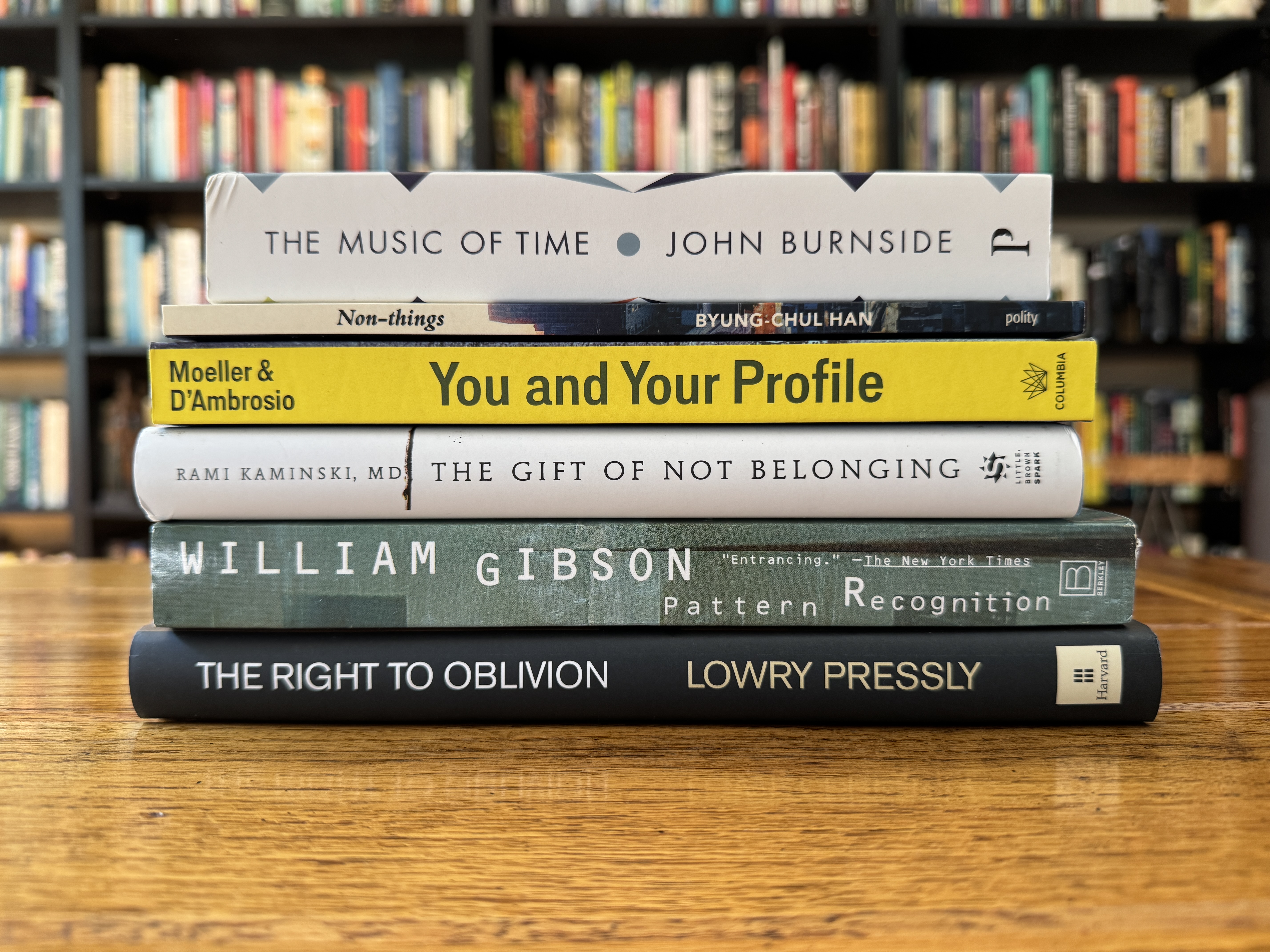
Four of the titles pictured above are selections for the 2026 Philosophical Book Club at Commonplace Philosophy. Speaking of philosophy, my two-person study group will discuss Book IX of Aristotle’s Nicomachean Ethics tomorrow, which means this excellent project draws to a close soon. Next up for us is a deep dive into the novels of E.M. Forster, beginning with Where Angels Fear to Tread (1905). We’ve been reading and studying together for a couple of years now, so it is no surprise that we often discover new books that appeal to us both. Most recently, a Guardian review ensured that Rami Kamiski’s The Gift of Not Belonging ended up on our doorsteps and then at the tops of our respective “actively reading” stacks. Ditto John Burnside’s The Music of Time: Poetry in the Twentieth Century (2021). Both of these are pictured above.
For courses at the University of Chicago Graham School, I’m reading Hannah Arendt’s The Origins of Totalitarianism (1951) and (re)reading Charles Dickens’ A Tale of Two Cities. Later this semester, I will read his Little Dorrit and Our Mutual Friend. It may prove aspirational, but I’ve pulled Claire Tomalin’s 2011 biography of Dickens from the shelves. For an upcoming seminar led by the translator, I’m reading Daniel Mendelsohn’s The Odyssey (2025), and as part of the enrichment experience for Big White Fog at the Court, I’ve pulled down Richard Wright’s Native Son (1940), selected by the Community Reads Book Club. (Admittedly, this, too, may be aspirational.) After attending the KINO! Film Salon discussion of the documentary Werner Herzog: Radical Dreamer, I began reading his 2022 memoir, Every Man for Himself and God Against All, which is pretty terrific.
As for what I’ve recently finished, that includes the texts associated with courses I took through Roundtable by 92nd Street Y: North and South (Elizabeth Gaskell; 1855), Storylife: On Epic, Narrative, and Living Things (Joel Christensen; 2025); and Possession: A Romance (A.S. Byatt; 1990). I reread Lionel Shriver’s 2016 novel, The Mandibles, the book my youngest packed for vacation. It holds up — presciently so. What didn’t work for me was Megan Abbott’s latest, El Dorado Drive. Her previous novels have been reliably fun “beach reads,” but this was clumsy and predictable. Barbara Pym’s Excellent Women (1952), on the other hand, which I read with APS Together, was elegant, endlessly surprising, gorgeously written.
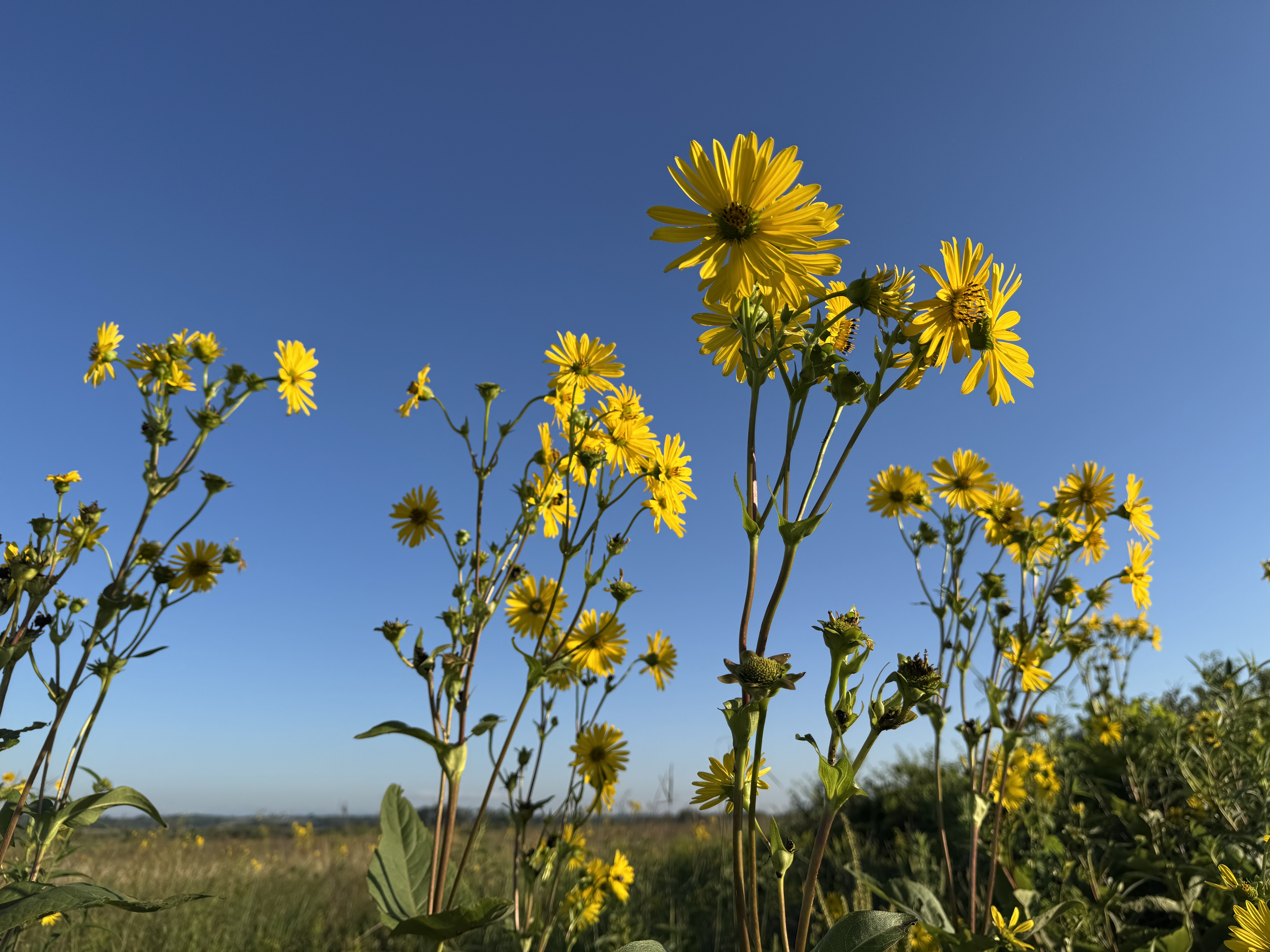
For one reason and then another, I didn’t get to my favorite conservation district until this past weekend. There, I greeted the sunrise both mornings, admired the many birds, and appreciated the (much needed) change from concrete and asphalt to sand and soil.





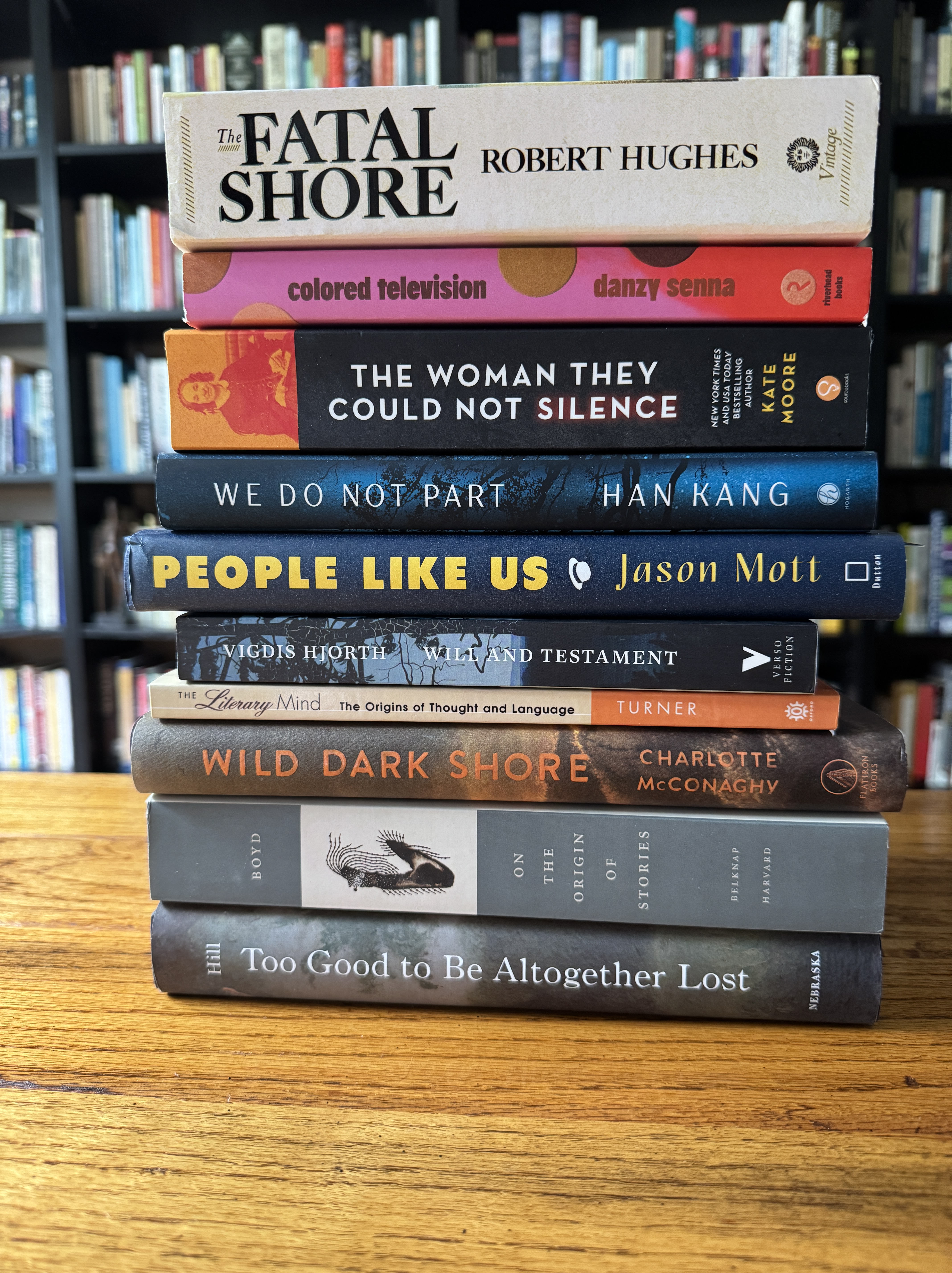
 Nerdishly