
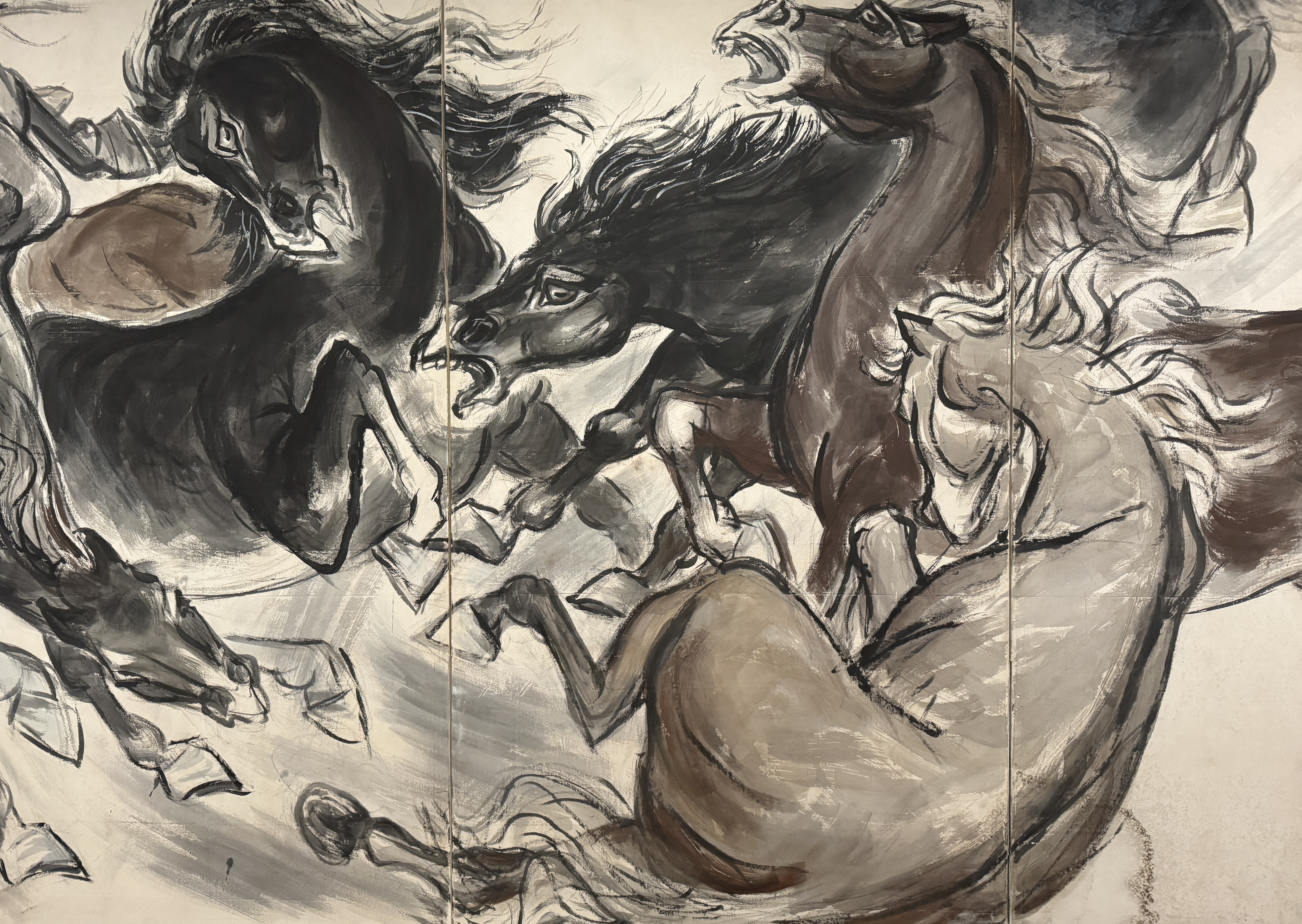
My image of one of the works of art at “Korean National Treasures: 2,000 Years of Art.”
My image of one of the works of art at “Korean National Treasures: 2,000 Years of Art.”
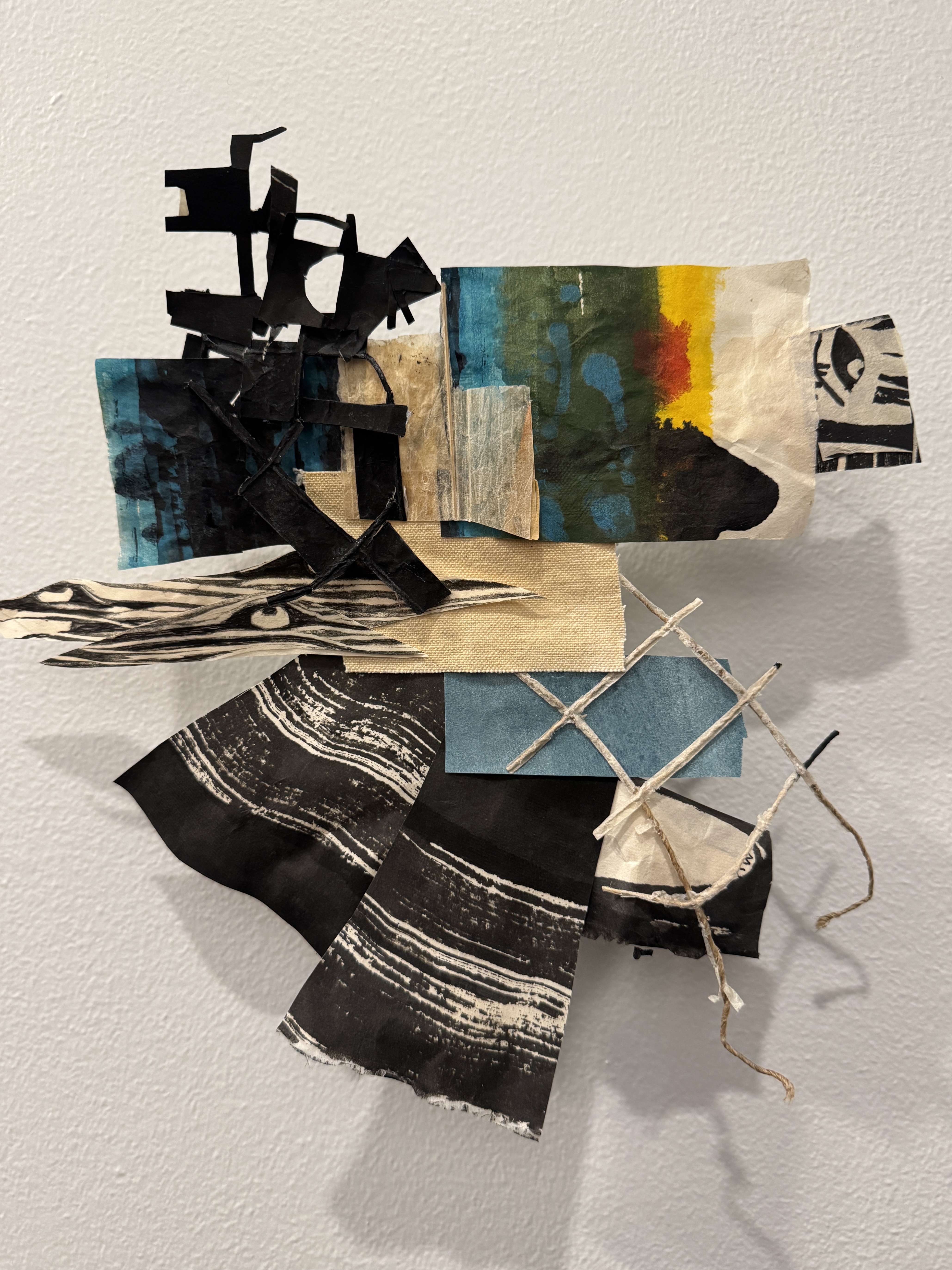
“Queequeg” by Heidi Whitman (2025); seen at the New Bedford Whaling Museum.
From Chapter V. Breakfast:
But as for Queequeg—why, Queequeg sat there among them—at the head of the table, too, it so chanced; as cool as an icicle. To be sure I cannot say much for his breeding. His greatest admirer could not have cordially justified his bringing his harpoon into breakfast with him, and using it there without ceremony; reaching over the table with it, to the imminent jeopardy of many heads, and grappling the beefsteaks towards him. But that was certainly very coolly done by him, and everyone knows that in most people’s estimation, to do anything coolly is to do it genteelly.
And, yes, I will have reread Moby-Dick twice before the first quarter of the new year is behind us.

Above is my image of Leonora Carrington’s “The Giantess (The Guardian of the Egg),” seen at the Art Institute of Chicago on my most recent visit. Isn’t this something? Given the frantic activity at her feet, I suspect we should worry about her, but she seems calm in the face of the potential danger, almost maternal. I aspire to the tranquility of her averted gaze. This oversized protector of birds and eggs reminded me that I had not yet posted about my bird of the year.
As I’ve shared in years past, our family first encountered the idea in Rare Encounters with Ordinary Birds. Lyanda Lynn Haupt writes:
There is a game birders play on New Year’s Day called “Bird of the Year.” The very first bird you see on the first day of the new year is your theme bird for the next 365 days. It might seem a curious custom, but people who watch birds regularly are always contriving ways to keep themselves interested. This is one of those ways. You are given the possibility of creating something extraordinary — a Year of the Osprey, Year of the Pileated Woodpecker, Year of the Trumpeter Swan. This game is an inspiration to place yourself in natural circumstances that will yield a heavenly bird, blessing your year, your perspective, your imagination, your spirit. New year, new bird.
We have been playing this game for so long that we now rework the rules a bit to avoid getting the same birds again and again. And again. This year, because my younger daughter and I knew we would be in New Bedford, we determined that our birds would be the first we espied on our walk to dinner after settling in our hotel. Naturally, we encountered gulls, but because we are not quite as quick with our water bird identification, we landed on the peregrine falcon that soared into view, disrupting a previously unseen flock of nearby pigeons.
The Year of the Peregrine Falcon it is.

In late December, I visited the Museum of Science and Industry with my younger daughter. Although I am not particularly invested in the world of Spider-Man, I do count several graphic novels and at least two comic book series as among my favorite books; more, I recently read Michael Chabon’s The Amazing Adventures of Kavalier & Clay for a Roundtable course, so I was more than a little enthusiastic about seeing some of the original art that hung in “Marvel’s Spider-Man: Beyond Amazing.”
Above is my photo of the original final page of Issue 10 of The Amazing Spider-Man (1963), famous, apparently, for Jameson’s soliloquy about his hatred of the titular character.
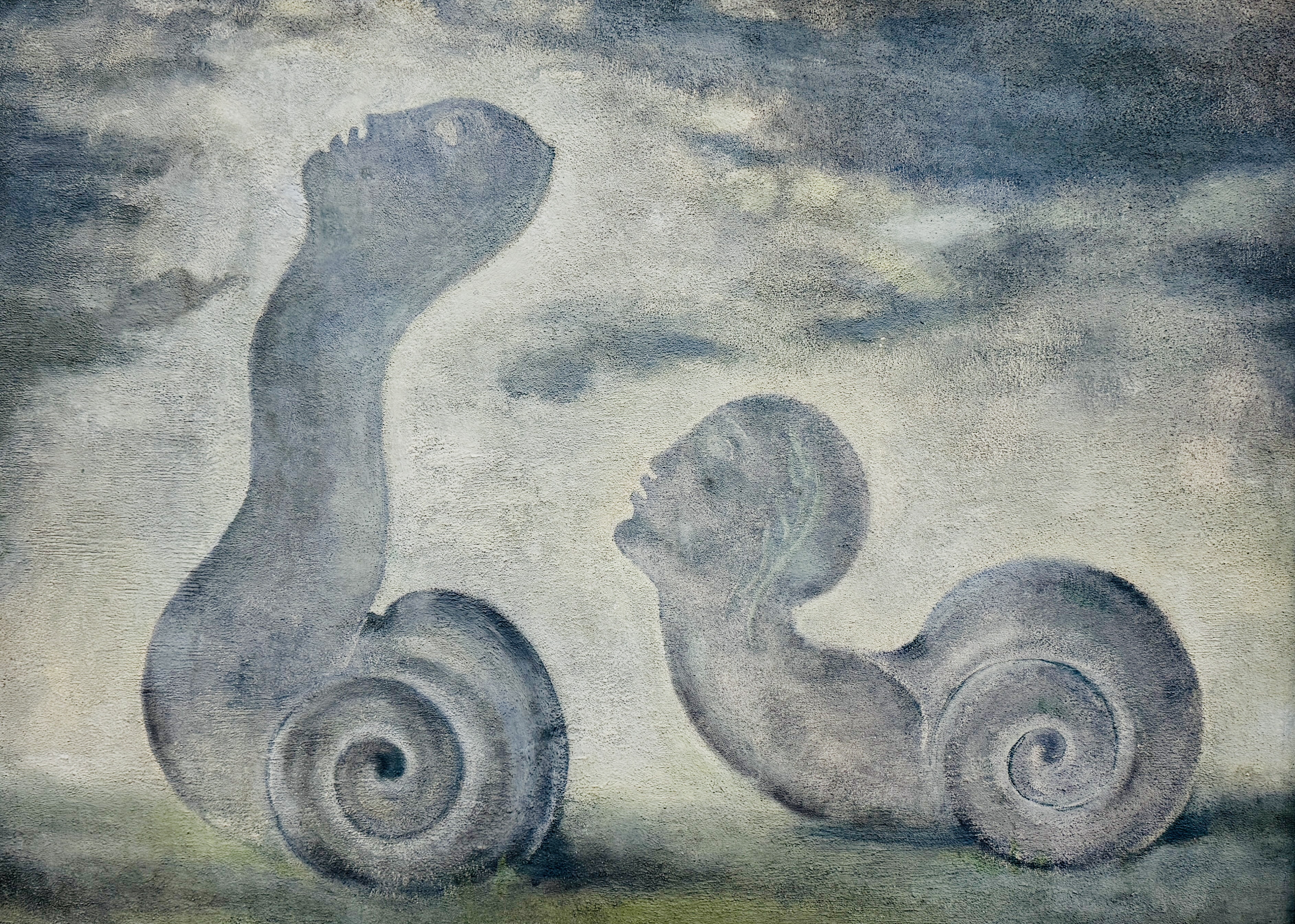
The above is my image of “The Bewitched” (1932) by Mina Loy.
Over the weekend, we headed into Chicago to celebrate my older daughter’s birthday. Our plans were upended when the Museum Campus shut down in anticipation of the cold.
When we relocated to Chicago from Southern California in the early 1990s, my husband and I, both born and raised in the Northeast, were not at all surprised by the number of adults who darted through the city in shorts and flimsy footwear in the most cutting cold and wind, nor by students who walked to class in zippered hoodies (sometimes dragging a coat). It sorted with a type we knew well from childhood — like my father, who could never abide a winter hat, or the president of the Class of 1982, who remained sockless even in six inches of uncleared snow, or the scout leader who would only wear sandals, even in January. So, Chicago, I hardly knew you when I learned that the Shedd, Field, and Adler would not open on Friday — especially in light of the many school closings.
The Art Institute remained open, though, so we spent several hours there. Particular highlights this visit included Bruce Goff: Material Worlds, Raqib Shaw: Paradise Lost, and old favorites, like the Thorne Miniature Rooms.
In the Modern Wing, “The Bewitched” put me in mind of Francesca and Paolo, perhaps because I am rereading the Inferno, this time with Samantha Rose Hill and Elias Crim. Among other pursuits this semester, I am also reading The Canterbury Tales with Marion Turner. In Friday’s meeting, she reminded us that the juxtaposition of the stories and, by extension, storytellers — for example, the Miller’s interruption when the Knight has concluded — is part of Chaucer’s rather subversive genius. Wait. A similar rubric undergirds the Inferno, right? (After all, wasn’t it one of Chaucer’s chief influences?) Doesn’t Dante describe the weaknesses of societies through the stories of characters’ sin and limitations, building toward a sort of political treatise or philosophy?
As always, I love the intersections — the serendipity, synchronicity, and synthesis.
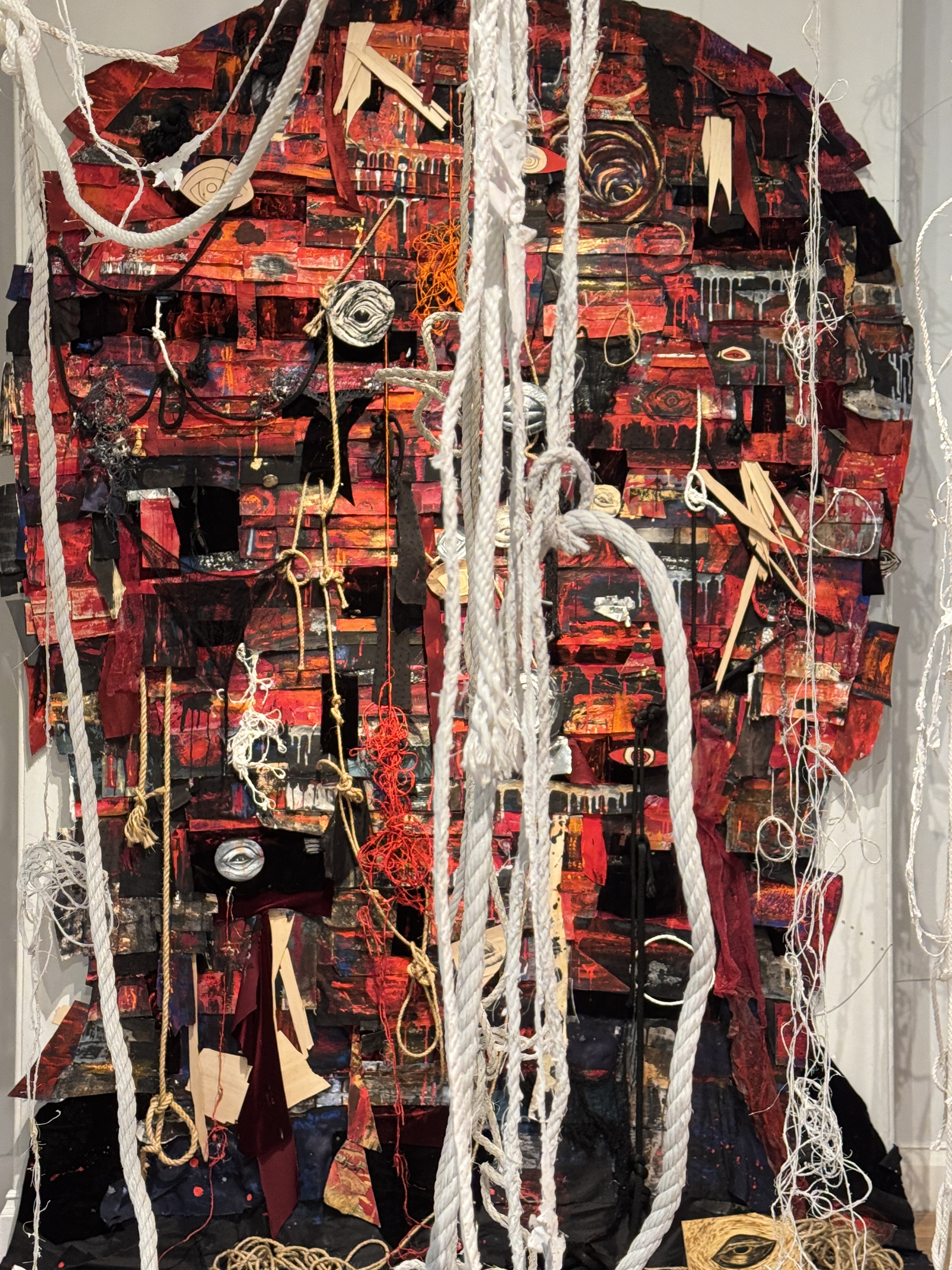
My image of Heidi Whitman’s work at the New Bedford Whaling Museum.
From Chapter 36 of Moby-Dick; or, The Whale (Herman Melville; 1851):
While the mate was getting the hammer, Ahab, without speaking, was slowly rubbing the gold piece against the skirts of his jacket, as if to heighten its lustre, and without using any words was meanwhile lowly humming to himself, producing a sound so strangely muffled and inarticulate that it seemed the mechanical humming of the wheels of his vitality in him.
The focal point of Whitman’s installation put me in mind of this passage, which, as it turns out, occurs in the chapter from which I read at this year’s marathon.
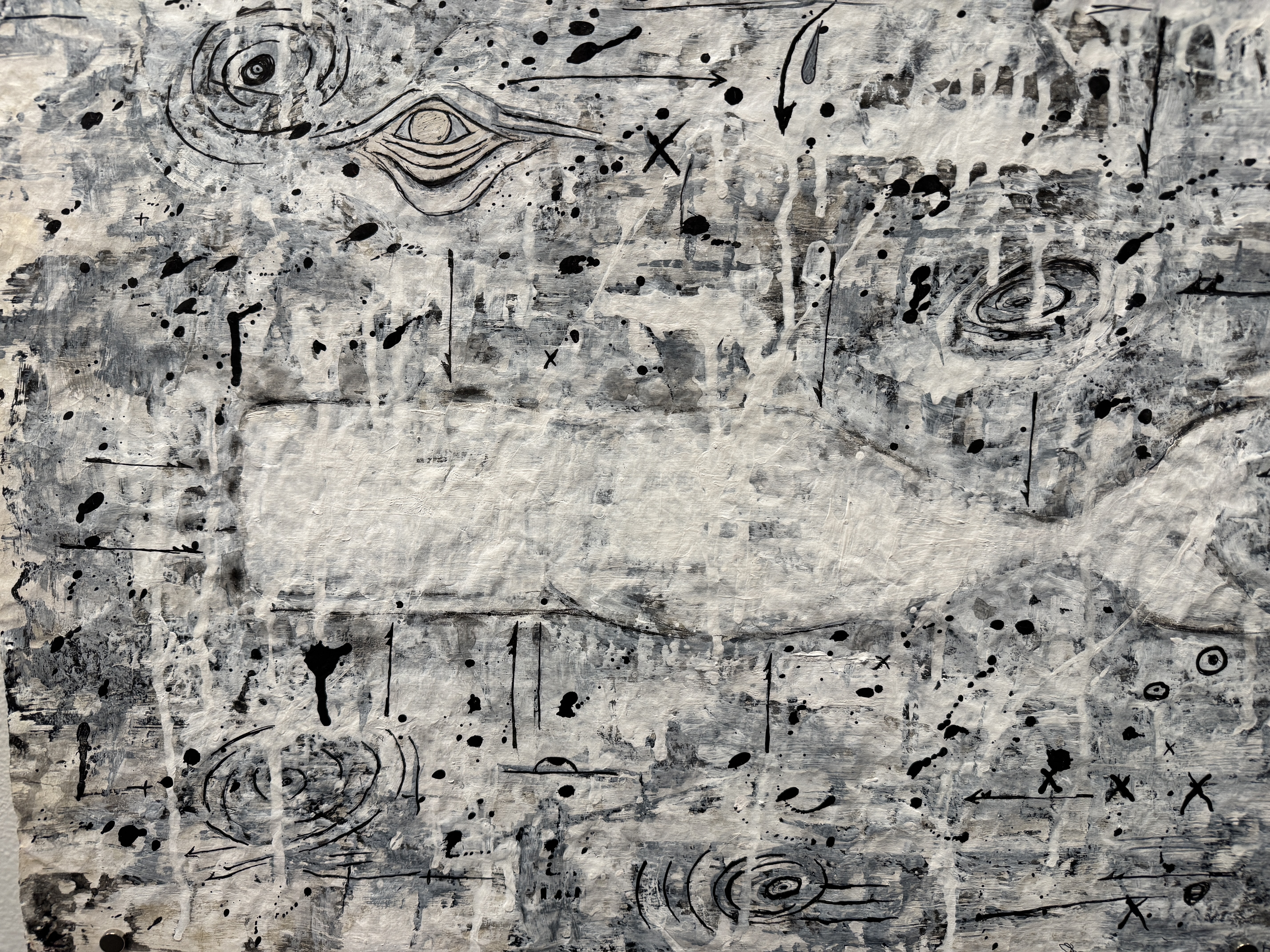
The above is my image of detail from Heidi Whitman’s work at the New Bedford Whaling Museum. My younger daughter and I were there this weekend for the thirtieth anniversary of the Moby-Dick Marathon, for which we were both readers. This year’s event commemorated Melville’s 1841 departure aboard the whaleship Acushnet: It has been 185 years since the adventure that yielded Moby-Dick and 175 years since the publication of the novel.
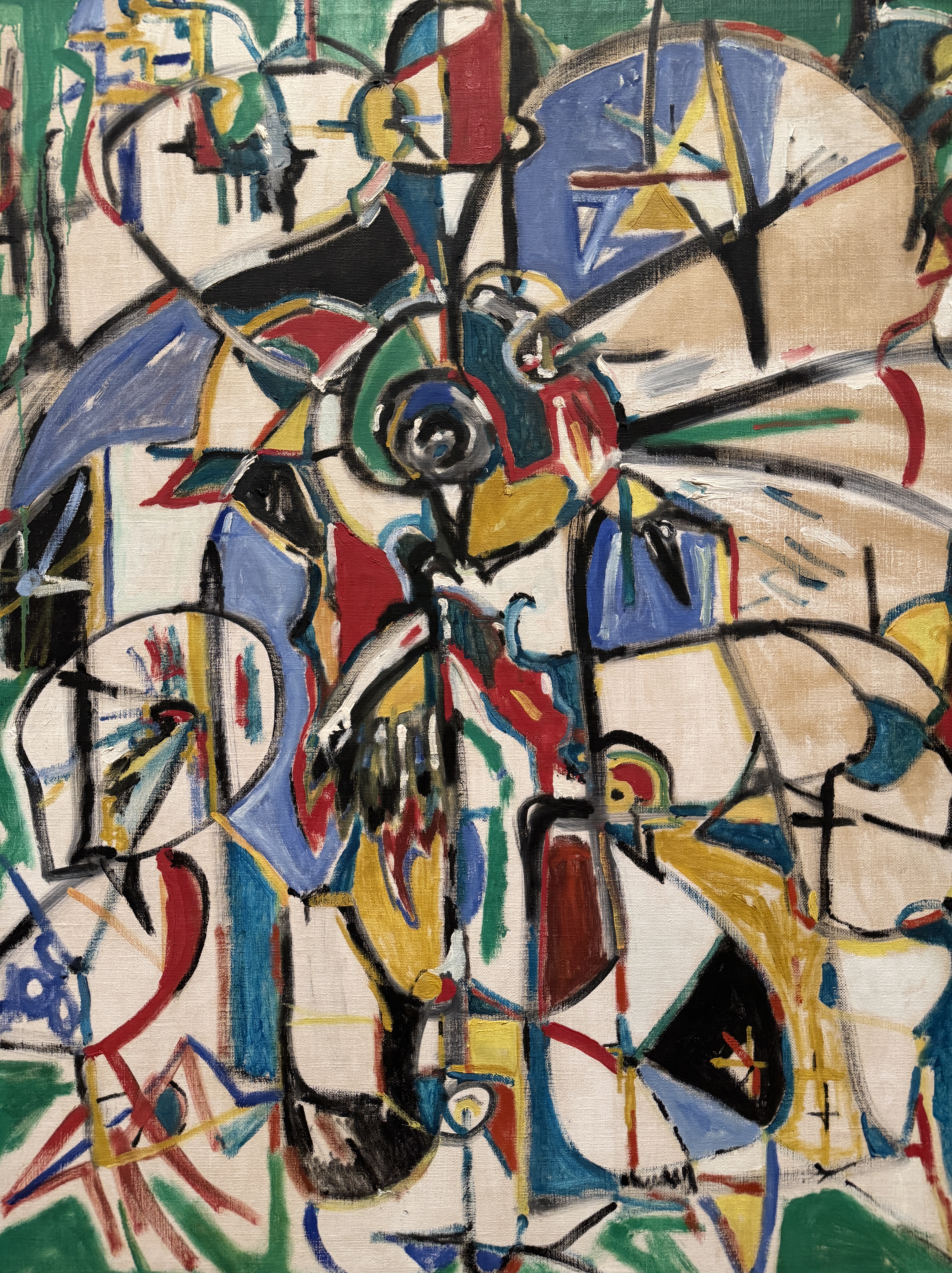
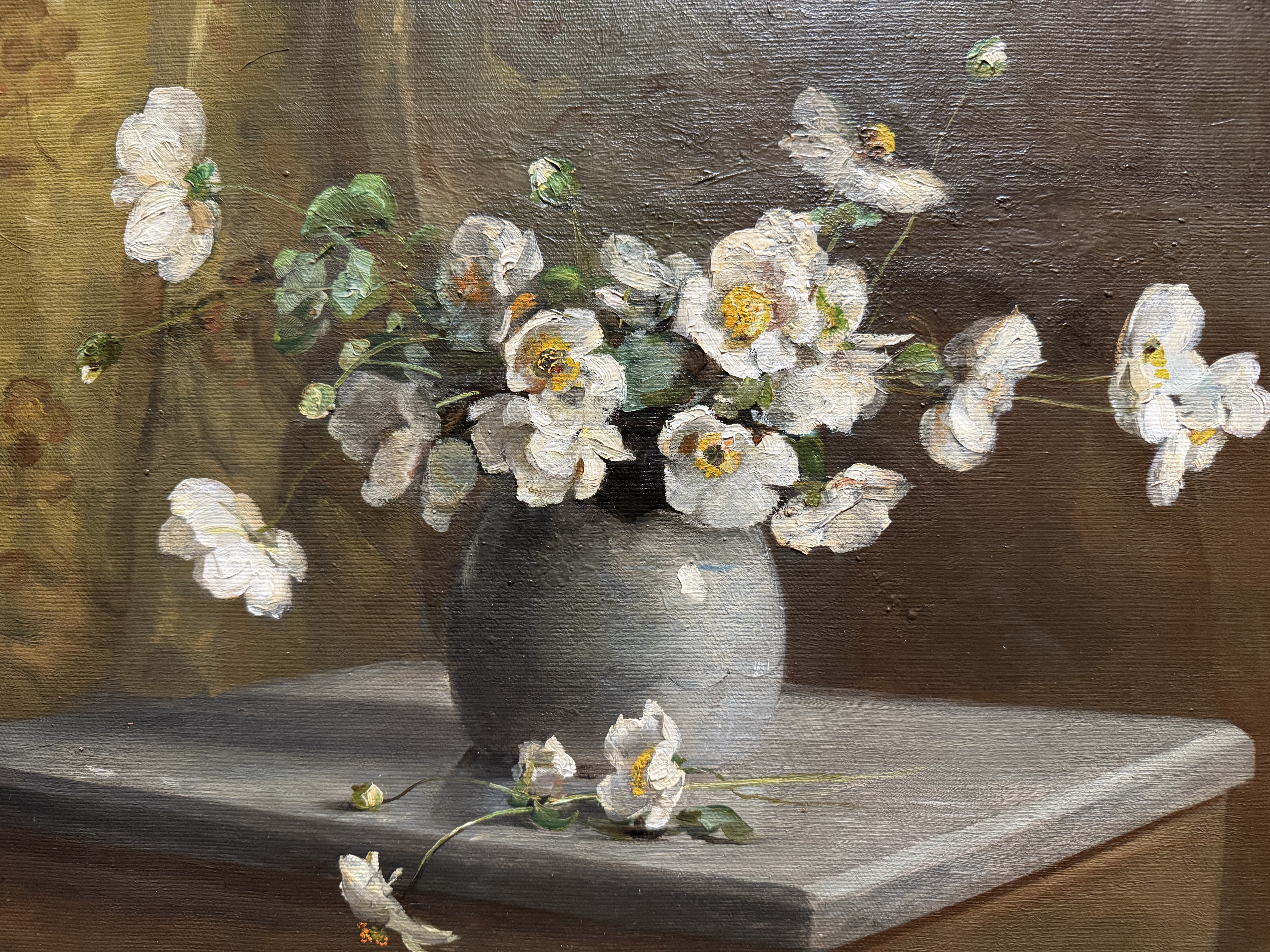
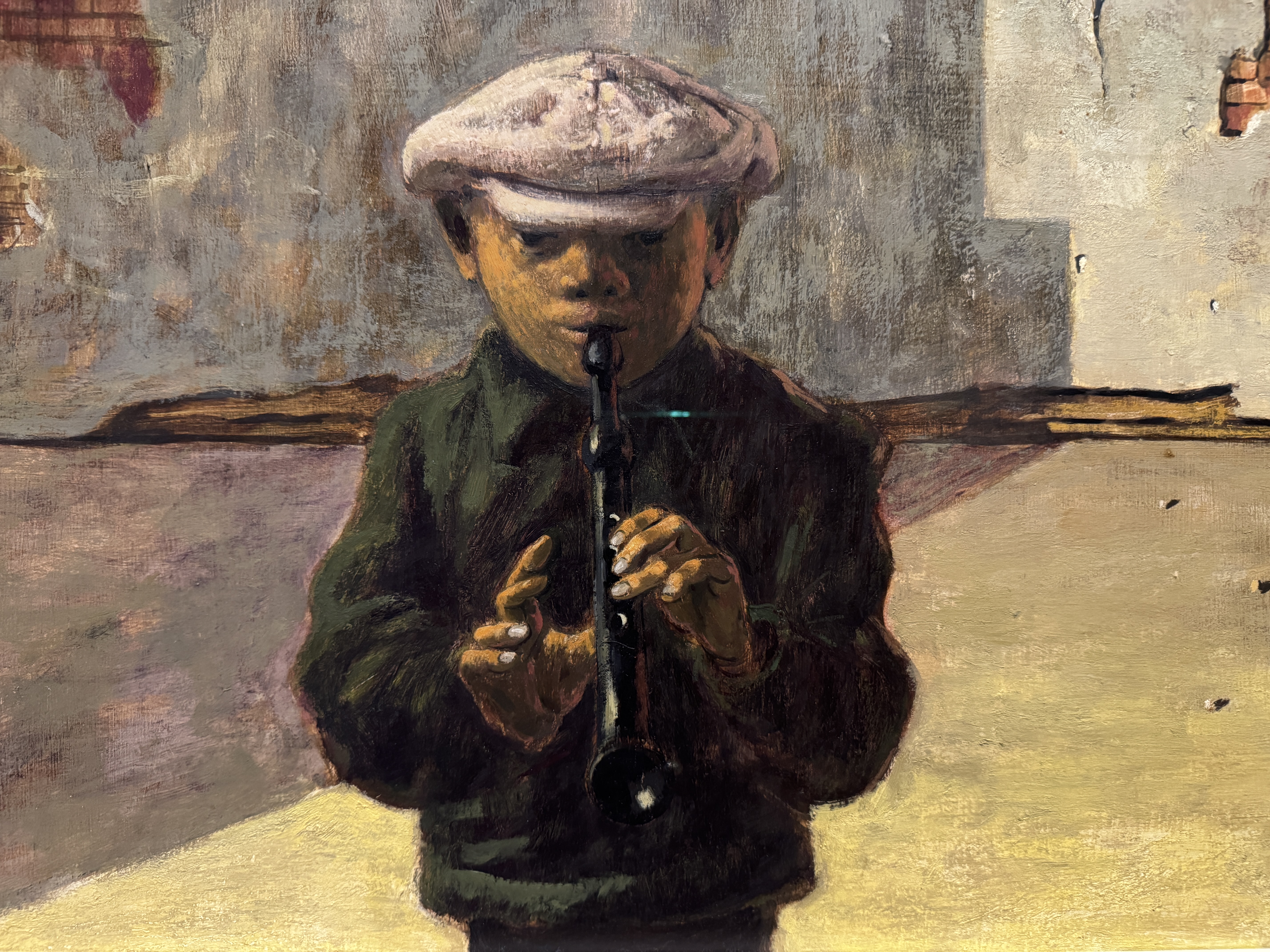
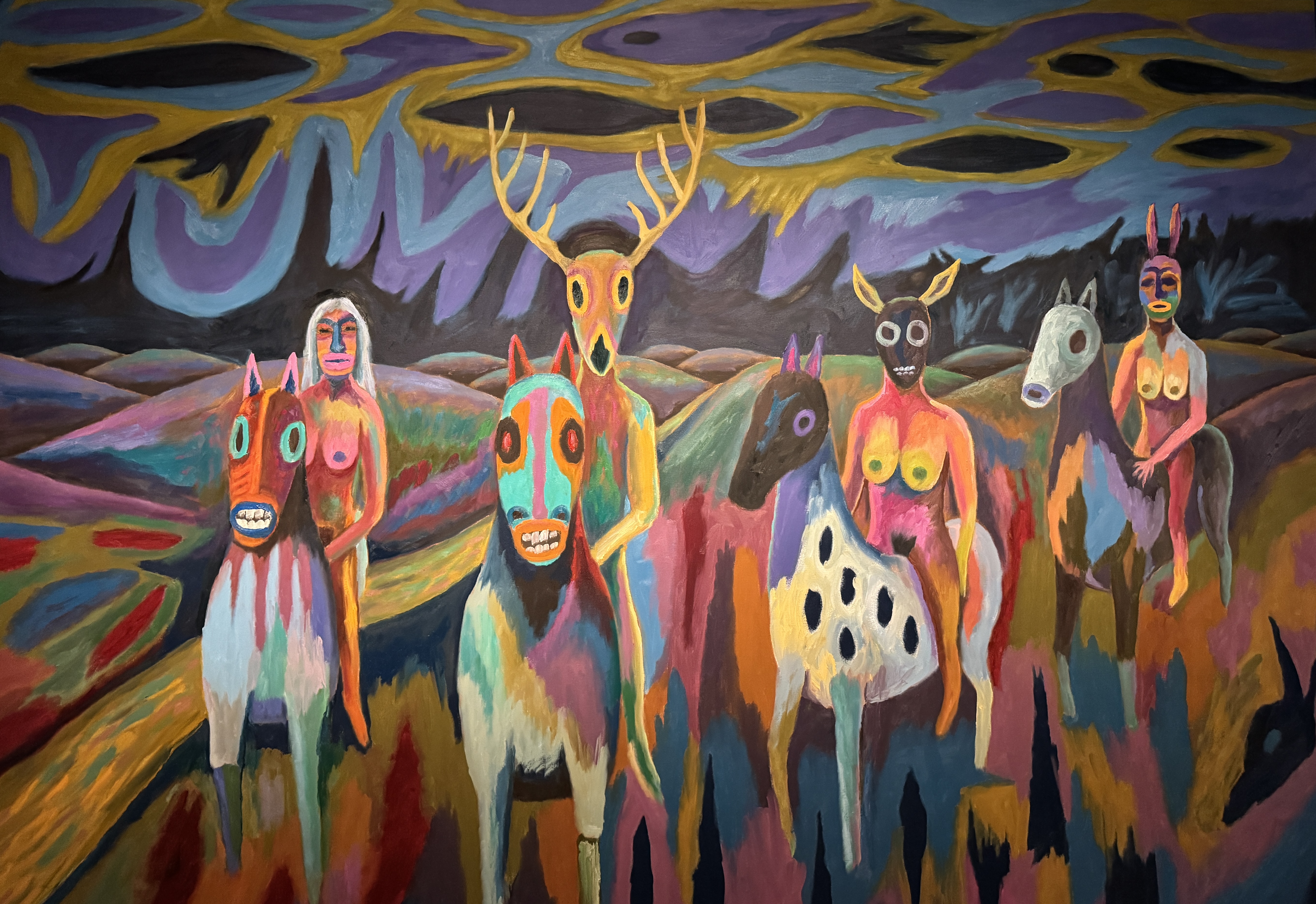
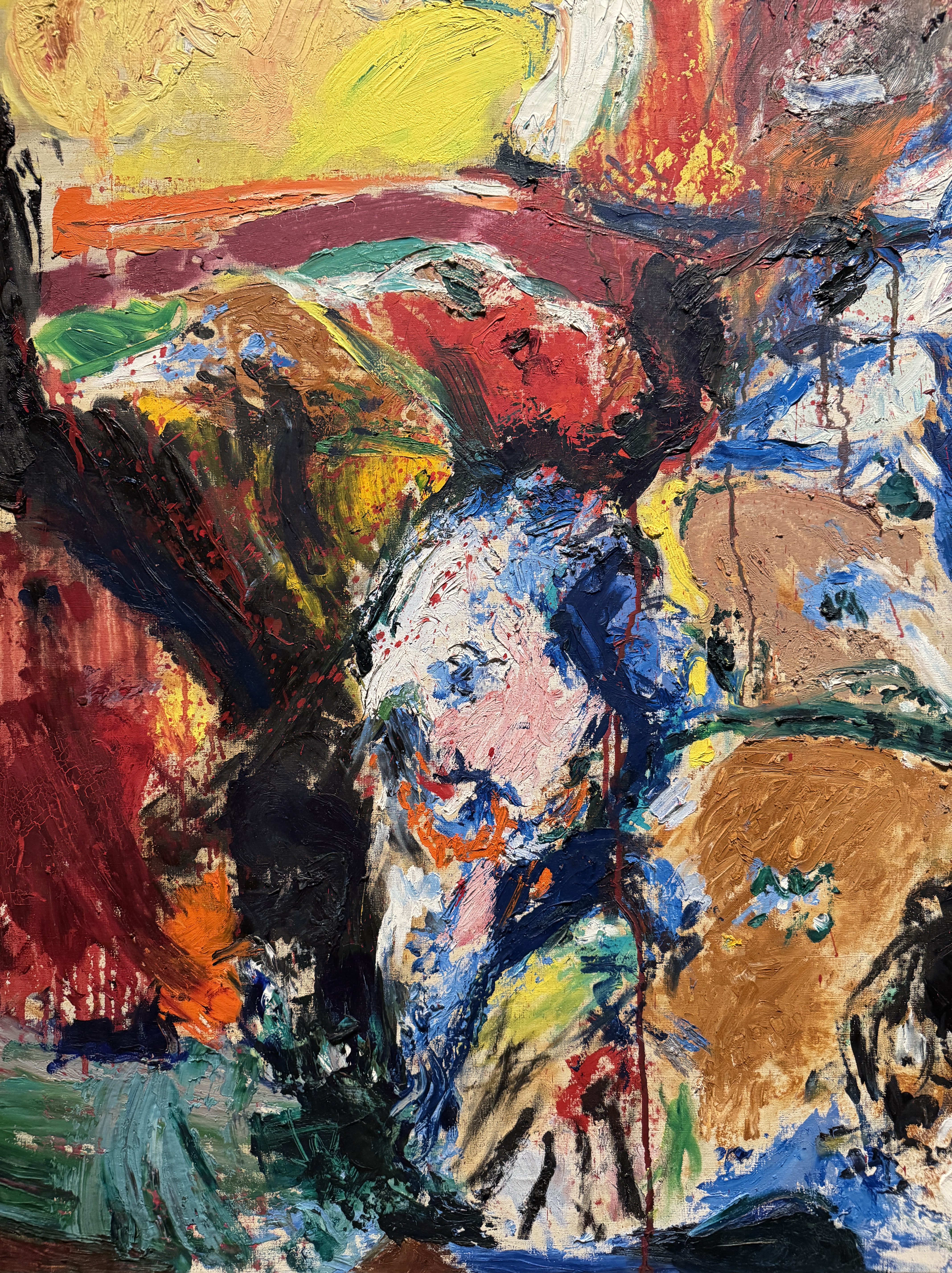
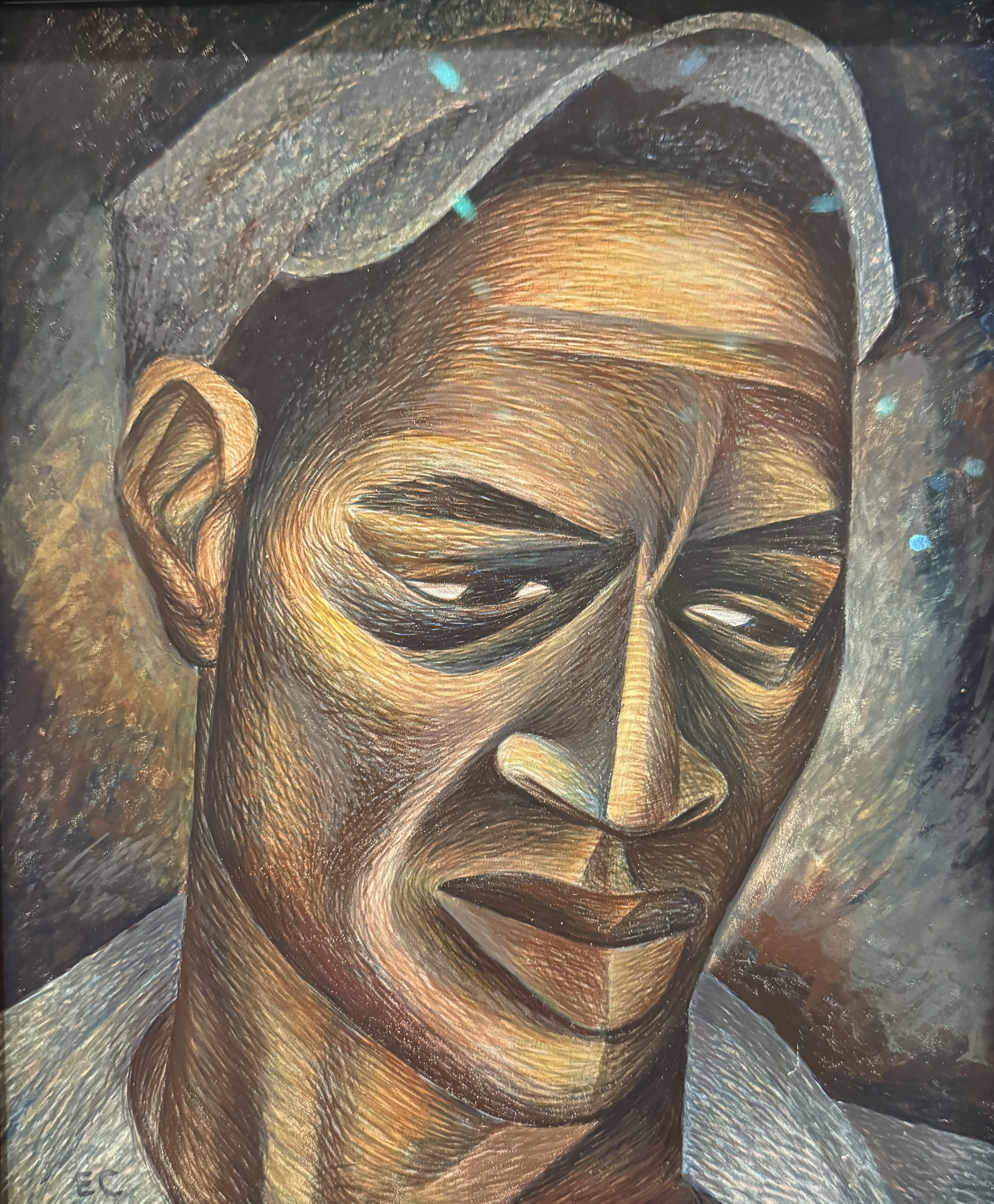
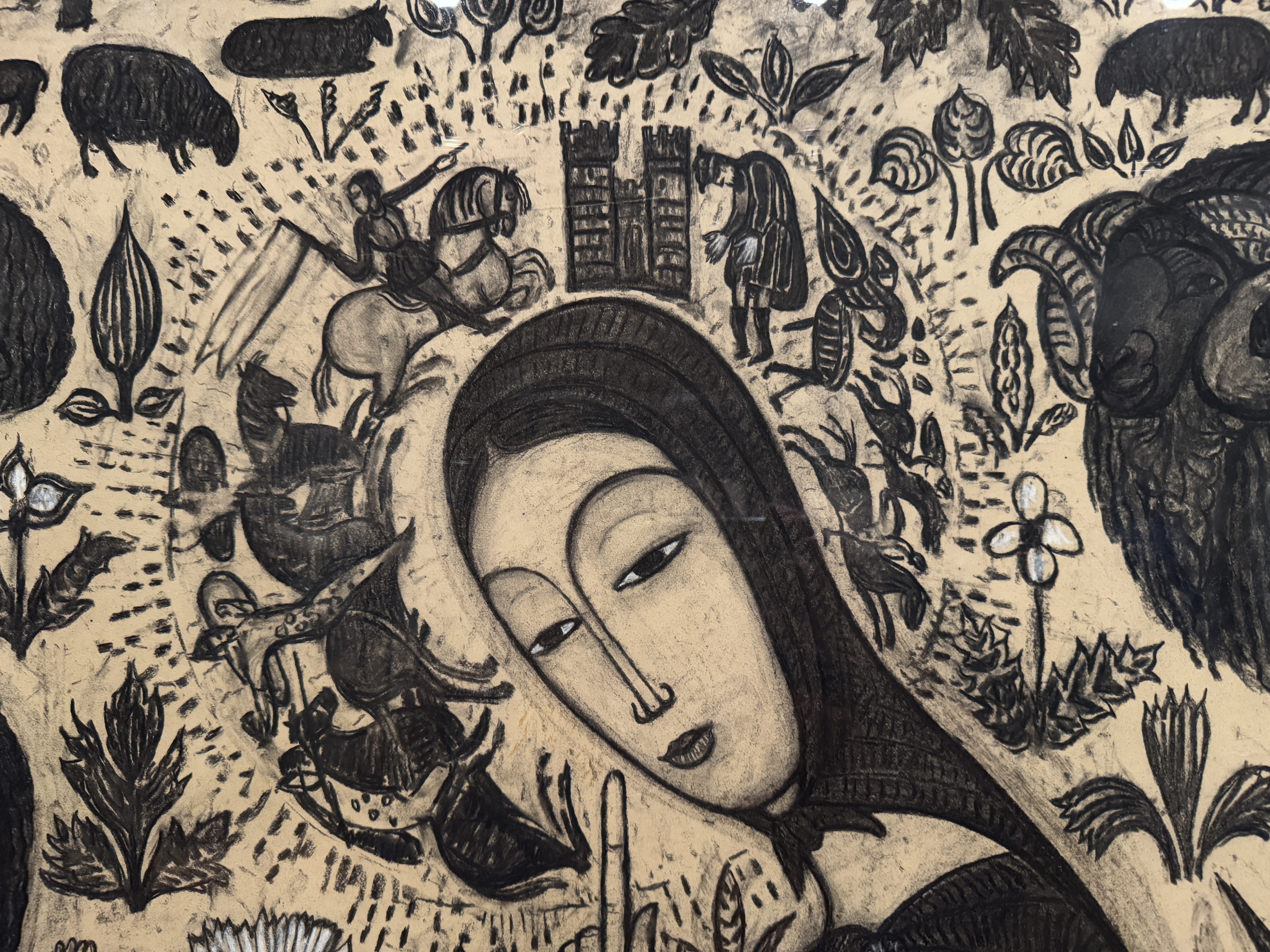
The above are my images of details from the following works of art: Le Jardine (1959-60) by Herbert Gentry; Floral Still Life (1880-90) by Charles Ethan Porter; The Piper (1953) by Hughie Lee-Smith; Four Days and Four Nites (2019-2020) by Jim Denomie; and The Suicide of Mr. H. (1961) by Asger Jorn.
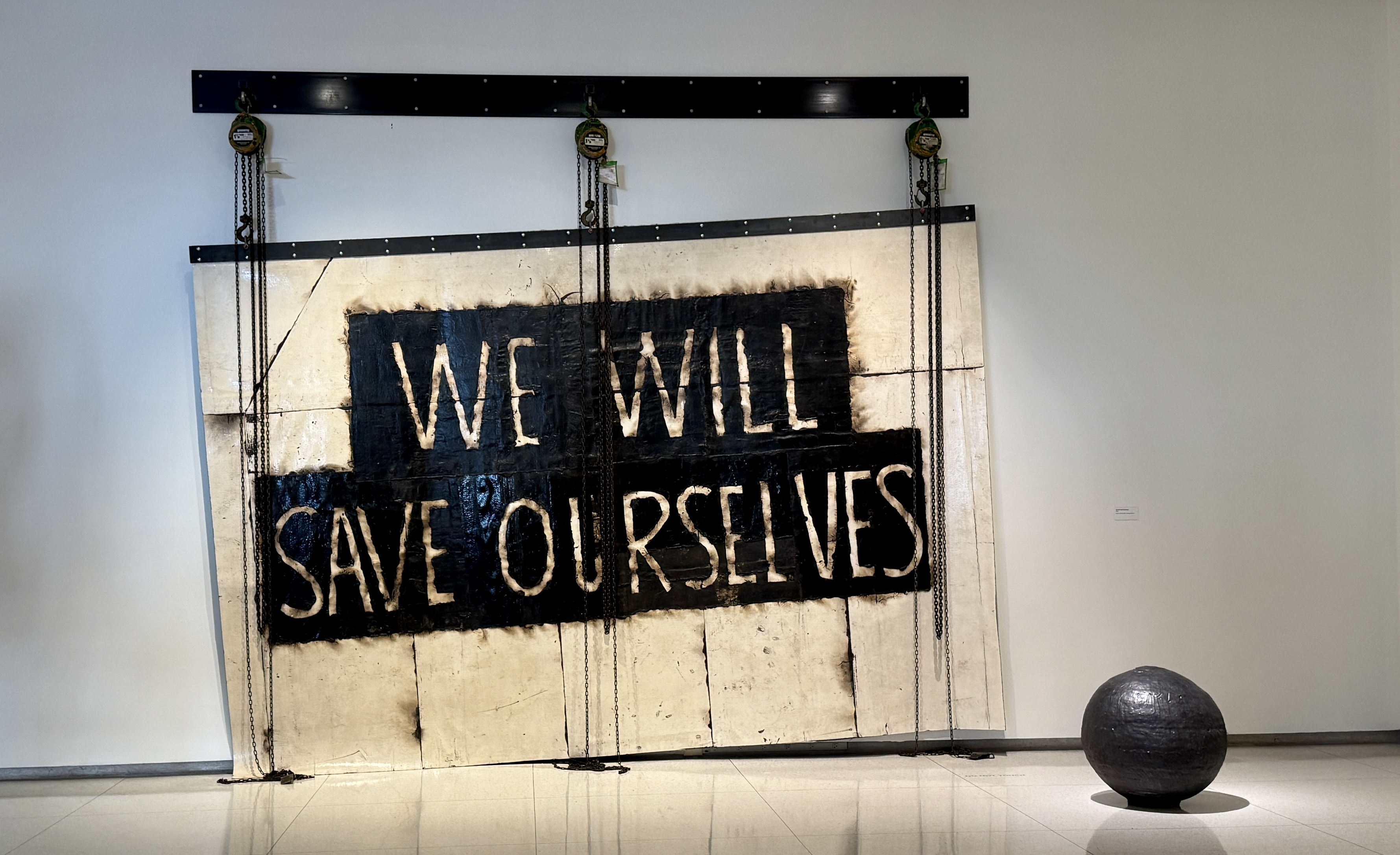
Last week, we attended a Friday tour of Theaster Gates: Unto Thee at the Smart Museum.




 Nerdishly