Weekend

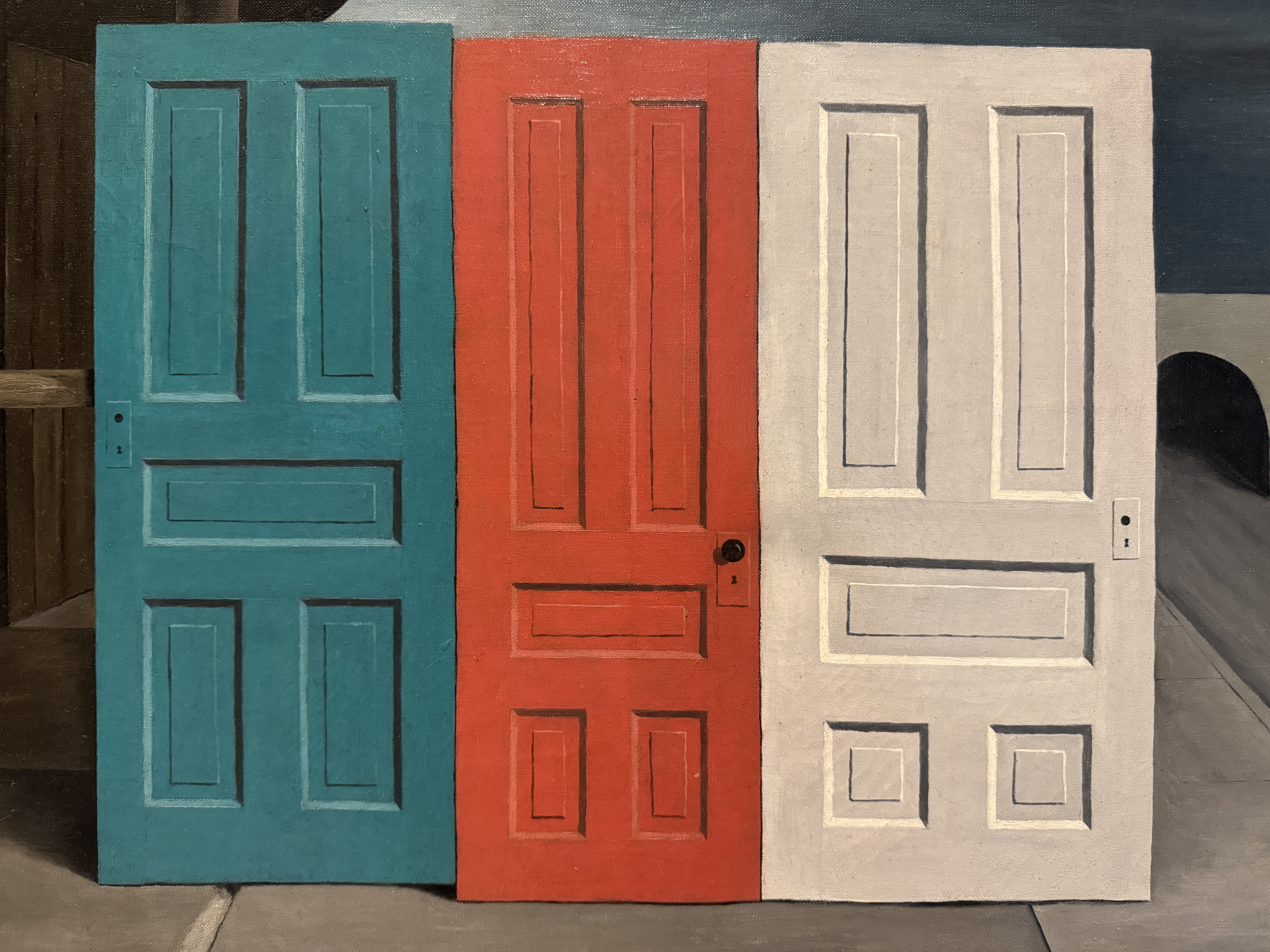
My image of Gertrude Abercrombie’s “Doors (3 Demolition)” (1957).

Over the weekend we saw the Court’s excellent production of A Raisin in the Sun (review here), having visited our favorite noodle stop and the Smart Museum of Art beforehand. (The Smart is still celebrating its fiftieth anniversary, so if you’re in the area and have never visited this tiny treasure, get there.)

After a week of single-digit temperatures, the weather has granted us a return to more comfortable walking weather. (Recurring public service announcement: Wear sunscreen.) In addition to logging more miles, I’ve gotten back to music practice, preparing to resume lessons in mid-March. (The doctor advised against playing for at least two weeks post-surgery; it was only a few days the first time. May there be no third time.)

Generally, very little can prevent me from reading, so that has continued uninterrupted. Not long after announcing I had begun The Heaven and Earth Grocery Store, though, I read this article and became absorbed by Barbara Kingsolver’s Demon Copperhead (2022). Come for the social commentary; stay for one of the most beguiling narrators since perhaps his narrative brother, David Copperfield. (Speaking of the Dickens novel, I will reread it for a UChicago course later this year.) I’ve since returned to the McBride, a delight, and will likely finish it today or tomorrow. Late last week, I attended a virtual talk with Amy Tan; naturally her book about backyard birding made its way from my shelves to the table beside my favorite reading chair. And as I’ve mentioned, with my youngest, I’ve been reading books by Brazilian writers, most recently, Captains of the Sands (Jorge Amado; 1937). Since some have likened it to Lord of the Flies (William Golding; 1954), we have decided to reread that when we finish Captains. (In a neat intersection of interests, I discovered Yellowjackets this month, which most assuredly owes a debt to Golding — and to Lost, a small-screen family favorite.)

All that remains is to get back to my Latin studies, which, now that I feel more myself, seems probable this week.

I typed and erased at least three sentences to conclude this entry and then remembered that Jeanne at Necromancy Never Pays had already pointed me to the right words:

How to Be Eaten did turn out to be the right book at the right time. It fit in with something I read by Amanda Marcotte, author of Troll Nation and writer for Salon, who advises that resistance can consist of simply “continuing to exist, by thriving as the person you were born to be, and by holding one another for strength and comfort in adversity.”

Until next time, then, continue to exist. Thrive as the person you were born to be. Hold one another for strength and comfort in adversity.

Lente

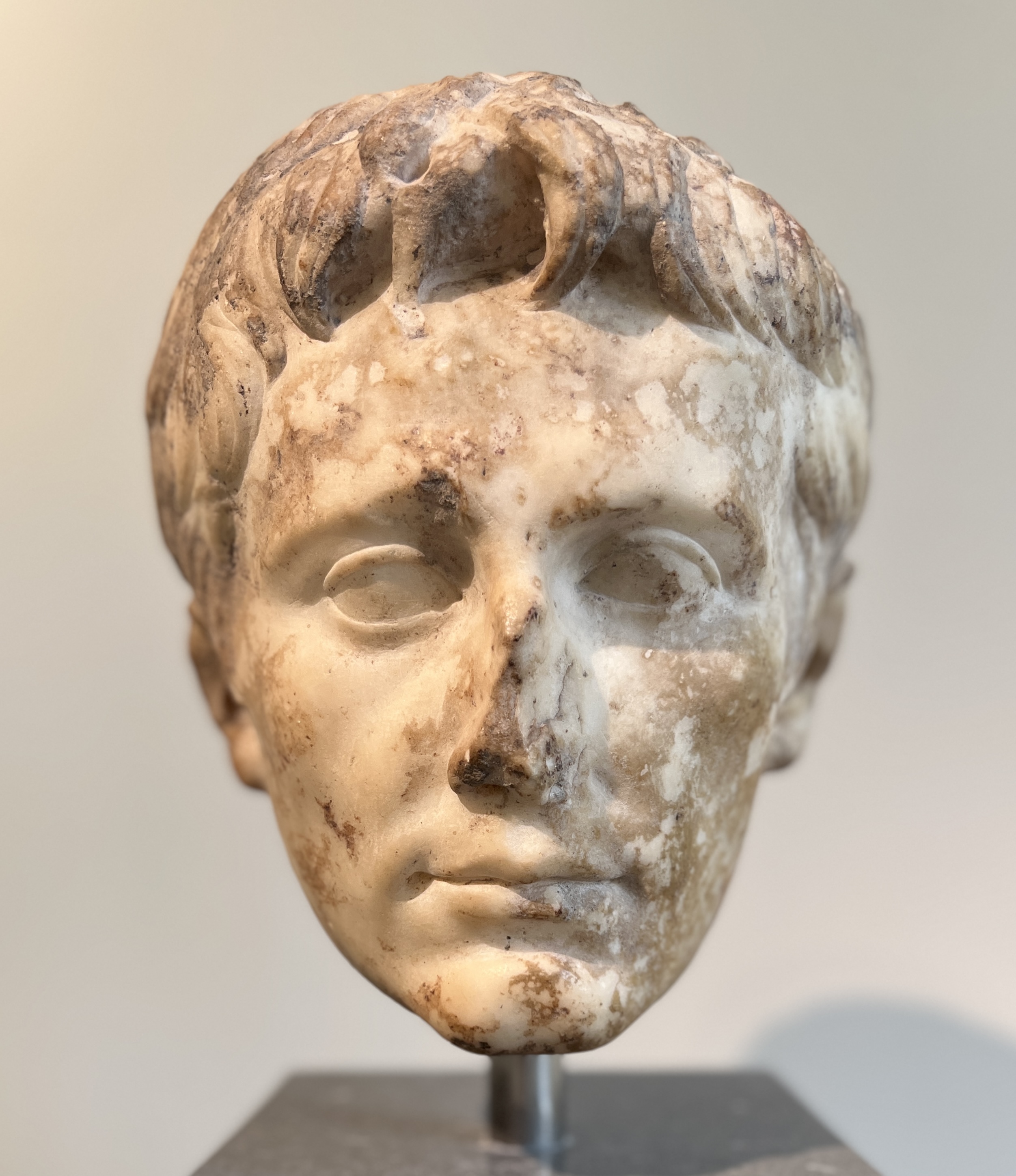
“Julia Domna,” Roman, 193-217 CE.
Seen at the Harvard Art Museums last week.

My progress through Dr. LaFleur’s Latin tutorial has been maddeningly slow: When I submitted my work on Chapter VIII in August 2023 (yes, you read that correctly), I wrote, in part, “I recognize that I may be your slowest student ever but trust that if this represented a problem, you would advise me.” Imagine my relief when I learned that several students had, at that point, been working through the tutorial for at least two years. But eighteen months have passed, and I am now polishing my submission for Chapter XI (yes, you read that correctly). At this rate, the Ovid tutorial — my reach goal — seems impossibly far off.

And yet….

When I wander through art museums, some of my favorite moments involve recognition: I “know” an artist, or an artist’s contemporary, or the obscure subject, or whatever. Are you familiar with the feeling I’m describing? A work attracts your attention, and you realize it reminds you of other pieces… “Ah! Could this be…? It is!” My daughters and husband, who most frequently join me for museum adventures, have indulged and encouraged my barely stifled delight at one “discovery” or another (and another) for many, many years now. In fact, they know that this wash-rinse-repeat cycle in which we stitch one learning experience to another, or a book to a painting to a piece of music to a news article to a film to a — you get the idea, is a rich and rewarding way to learn, to think, to grow. This sort of (re)discovery has a reliable “stickiness.”

As have my Latin studies. It has been slow going, yes, but what I have learned so far, I own. My husband drills me on vocabulary and my study cards for at least an hour on nearly every trip into Chicago or Milwaukee, for example, and I drive the first leg of our trips into Michigan so that he can quiz me. More than six months ago, I added Duolingo to my day. Admittedly, its Latin program is short and limited, but the skill-building tools for vocabulary have merit.

And so I learn. In my way. On my schedule. However long it takes.

(Speaking of schedules, for the first semester since I enrolled in music lessons (Fall 2014), I am taking a break of sorts: I have only registered for a half-term this spring. More, I am not returning to band until Fall 2025. Travel and “required maintenance” on this aging vehicle prompted me to rethink these first few months of the new year. I am still studying, though, and will outline what is on my practice sheet in another post.)

Habitual

My older daughter walks to work, and it is one of life’s gifts that she enjoys my company; her call each weekday morning is both alarm and balm. Until recently, I tackled some chores, walked in my own neighborhood, or snuggled deeper into my nest of blankets and lounging cats while we chatted. One morning last month, though, I rose, walked down the hall, and hopped on the exercise bike when her call came in – painlessly adding another twenty minutes of movement to my day. One day of biking followed another, then another, then another, and now it’s a habit (if still a relatively new one).

Simple rituals, such as my daughter’s call, and habits, such as biking during that call, give the day a reliable rhythm (and, in this case, a great delight) and help me meet objectives (e.g., increase movement) or goals (e.g., maintain healthy blood pressure). I learned this well during the years I worked while parenting and teaching, and it’s a lesson I credit with slow but steady improvements in my physical fitness and music performance. But even someone as committed as I am to the value of small changes, mindful plans, and reliable rhythms requires a periodic reminder.

Late last summer, I appended a note to my work on Lesson 7 of my Latin tutorial: “I recognize that I may be your slowest student ever but trust that if this represented a problem, you would advise me.” My wonderful tutor more than allayed my concerns, but I still hoped to pick up the pace – only to fall short of my expectations week after week. Although I continued to use long drives to and from adventures in Chicago, Milwaukee, and Ann Arbor for vocabulary, declension, and conjugation review, progress with the translations and readings stalled after my Lesson 8 submission in the fall. How was I able to add another walk to my day, another instrument to my practice roster, another course or book group to my calendar but not consistently work on the Latin lessons? I lacked neither time nor interest. What was the deal?

Captain Obvious finally smacked me with the Wheelock’s text: My Latin studies lacked a ritual or habit. So. After my first walk last Monday, I worked on them for an hour. The same on Tuesday. Then Wednesday. And so an infant habit is born, one that yields a completed lesson every three weeks, dovetails the other tasks on my daily schedule, and suits to my learning style. 

Perspective

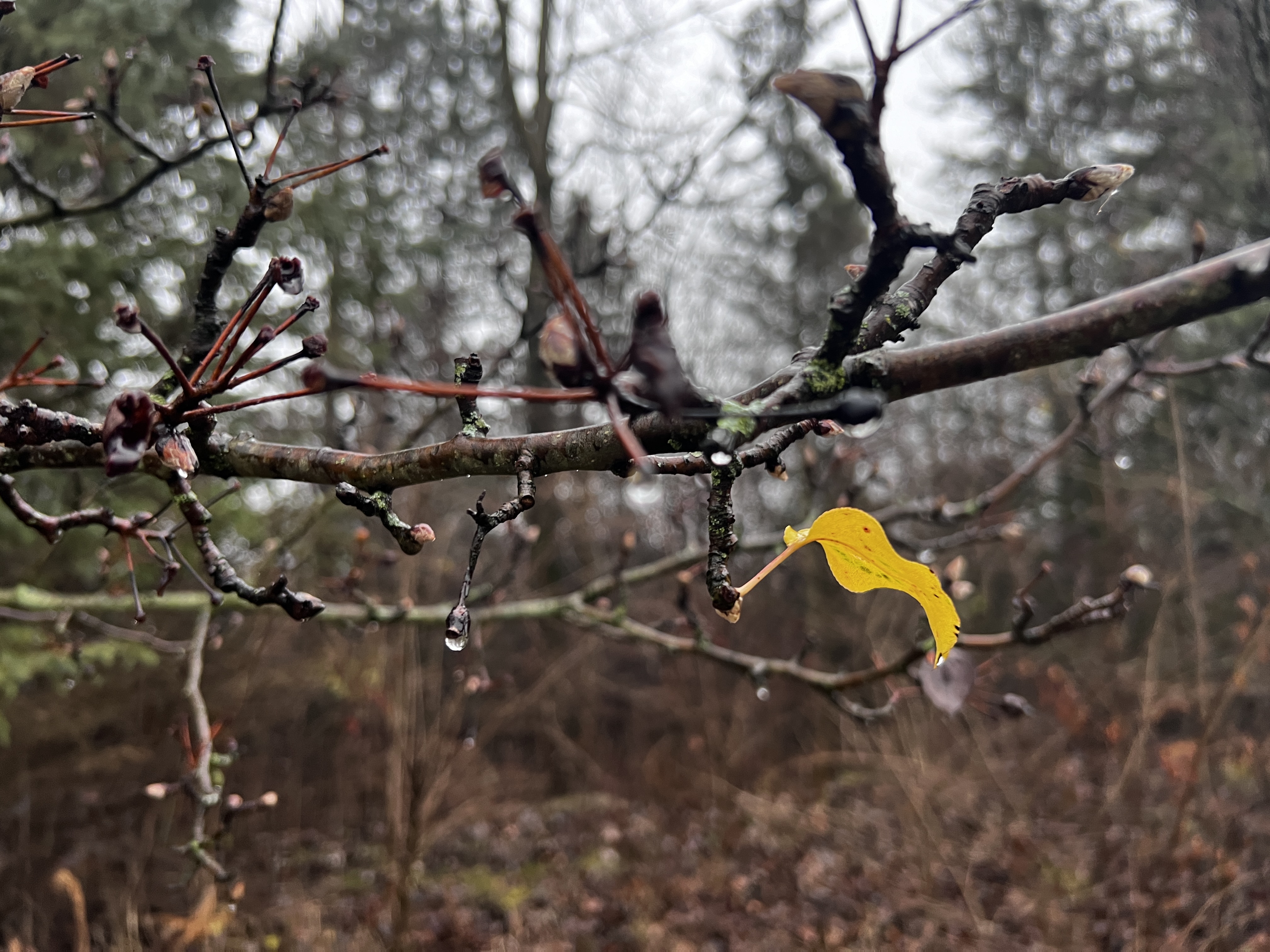
Seen while walking in Ann Arbor yesterday.

Following a string of gray days, the sun is winking in and out of view, so it’s time to walk. Today’s other projects include my reading and notes for tomorrow’s meeting on The Magic Mountain, a “You took how many days off?!?” music practice, reading for this, and my current Latin unit.

To do

• Practice music with particular emphasis on 113 (Bona Rhythmical Articulation)
• Review Latin vocabulary
• Read “The Geese” and assemble notes for first of three discussions on Essays of E.B. White
• Walk before the light drains from the sky
Look up again tonight
• Finish Chain Gang All-Stars (review here)

Staten Island Ferry

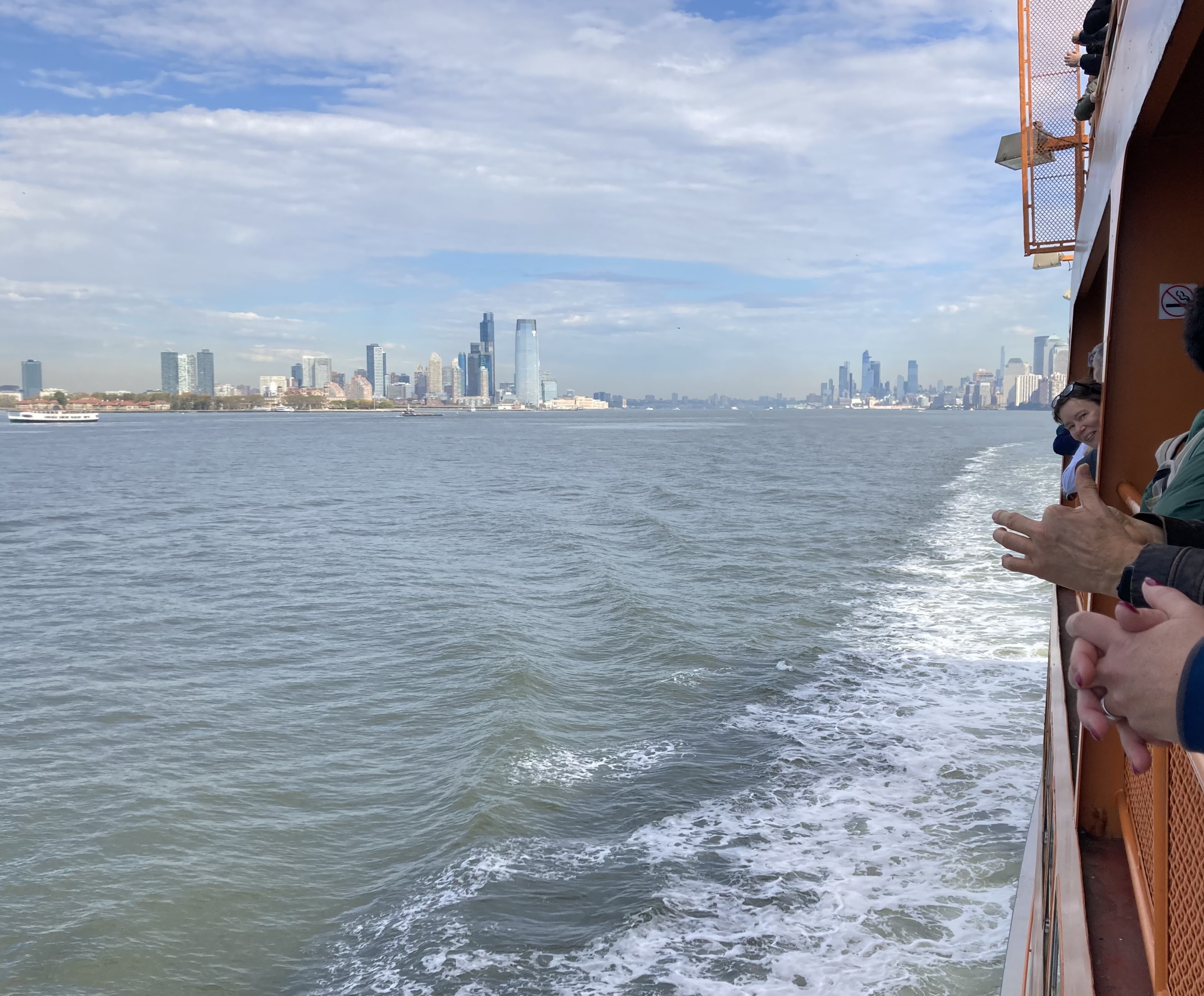
Image captured by my older daughter.

Three weeks have passed since we departed for our NYC adventure. Sparing my seventy-three readers a cliché about time’s passage, I will confine myself to a bemused (virtual) headshake. 

Reading: I’m more than halfway through The Woman in White and 195 pages into The Magic Mountain. I had thought I would read ahead in New Grub Street, but this week, I simply kept pace with the APS Together schedule. I hope to finish Our Missing Hearts (terrific review here) over the weekend.

Latin and music: The trip, re-entry, and preparation for the upcoming concert left me a bit short of time and energy for my Latin studies, although my husband did help me drill vocabulary on our trip into Chicago last weekend. (We saw Twelfth Night at the Chicago Shakespeare Theater. Recommended.) The two music lessons since my return from NYC were longer to make up for the lesson lost during vacation (yes, she’s a terrific instructor), and the assignments represent greater challenges, which, coupled with band music, require a continuing commitment to regular (and extended) practice.

Perhaps if I were as strict about Latin as I am about music, I might be reading Ovid by now. Sigh.

More when time permits.

Progress

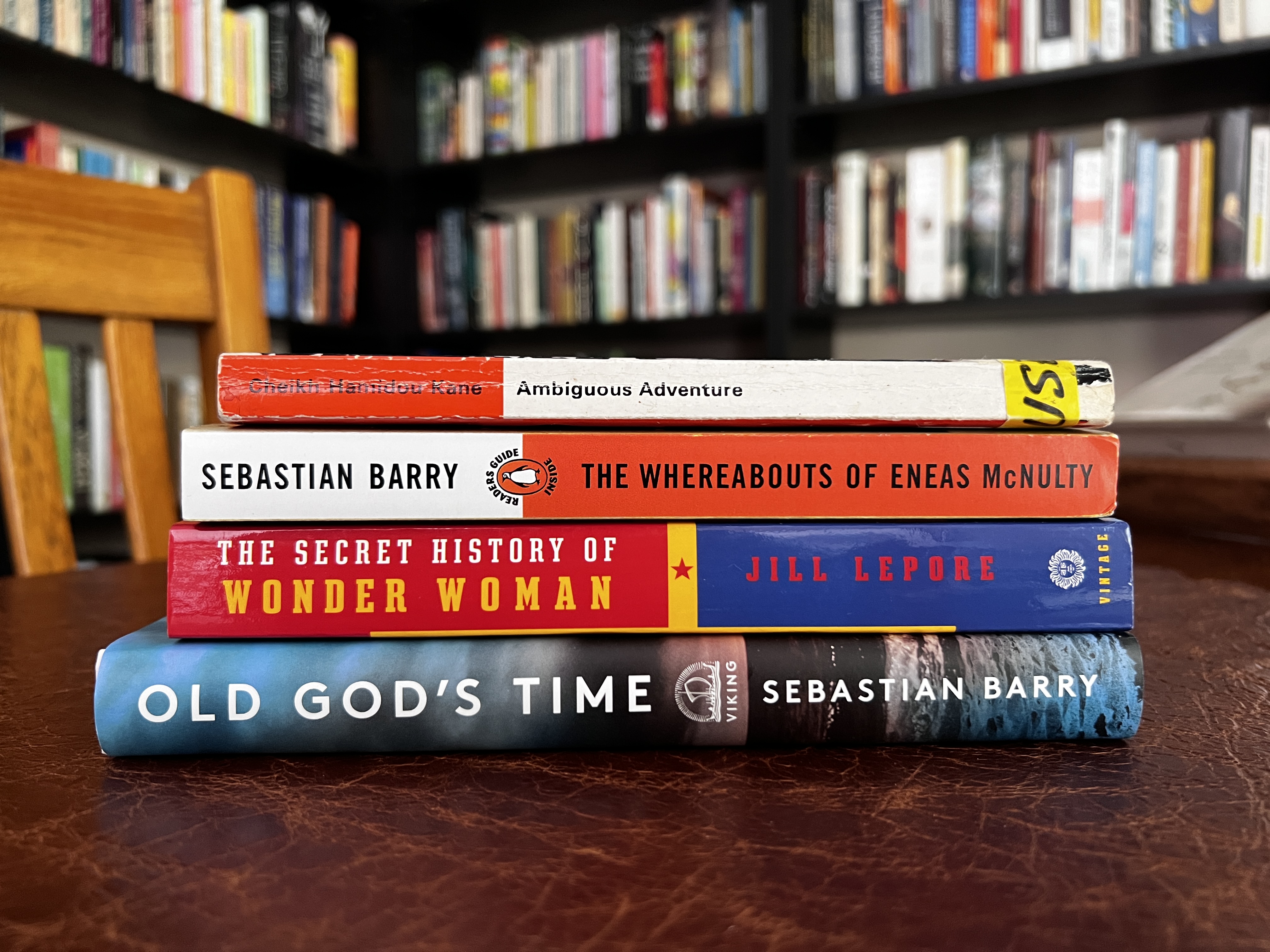
Recent acquisitions.

Although I had hoped to finish sooner, I only just listened to Lecture 17 of Cervantes’ Don Quixote, an Open Yale Courses program, this morning. (The course comprises twenty-four lectures delivered by Professor Roberto González Echevarría. Absolutely excellent.)

Somehow I finished Nights of Plague in time for a wonderful book discussion last night. I began reading as soon as I finished The Republic earlier this month but was happily sidetracked by an invitation to a reading group tackling Thomas Hardy’s Far from the Madding Crowd; then family came into town for several days. Finishing Orhan Pamuk’s tome really was a feat, then, given how little time I had.

Naturally, although I followed the #FaulknerinAugust discussion, I needed to set aside the book for most of the month, but I am back to a chapter a day in Absalom, Absalom.

I’m also reading Adrienne Brodeur’s Little Monsters.

After only three rehearsals, we have a break from band this coming week, so for the next few music practices, I’m focused primarily on my current étude, the Mozart duet, and the middle of the second movement of the Stamitz concerto. (I spent much less time on this over the last two months than originally planned.)

And though my Latin studies stalled in the second week of the month, after a vocabulary review, I’ve cracked open the next unit.

Roman

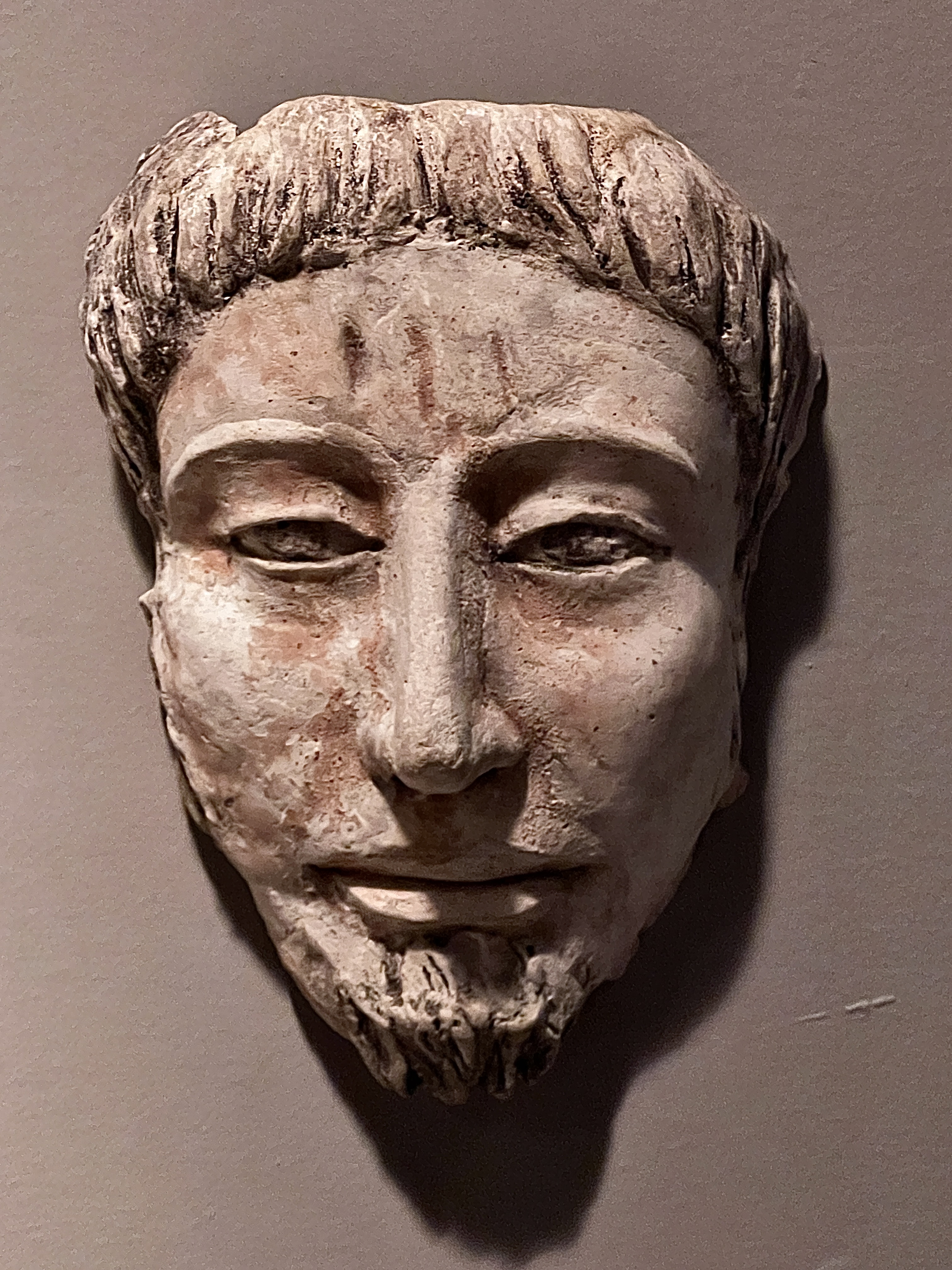
At the Field Museum.

Part of my Latin tutorial includes a survey of Roman history via SPQR by the always-excellent Mary Beard. Is it any wonder that I now regularly see Roman influence where I may have previously missed or overlooked it? A plaque describing a case of portrait masks in the Field Museum’s Egyptian exhibit indicates that once the Romans conquered the Egyptians (30 BCE), they adopted a number of Egyptian customs, including portrait masks — which were actually a Greek contribution to Egyptian traditions. The one pictured here is from the Ptolemaic-Roman Period.

Notes

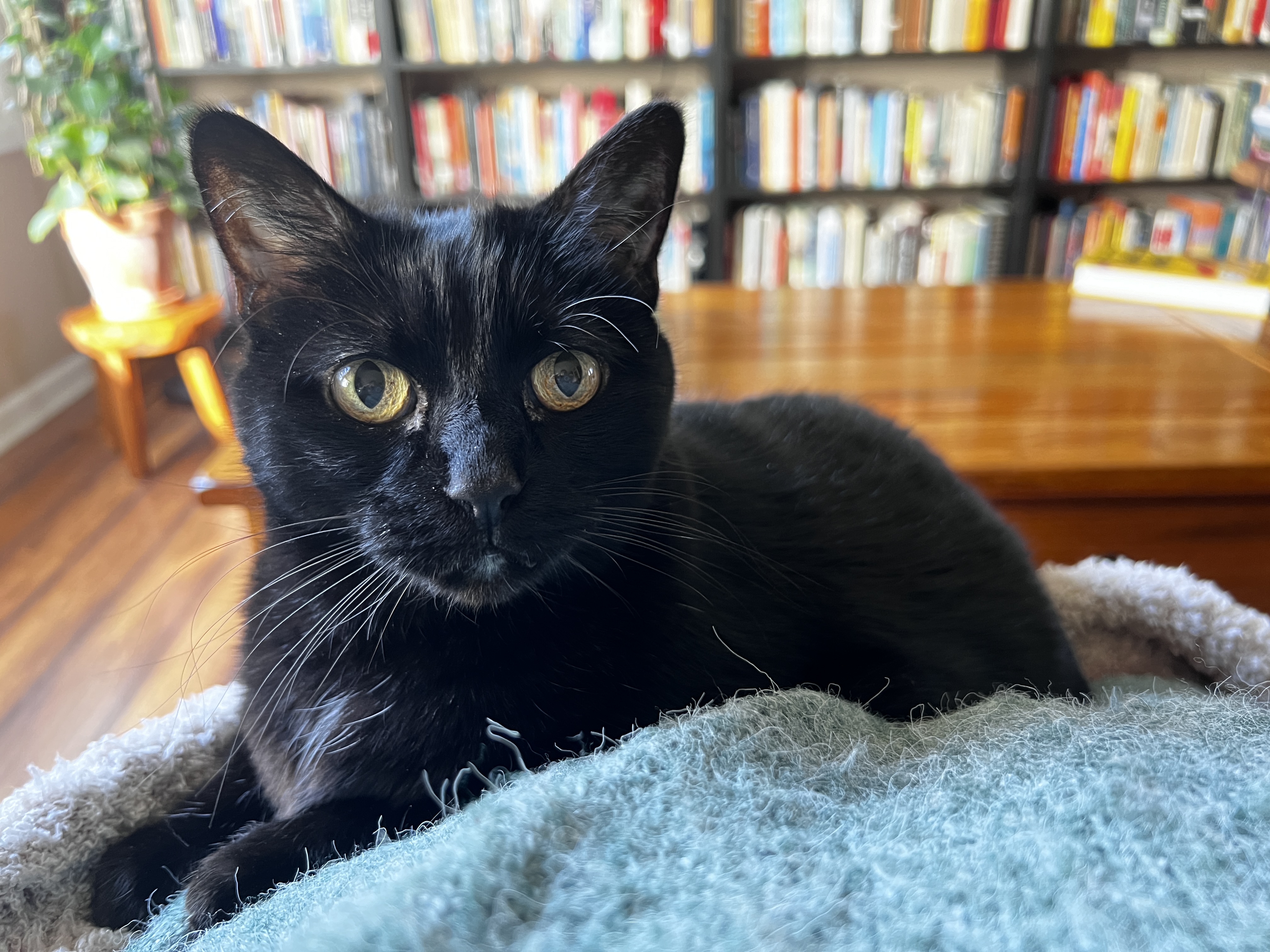
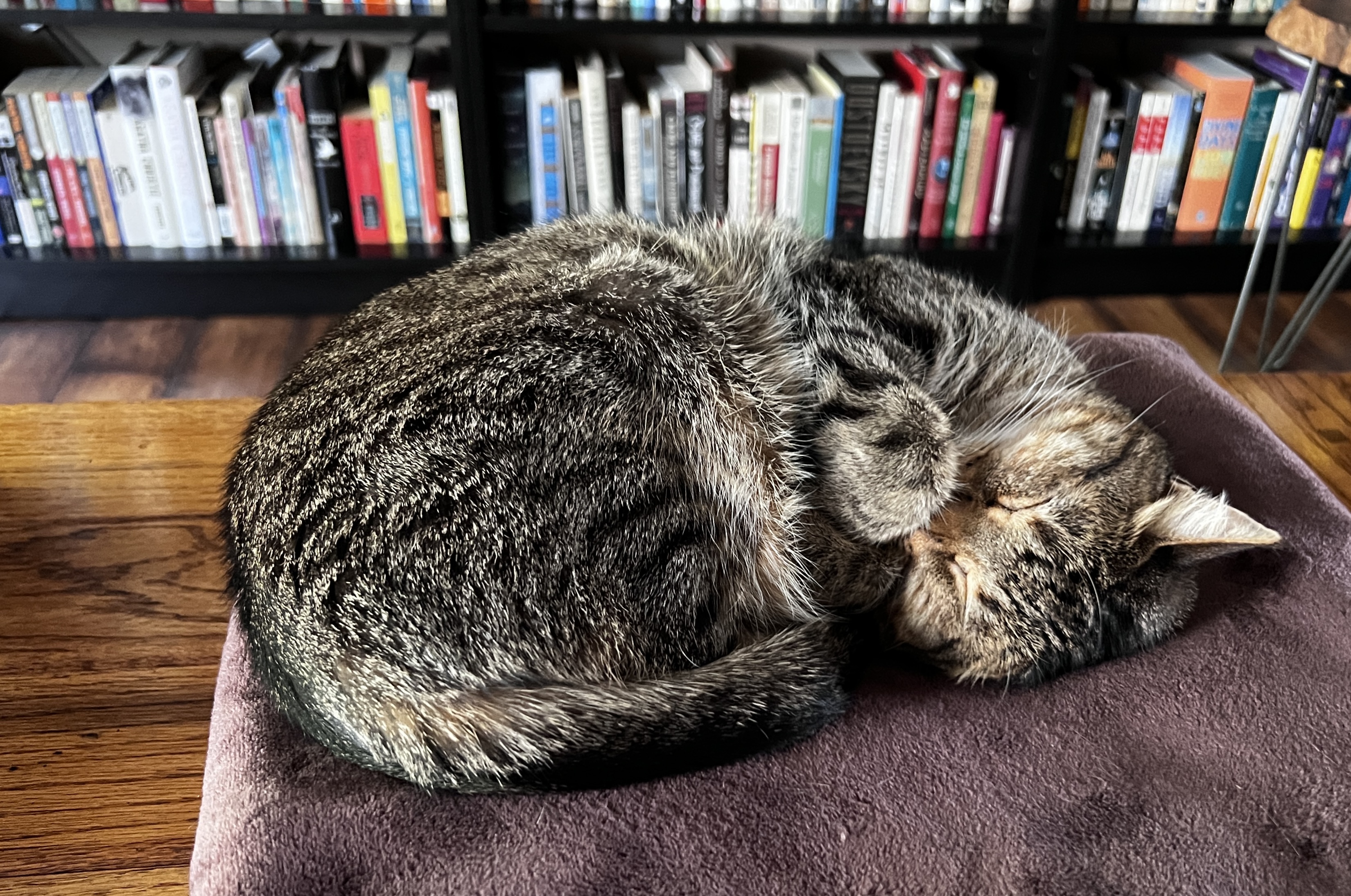
It seemed only right that I include a photo of our younger cat.

Over the weekend, I attended the Ann Arbor Art Fairthe featured artist of which was Katie Musolff. Her work is stunning, and I was delighted to see this magnificent painting in person. The work of Lauchlan Davis also attracted my attention, so much so that I purchased a numbered print of her 2022 “Duck, Duck, Goose.” 

During my music lesson this week, my teacher corrected an embouchure issue with which I have been struggling in piccolo practice. What a difference! Both my concert flute and alto flute are now en route to the technician for annual cleaning and adjusting, so for the next week or so I’m working with my trusty Yamaha.

Only three meetings remain in the Plato’s Republic reading group. Between the discussion and David Roochnik’s fabulous lectures, I am learning far more than I did forty years ago when I first read this work as a college freshman.

Slowly, surely, I am making my way through my Latin I tutorial. I have reached the point at which I can say that it brings me as much satisfaction as my music studies. (And it is just as difficult.)

Also slowly, surely, I’m accumulating mileage. The air quality and increasing temperatures make exercise difficult, but we take our primary walk early enough to mitigate some of the concerns.

I am a few pages away from finishing a smart and entertaining novel:  Babel: Or the Necessity of Violence: An Arcane History of the Oxford Translators’ Revolution by R.F. Kuang. (Review here.) In fact, the last few books I’ve read are worth mentioning:

The Fold (Peter Clines; 2015. Fiction.)
The Thursday Murder Club (Richard Osman; 2020. Fiction.)
The Man Who Died Twice (Richard Osman; 2021. Fiction.)
The Bullet That Missed (Richard Osman; 2022. Fiction.)
Long Live Latin: The Pleasures of a Useless Language (Nicola Gardini; 2019. Non-fiction.)
The Guest (Emma Cline; 2023. Fiction.)

The novels represent my favorite sort of summer reading (engaging, light without being utterly frivolous, sometimes even thought-provoking), and Gardini’s meditation on Latin was perfect. (Review here.)