Today I am finishing my reread of Faulkner’s As I Lay Dying for the Roundtable course “Fictions of the Self in American Literature,” among other assignments for assorted courses and seminars. Before my Sunday afternoon runs away from me, though, I should also walk in the cold sun and practice my music.
The morning has run off without me, but I will catch up to it soon enough. In the meantime, I’ve just finished some desk work and tomorrow’s chapters of Bleak House (Charles Dickens; 1853), which I’m reading with APS Together. Other reading this week includes The Dispossessed (Ursula K. LeGuin; 1974) for a short course with NYR Seminars; The Amazing Adventures of Kavalier and Clay (Michael Chabon; 2000) and the Stanley Lombardo translation of The Iliad for courses with Roundtable by The 92nd Street Y; and Moby-Dick, this time with Samantha Rose Hill.
Between this week’s lesson and next, I will attend another performance class for adult music students, the focus of which will be music for a holiday concert, but the chief part of my daily practice comprises Marcel Moyse’s 24 Little Melodic Studies and On Sonority, Art, and Technique; Taffanel and Gaubert; and M.A. Reichert’s 7 Daily Exercises. I’m also working out the second movement of Bach’s Flute Sonata in E-flat major.
Before today’s practice, though, I must do a few here-comes-winter tasks in the yards and walk. We raked and walked in snow and temps in the low twenties earlier this week; it’s sunny and 49 as I type this; the daytime highs on Friday and Saturday will be in the sixties. What is that saying about Chicago(land) weather? If you don’t like it, then just wait fifteen minutes.
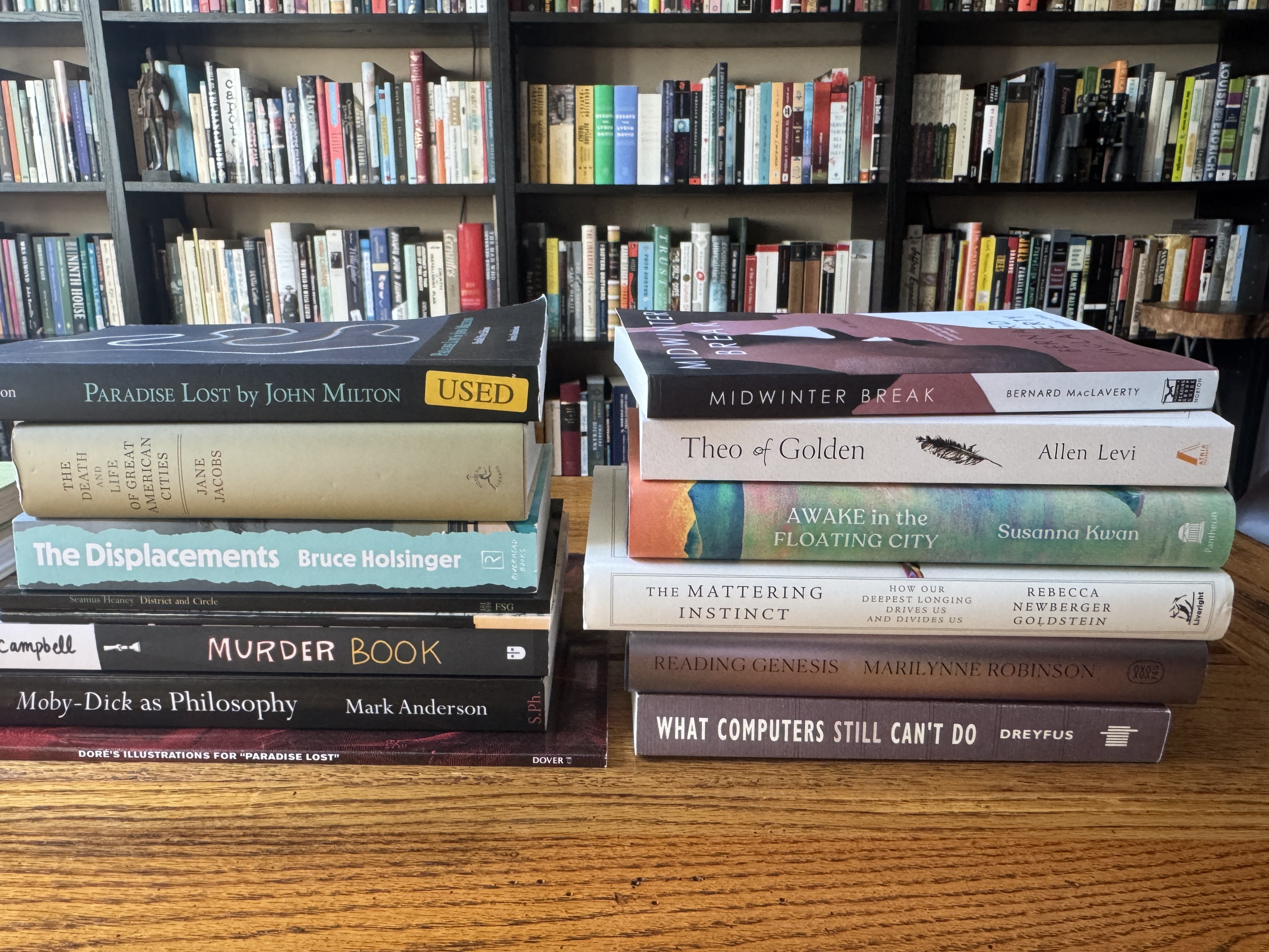
What have you been reading? Studying? Thinking about? Leave a comment; I would enjoy hearing from you. Looking ahead to 2026, I am wondering if a year of “reading at whim” might not be best — fewer classes and reading groups, more pulling down some of the volumes already on my shelves. I just reached into the shelves behind and drew from them, randomly: The Hummingbird (Sandro Veronesi; 2019/2020) and The Cold Millions (Jess Walters; 2020). Unread. I looked to the left and the first title I made out was The Big Sort: Why the Clustering of Like-Minded American is Tearing Us Apart (Bill Bishop; 2009). Unread. The bookcase in front of me? Bitch: On the Female of the Species (Lucy Cooke; 2022). Unread. More than half of the books here are. As I’ve said, this once embarrassed me. Now it alternately enlivens and frightens me.
From early in Nassim Nicholas Taleb’s The Black Swan: The Impact of the Highly Improbable:
The writer Umberto Eco belongs to that small class of scholars who are encyclopedic, insightful, and nondull. He is the owner of a large personal library (containing thirty thousand books), and separates visitors into two categories: those who react with “Wow! Signore professore dottore Eco, what a library you have! How many of these books have you read?” and the others — a very small minority — who get the point that a private library is not an ego-boosting appendage but a research tool. Read books are far less valuable than unread ones. The library should contain as much of what you do not know as your financial means, mortgage rates, and the currently tight real-estate market allows you to put there. You will accumulate more knowledge and more books as you grow older, and the growing number of unread books on the shelves will look at you menacingly. Indeed, the more you know, the larger the rows of unread books. Let us call this collection of unread books an antilibrary.
In between walking and leaf-raking, I have been reading and studying. Yesterday the Roundtable by 92nd Street Y course on the Iliad began, and the Library of America (LoA) course on Joan Didion ended. (With one exception, I have greatly appreciated the Roundtable courses and recommend them.) The NYR Seminar led by Daniel Mendelsohn concluded last week, and it was so terrific, I signed up for another (shorter) seminar with them. My two-person study group has moved on to our third Forster novel, A Room with a View (1908), and I’m participating in two other slow-read groups: Bleak House with APS Together (underway) and Moby-Dick with Samantha Rose Hill (beginning November 9). (Speaking of the White Whale, my daughter and I are once again slated to read at the marathon.)
I continue to work in Marcel Moyse’s 24 Little Melodic Studies and On Sonority, Art, and Technique; Taffanel and Gaubert; and M.A. Reichert’s 7 Daily Exercises. My lessons are now complemented by a performance class, at the first meeting of which, I presented Germaine Tailleferre’s “Pastorale for Flute and Piano” and at the second, the James Galway arrangement of “Ashokan Farewell.” My new solo is Bach’s Flute Sonata in E-flat major.
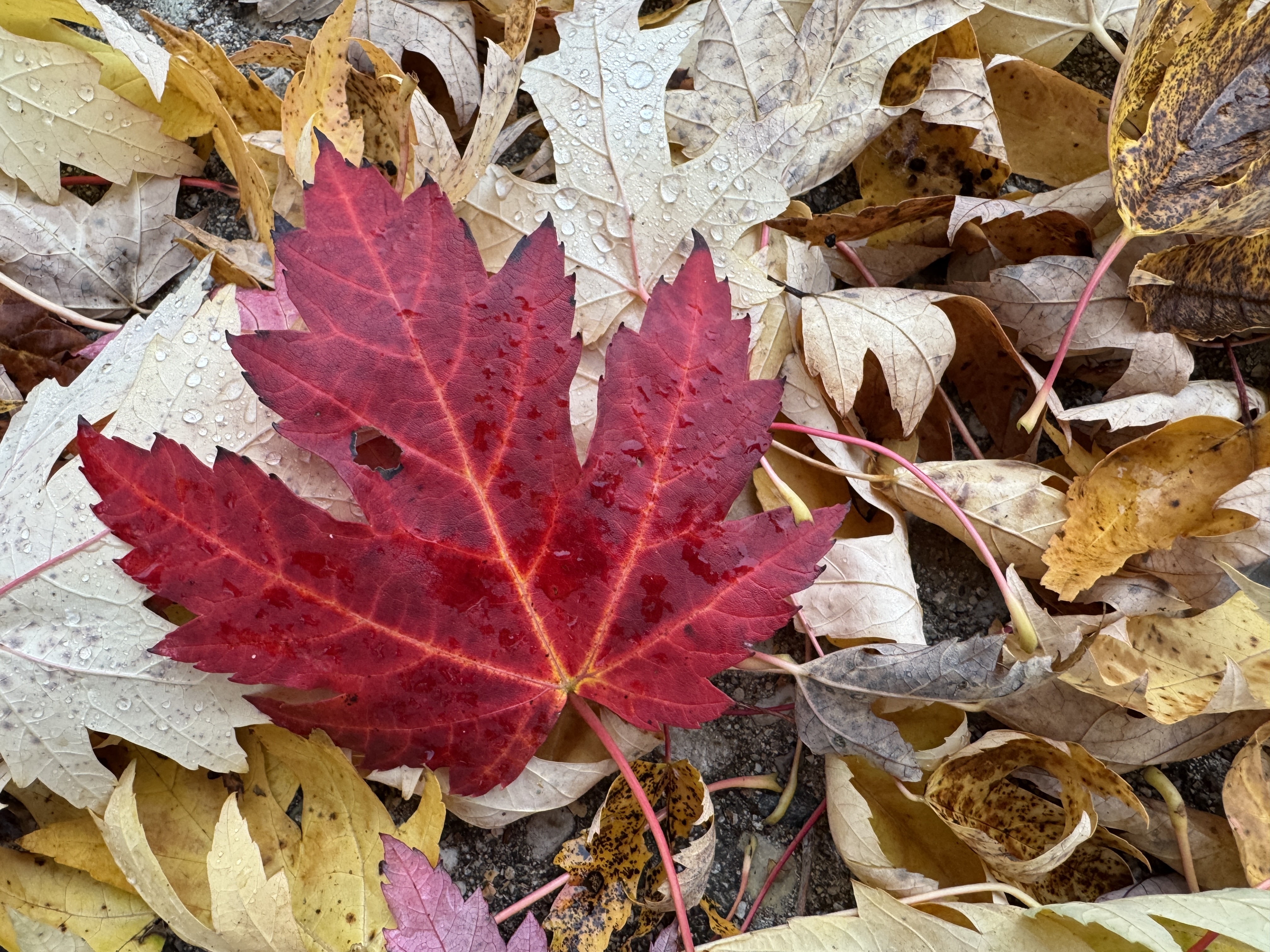
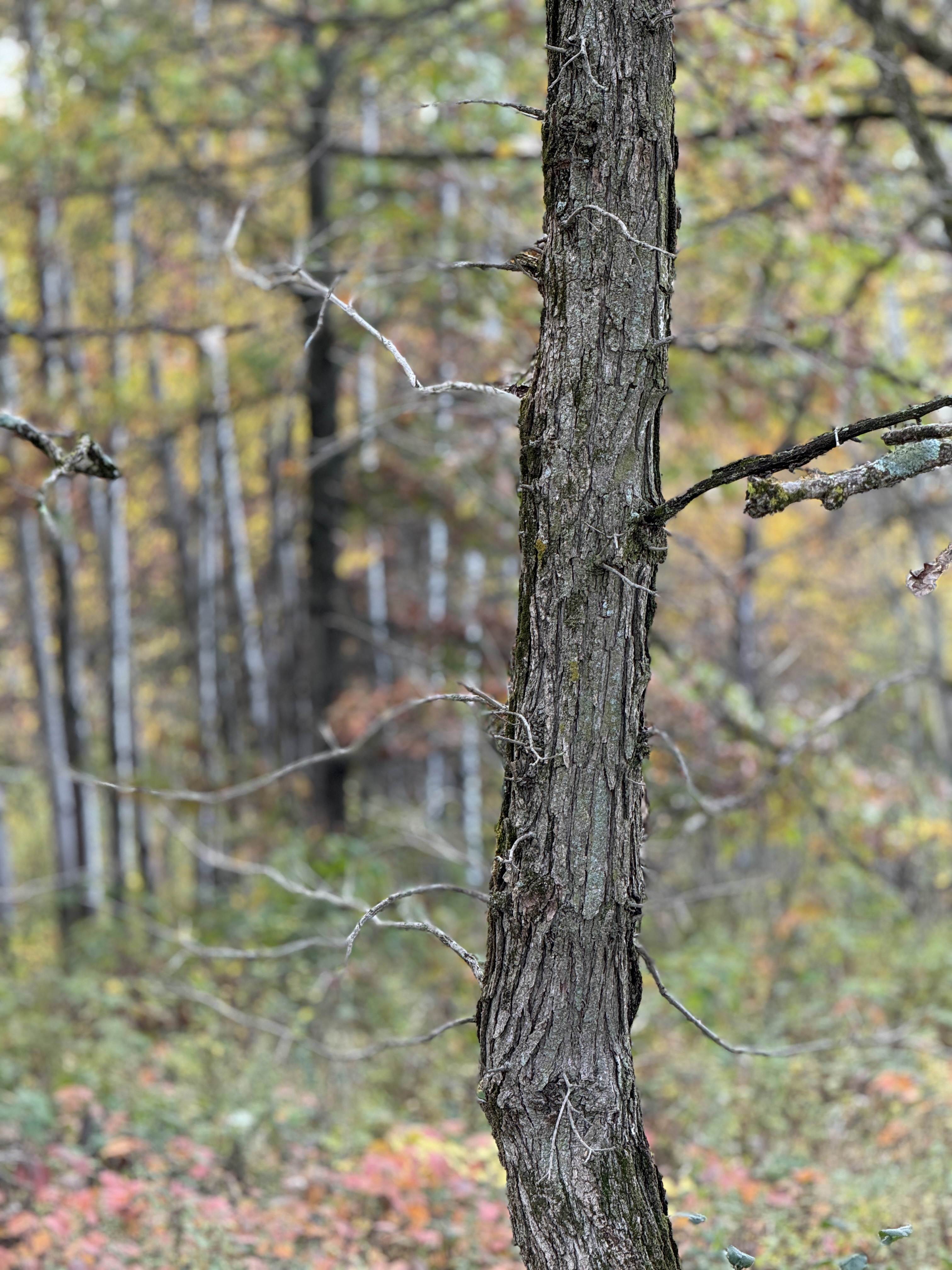
This summer’s drought and the continued warm temperatures have delayed autumn’s arrival: Most trees are reluctant to release their leaves; the weekend’s rain reinvigorated the grass. It remains just cool enough to walk with a jacket at sunrise.
Last night marked the halfway point of an NYR Seminar led by Daniel Mendelsohn on his translation on The Odyssey. Fabulous — the seminar and the translation. Last week, I finished Edith Hall’s Aristotle’s Way: How Ancient Wisdom Can Change Your Life in anticipation of a course I am taking through Roundtable by 92nd Street Y. Today I’m continuing to reacquaint myself with Joan Didion’s work for a course with the Library of America.
For my next lesson, I’m preparing the seventh of Marcel Moyse’s 24 Little Melodic Studies and its variations. Having worked through Exercise 4 of Taffanel and Gaubert, I am becoming acquainted with Michel Debost’s scale game. We’ve added the first of M.A. Reichert’s 7 Daily Exercises to my practice routine, and I continue to use Moyse’s On Sonority, Art, and Technique. My current solo piece is Germaine Tailleferre’s “Pastorale for Flute and Piano.”
In spite of the days atop days of poor air quality and too little rain, the pockets have flourished and continue to attract pollinators. We’ve decided to add three more raised beds and two “prairie lawn” patches.
In other news…
Earlier this year, when I registered for a partial semester of lessons in order to have time to address a health concern, I was already experiencing ambivalence about my flute adventure: I love the instrument and the pursuit, but the program no longer met my interests and needs, and practice had become a self-defeating slog. My teacher’s recent retirement represented an opportunity to rethink my expectations, though, and after a four-month break, I scheduled a trial lesson with a teacher whose approach in nearly every way differs from my previous instruction. Focused on (re)building my foundation, we’re using Marcel Moyse’s 24 Little Melodic Studies and On Sonority, Art, and Technique, as well as Taffanel and Gaubert (particularly Exercise 4 to prepare for Michel Debost’s scale game). Encouraged to bring a solo piece I had never presented, I sorted through my library of music before impulsively choosing a simple but lovely arrangement of Holst’s “Jupiter, the Bringer of Jollity” I had heard on Tomplay. The challenge for these first few lessons is simply creating a great sound with excellent support, so why not skip the usual suspects for now? What a great piece for improving phrasing and expression. (You may better know it as the patriotic hymn “I Vow to Thee, My Country.”)
Speaking of pursuits… It’s been nearly a month, but “On the nightstand” in the sidebar has been updated to reflect my current studies.
“Julia Domna,” Roman, 193-217 CE. Seen at the Harvard Art Museums last week.
My progress through Dr. LaFleur’s Latin tutorial has been maddeningly slow: When I submitted my work on Chapter VIII in August 2023 (yes, you read that correctly), I wrote, in part, “I recognize that I may be your slowest student ever but trust that if this represented a problem, you would advise me.” Imagine my relief when I learned that several students had, at that point, been working through the tutorial for at least two years. But eighteen months have passed, and I am now polishing my submission for Chapter XI (yes, you read that correctly). At this rate, the Ovid tutorial — my reach goal — seems impossibly far off.
And yet….
When I wander through art museums, some of my favorite moments involve recognition: I “know” an artist, or an artist’s contemporary, or the obscure subject, or whatever. Are you familiar with the feeling I’m describing? A work attracts your attention, and you realize it reminds you of other pieces… “Ah! Could this be…? It is!” My daughters and husband, who most frequently join me for museum adventures, have indulged and encouraged my barely stifled delight at one “discovery” or another (and another) for many, many years now. In fact, they know that this wash-rinse-repeat cycle in which we stitch one learning experience to another, or a book to a painting to a piece of music to a news article to a film to a — you get the idea, is a rich and rewarding way to learn, to think, to grow. This sort of (re)discovery has a reliable “stickiness.”
As have my Latin studies. It has been slow going, yes, but what I have learned so far, I own. My husband drills me on vocabulary and my study cards for at least an hour on nearly every trip into Chicago or Milwaukee, for example, and I drive the first leg of our trips into Michigan so that he can quiz me. More than six months ago, I added Duolingo to my day. Admittedly, its Latin program is short and limited, but the skill-building tools for vocabulary have merit.
And so I learn. In my way. On my schedule. However long it takes.
(Speaking of schedules, for the first semester since I enrolled in music lessons (Fall 2014), I am taking a break of sorts: I have only registered for a half-term this spring. More, I am not returning to band until Fall 2025. Travel and “required maintenance” on this aging vehicle prompted me to rethink these first few months of the new year. I am still studying, though, and will outline what is on my practice sheet in another post.)
“Another Chance,” which demanded my attention this Saturday, is painted by Yeats’ brother. The places at which my interests and pursuits intersect delight me.
“‘All that’s beautiful drifts away / Like the waters.’”
Of course, what drew my eye initially was the figure — to me, Ishmael atop Queequeg’s casket. Speaking of the intersections of interests and pursuits, my younger daughter and I are scheduled to read at the 2025 Moby-Dick Marathon. (I was a reader for the virtual program in 2021.)
🎶 In Maquarre’s Daily Exercises for the Flute, pages 4 through 8.
🎶 In Album of Flute Duets, revised and annotated by Louis Moyse, Jean-Jacques Naudot’s Sonata for Two Flutes, the fourth and final movement, another allegro.
🎶 In Interval Duets by Thomas Filas, the third duet. I am playing the second flute part this time through these deceptively simple pieces.
🎶 Revisiting the Adagio and Allegro from Jean-Baptiste Loeillet’s Sonata No. III in Selected Duets for Flute, Vol. II (Advanced). Again, I am playing the second part.
🎶 In P. Bona’s Complete Method for Rhythmical Articulation, 120.
🎶 In Contemporary French Recital Pieces, Vol. I, Louis Aubert’s “Lied.”
Because we don’t have band rehearsal next week, I am setting aside my concert folder until after my next lesson.
It had been two months since my last music lesson, and my practice time was limited during those months. But somehow I pulled it together for a productive hour-long lesson today.
🎶 Having completed work on Hans Köhler’s Sonatina for Two Flutes in Album of Flute Duets, revised and annotated by Louis Moyse, we have selected Jean-Jacques Naudot’s Sonata for Two Flutes in the same collection. For my late-July lesson, I will prepare the Adagio and the first part of the Allegro (the first page of the four-page piece).
Over the spring semester, we completed the fifteen pieces in Interval Duets by Thomas Filas. The deceptively simple collection focused on achieving a clear, beautiful sound. Over the next fifteen lessons, then, we have decided to work through the book again; this time, I will play second part. We are also revisiting the Adagio and Allegro from Jean-Baptiste Loeillet’s Sonata No. 1 in Selected Duets for Flute, Vol. II (Advanced); again, I am playing the second part.
🎶 Today I finished (if that is correct verb) the third of Köhler’s “moderately difficult pieces as studies for flute” from Op. 33, Book 2, in Robert Cavally’s Melodious and Progressive Studies from Andersen, Gariboldi, Koehler, and Terschak for Flute, Book 2. In April, I shared with my teacher that pieces like this feel needlessly difficult for an adult learner whose chief goals are (1) to do well in community band and (2) to always be learning and improving. She has now moved me into his Twenty-Five Romantic Etudes (Op. 66), and for my next lesson I will prepare the “The Swing.”
🎶 In April, I finished 116 in P. Bona’s Complete Method for Rhythmical Articulation, and my teacher provided excellent notes and examples to help me approach 120, my last assignment in the book; however, I have no plans to tackle this until after I present the first movement of the Stamitz Concerto in G major, Op.29, in August. Because I chose to work on the three movements out of order, this will conclude my work on the concerto, freeing me to focus on the Bona.
🎶 For my scales and long tone work, I have primarily relied on Parès Scales for Flute or Piccolo and ILMEA Senior HS Band Audition Scales sheet. My teacher now recommends that I begin working in Maquarre’s Daily Exercises for the Flute.
🎶 For my piccolo studies, in addition to exercises in Danielle Eden’s Piccolo! Piccolo! method books, my teacher recommended revisiting Köhler’s Op. 33, Book 1.
🎶 My July practice sheet:
— 15 minutes: long tones, scales, exercises — 20 minutes: Twenty-Five Romantic Etudes (Op. 66), “The Swing” — 10 minutes: Interval Duets, No. I — 15 minutes: Album of Flute Duets, Jean-Jacques Naudot’s Sonata for Two Flutes — 15 minutes: Selected Duets for Flute, Vol. II (Advanced), Jean-Baptiste Loeillet’s Sonata No. 1 — 15 minutes: piccolo




 Nerdishly