Storytellers and stargazers

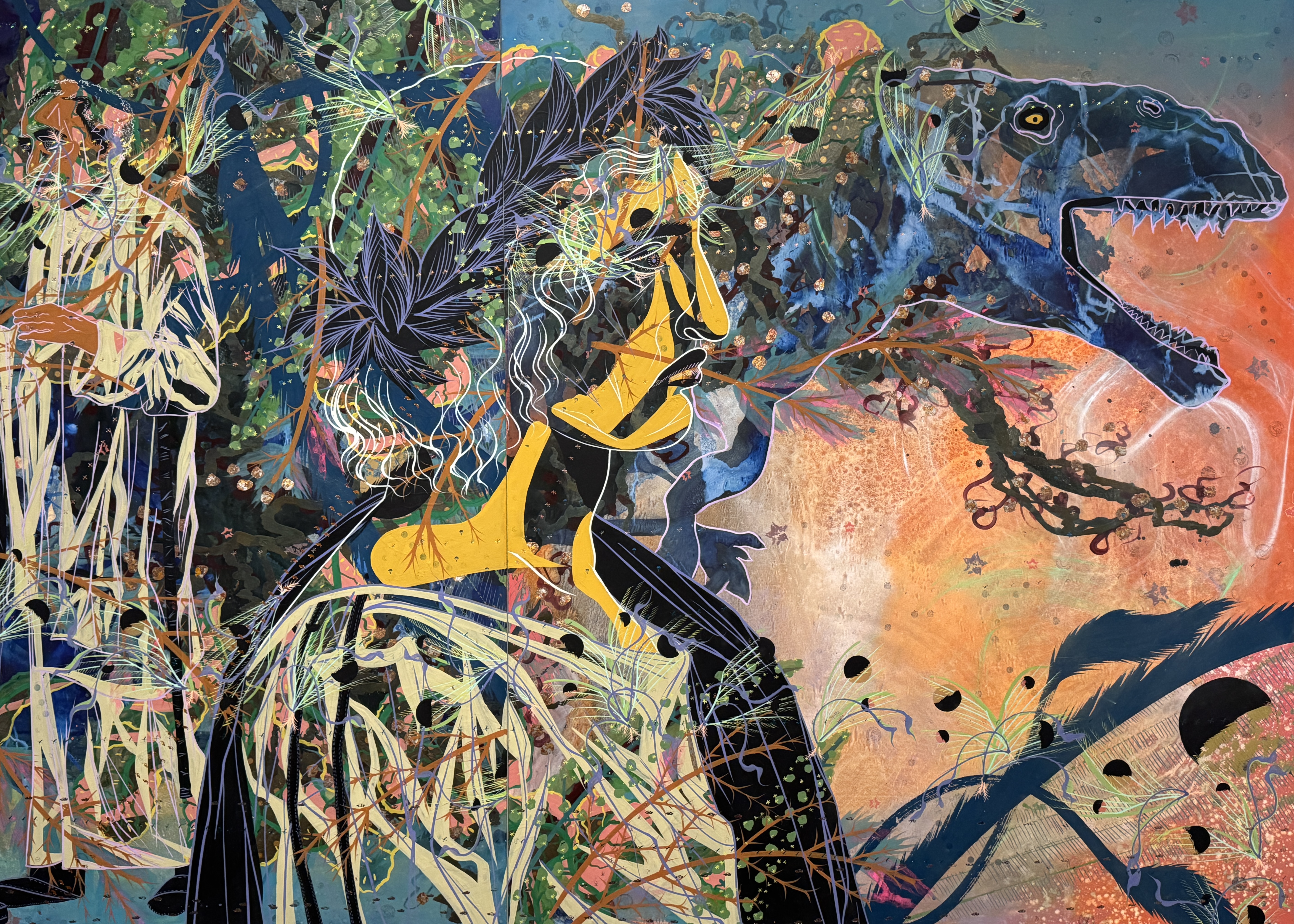
What Sin Is Purged Here in the Circle Where We Are Standing? (2023)

Tammy Nguyen’s painting was not on view the last time I visited the Toledo Art Museum — at least I’m pretty certain it wasn’t. But even if it were, this was the visit during which it demanded my attention. Here’s a link to more about this startling and compelling work.

At the Smart Museum yesterday, I experienced a similar sense of discovery when I encountered Patrick Nagatani’s Beware Artist. We were in the area for the Sunday matinee of An Iliad at the Court, which is drop-everything-and-get-your-tickets theater. We had seen Timothy Edward Kane in this role three times before — live in the 2013 production and in the 2020 production at the Institute for the Study of Ancient Cultures Museum (formerly, the Oriental Institute) and streaming during the pandemic. Mesmerizing as he was then, he is even more spectacular in this iteration of The Poet. The post-show discussion with Kendall Sharpe of the University of Chicago Graham School and Charlie Newell, former artistic director of the theater, was time spent well, too. We returned for the evening performance, which featured Kane’s understudy, Jason Huysman. To me, the role of The Poet is not necessarily to be interpreted as Homer but rather as one of many singers of the Iliad, so it was a gift to hear another vocalist, to encounter the material in a different way. While both actors impart the heroic, the beautiful, and the doomed, however, Kane is, as Newell suggested in his remarks, a demigod, and like Achilles, his work towers above that of other men, his shield illuminates worlds, and his voice stops hearts.

After sleeping in this morning, we walked, then finished all of the yard work in time to watch the Vera C. Rubin Observatory “First Look Event.” Sharing the link with my sister and nephew, I wrote, Humans may be warriors and conquerors, but we are storytellers and stargazers, too.
Weekend

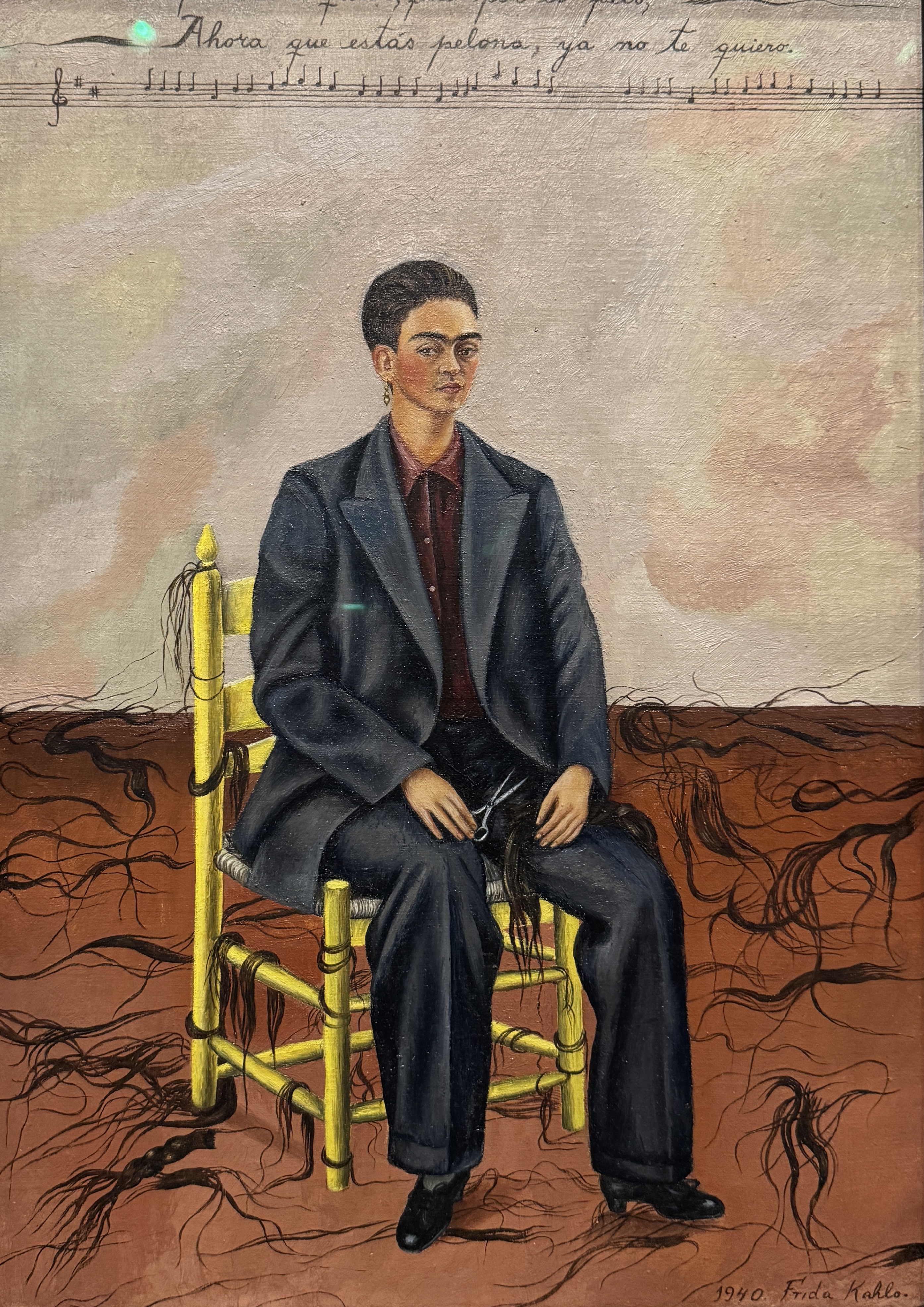
My image of Gertrude Abercrombie’s “Doors (3 Demolition)” (1957).

Over the weekend we saw the Court’s excellent production of A Raisin in the Sun (review here), having visited our favorite noodle stop and the Smart Museum of Art beforehand. (The Smart is still celebrating its fiftieth anniversary, so if you’re in the area and have never visited this tiny treasure, get there.)

After a week of single-digit temperatures, the weather has granted us a return to more comfortable walking weather. (Recurring public service announcement: Wear sunscreen.) In addition to logging more miles, I’ve gotten back to music practice, preparing to resume lessons in mid-March. (The doctor advised against playing for at least two weeks post-surgery; it was only a few days the first time. May there be no third time.)

Generally, very little can prevent me from reading, so that has continued uninterrupted. Not long after announcing I had begun The Heaven and Earth Grocery Store, though, I read this article and became absorbed by Barbara Kingsolver’s Demon Copperhead (2022). Come for the social commentary; stay for one of the most beguiling narrators since perhaps his narrative brother, David Copperfield. (Speaking of the Dickens novel, I will reread it for a UChicago course later this year.) I’ve since returned to the McBride, a delight, and will likely finish it today or tomorrow. Late last week, I attended a virtual talk with Amy Tan; naturally her book about backyard birding made its way from my shelves to the table beside my favorite reading chair. And as I’ve mentioned, with my youngest, I’ve been reading books by Brazilian writers, most recently, Captains of the Sands (Jorge Amado; 1937). Since some have likened it to Lord of the Flies (William Golding; 1954), we have decided to reread that when we finish Captains. (In a neat intersection of interests, I discovered Yellowjackets this month, which most assuredly owes a debt to Golding — and to Lost, a small-screen family favorite.)

All that remains is to get back to my Latin studies, which, now that I feel more myself, seems probable this week.

I typed and erased at least three sentences to conclude this entry and then remembered that Jeanne at Necromancy Never Pays had already pointed me to the right words:

How to Be Eaten did turn out to be the right book at the right time. It fit in with something I read by Amanda Marcotte, author of Troll Nation and writer for Salon, who advises that resistance can consist of simply “continuing to exist, by thriving as the person you were born to be, and by holding one another for strength and comfort in adversity.”

Until next time, then, continue to exist. Thrive as the person you were born to be. Hold one another for strength and comfort in adversity.

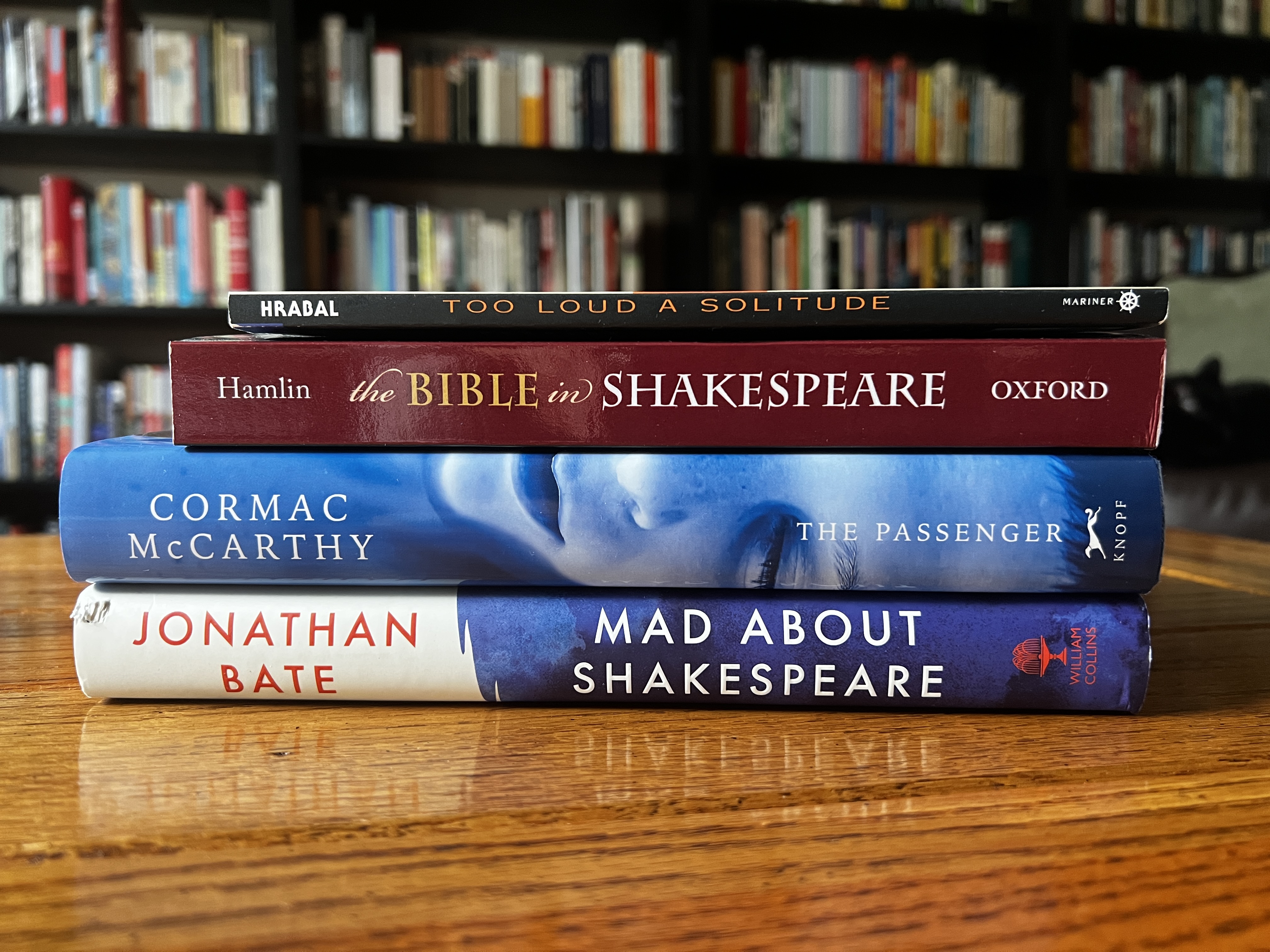
New books and whatnot

If a body were to be likened to a car, then one could say that an aging body, like an older car, will eventually require more than an oil change, a multi-point inspection, a tire rotation, and an alignment to continue running (set aside smoothly). I’m an older car. More than one mechanic and more than one service appointment were required. And that’s really all I need say about that.

It’s back to walking several miles a day, practicing my music, reading, and studying. Today’s books are Pericles (in anticipation of this) and John Banville’s The Sea.

Retail

Before and after seeing A Streetcar Named Desire at the Copley Theatre (highly recommended; review here), we ran a number of errands, the last of which was at a hobby / fabric store. Among the silk flowers, kitschy mugs, and seashell frames was the creature above. Three questions: Lamb or llama? Who bought the rest of them? Why?

“I am Misanthropos and hate mankind.”

The always excellent Christopher Prentice at the Newberry Library on Saturday.

On Saturday, the Shakespeare Project of Chicago (SPC) presented Timon of Athens at the Newberry Library — their first reading in that venue since February 2020.

Put up thy gold: go on, — here’s gold, — go on;
Be as a planetary plague, when Jove
Will o’er some high-viced city hang his poison
In the sick air: let not thy sword skip one….

Timon of Athens, Act IV, Scene iii

Peter Garino in the titular role absolutely rocked, but the rest of the cast was excellent, too. What a return!

My affection for SPC’s work is long-lived. My son and I attended our first SPC production, The Merchant of Venice, twenty-one years ago. That fall, we saw The Two Gentlemen of Verona, directed by Jeff Christian, who also played Valentine; then, in 2005, we caught The Winter’s Tale. After that, the move from Chicago coupled with busy weekend schedules prevented us from attending the theatrical readings.

Nearly a decade later, though, in February 2014, I finally introduced my husband and daughters to the SPC, and in a neat “full circle” moment, the production was The Two Gentlemen of Verona, directed by Jeff Christian. For a few moments, it felt as if time were bending, folding in upon itself as I remembered encountering this play with my son while my husband took our then quite young daughters to play in a nearby park.

The four of us also saw All’s Well That Ends Well in 2014, and in 2016, we attended three SPC productions: The Winter’s Tale in January, Cymbeline in late February, and Cardenio in April. Excellent, all, but Tale featured Christopher Prentice and so provided the synchronicity / serendipity / synthesis I so appreciate. You see, Prentice was a standout at the Illinois Shakespeare Festival we attended in 2014 — an impressive Beatrice in Much Ado about Nothing and a perfect Ned in Elizabeth Rex. At Much Ado, in another of those moments in which time bent, folded upon itself, and left me breathless, we read in the program that Prentice was a founding member of the now-defunct Signal Theatre Ensemble, and I remembered that in 2003 he played Benedick in Much Ado,a production my son and I saw at a studio of the Anthenaeum Theatre on the grounds of St. Alphonsus Church in Chicago. 

Time bends and folds.

After our daughters headed to university and beyond, my husband and I continued to attend SPC readings: Henry V in October 2016, King John and The Changeling in 2017; Coriolanus and Women Beware Women in 2018; Titus Andronicus in 2019; and Richard III in early 2020. Yesterday’s was the first we attended at the Newberry Library, and despite the wildly uncomfortable chairs, we think we may continue to see them there. (We saw the other readings at the Highland Park, Winnetka, and Vernon Area public libraries).

Speaking of time’s bends and folds, Christopher Prentice introduced yesterday’s program.

The material in today’s entry was culled from an earlier post
and the title comes from
Timon of Athens, Act IV, Scene iii.

New books

This weekend, we saw a remarkable production of Measure for Measure at the Chicago Shakespeare Theater and performed in our community band’s Halloween concert. Upcoming: music lessons, early voting, reading group meetings, walks, leaf-raking, and a two-day respite to recover from the Covid bivalent booster.