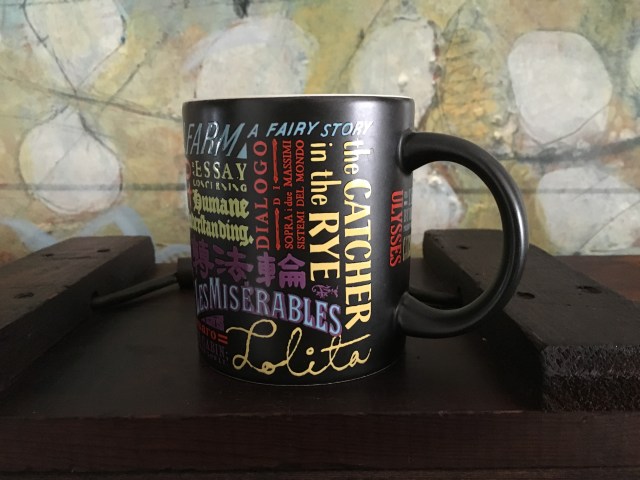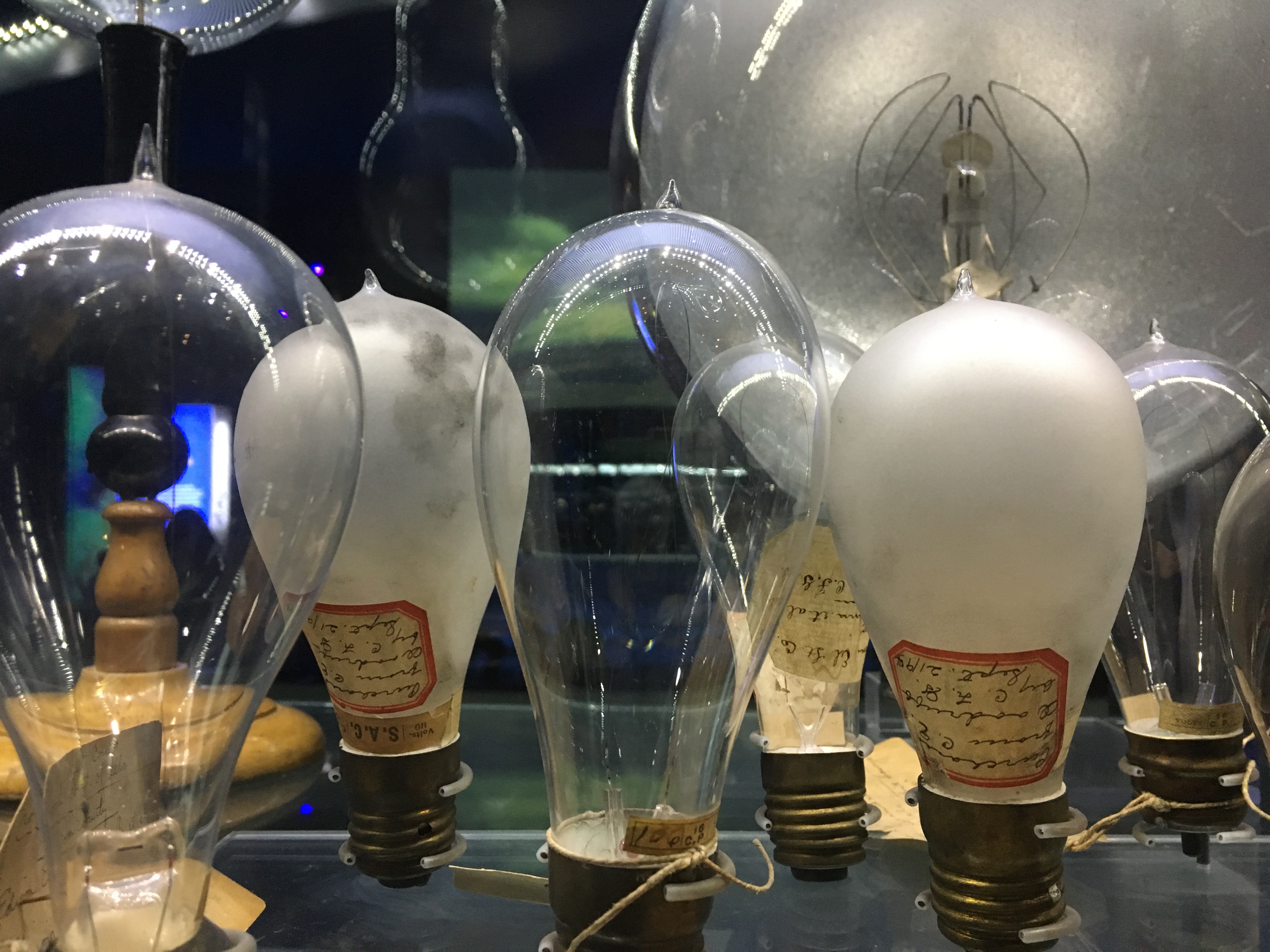
Abbreviated

img_8613Afternoons end before they have really begun now, don’t they? By 3 p.m., I must turn on a light here and another there. Abbreviated days possess a sort of magic, especially when the snow finally arrives. But by early January, I suspect that, as in years past, the long nights will begin to weary me, and I will sniff the air for the scent of warm, clean dirt. Spring.

I took the image above during a recent trip to the Museum of Science and Industry. The adventure was equal parts sentiment and foolhardiness. After all, who goes to MSI on the day before Thanksgiving? Everyone, as it turns out. And the trip into the city took twice as long as it should have. Still, we had a lovely time and plan to return for a proper visit (i.e., one that coincides with everyone else returning to work and school) over our long winter break.
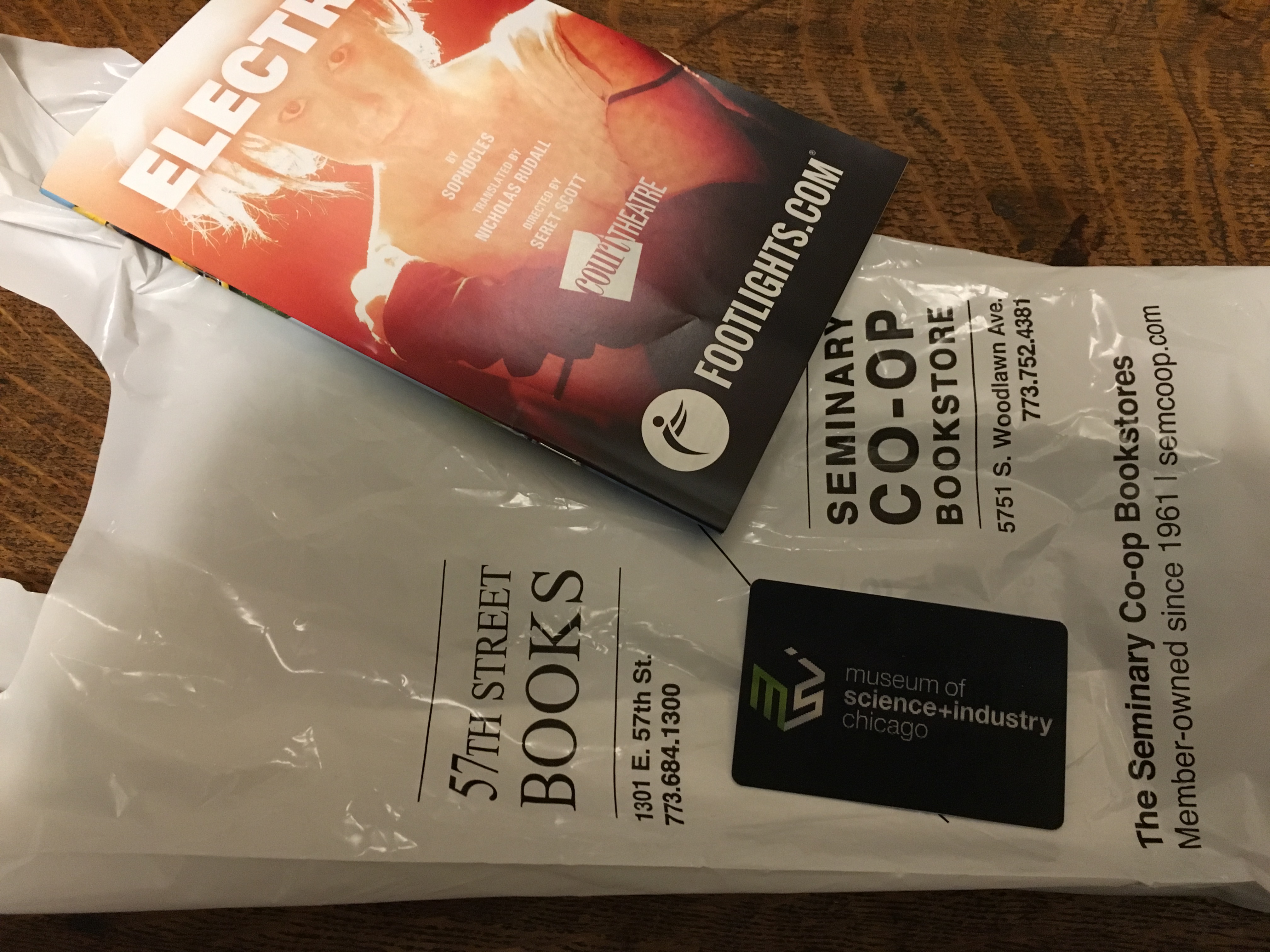
img_8610After MSI and dinner, we browsed the wondrous stacks at the Seminary Coop Bookstores and then attended Electra at the Court Theatre. The Court’s Greek Cycle has met with somewhat mixed reviews, but we have appreciated all of it — particularly Sandra Marquez’s majestic Clytemnestra (all three plays) and Kate Fry’s Electra.

Apart from getting the band back together, the trip into Chicago for MSI and Electra was the highlight of our recent ten-day break. Our daughters, now juniors, use the Thanksgiving holiday to get ahead on final projects and examinations, so when they came up for air, we kept it pretty simple. We (re)watched some Sherlock (in anticipation of Season 4) and walked. We raked leaves and counted birds at the feeders. We ate good food and talked. They had appointments for haircuts and annual physicals. Otherwise, they were absorbed by their studies. Soon they will be home again, though, with no projects or exams looming large. We have assembled a much more ambitious itinerary for our winter break, then, including four plays, four museums, the postponed zoo trip, and some eagle-watching.

In early December, while they finish up their fall courses and enter their reading and examination period, I will work through some holiday music and Unit 4 in Rubank Advanced Method, Vol. 1. I have been studying flute for just over two years now and will (again) acknowledge that while I have made tremendous strides, some skills may be beyond me, including velocity. Young learners have a decided advantage when it comes to manual dexterity and speed, to be sure, but the pursuit remains worthwhile and stimulating. Other pursuits for these next two weeks include reading, of course; Project FeederWatch, which now offers an option to report behavioral data (displacement and predation); and my volunteer work at the library, which I don’t think I have mentioned previously. My husband and I gave several hours each week a few summers ago but stepped away from the commitment to focus on our literacy volunteer assignment. I returned to the library in September and am enjoying the people and projects.

Until my next post, here are three more images from our MSI visit, which included a stop at the “Brick by Brick” exhibit.
img_8612

img_8611

img_8609

In which ten days pass

img_8091■ In anticipation of Banned Books Week (September 26 through October 1), I reread Slaughterhouse-Five earlier this month. I must have known I was entering a reading slump, during which I touch books; I think about books; heck, I even acquire books. But read them? Meh. Not so much. My mind has been restless, and regaining the required focus has felt a bit like bathing two cats at the same time — messy and misguided. I am glad I reacquainted myself with Vonnegut’s charms, though, because he reminded me that, slump or not, I am a reader.

■ I am also something of a watcher, and I’ve not had any difficulty focusing on that pursuit. Heh, heh, heh. After catching up on the sensational Mr. Robot, I chose The Americans as my next small-screen obsession. Terrific stuff.

■ Speaking of watching… Despite a strong cast and some stagecraft wizardry, the performance of Julius Caesar we saw at the Writers Theatre this week was missing… something. I’d have put it down to simply being an off day, but the Trib sensed a lack, too.

Our next theater adventure is part two of the Chicago Shakespeare Theater’s bard binge, Tug of War. (Reviews here and here.)

The year (so far) in theater

A Q Brothers’ Christmas Carol (January; Chicago Shakespeare Theater)
The Heir Apparent (January; Chicago Shakespeare Theater)
Marjorie Prime (January; Writers Theatre)
The Winter’s Tale (January; Shakespeare Project of Chicago)
Cymbeline (February; Shakespeare Project of Chicago)
Romeo and Juliet (March; Lyric Opera)
Arcadia (March; Writers Theatre)
Long Day’s Journey into Night (March; Court Theatre)
Othello (March; Chicago Shakespeare Theater)
The Life of Galileo (April; Remy Bumppo Theatre Company)
Cardenio (April; Shakespeare Project of Chicago)
Richard III (April; The Gift Theatre at The Garage: Steppenwolf Theatre)
Othello: The Remix (April; Chicago Shakespeare Theater)

The New Contemporary

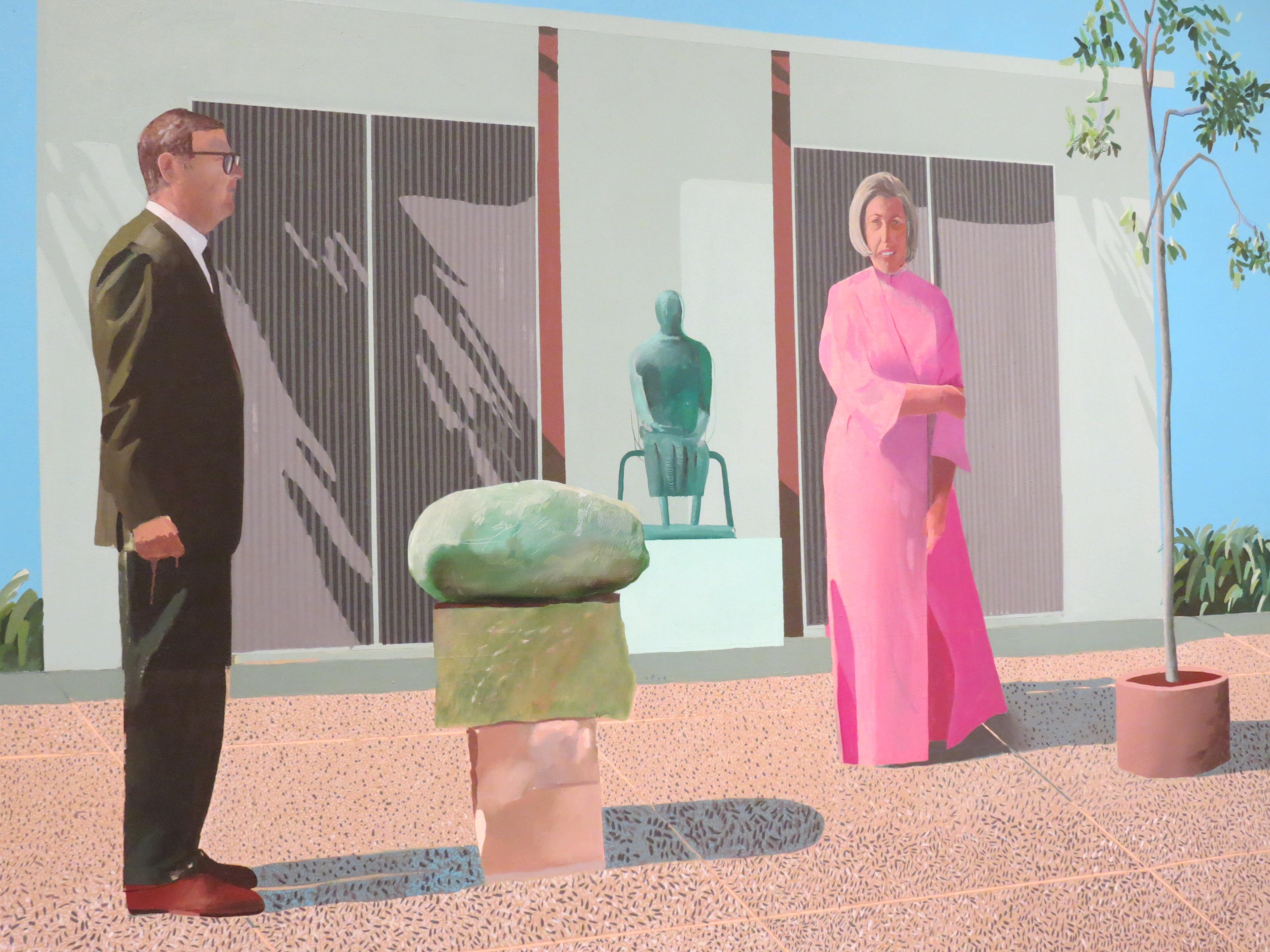
The Art Institute exhibition “The New Contemporary” (re)opened in mid-December. Once we had made our way through, I was glad to climb the stairs to the modern galleries — some Picasso, Ernst, Dali, Beckman, et al. to clear my head. Oh, there were some high points in “The New Contemporary“: The Hockney that looks like an Updike novel to me (“American Collectors“) has a wonderful space, for example. But Pollock’s “The Key” is off-exhibit, and its replacements don’t interest me as much. The underlying narrative of many of the featured works in the contemporary galleries isn’t as clear or, when it is clear, as compelling to me, as, say, the modern galleries.

To me. Those two words explain, of course, why it is impossible to define art. “To me” varies so widely. One man’s sculpture, book, movie, play (see below), etc. is another’s bit of rubbish, and all that. There are some who say that primitive pieces, like the Venus of Willendorf, aren’t art, for example, or the Chauvet Cave paintings. I’d heartily disagree, but then who am I? I had trouble seeing the art in “The New Contemporary” but have absolutely no trouble seeing how typeface could be described as art. Shrug and chuckle. There is so much to see. No need to get hung up on what doesn’t speak to me. I just climbed some stairs and (re)discovered something that does.

I keep meaning to return to Cynthia Freeland’s short treatise But Is It Art, but then I remember that it sort of annoyed me when I first began it, and I’m really more of a Sister Wendy or Simon Schama sort of gal. So it mocks me from the art bookcase.

Speaking of rubbish, one man’s and not another’s, I disliked The Heir Apparent. David Ives drew from Moliere’s The Misanthrope for The School for Lies, both of which delighted me two seasons ago. He drew from a contemporary of Moliere for Heir, but the results were just not my cuppa. Too much potty humor and too thin a plot, which was actually a damned shame because the cast they assembled was superb — comedic timing and delightful verbal gymnastics galore. And the set was stunning. Oh, well. Not every play can be four stars.

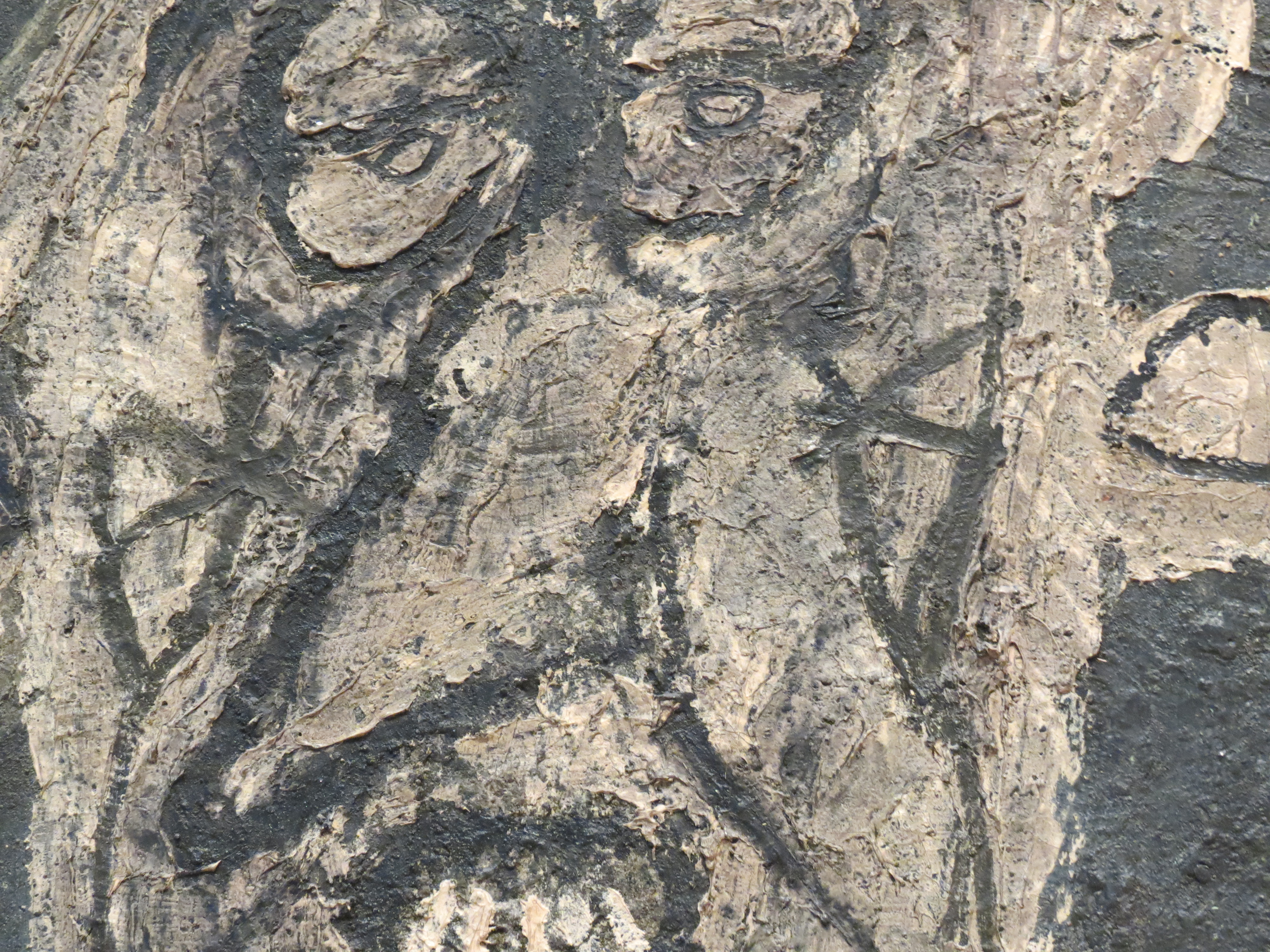
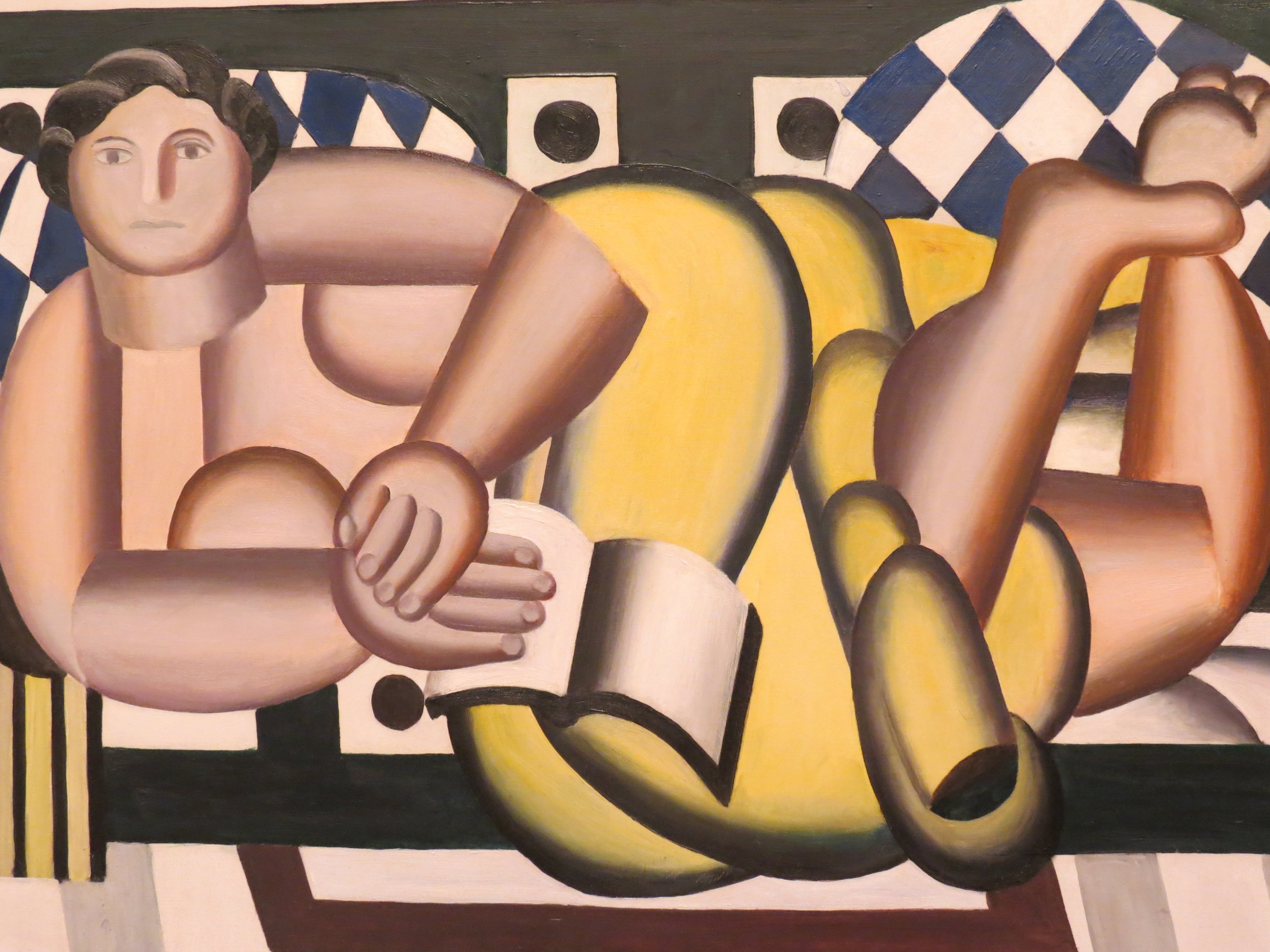
The following images include detail from works seen during my most recent visit to the Art Institute of Chicago.

IMG_6086

IMG_6091

IMG_6092

IMG_6095

IMG_6099

IMG_6112

IMG_6114

■ Jackson Pollock’s “Number 17A” (1948)
■ Jackson Pollock’s “Greyed Rainbow” (1953)
■ David Hockney’s “American Collectors” (1968)
■ Jasper Johns’ “Alphabet” (1959)
■ Jean Dubuffet’s “Head of a Man” (1945)
■ Alberto Giacometti’s “Couple” (1926)
■ Fernand Léger’s “Reclining Woman” (1922)

The year in theater

Waiting for Godot at the always excellent Court Theatre, the National Theatre of Scotland and Royal Shakespeare Company’s Dunsinane at the Chicago Shakespeare Theater, and Moby Dick at the Lookingglass Theatre were the best of my 2015 theater experiences. In a year that included Shannon Cochran in Little Foxes, the unsettling but superbly acted Never the Sinner, the wildly offbeat Pilgrim’s Progress (one of the hottest tickets in the city), two Q Brothers’ productions, and my second time seeing The Book of Mormon, that is saying volumes. The finest performances of the year were Christopher Donahue as Ahab in Moby Dick, Mike Nussbaum as Gregory Solomon in The Price, and Lance Baker as Mr. Van Daan and O’Neill in Anne Frank and 1984, respectively. Again, singling out these actors when one considers Cochran as the imperious Regina Gidden, Alfred H. Wilson and Allen Gilmore as, respectively, Estragon and Vladimir, and Karen Janes Woditsch as Sister Aloysius in Doubt, is high, high praise.

Waiting for Godot (January; Court Theatre)
Dunsinane (March; Chicago Shakespeare Theater)
The Book of Mormon (March; Broadway in Chicago: Bank of America Theatre)
The Good Book (March; Court Theatre)
Les Miserables (March; Paramount Theatre)
The Little Foxes (May; Goodman Theatre)
Sense and Sensibility (May; Chicago Shakespeare Theater)
Doubt (June; Writers Theatre)
The Diary of Anne Frank (July; Writers Theatre)
Moby Dick (July; Lookingglass Theatre)
Q Gents (August; Illinois Shakespeare Festival)
Grand Concourse (August; Steppenwolf Theatre)
The Price (September; TimeLine Theatre)
East of Eden (September; Steppenwolf Theatre)
The Tempest (October; Chicago Shakespeare Theater)
1984 (October; Steppenwolf Theatre)
Agamemnon (November; Court Theatre)
Never the Sinner (November; Victory Gardens Theater)
Pilgrim’s Progress (December; A Red Orchid Theatre)
Fallen Angels (December; Remy Bumppo Theatre Company)
Treasure Island (December; Lookingglass Theatre)
A Q Brothers’ Christmas Carol (December; Chicago Shakespeare Theater)

I also thoroughly enjoyed the following cinema broadcasts:

Aida (July; The Met: Live in HD (Fathom Events))
Hamlet (October; National Theatre Live (Cinema Broadcast))
The Winter’s Tale (November; Kenneth Branagh Theatre Live (Cinema Broadcast))
Coriolanus (December; National Theatre Live (Cinema Broadcast))

A Greek chorus

Perhaps it was a product of seeing the two plays on the same day, but the relationship between the barking journalists who offer up sensational headlines in the wake of Bobby Franks’ murder in Never the Sinner at Victory Gardens and the Greek chorus who bring the audience up to speed on the house of horrors that is Atreus in the contemporary translation of Aeschylus’ Agamemnon at the Court is rather uncanny. The similarity struck me during the panel discussion that followed Never the Sinner. The press, the chorus. Of course! It’s all narrative, I thought, and someone mediates it, reinterprets it, annotates it, comments on it, tells the story.

Reviews of Never can be found here and here; Agamemnon, here and here. I enthusiastically recommend both plays.

A minority of one

While there is much to recommend about the Steppenwolf’s production of 1984, including the haunting set and the emphasis on the individual’s experience of this madly prescient world, Lance Baker’s creepily perfect O’Neill is the best reason to see the play, which runs through November 20. Reviews here and here.

“And let me speak to th’yet unknowing world….”

In Hamlet: Poem Unlimited, Harold Bloom notes:

[W]ithout Horatio, we are too distanced from the bewildering Hamlet for Shakespeare to work his guile upon us… Horatio pragmatically is the most important figure in the tragedy except for Hamlet himself. Through Horatio we the audience contaminate the play.

[…]

Highest and lowest are one in the Hamlet-world. But they aren’t for us, and our representative in that world is Horatio. Where theatricalism governs all, and Hamlet is master of the revels, we hold fast to Horatio, who is too drab to be theatrical. We hope we are not drab, but we cannot keep up with Hamlet who is always out ahead of himself.

In other words, we need Horatio. We need him to mediate the larger-than-life-ness, the all-at-once-ness, and the too-too-much-ness that is, as Bloom calls it, Hamlet-world. We need Horatio to be the one reliably real thing in the matryoshka-doll nesting of plays within plays within plays that is Shakespeare’s Hamlet.

And yet the Sonia Friedman production of Hamlet now at London’s Barbican Theatre (yes, the one starring Benedict Cumberbatch) features a wan and rather clueless Horatio, one who fails to give us anything to which we can hold fast during Hamlet’s whirlwind tour of life, man’s universe, and everything in it. Through this failure, this lack of a good and true Horatio, Hamlet becomes just a man — a smart man, a conflicted man, a man aware of all his thoughts and feelings and more aware of them than any other man before or since, a man of exuberant, often excessive drama, but still, just a man. And Shakespeare created something more than just a man when he created Hamlet.

The last time I was this disappointed in Horatio was nine years ago to the week, when I saw the Terry Hands production of Hamlet at the Chicago Shakespeare Theater. How do directors arrive at an interpretation of the play that robs the audience of its one reliable companion for the journey?

Not that there isn’t much to recommend here, from the unconventional star’s turn in a bucket-list role to the jaw-dropping set and its many effects, from the twitchy heartbreak Ophelia represents to the intelligent self-possession Gertrude uncovers. National Theatre Live has already announced its encore performances. It is $20 well spent.