
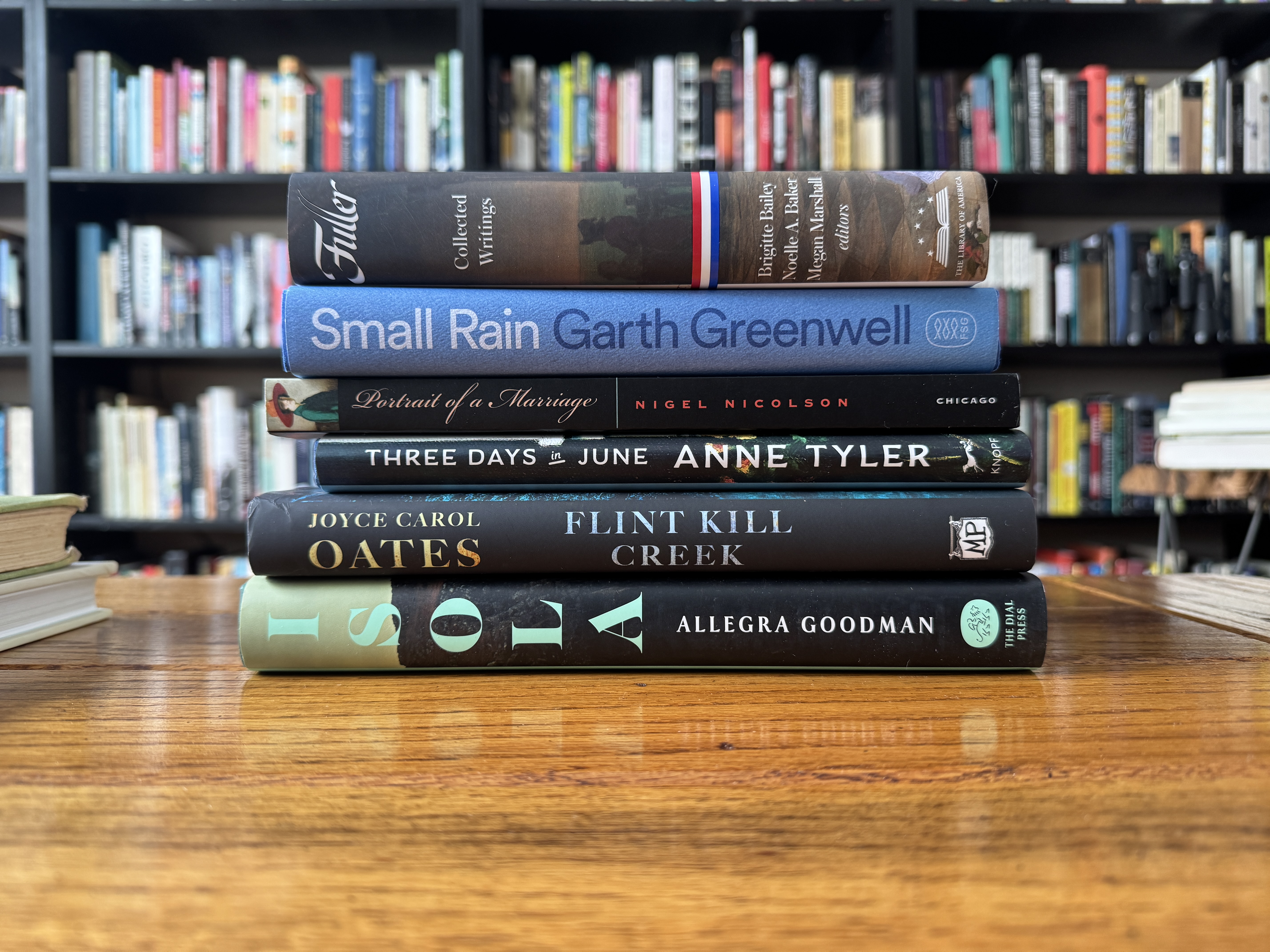
Shelved for now.
Shelved for now.
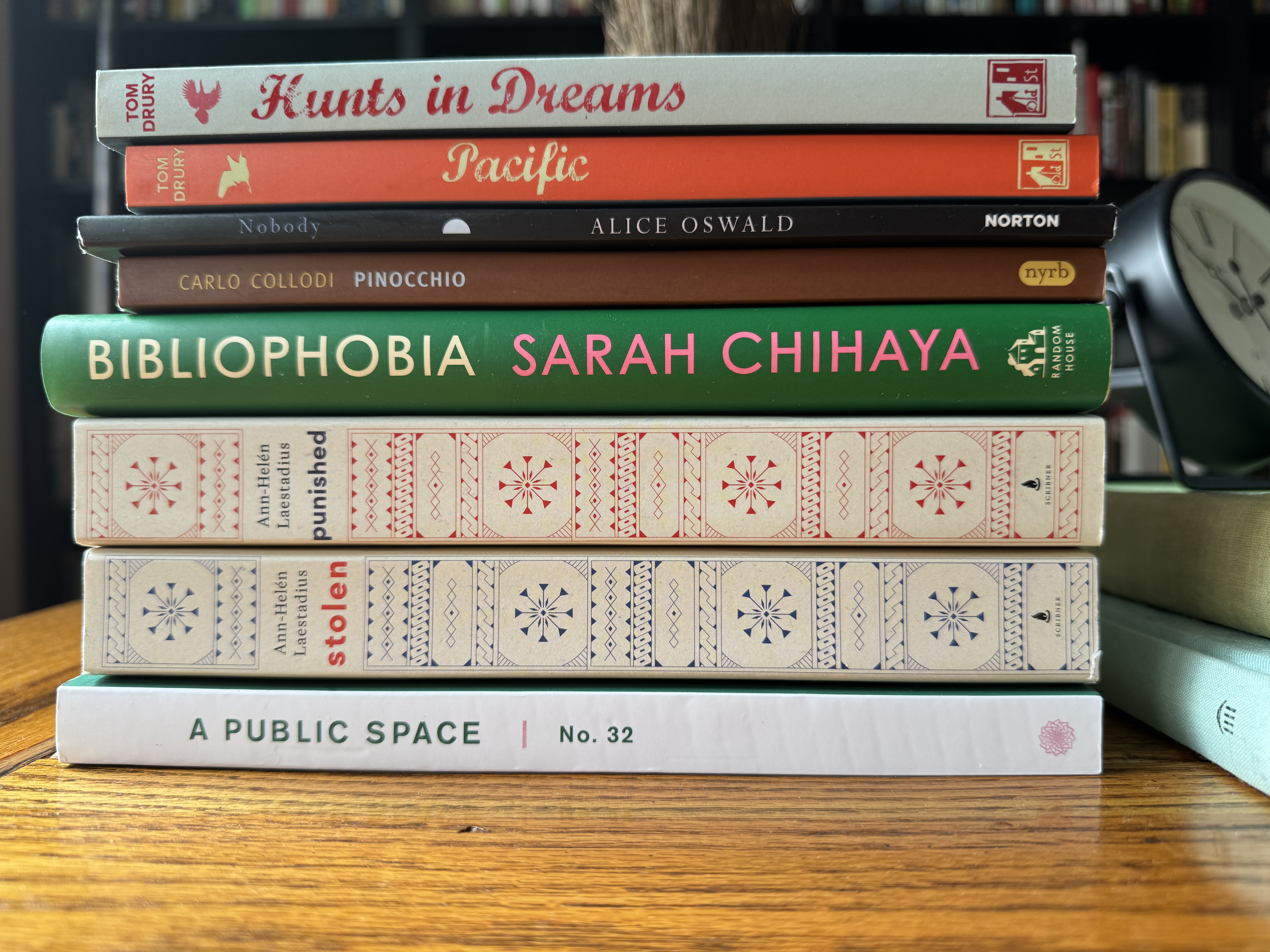
Gifts to self.
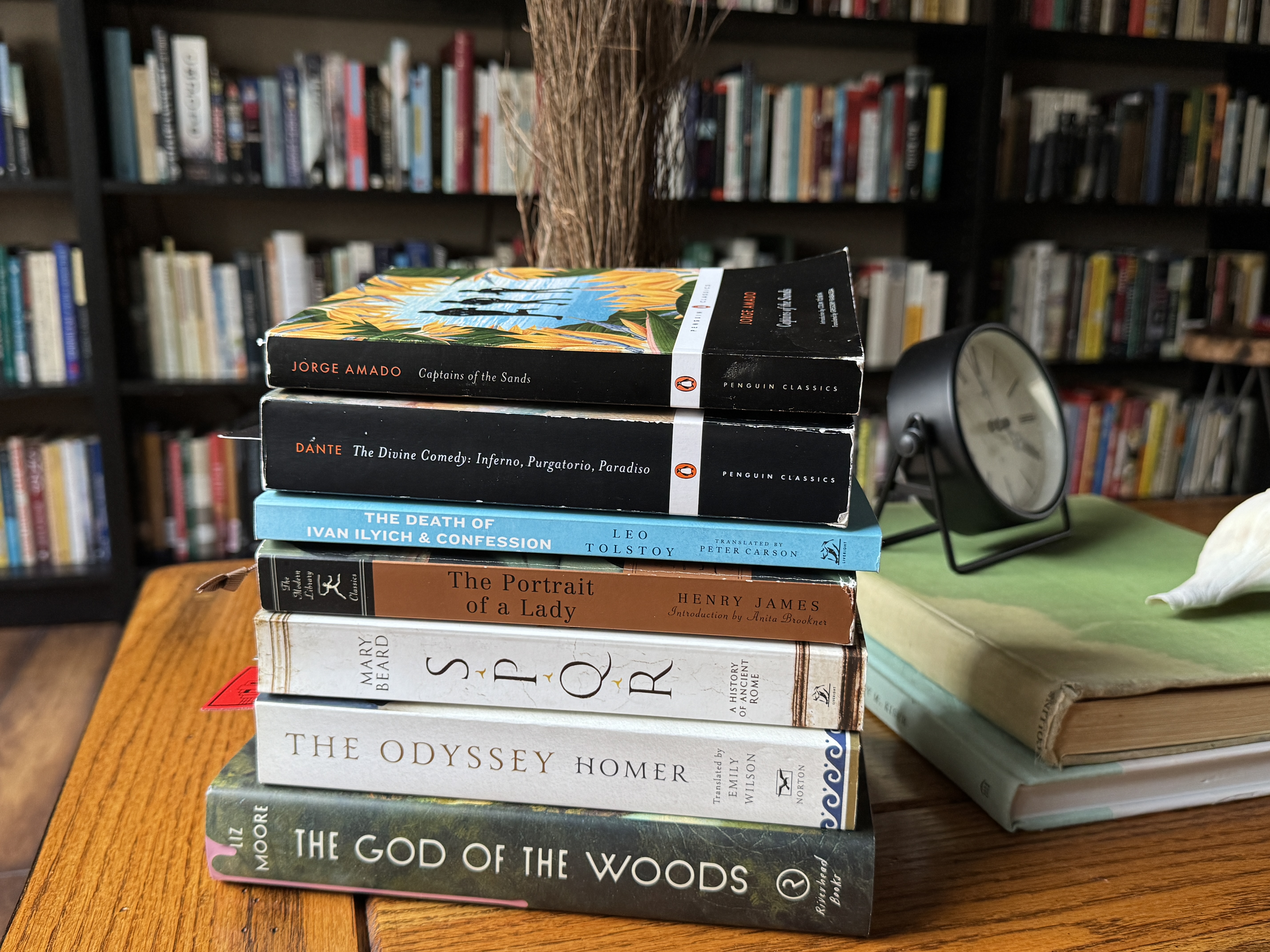
These have been my companions over the last week or so of recuperation. Although I’m not sure I thought the Moore was as amazing as many reviewers did, it was a solid bit of entertainment. Most of the other books are familiar from my sidebar, but the Tolstoy is new… I joined Story Club with George Saunders, an absolute delight. And the Amado is part of the Brazilian literature mini-project on which my youngest and I have embarked.
Today, though, inspired by a talk I attended this week, I’m beginning The Heaven and Earth Grocery Store.
Not pictured is Pinter’s Betrayal, which I read in anticipation of this.
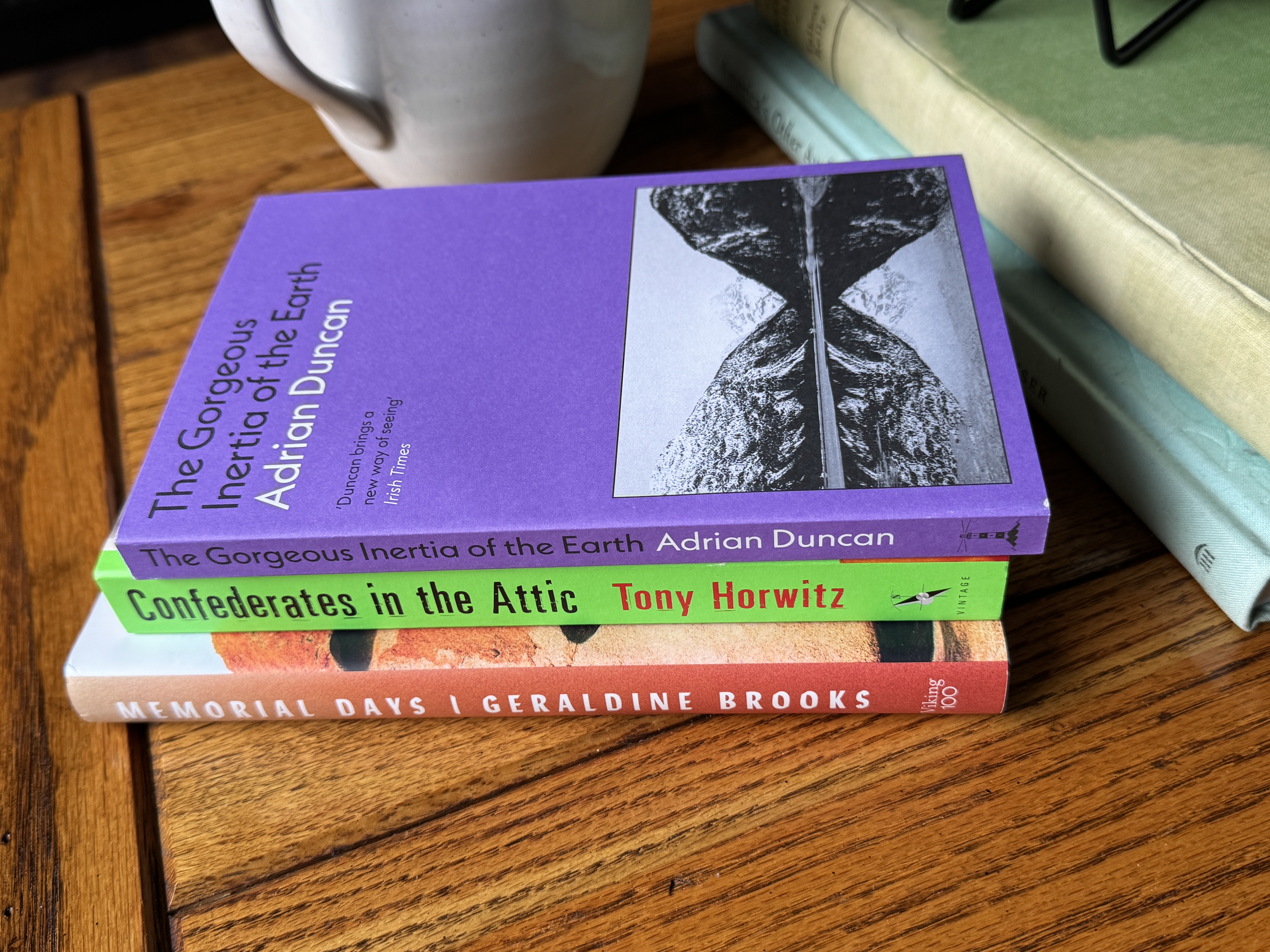
Shelved for now.

As I mentioned earlier this month, travel and “required maintenance” on this aging vehicle prompted me to rethink my obligations and pursuits for the first few months of 2025. Today, twenty-four hours after my most recent trip into the shop, I’m calling this stack my get-well gift to self.
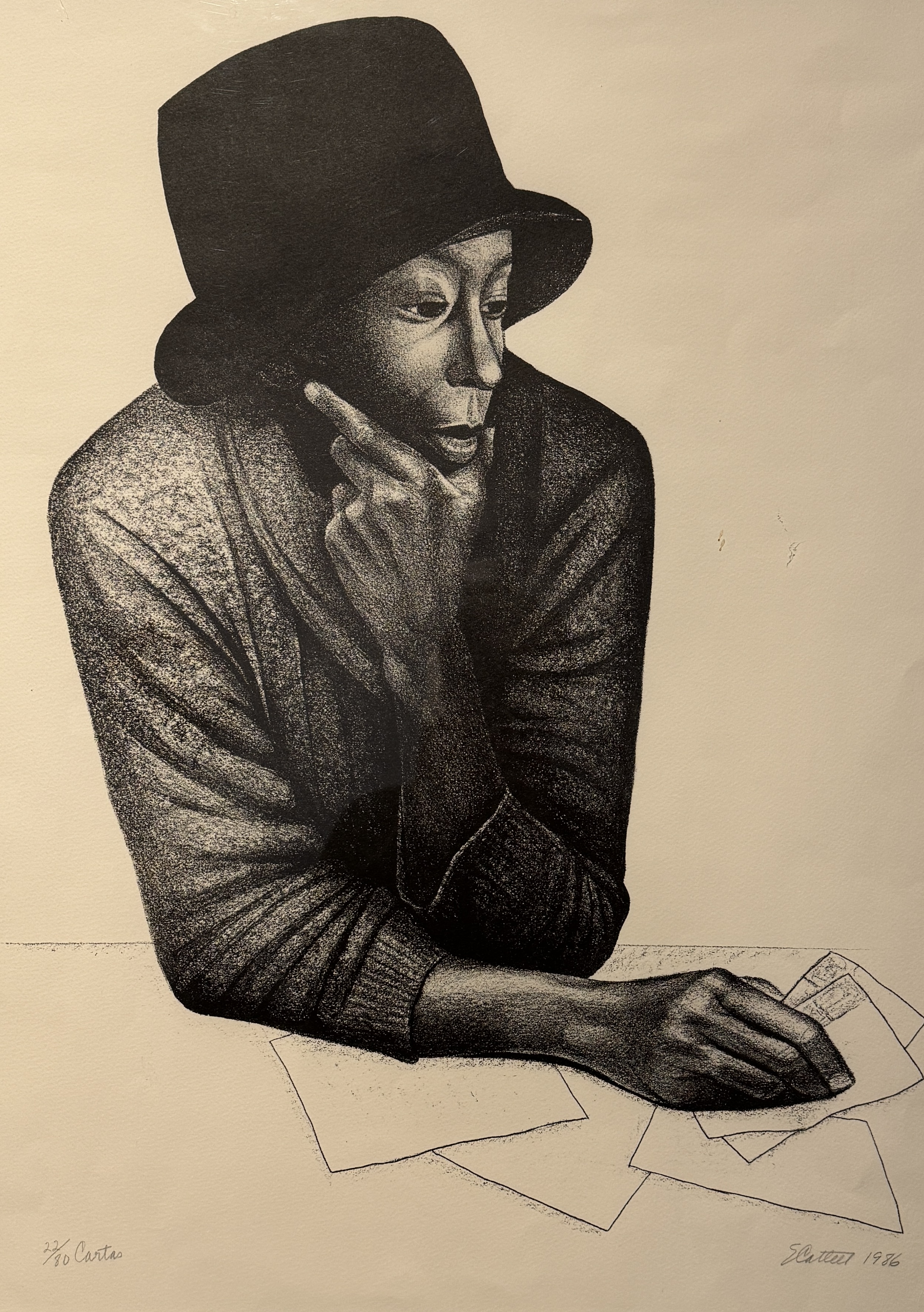
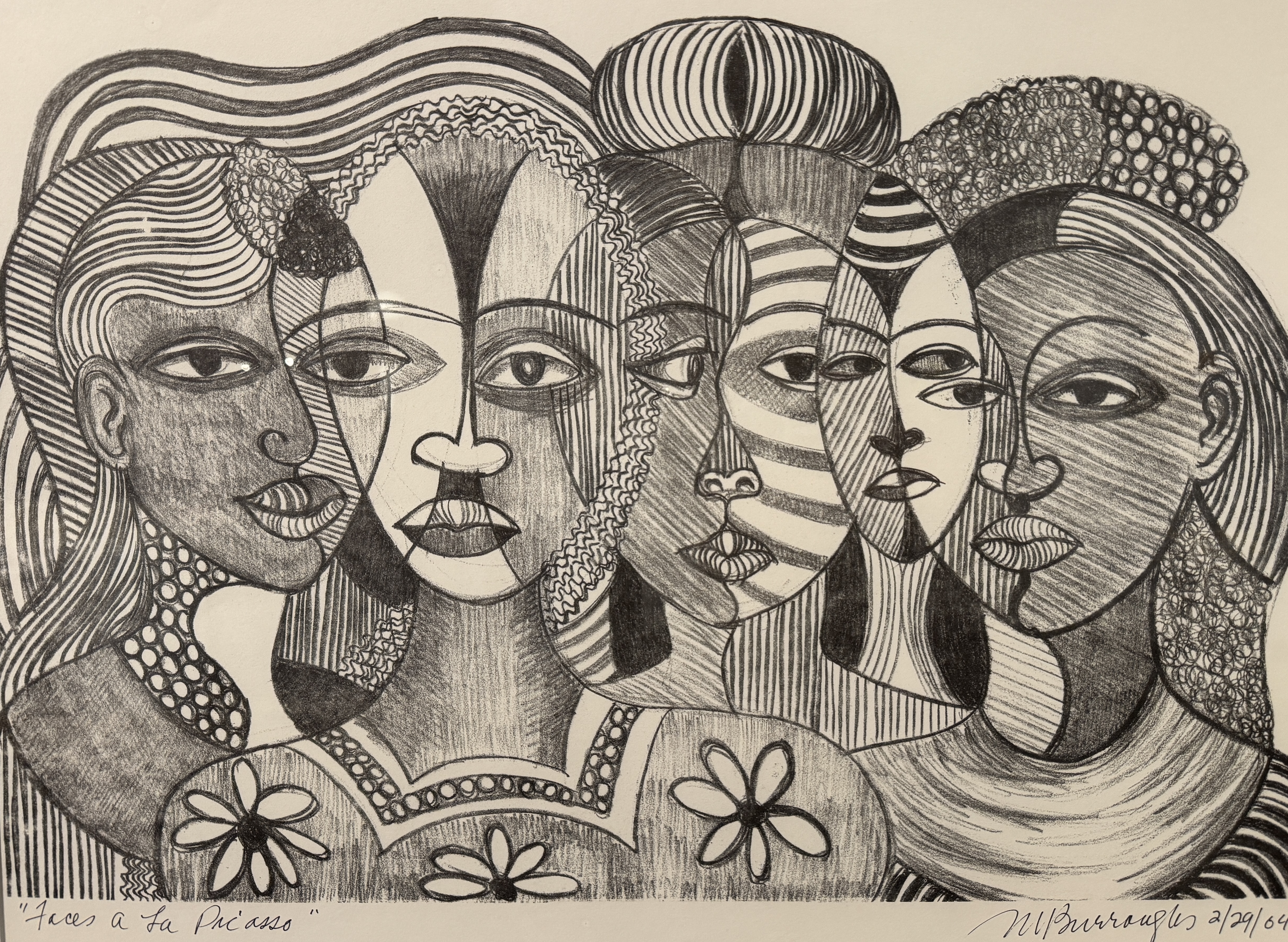
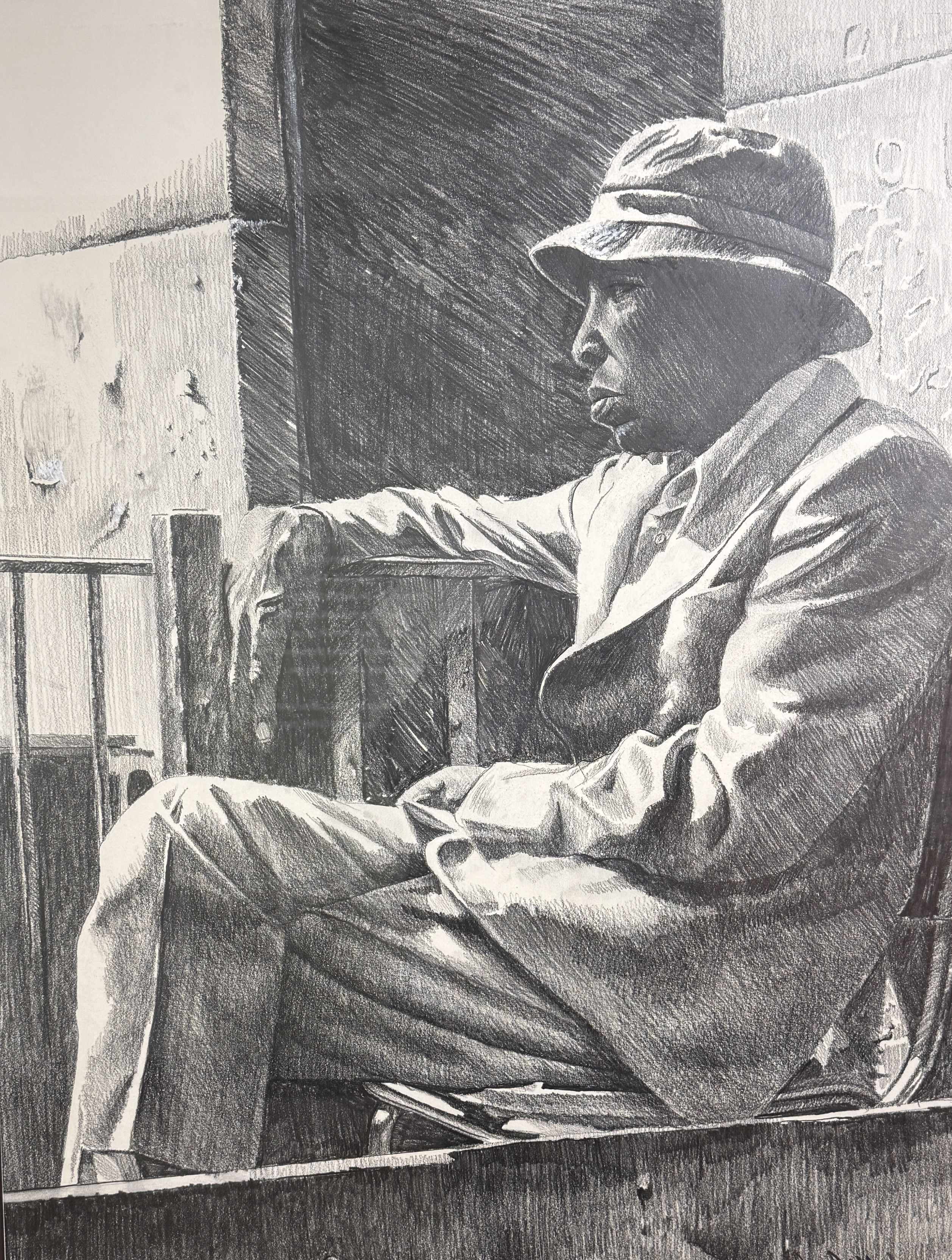
My images of detail from the following works at the Wright Museum:
✤ “Cartas” by Elizabeth Catlett
✤ “Faces of Picasso” by Margaret Burroughs
✤ “Sam Pool” by Paul Collins

A few acquisitions.

”No. 2” by Jackson Pollock (1950) at Harvard Art Museums.
Today I am reading, among other things, Whale Fall by Daniel Krause. Yes, I am reading, watching the birds at my feeders, eating a couple of chocolate chip cookies, and thinking about a movie that concludes with a rogue planet seemingly bypassing Earth and then colliding with it.

The MFA Boston plaque for this Fernando Botero sculpture (Venus, 1977-78) notes that he “takes icons of Western art — including Roman goddesses and female nudes — and inflates their proportions, an act of admiration as well as a veiled critique of the dominance of European culture in the Americas.”
Seeing her just delighted me.

“Julia Domna,” Roman, 193-217 CE.
Seen at the Harvard Art Museums last week.
My progress through Dr. LaFleur’s Latin tutorial has been maddeningly slow: When I submitted my work on Chapter VIII in August 2023 (yes, you read that correctly), I wrote, in part, “I recognize that I may be your slowest student ever but trust that if this represented a problem, you would advise me.” Imagine my relief when I learned that several students had, at that point, been working through the tutorial for at least two years. But eighteen months have passed, and I am now polishing my submission for Chapter XI (yes, you read that correctly). At this rate, the Ovid tutorial — my reach goal — seems impossibly far off.
And yet….
When I wander through art museums, some of my favorite moments involve recognition: I “know” an artist, or an artist’s contemporary, or the obscure subject, or whatever. Are you familiar with the feeling I’m describing? A work attracts your attention, and you realize it reminds you of other pieces… “Ah! Could this be…? It is!” My daughters and husband, who most frequently join me for museum adventures, have indulged and encouraged my barely stifled delight at one “discovery” or another (and another) for many, many years now. In fact, they know that this wash-rinse-repeat cycle in which we stitch one learning experience to another, or a book to a painting to a piece of music to a news article to a film to a — you get the idea, is a rich and rewarding way to learn, to think, to grow. This sort of (re)discovery has a reliable “stickiness.”
As have my Latin studies. It has been slow going, yes, but what I have learned so far, I own. My husband drills me on vocabulary and my study cards for at least an hour on nearly every trip into Chicago or Milwaukee, for example, and I drive the first leg of our trips into Michigan so that he can quiz me. More than six months ago, I added Duolingo to my day. Admittedly, its Latin program is short and limited, but the skill-building tools for vocabulary have merit.
And so I learn. In my way. On my schedule. However long it takes.
(Speaking of schedules, for the first semester since I enrolled in music lessons (Fall 2014), I am taking a break of sorts: I have only registered for a half-term this spring. More, I am not returning to band until Fall 2025. Travel and “required maintenance” on this aging vehicle prompted me to rethink these first few months of the new year. I am still studying, though, and will outline what is on my practice sheet in another post.)
 Nerdishly