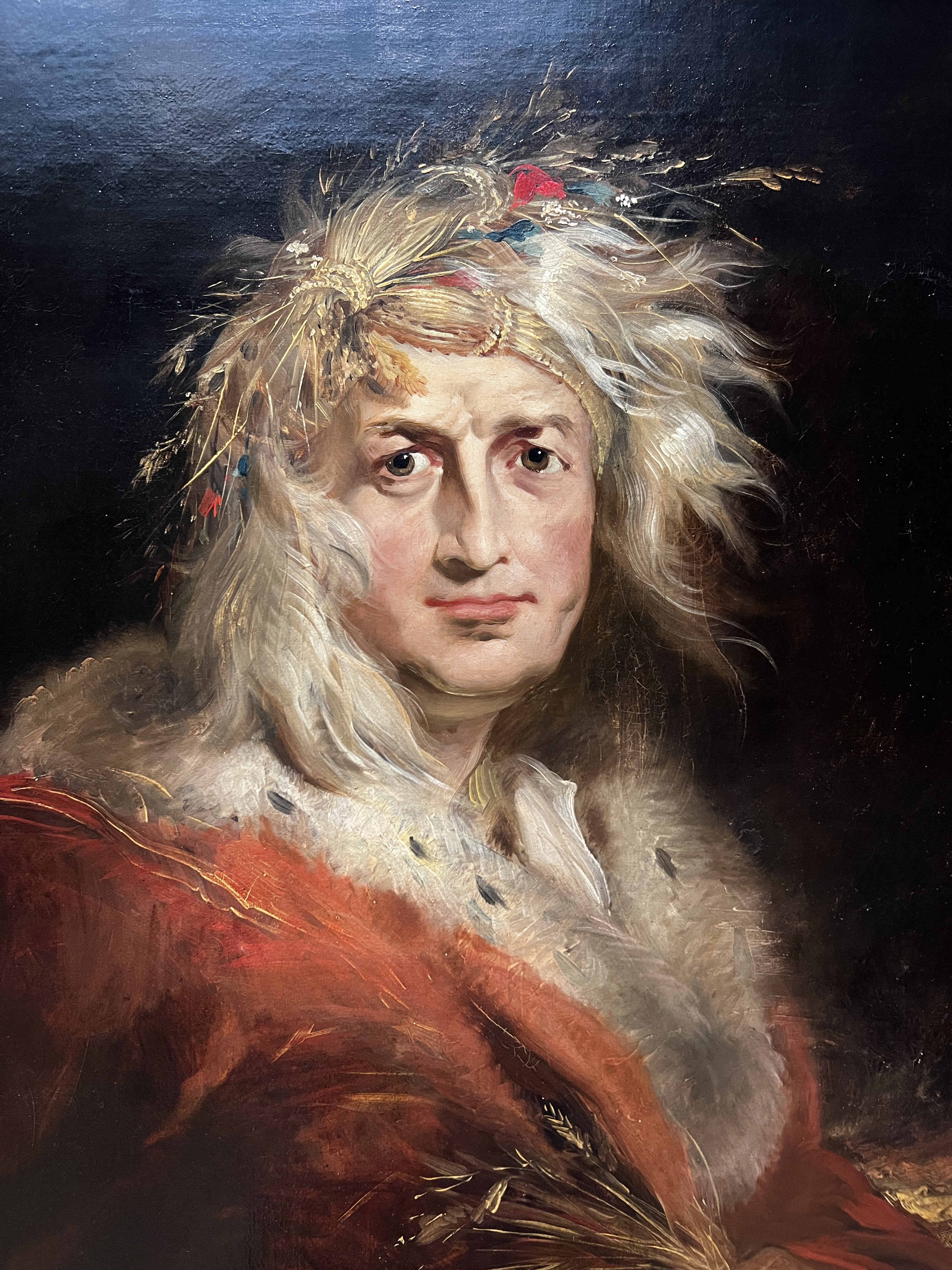
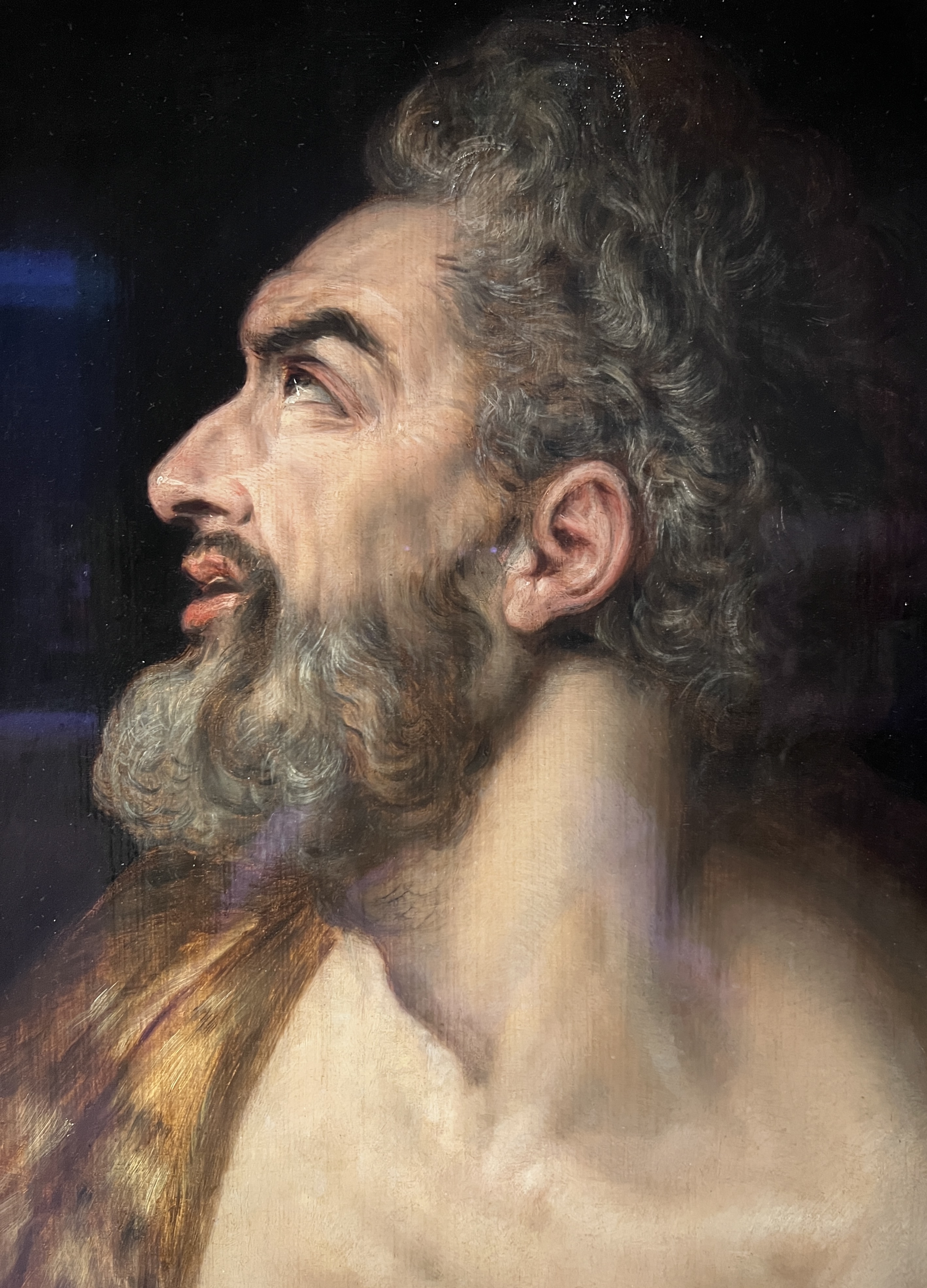
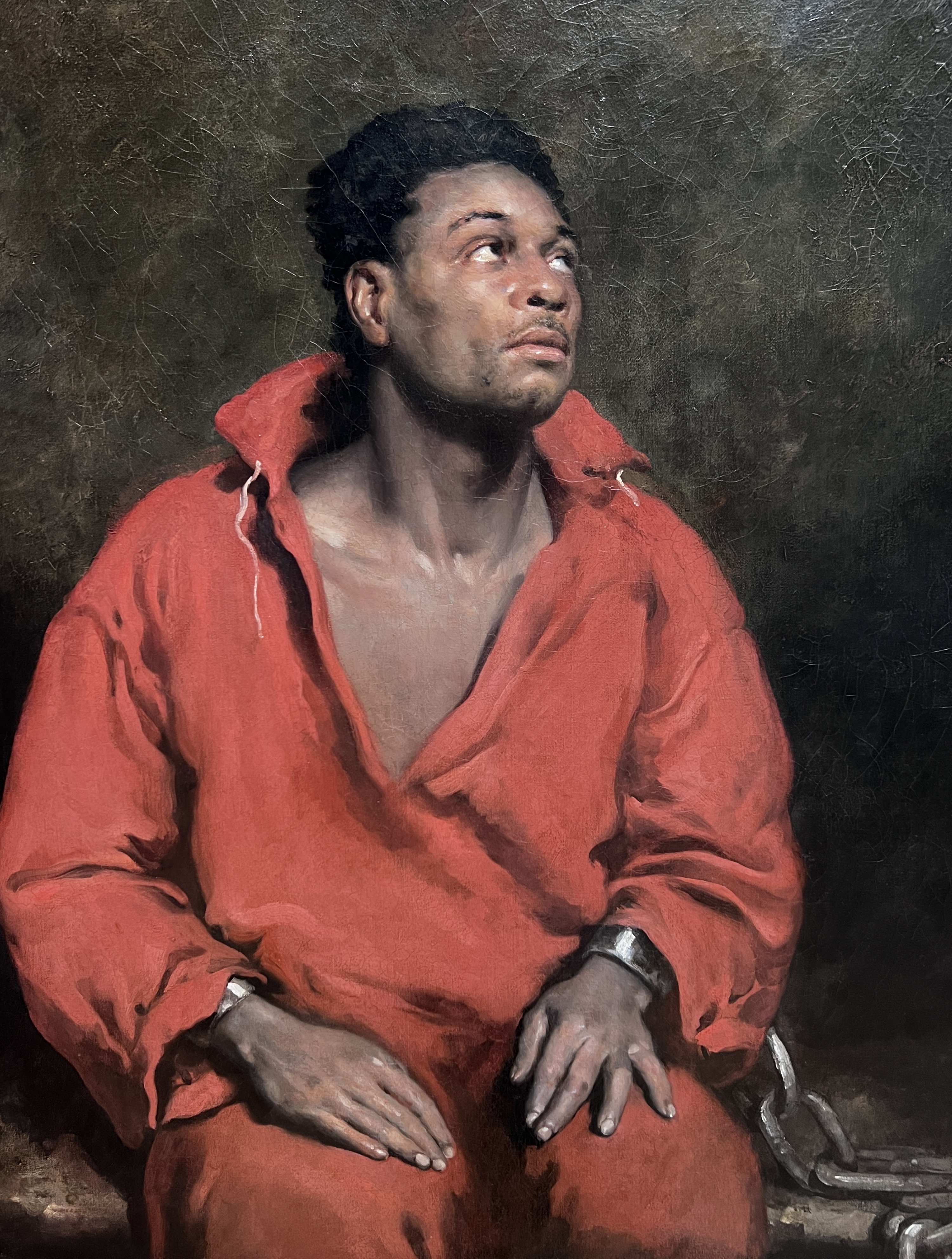
The images above are my photos of detail from the following paintings:
■ “David Garrick as King Lear” by Richard Westall; about 1815 ■ “The Penitent Saint Peter” by Jusepe de Ribera; about 1630 ■ “Study Head of a Bearded Man” by Frans Floris; about 1565 ■ “The Captive Slave (Ira Aldridge)” by John Philip Simpson; 1827
The first image is from our walk on Saturday at the state park. The next two images were taken yesterday at a favorite conservation area; the last three, today, same location.
No alarm; a beautiful hike at a state park; Chapter 4 of Absalom, Absalom; music practice; a bizarre chat with a customer service representative; two episodes of Only Murders in the Building; delicious luncheon; Bananagrams; and now? More of The Moonstone.
Although I had hoped to finish sooner, I only just listened to Lecture 17 of Cervantes’ Don Quixote, an Open Yale Courses program, this morning. (The course comprises twenty-four lectures delivered by Professor Roberto González Echevarría. Absolutely excellent.)
Somehow I finished Nights of Plague in time for a wonderful book discussion last night. I began reading as soon as I finished The Republic earlier this month but was happily sidetracked by an invitation to a reading group tackling Thomas Hardy’s Far from the Madding Crowd; then family came into town for several days. Finishing Orhan Pamuk’s tome really was a feat, then, given how little time I had.
Naturally, although I followed the #FaulknerinAugust discussion, I needed to set aside the book for most of the month, but I am back to a chapter a day in Absalom, Absalom.
I’m also reading Adrienne Brodeur’s Little Monsters.
After only three rehearsals, we have a break from band this coming week, so for the next few music practices, I’m focused primarily on my current étude, the Mozart duet, and the middle of the second movement of the Stamitz concerto. (I spent much less time on this over the last two months than originally planned.)
And though my Latin studies stalled in the second week of the month, after a vocabulary review, I’ve cracked open the next unit.
The heat warning ended, more books arrived, and really? Nothing is right with the world, is it? But Friday still becomes Saturday and Saturday, Sunday, so here I am, reading Nights of Plague for a book discussion, practicing Florence Price’s “Juba Dance” for band rehearsal on Monday, and wondering whether I should walk first this afternoon or do the yard work first. And with a thud of all-at-onceness, such banal dithering has made me as uncomfortable as my first encounter with Ilya Kaminsky’s poem.
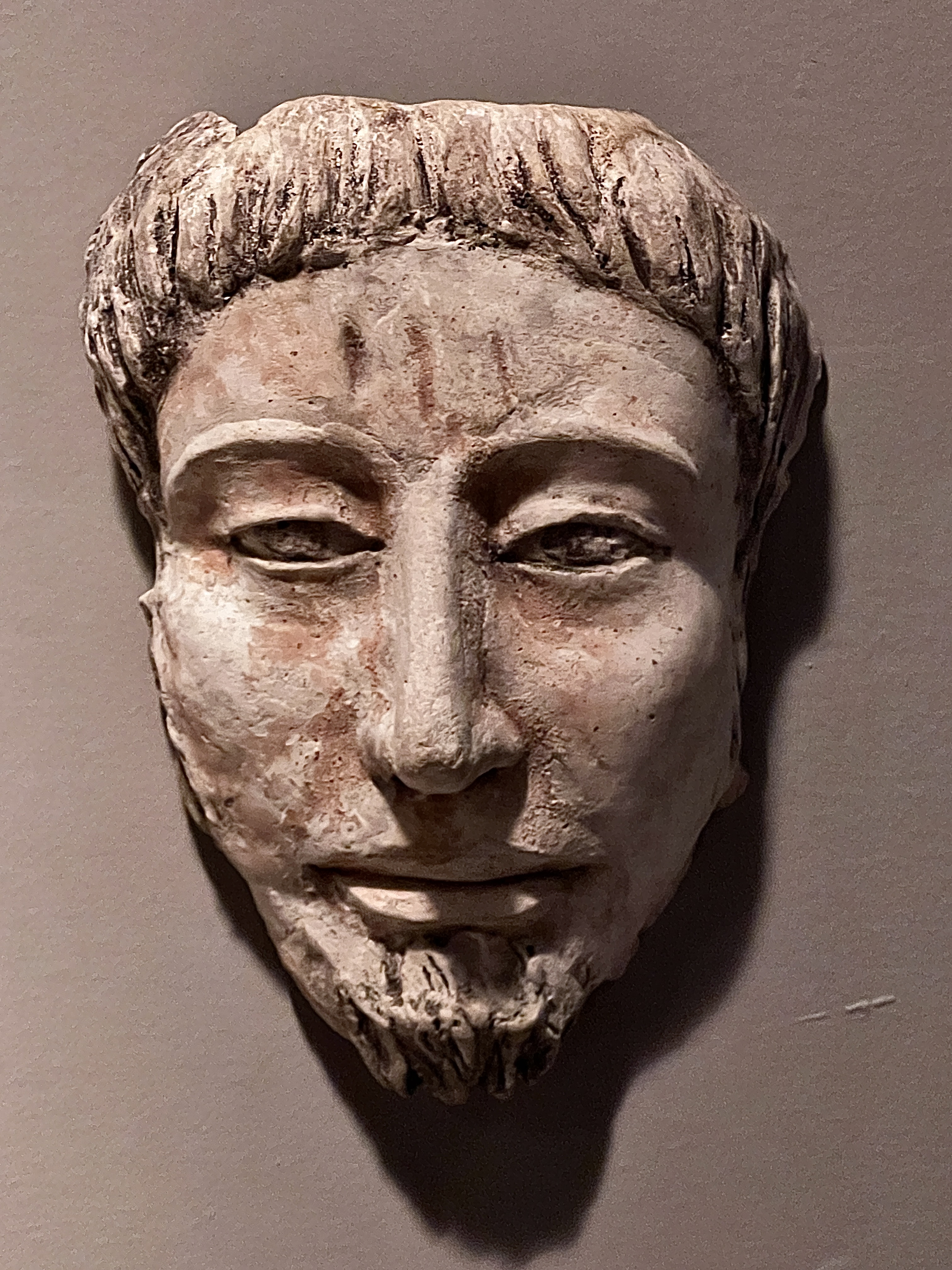
Part of my Latin tutorial includes a survey of Roman history via SPQR by the always-excellent Mary Beard. Is it any wonder that I now regularly see Roman influence where I may have previously missed or overlooked it? A plaque describing a case of portrait masks in the Field Museum’s Egyptian exhibit indicates that once the Romans conquered the Egyptians (30 BCE), they adopted a number of Egyptian customs, including portrait masks — which were actually a Greek contribution to Egyptian traditions. The one pictured here is from the Ptolemaic-Roman Period.