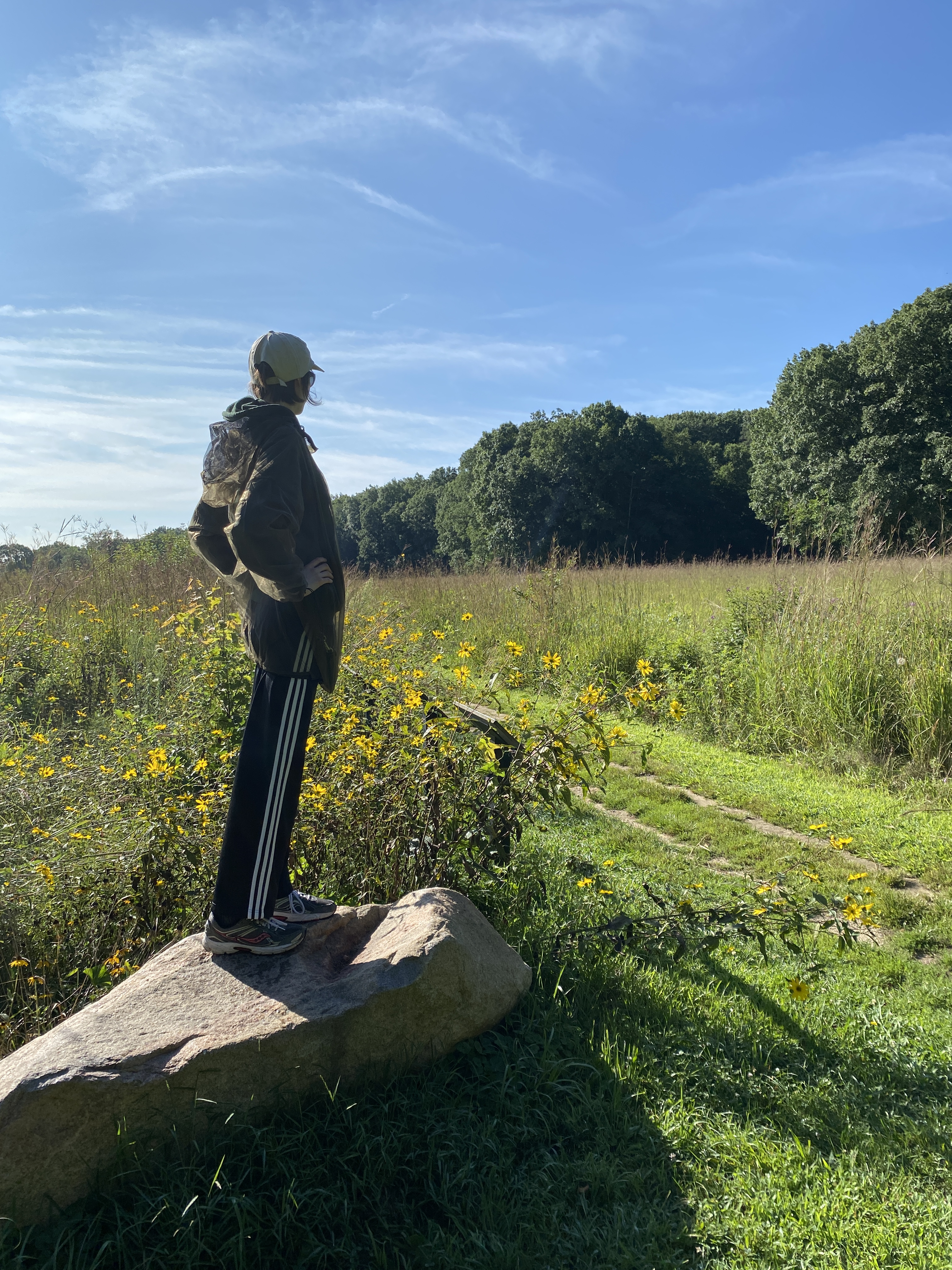
We arrived at the trail for our four-mile walk just after sunrise, and since returning home, we’ve knocked out the few outdoor chores on our list. The calendar may read September, but the weather indicates mid-July: Highs today and tomorrow may hit ninety or more. That sounds like my cue to lower the blinds and the thermostat and settle in with a stack of books after my music practice.
This weekend, I’m reading Marisel Vera’s The Taste of Sugar (2020) for an upcoming Chicago Humanities Festival event, and Laura Lippman’s most recent bestseller, Dream Girl, which is my “Farewell, summer!” selection.
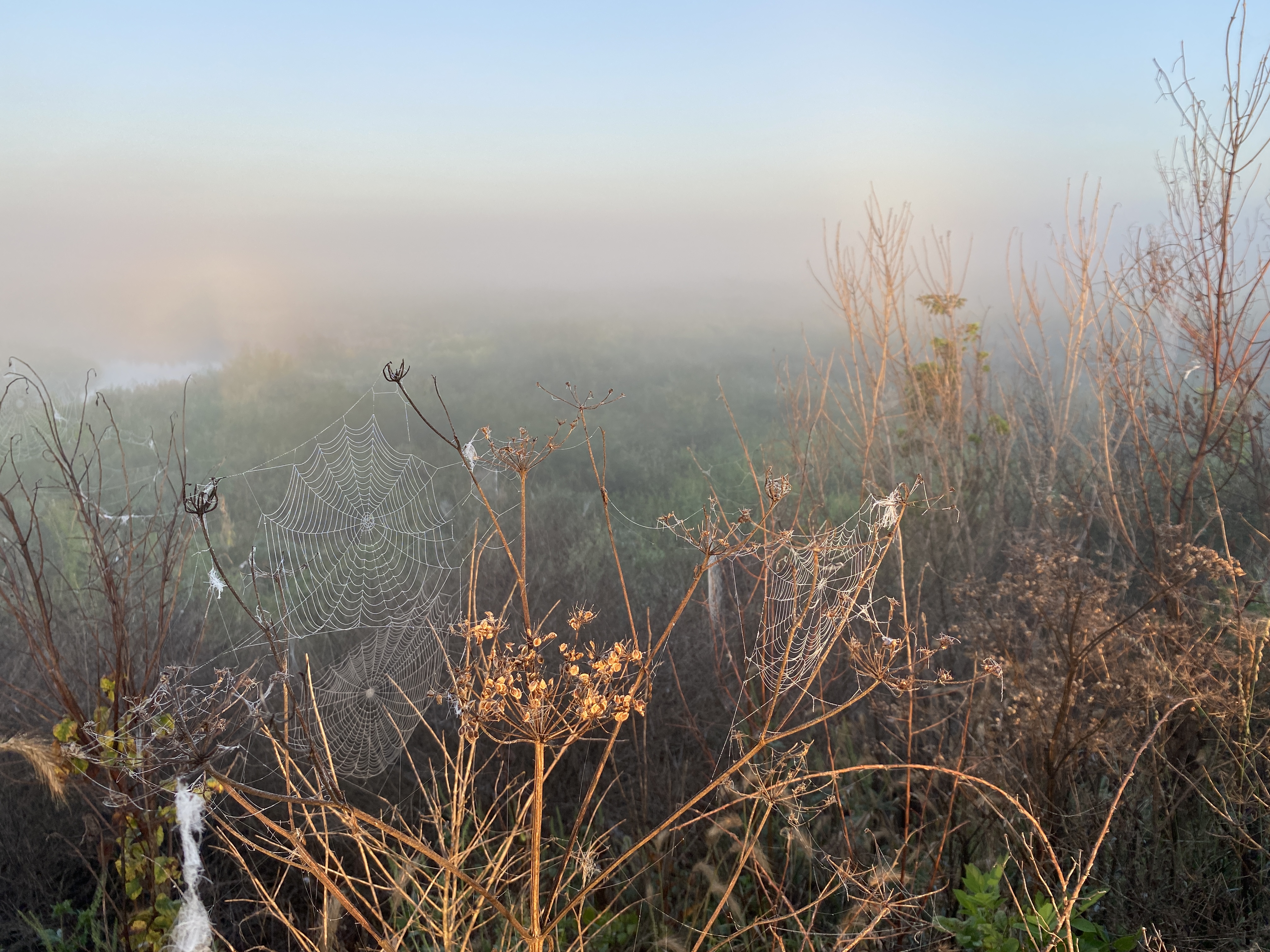
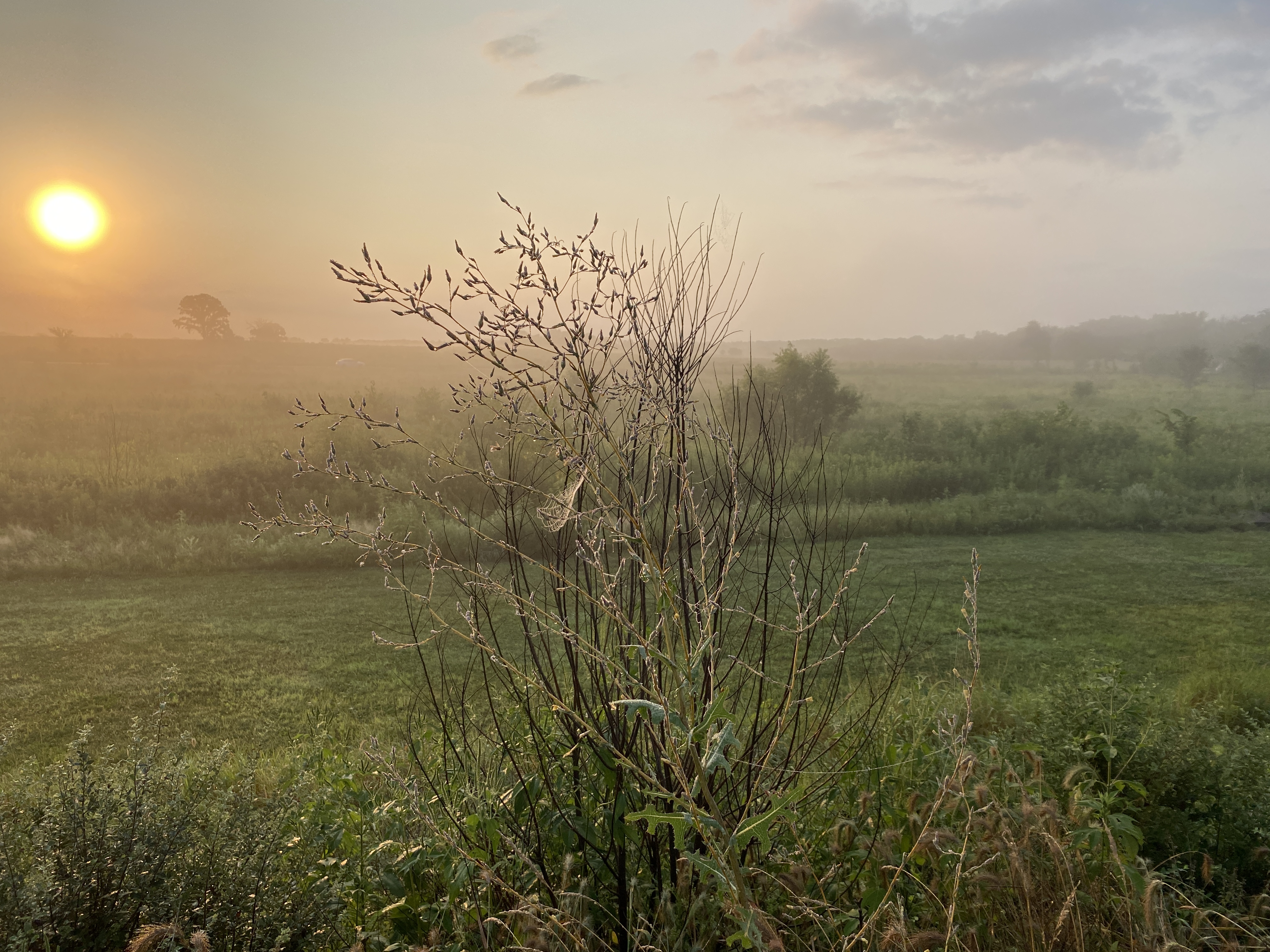
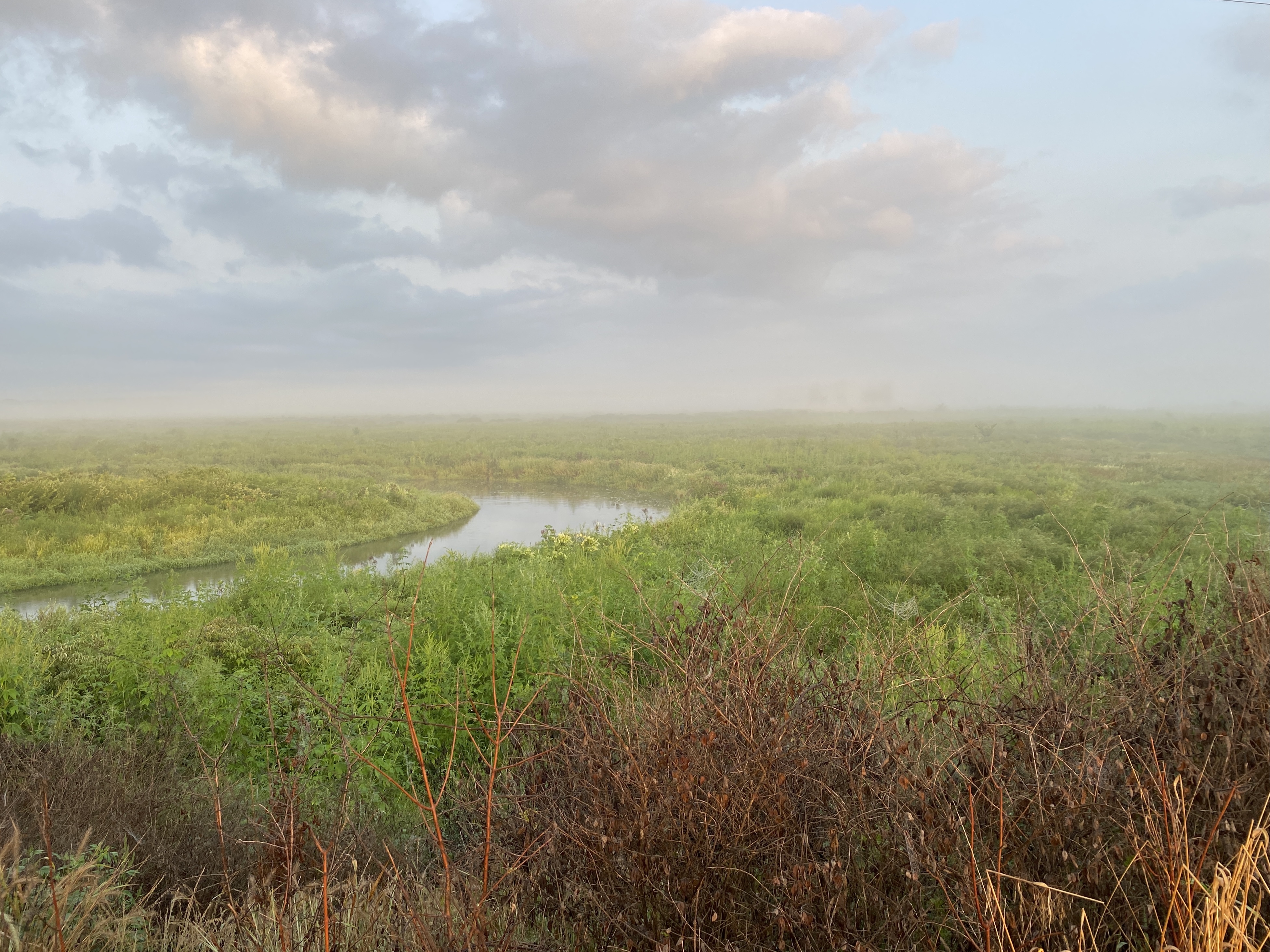
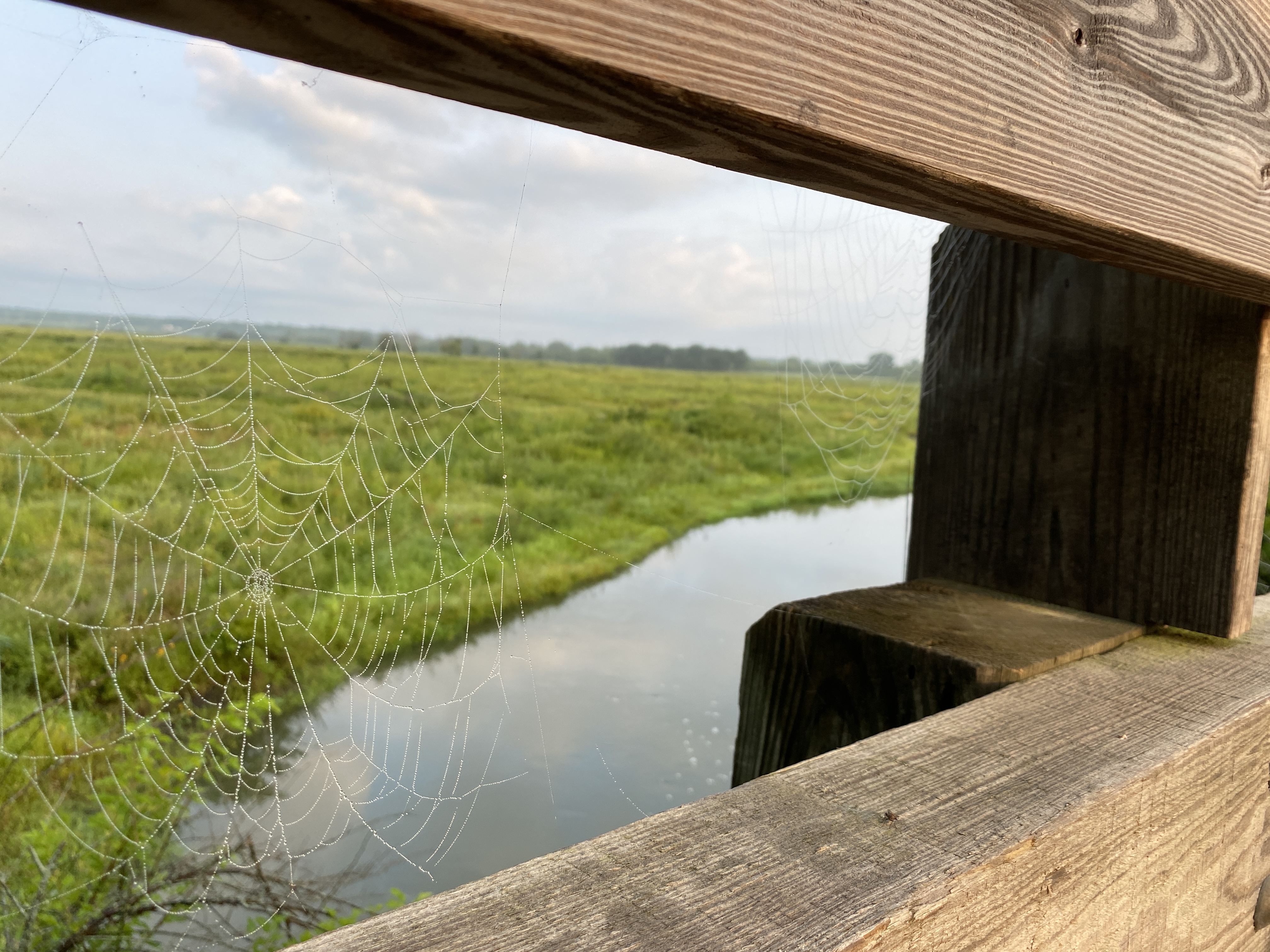
Image captured at the conservation district on Labor Day.
From Book II, Chapter 15, of Middlemarch:
I at least have so much to do in unraveling certain human lots, and seeing how they were woven and interwoven, that all the light I can command must be concentrated on this particular web, and not dispersed over that tempting range of relevancies called the universe.
Although I missed the August meetings of book group, I did finish (re)reading Middlemarch and have returned in time for our three remaining meetings this month.
Book Five, Chapter 44 He distrusted her affection; and what loneliness is more lonely than distrust?
Book Five, Chapter 46 Our sense of duty must often wait for some work which shall take the place of dilettanteism and make us feel that the quality of our action is not a matter of indifference.
Book Five, Chapter 50 “… [T]here are always people who can’t forgive a man for differing from them.”
I also finished reading Rebecca Mead’s My Life in Middlemarch.
p. 41 Coming to languages too late for effortless fluency, she set about achieving what she could through resolution and determination. She found an outlet for her hungry ambition by reshaping herself into an intellectual. She turned her yearning into learning.
p. 145 Books — or texts, as they were called by those versed in theory — weren’t supposed merely to be read, but to be interrogated, as if they had committed some criminal malfeasance.
p. 172 Such an approach to fiction — where do I see myself in here? — is not how a scholar reads, and it can be limiting and its solipsism. It’s hardly an enlarging experience to read a novel as if it were a mirror of oneself. One of the useful functions of literary criticism and scholarship is to suggest alternative lenses through which a book might be read.
A book group member recommended The Readers Karamazov podcast, which began its second season with a four-episode discussion of Middlemarch. (And, yes, I must go back and listen to their The Brothers Karamazov episodes.) What a terrific resource! I enjoyed their insights so much that I plan to read along for the rest of this season. Candide (Voltaire; 1759. (Trans. John Butt; 1947.), their next selection, was a reread for me.
In my quest to reread all of Shakespeare’s plays, I have finished Twelfth Night and Troilus and Cressida since my last annotated list.
Under the heading “beach reads” (although I spent no time at the beach this summer), file the following:
■ The House in the Cerulean Sea (TJ Klune; 2020. Fiction.) p. 188 It struck him, then, just who this house belonged to, and how much of an honor this would be. For an adult sprite, their dwelling was their most important possession. It was their home where all their secrets were kept. Sprites were notorious for their privacy, and he had no doubt that Phee would one day be the same, though he hoped she would remember the time spent at Marsyas in her youth. She wouldn’t have to be so alone.
■ The Turnout (Megan Abbott; 2021. Fiction.) Review here.
■ The Plot (Jean Hanff Korelitz; 2021. Fiction.) Review here.
■ A Trick of the Light (Louise Penny; 2011. Fiction.) The Inspector Gamache series is actually a number of steps up from “beach read.” As always, many thanks to Robin for recommending these books.
My recent graphic work selections include: ■ Odessa (Jonathan Hill; 2020. Graphic fiction.) ■ The Hard Tomorrow (Eleanor Davis; 2019. Graphic fiction.) ■ Sweet Tooth: The Return (Jeff Lemire; 2021. Graphic non-fiction.) ■ It’s Not What You Thought It Would Be (Lizzy Stewart; 2021. Graphic non-fiction.) ■ Seek You: A Journey through American Loneliness (Kristen Radtke; 2021. Graphic non-fiction.)
Radtke’s Seek You is a gorgeous read. Highly recommended.
■ Gilead (Marilynne Robinson; 2004. Fiction.) Speaking of gorgeous reads, how did this languish on my shelves for seventeen years? Beautiful, beautiful.
p. 7 Well, see and see but do not perceive, hear and hear but do not understand, as the Lord says. I can’t claim to understand that saying, as many times as I’ve heard it, and even preached on it. It simply states a deeply mysterious fact. You can know a thing to death and be for all purposes completely ignorant of it. A man can know his father, or his son, and there might still be nothing between them but loyalty and love and mutual incomprehension.
p. 39 But I’ve developed a great reputation for wisdom by ordering more books than I ever had time to read, and reading more books, by far, than I learned anything useful from, except, of course that some very tedious gentleman have written books. This is not a new insight, but the truth of it is something you have to experience to fully grasp.
p. 197 We take fortuitous resemblances among us to be actual likeness, because those around us have also fallen heir to the same customs, trade in the same coin, acknowledge, more or less, the same notions of decency and sanity. But all that really just allows us to coexist with the inviolable, untraversable, and utterly vast spaces between us.
p. 233 I was thinking about the things that had happened here just in my lifetime — the droughts and the influenza and the Depression and three terrible wars. It seems to me now we never looked up from the trouble we had just getting by to put the obvious question, that is, to ask what it was the Lord was trying to make us understand.
p. 246 I love the prairie! So often I have seen the dawn come and the light flood over the land and everything turned radiant at once, that word “good” so profoundly affirmed my soul that I am amazed I should be allowed to witness such a thing.
Recent non-fiction selections included:
■ Fulfillment: Winning and Losing in One-Click America (Alec MacGillis; 2021) Review here.
■ Witch-Hunt: Mysteries of the Salem Witch Trials (Marc Aronson; 2003)
■ The 57 Bus: A True Story of Two Teenagers and the Crime That Changed Their Lives (Dashka Slater; 2017) Original article here.
Other books:
■ Green Shadows, White Whale (Ray Bradbury; 1992. Fiction.) I read Bradbury’s fictionalized account of his travels to Ireland to write the script of Moby Dick for an upcoming Newberry Library program.
In May, when we first visited the arboretum, the rhododendron garden was on vibrant, colorful display. In this pause before autumn, though, it’s still lovely.
I love the prairie! So often I have seen the dawn come and the light flood over the land and everything turned radiant at once, that word “good” so profoundly affirmed my soul that I am amazed I should be allowed to witness such a thing.
— from Marilynne Robinson’s Gilead
This view. Our reward for rising at five, finishing the daily chores, and donning our walking shoes before 6 a.m.
My 2021 reading plan is fairly simple: Read no fewer than 100 books from my personal library (i.e., books acquired before the end of 2020), including 24 or more non-fiction titles and at least one book from each of the following categories: Shakespeare (by, about, retold, etc.), poetry, NYRB, Kurt Vonnegut (by or about), Joyce Carol Oates, philosophy, art, and children’s / YA. At this writing, I’ve read 129 books, 91 of which were read from my shelves (RFS). Twenty-one of those RFS were non-fiction titles, so I must read read nine more books from my shelves, and at least three of those should be non-fiction works. With five months remaining in the year, that seems doable.
How am I doing with those RFS categories, then?
Shakespeare (by, about, retold, etc.): In my quest to reread all of the plays this year, I’ve finished 26, so far. I’ve also read Maggie O’Farrell’s Hamnet and Matthew Haig’s The Dead Fathers Club. As I mentioned in last year’s summary, though, this category is not met in 2021 unless I have read at least one of the many non-fiction works I’ve collected. So far, I’ve read three:
■ Tyrant: Shakespeare on Politics (Stephen Greenblatt; 2018. Non-fiction.) ■ How to Think Like Shakespeare: Lessons from a Renaissance Education (Scott Newstok; 2020. Non-fiction.) ■ Falstaff: Give Me Life (Harold Bloom; 1992. Non-fiction.)
Poetry: ■ War Music: An Account of Homer’s Iliad (Christopher Logue; 2015. Poetry.) ■ Stag’s Leap (Sharon Olds; 2012. Poetry.) ■ Chicago Poems (Carl Sandburg; 1916. Poetry.)
NYRB: ■ The Goshawk (T.H. White; 1951. Non-fiction.)
Kurt Vonnegut (by or about): I have not met this goal, nor have I selected title(s) to meet it.
Joyce Carol Oates: ■ Pursuit (Joyce Carol Oates; 2019. Fiction.) ■ The Collector of Hearts (Joyce Carol Oates; 1998. Fiction.)
Philosophy: ■ Lost in Thought: The Hidden Pleasures of an Intellectual Life (Zina Hitz; 2020. Non-fiction.) ■ Meditations (Marcus Aurelius; 180 A.D. (Trans. Gregory Hays.) Non-fiction.) ■ The Gospel According to Jesus: A New Translation and Guide to His Essential Teachings for Believers and Unbelievers (Stephen Mitchell; 1993. Non-fiction.)
Art: Linda Lear’s biography of Beatrix Potter is on my nightstand. This and a volume of Potter’s complete tales are how I hope to meet this goal.
Children’s / YA: ■ The Absolutely True Diary of a Part-Time Indian (Sherman Alexie; 2007. Fiction.) ■ The Mouse and His Child (Russell Hoban; 1967. Fiction.) ■ Harry Potter and the Sorcerer’s Stone (J.K. Rowling; 2001. Fiction.) ■ Harry Potter and the Prisoner of Azkaban (J.K. Rowling; 1999. Fiction.) ■ Harry Potter and the Goblet of Fire (J.K. Rowling; 2000. Fiction.) ■ Harry Potter and the Order of the Phoenix (J.K. Rowling; 2003. Fiction.) ■ Harry Potter and the Half-Blood Prince (J.K. Rowling; 2005. Fiction.) ■ Harry Potter and the Deathly Hallows (J.K. Rowling; 2007. Fiction.)
I also planned to read Simone de Beauvoir’s The Second Sex (1949) and Tom Reis’ The Black Count: Glory, Revolution, Betrayal, and the Real Count of Monte Cristo (2012) this year, as well as biographies of Tom Stoppard, Ruth Bader Ginsberg, and Fred Rogers. At this writing, I remain optimistic about meeting these “mini-challenges.”
This weekend, though, I’m focused on Book Five of Middlemarch for book group, Gilead (Marilyn Robinson; 2003), and a graphic novel I espied on my way out of the “prize room” from which my husband and I collected our books for completing the library’s summer reading program.














 Nerdishly