

To be shelved.
To be shelved.

Image captured on Saturday’s walk at a conservation district.
The juncos have returned, and when my husband and I depart each weekday morning, only streetlights illuminate the sidewalks for the first mile of our walk. Autumn has arrived — as has rain, which, so sorely needed all summer, has greened the lawn for dormancy and duped the dying begonias into rebirth, even as the oaks bury everything in yellow and brown leaves.
Punctuated by long nights and scented by benign smoke and wet leaves, the period between first frost and December is my favorite part of the year. The furnace is pressed into service by 5 a.m., and I, now be-sweatered and -socked from rising until bedtime, begin yawning before 6:45 p.m., but the rest is a sort of everyday magic, from the perfect circles bored into the pumpkins by what I imagine to be a stout but agreeable-enough nocturnal animal to the prehistoric trumpeting of the sandhill cranes as they gather in ever-widening circles over our home before beginning their journey away from the prairie; from the slant of the afternoon sun on the living room floor to the color of the sky when I collect the mail; from best-of booklists to seasonal menus… I adore autumn.
What is your favorite season? Why?

No filter needed.
We rose early to be on the trail before sunrise. Our reward was the chorus of many, many birds preparing to migrate.
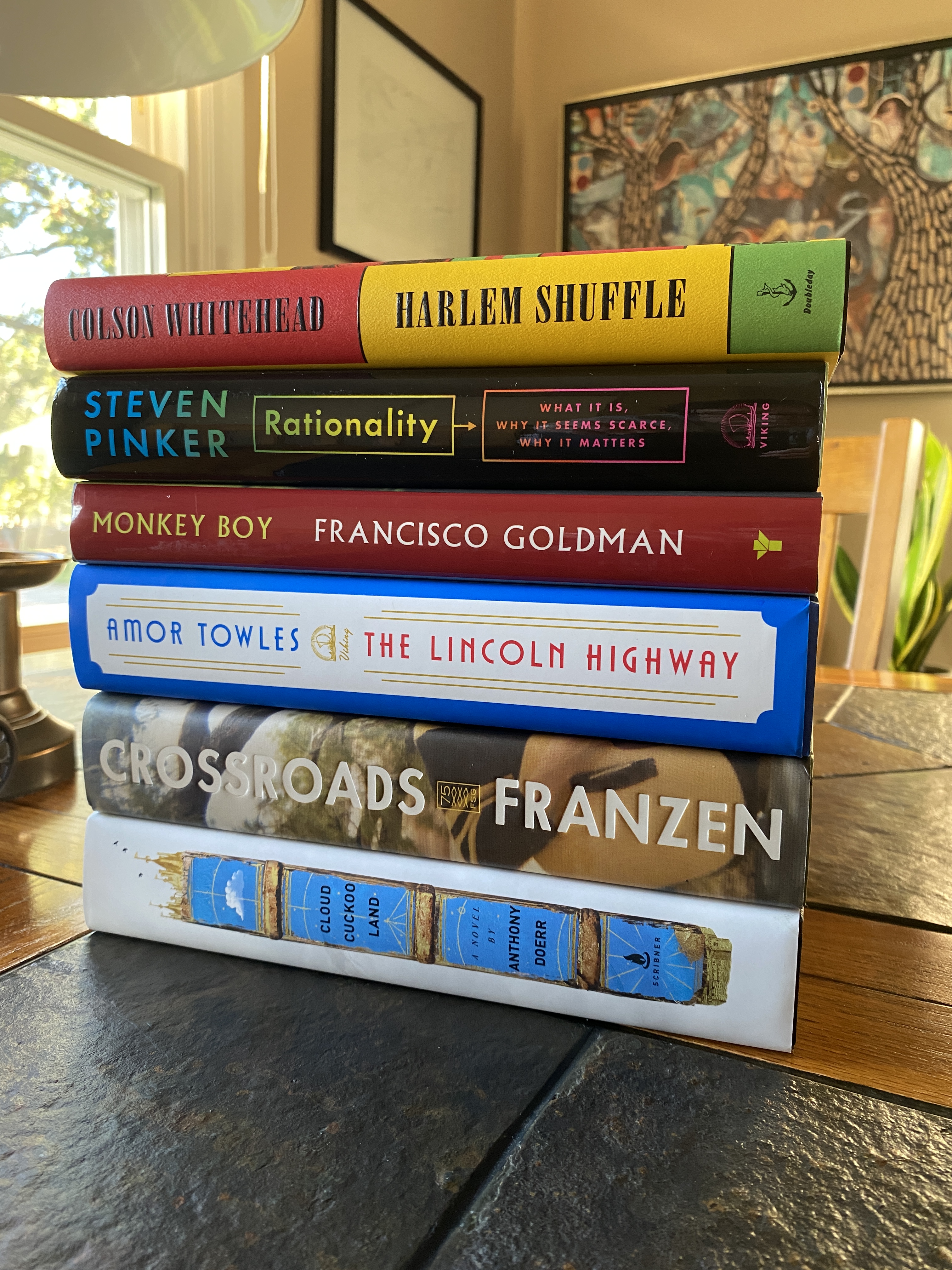
The “buy two, get a third free” sale had me at “Hello.” In other reading news, I am halfway through Inferno with 100 Days of Dante (it’s not too late to join), and Tolstoy Together has reached Day 32.

It began at 8:15 a.m. with a bit of shifting to make room for the books pictured above. The project then grew to include additional reorganizing, followed by dusting and vacuuming every shelf. I finally finished the project about thirty minutes ago. Now it’s time to catch up on some reading.
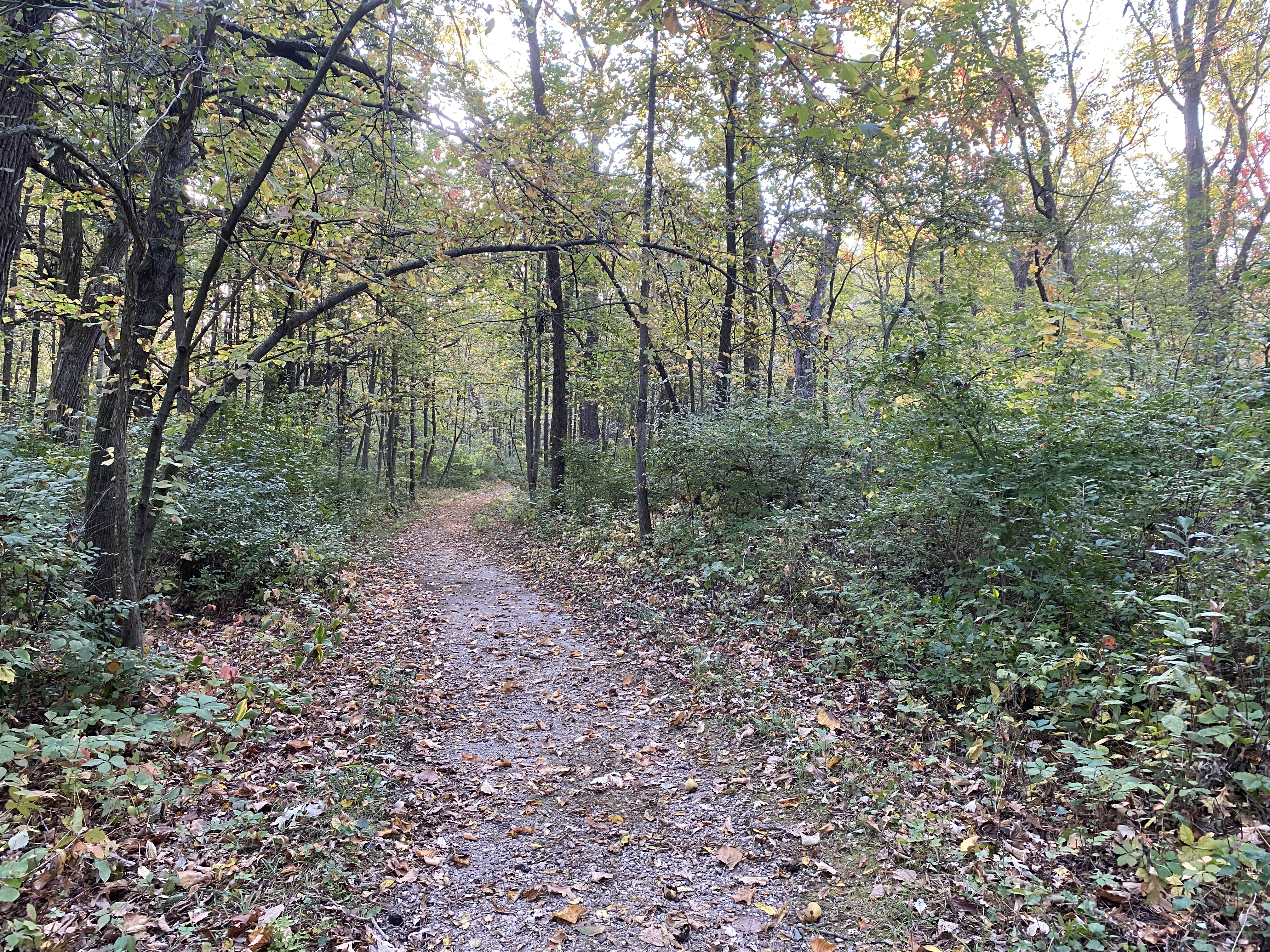
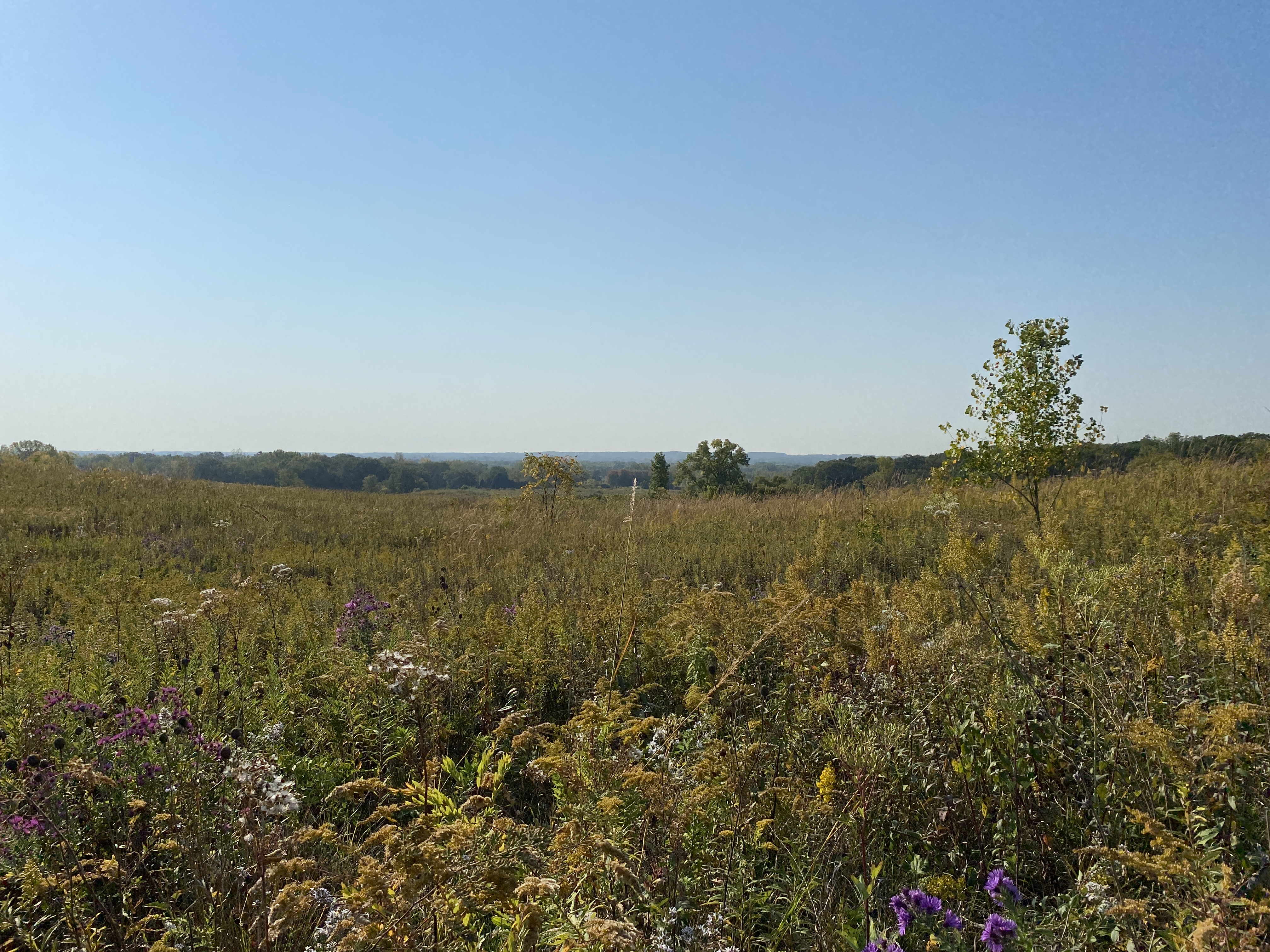
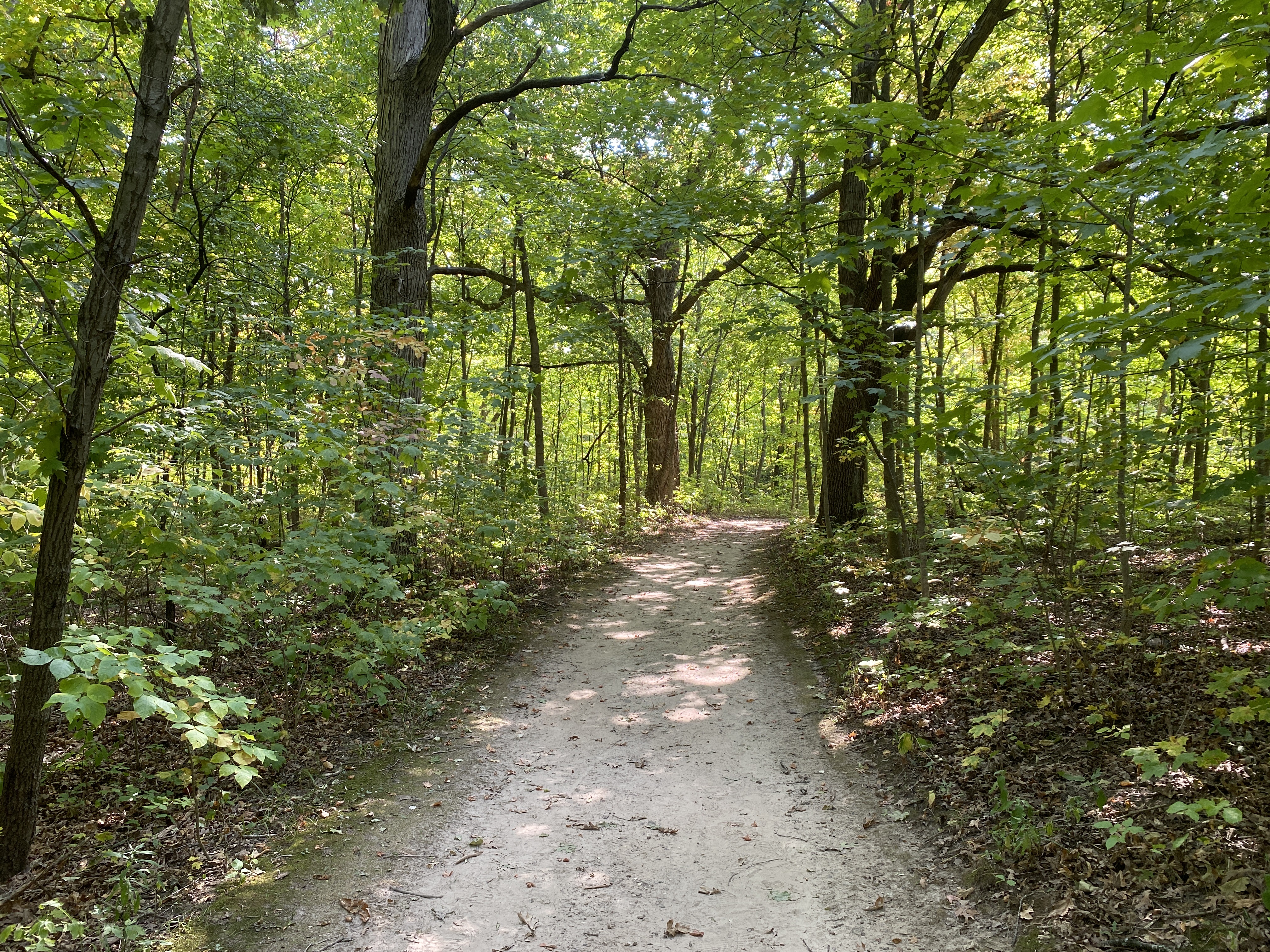
Earlier this month, we finished a geocache challenge we began [insert abashed head-shaking] 4.5 years ago. One morning, three sites, more than five miles of walking (1.2 of that on rugged terrain), and done. Finally. You bet we have proudly displayed our coin.
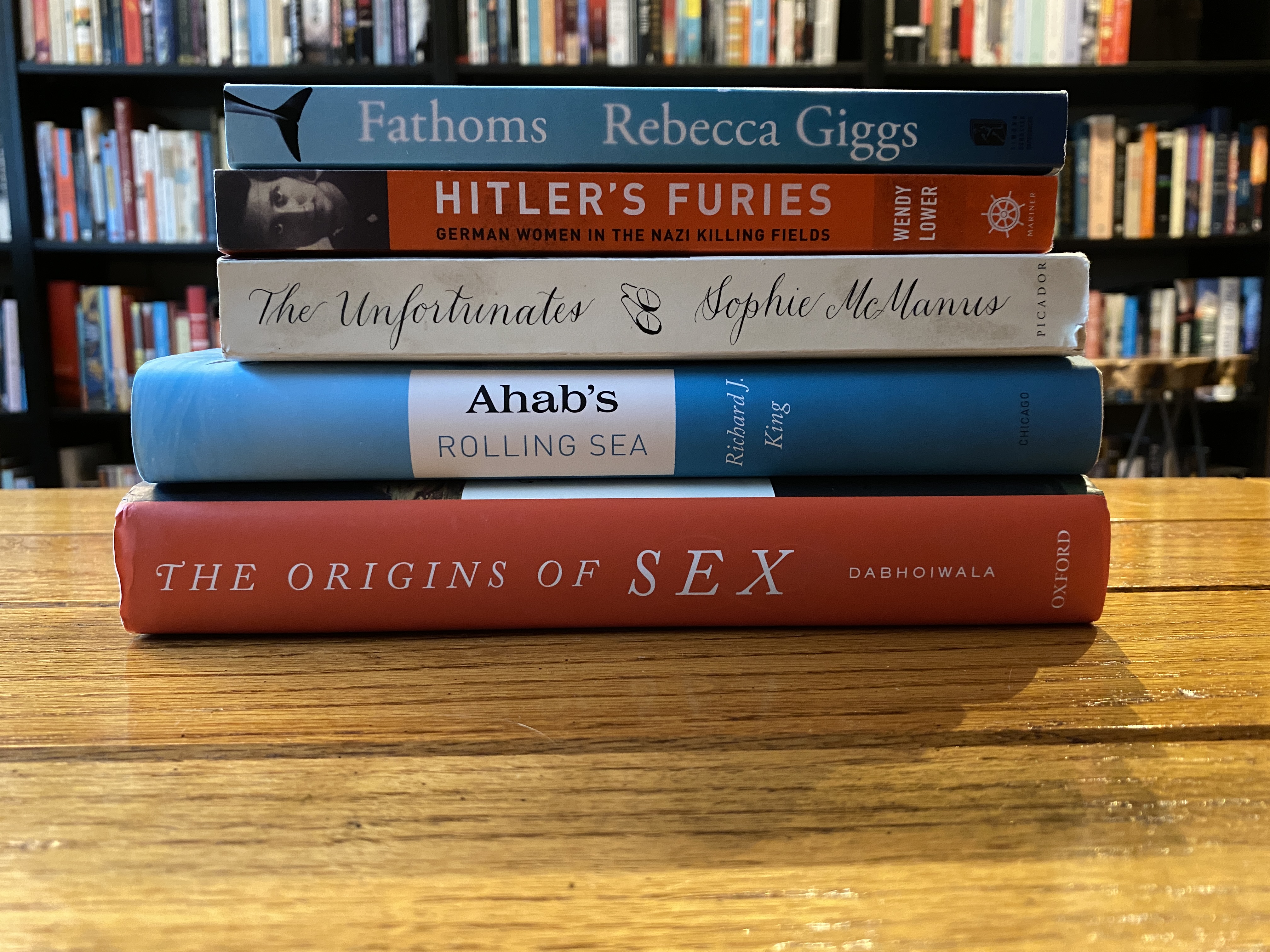
A few more to shelve.

It will be a bit before I get to these. As I mentioned, I’m happily rereading War and Peace with Tolstoy Together 2021, an effort slated to conclude December 8. The tutorial / book group program through which I read The Brothers Karamazov and reread Middlemarch is tackling Goethe’s Faust. Eight works stand between me and my goal to reread all of Shakespeare’s plays this year.
And so on.
I will get to the new books. Sooner or later.
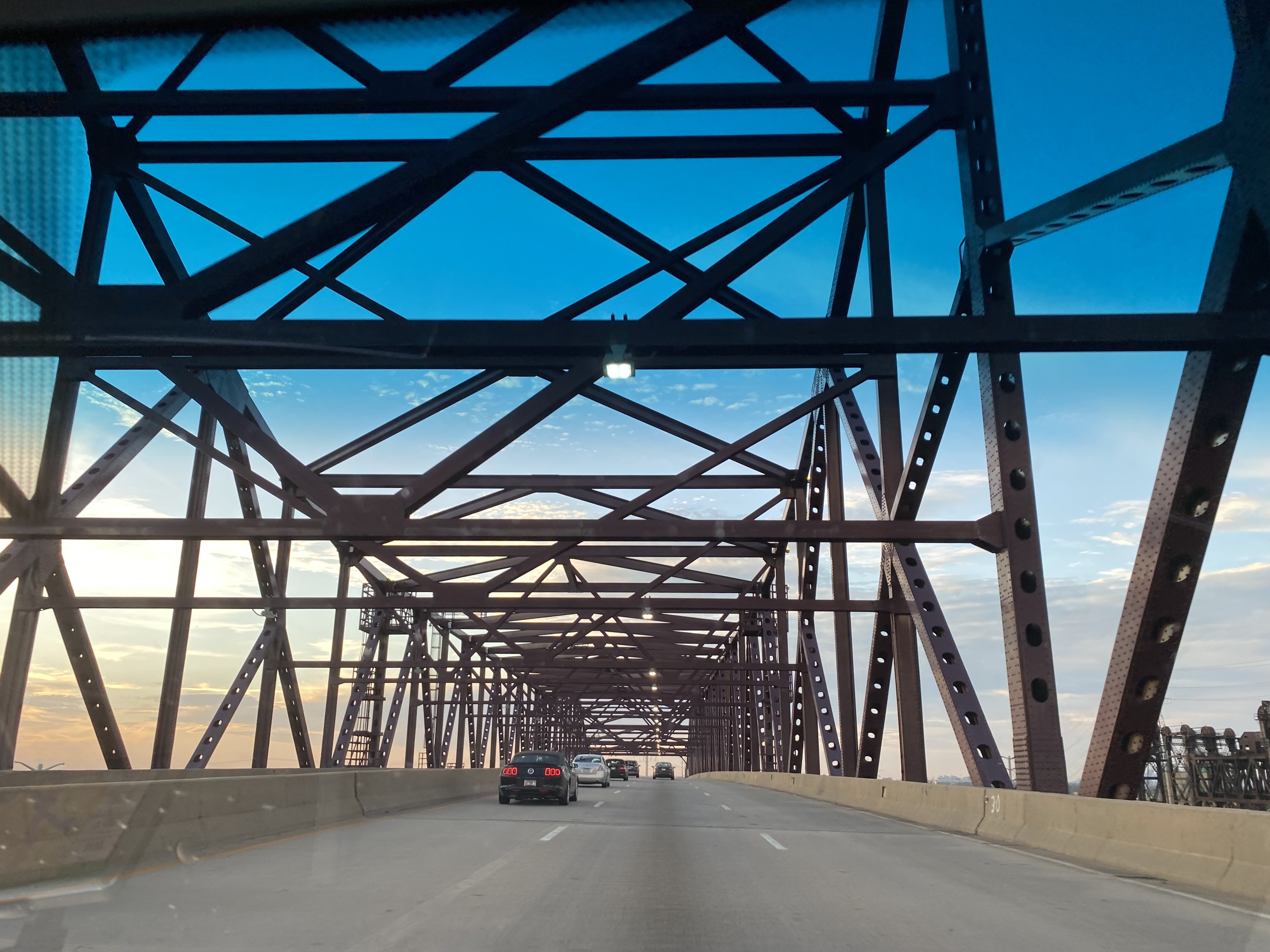
Always the Skyway. Even if the GPS says otherwise.
Louise Penny’s How the Light Gets In (2013) accompanied us on an unplanned but thoroughly delightful road trip to Michigan last weekend. Other books I’ve read since my last post:
■ The Debt Trap: How Student Loans Became a National Catastrophe (Josh Mitchell; 2021. Non-fiction.)
Related articles here and here.
■ Antony and Cleopatra (William Shakespeare; 1607. Drama.)
I understand and appreciate this play better with each rereading.
■ The House on Mango Street (Sandra Cisneros; 1984. Fiction.)
To celebrate Banned Books Week.
■ Chicago’s Great Fire: The Destruction and Resurrection of an Iconic American City (Carl Smith; 2020. Non-fiction.)
In advance of attending a Gilder Lehrman Book Breaks event.
■ The Undocumented Americans (Karla Cornejo Villavicencio; 2020. Non-fiction.)
In advance of attending a Chicago Humanities Festival event.

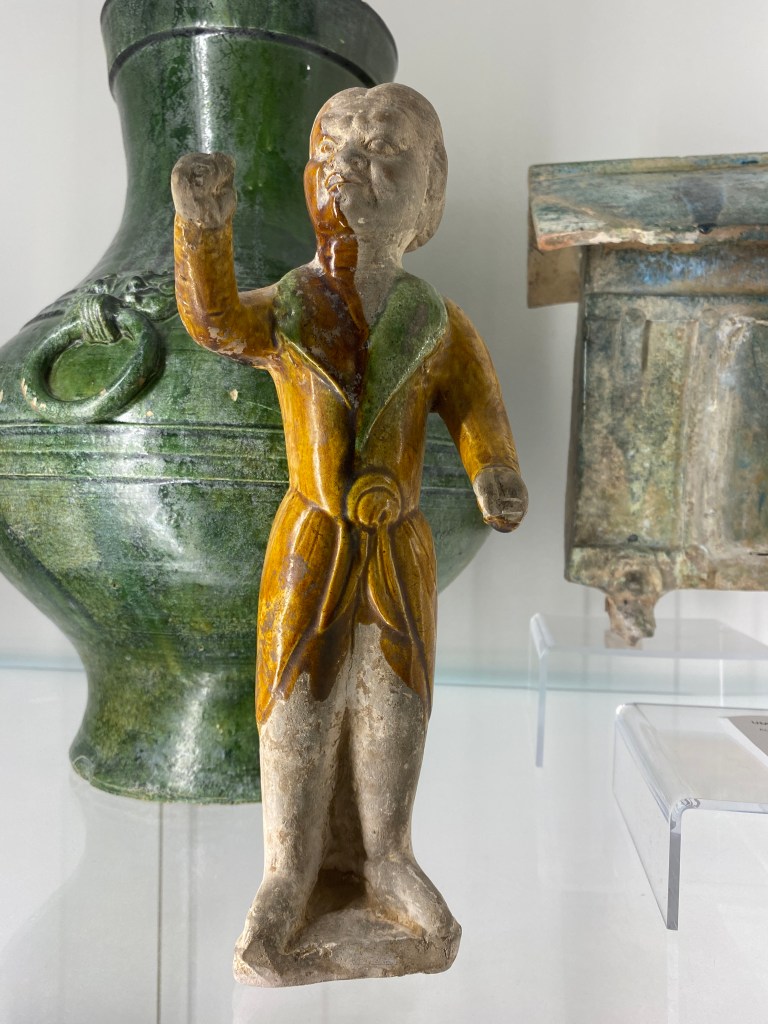
I have always been drawn to tomb figures.
Last week, I had an opportunity to revisit the Kelsey Museum of Archaeology and the University of Michigan Museum of Art. The book I chose for the drive there and back was The Beautiful Mystery (Louise Penny; 2012). When I returned home, I finished Migrations (Charlotte McConaghy; 2020), which I loved and particularly recommend to fans of Station Eleven (Emily St. John Mandel; 2014). Related review here.
Since my last annotated list I’ve finished both Othello (1603) and Timon of Athens (1606) as part of my goal to reread all of Shakespeare’s plays this year.
For a recent Chicago Humanities Festival program, I devoured The Taste of Sugar (Marisel Vega; 2020) in two sittings; and for The Readers Karamazov lineup of Middlemarch related texts, I read Clouds (Aristophanes (trans. I. Johnston); 423 B.C.), again relying on the wonderful Reading Greek Tragedy Online resource.
Four Thousand Weeks: Time Management for Mortals (Oliver Burkeman; 2021) yielded a number of passages for my commonplace book. (The title of this entry is taken from the introduction.) The premise? If we make it to eighty, we live for about four thousand weeks. How will we spend them? This book, writes Burkeman, “is an attempt […] to see if we can’t discover, or recover, some ways of thinking about time that do justice to our real situation: to the outrageous brevity and shimmering possibilities of our four thousand weeks.”
p. 64
In case this needs saying, it isn’t that a diagnosis of terminal illness, or a bereavement, or any other encounter with death is somehow good, or desirable, or “worth it.“ But such experiences, however wholly unwelcome, often appear to leave those who undergo them in a new and more honest relationship with time. The question is whether we might attain at least a little of that same outlook in the absence of the experience of agonizing loss.
p. 115
The trouble with being so emotionally invested in planning for the future, though, is that while it may occasionally prevent a catastrophe, the rest of the time it tends to exacerbate the very anxiety it was supposed to allay. The obsessive planner, essentially, is demanding certain reassurances from the future — but the future isn’t the sort of thing that can ever provide the reassurance he craves, for the obvious reason that it’s still in the future.
p. 116
[T]his underlying longing to turn the future into something dependable isn’t confined to compulsive planners. It’s present in anyone who worries about anything, whether or not they respond by devising elaborate timetables or hypercautious travel plans. Worry, at its core, is the repetitious experience of a mind attempting to generate a feeling of security about the future, failing, then trying again and again and again — as if the very effort of worrying might somehow help forestall disaster. The fuel behind worry, in other words, is the internal demand to know, in advance, that things will turn out fine….
p. 158
The derision we heap upon the avid stamp collector or train spotter might really be a kind of defense mechanism, to spare us from confronting the possibility that they are truly happy in a way that the rest of us — pursuing our telic lives, ceaselessly in search of future fulfillment — are not.
p. 159
There’s a second sense in which hobbies pose a challenge to our reigning culture of productivity and performance: it’s fine, and perhaps preferable, to be mediocre at them.

