

Walks in the woods

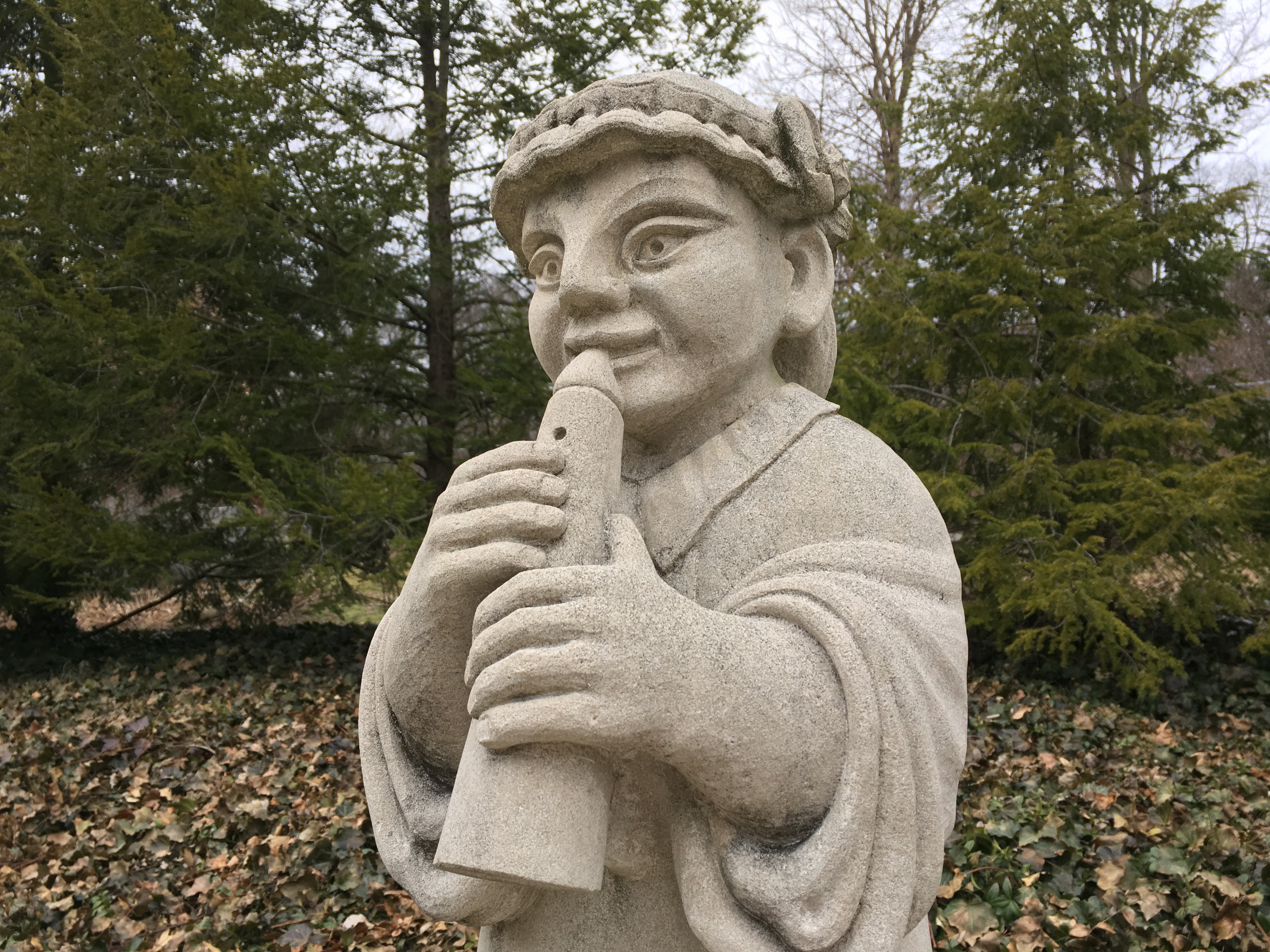


This image was taken ten years ago, nearly to the day.
From Harold Bloom’s Shakespeare: The Invention of the Human (1998):
Bardolatry, the worship of Shakespeare, ought to be even more a secular religion than it already is. The plays remain the outward limit of human achievement: aesthetically, cognitively, in certain ways morally, even spiritually. They abide beyond the end of the mind’s reach; we cannot catch up to them. Shakespeare will go on explaining us, in part because he invented us….
My immersion in the “Shakespeare in a Year” project prompted me to revisit old posts about introducing Shakespeare to younger readers. Of course, so much of what we did in our family-centered learning project brought me to Shakespeare. In other words, what works for young readers works for oldsters, too.
1. Begin early.
My daughters (now nineteen and twenty-one) met the bard in Kenneth Branagh’s Henry V (“O Kate! Nice customs curtsey to great kings”), but they fell in love with him (yes, at six and eight) during a Chicago Shakespeare Theater (CST) production of A Midsummer Night’s Dream.
A rappin’ Puck.
A show-stealing Bottom.
The grace and wonder of that stage.
The fact that the actors met the audience in the lobby.
They were hooked.
(Their older brother met and became hooked on Will during an earlier staging of the same CST production of Dream but didn’t fall in love until he watched Julius Caesar, with Jason Robbards as Brutus and Charlton Heston as Mark Antony. “Would he were fatter!”)
2. Provide an adequate introduction.
When the children were young, we would, prior to watching a live or filmed performance, read aloud from an abridgment (e.g., Charles and Mary Lamb, E. Nesbitt, Beverly Birch, Bruce Coville, Adam McKeown — the latter two being particular favorites). That gave us the basic plot and, often, the key subplots. As they grew older, they appreciated a more detailed synopsis of the play prior to watching. For this, we turned to Boyce’s Shakespeare A to Z; The Essential Reference to His Plays, His Poems, His Life and Times, and More.
3. Watch.
Shakespeare wrote plays, not novels; that is, his works were meant to be seen and heard, not read — at least not at first. While I prefer live theater, that’s more easily said than done for some folks, given travel, time, and/or budgetary considerations. In my experience, a well regarded film is preferable to an amateur-ish “Shakespeare in the Park” production. Bad theater, no matter how well intentioned, is just bad theater.
4. And watch again.
A different production. A live performance and a film. Two different films. Whatever arrangement works.
5. Read.
We read the unabridged play to the accompaniment of a quality audio production. The Arkangel recordings are excellent, but a few of our favorite audio productions include Naxos (King Lear, King Richard III, and The Tempest), Caedmon (Twelfth Night), and BBC Radio Presents (Hamlet).
6. Read closely.
Not younger students necessarily, but older students, yes. After reading / listening to the the play, dive in — deeply. Get in the text. Swim around. Read aloud to one another. Revisit passages that were memorable in performance. Review speeches that others have deemed noteworthy and discover why.
7. Keep a commonplace book.
We copy passages that “speak” to us and share our entries. How fascinating to see what someone else deems worthy of preservation.
8. Supplement and discuss.
Don’t overdo this with younger students, but take it as far as ability and interest allow with older and/or advanced students. A few oft-consulted resources:
■ Asimov, Isaac. Asimov’s Guide to Shakespeare (Volumes One and Two).
■ Bloom, Harold. Shakespeare: The Invention of the Human.
■ Boyce, Charles. Shakespeare A to Z; The Essential Reference to His Plays, His Poems, His Life and Times, and More.
■ Epstein, Norrie. The Friendly Shakespeare: A Thoroughly Painless Guide to the Best of the Bard.
■ Goddard, Harold C. The Meaning of Shakespeare (Volumes One and Two).
■ Lomonico, Michael. The Shakespeare Book of Lists.
■ O’Toole, Fintan. Shakespeare Is Hard, But So Is Life.
■ Saccio, Peter. Shakespeare: Comedies, Histories, and Tragedies (The Teaching Company).
■ –. Shakespeare. The Word and the Action. (The Teaching Company.)
9. Review, revisit, reread.
Return to the plays again and again. And again. You will discover something new on every viewing and every reading.
10. Memorize.
For most plays, I asked my students to choose a passage for memorization, but we have memorized wide swaths of Shakespeare over the last decade simply through repeated viewings and readings / “listenings.” Obviously, too, the nature of a family-centered learning project (as opposed to a more conventional learning environment) allows for many, many everyday conversations that are colored by bardolatry. What we use, we own. It’s really that simple.
11. Enjoy! Don’t be afraid to have fun!
My daughters were onto something all those years ago, when their Ken nodded to Barbie and assured her that nice customs curtsey to great kings. Using Barbies or Little Ponies or puppets or whatever to illustrate plot twists or illuminate intent… well, that’s just child-like genius at work. Harness it to help your young viewers understand the intricacies of A Midsummer Night’s Dream or the intrigue of Hamlet. My daughters also illustrated the works, another way to come to grips with the plays and to make them their own. Even as they grew older, they continued to find value in marrying their love of art and their love of Shakespeare.

Four shelves of Shakespeare.
■ The Taming of the Shrew
■ The Two Gentlemen of Verona
■ Henry VI, Part 1
■ Henry VI, Part 2
■ Henry VI, Part 3
■ Richard III
Because the Shakespeare Project of Chicago presented King John (a play for our time, to be sure) in January, I have also read that. Why am I off schedule? Early voting for the consolidated primary begins next week. This, coupled with my other pursuits, requires that I work ahead to keep up.
To complement my reading, I chose Tony Tanner’s Prefaces to Shakespeare. Garber, Bloom, and Van Doren were well exercised during our home education years, so it was time to turn to another resource. That said, I may supplement with a rerun of the Saccio lectures. For the sonnets, I am using Don Paterson’s Reading Shakespeare’s Sonnets and the app that features the filmed performances coupled with Paterson’s comments. (By the way, I purchased the Tanner seven years ago. It has given all of the stockpiled companions around the house hope: “Maybe she will read me next!” Heh, heh, heh.)
The plays
Going forward, I will try to be more methodical about my notes. As I recall, my remarks about Taming centered on how I would direct the final act as if Kate were complicit in the wager. I’ve written about my experience of Gentlemen a few times, including here; my reread was swift. The Henry VI plays were not tedious for me (some find them so) because I read them last year to prepare for the Chicago Shakespeare Theater’s Tug of War. (Foreign Fire and Civil Strife covered three plays each: Edward III, Henry V, and Henry VI, Part 1; and Henry VI, Parts 2 and 3, and Richard III. Yes, three plays, one meal, two snacks per event. It. Was. Awesome.) The “read a synopsis or retelling / watch a(t least one) production / listen to an unabridged recording with text in hand / dig into additional resources” approach works well for me, and this go-around, I watched The Hollow Crown, Cycle 2, and read the plays while listening to the Arkangel productions. Margaret interests me greatly; what a role that would be!
Richard III more naturally follows the Henry VI plays than Titus Andronicus (the next play on the plan), so I reread Richard III first. In addition to the CST production in the fall, we saw the Gift Theatre production of Richard III at the Steppenwolf last year. Wow. What a mesmerizing performance. Yes, he rose from his wheelchair and encircled Anne with his walker. Brilliant. (Review here.) Over the weekend, I also watched Benedict Cumberbatch as Richard in The Hollow Crown, Cycle 2. Maybe it was Richard III overload (or Benedict Cumberbatch overload, for that matter), but his Richard lacked the dark wit that usually makes the character such a delicious role.
Speaking of delicious, ahem… ‘gainst my wont, I have begun reading Titus Andronicus, one of the few plays I have not already read and studied, before seeing a production. Amazon Video had nothing, nor was there anything on our shelves, so I await word on my library holds. Spoiler alert: As many folks know, Titus Andronicus is a horror show of a play. Even if you choose to reconcile the violence as purposeful camp, it’s still rough going, especially if, like me, you use the Arkangel recording to complement your reading. You’ve been warned.
The sonnets
It is a reflection of my limitations, obviously, and not the poet’s, but the sonnets, with one exception, hold little appeal for me. The exception is Sonnet 74, which was sent to me with the note:
Below is Shakespeare’s Sonnet 74, where the poet addresses his beloved, advising that his spirit will live on after his death in what he leaves behind (his poem) and his spirit in his beloved’s heart. Bold emphasis is mine.
But be contented: when that fell arrest
Without all bail shall carry me away,
My life hath in this line some interest,
Which for memorial still with thee shall stay.
When thou reviewest this, thou dost review
The very part was consecrate to thee:
The earth can have but earth, which is his due;
My spirit is thine, the better part of me:
So then thou hast but lost the dregs of life,
The prey of worms, my body being dead,
The coward conquest of a wretch’s knife,
Too base of thee to be remembered.
The worth of that is that which it contains,
And that is this, and this with thee remains.
This reminds me to make the following commonplace book entry from King John:
CARDINAL PANDULPH
You hold too heinous a respect of grief.
CONSTANCE
He talks to me that never had a son.
KING PHILIP
You are as fond of grief as of your child.
CONSTANCE
Grief fills the room up of my absent child,
Lies in his bed, walks up and down with me,
Puts on his pretty looks, repeats his words,
Remembers me of all his gracious parts,
Stuffs out his vacant garments with his form;
Then, have I reason to be fond of grief?
Fare you well: had you such a loss as I,
I could give better comfort than you do.
Yes, I have mentally SCREAMED this:
[S]He talks to me that never had a son.
And this:
Fare you well: had you such a loss as I,
I could give better comfort than you do.
…
Once I finish Titus Andronicus, I will use the rest of this week’s Shakespeare time to read through Sonnet 27.
The long poems
Which leaves Venus and Adonis. While tame by today’s standards, this is certainly naughty Shakespeare. Chuckle. According to my husband, this poem merits my eyebrow face — when my eyebrows rise so high, they all but disappear. My reading / listening, though, has been a powerful reminder that so much of human narrative — perhaps especially Shakespeare — is meant to be heard. I blame the Q Brothers for this, but my imagination’s ear *totally* heard an ad-rap-tation of the poem! My goal, in addition to Sonnets 19 through 27, is to read through Line 576 this week.

Image taken February 4, 2017.
From Anna Botsford Comstock’s Handbook of Nature Study:
In my belief, there are two and only two occupations for Saturday afternoon or forenoon for a teacher. One is to be out-of-doors and the other is to lie in bed, and the first is best. Out in this, God’s beautiful world, there is everything waiting to heal lacerated nerves, to strengthen tired muscles, to please and content the soul that is torn to shreds with duty and care.
Winter at the sites we most enjoy can be stark, but even in the gray hardness, cold beauty is evident. That said, it is difficult for this trail to compete with its autumn afternoon finery.

Same trail on October 2, 2015.
![IMG_5201[1]](https://nerdishly.com/wp-content/uploads/2015/10/img_52011.jpg)
 The Book of Joseph, a biographical play based on correspondence collected in Every Day Lasts a Year, runs through March 5 at the Chicago Shakespeare Theater.
From Stuart Sherman’s “A Scholar’s Perspective: Here?”:
The story told in The Book of Joseph is simple, true, and fraught with loss. In Kraków, Poland, 1939, Joseph Hollander — Jewish, enterprising, and alert to the approaching storm of hate and death — arranges a swift departure to safer places for himself and his large, loved family: mother, sisters, in-laws, nieces. But they decline to leave, calmly convinced that (to echo a novel published three years earlier an ocean away) it can’t happen here. Only Joseph knows it can. They stay; he leaves, intent on securing their escape somewhere down the line.
Then there’s a second story, without which we would have far less access to the first. Baltimore, Maryland, 1986: in the wake of Joseph’s death, his adoring grown son Richard finds a briefcase full of letters postmarked from Poland, stamped with swastikas, dating from the early 1940s, written by the Hollanders, under deepening duress, to the their cherished, distant son, now dwelling precariously in America and still trying like hell to get them out.
Entwining these two stories, from the middle and the end of the twentieth century, The Book of Joseph documents the Hollander family’s wholeness and its sunderings.
Our family shares a great enthusiasm for talk, talk, talking about what we read, see, do, think. This, coupled with my mental quilting — stitching this experience to that book to this film to that exhibition, and so on — is how I learn (and how I learn how much remains to be learned). So, on the long drive from Chicago, my husband and I discussed The Book of Joseph. The second act, which, I pointed out, propelled the material from quite good to must-see, focuses on who will tell the — “Who lives? Who dies? Who tells your story?” I offered. My husband acknowledged the Hamilton reference. The Book of Joseph is a Holocaust story, but it is a family story first. What parts of their narrative will survive? Who will remain to tell their story? How will it be told? Will it be told?
This play deserves a wide and appreciative audience. Reviews here and here, and I heartily agree with Chris Jones: Sean Fortunato, gives “the performance of his professional life” as Joseph Hollander.
Speaking of mental quilting, by the way, before I saw her name, I recognized Amy Carle’s face: She read the female lead in The Hill You Die On. Her Neve roams the rooms of my imagination still. (I’ve republished my entry from that evening here.)
The following was published on my original site on November 15, 2011.
Last night was the reading of Sheila O’Malley’s play, The Hill You Die On.
No traces of the play that had closed the night before were apparent in the small theater space where the reading was held. All that remained was bare, black, blank.
Expectant.
Two chairs and two stands on a platform. Another chair and stand off to the side.
The audience entered, greeted, rustled, embraced, connected, acknowledged, made room for, settled.
Introductions.
And then a relationship unfolded.
And I was reminded all over again that what happens to each of us is both unique and universal. The story is ours alone, but it has all been told before, hasn’t it? The coming together. And apart. The tenderness and sorrow. The beginning and the inevitable conclusion.
If you have heeded my recommendations over the years, if you have bookmarked The Sheila Variations or added the site to your feed or done whatever you need to do to ensure that you’re keeping up with her, you already know that she can, vernacularly speaking, write her ass off. The Hill You Die On is simply further evidence of her gifts.
Humor punctuates the first half of the play; Sheila’s dialogue reminds us that laughter comes easily early in a relationship. Wit has a different sound when it ends, though, doesn’t it, and she captures that, too. Most importantly, she captures the truth of it all – the honesty that is both tender and devastating.
A quiet moment all but undid me: Jack explains to Neve why he reads obituaries. Over the past year, I’ve perfected the art of the silent sob, so I don’t think I distracted anyone with my reaction to that beautifully written, perfectly delivered scene.
And the conclusion… well, I don’t think I was alone in my response to that.
Jeff Christian portrayed Jack. As I have mentioned, Jeff was the artistic director for the Shakespeare Project of Chicago (SPC), which played an important role in fostering my son’s (and my own, for that matter) love of Shakespeare. I had a moment after the play to tell Jeff how much I appreciated not only his wonderful performance but also his work with the Project. Damned if he didn’t ask me which plays we had seen. The Winter’s Tale, which we saw in February 2005, immediately came to mind, as did The Merchant of Venice from the 2003-2004 season, but for the life of me I could not remember Two Gentlemen of Verona, from that same season. “Uhhh….” It came to me as we were driving home. Of course. Well, we introverts don’t score high on small talk, do we? (More, let’s face it: Two Gentleman of Verona is not exactly one of Shakespeare’s great ones.) Still, once I learned that he was going to play Jack, I determined that he must know how important his work with SPC had been to us – and that meant talking to him. So I tried.
And Amy Carle portrayed, no, became Neve. Had I simply read the character, I would have loved her, but Amy Carle’s performance ensured that Neve will roam the rooms of my imagination for a long time. Beautifully, beautifully done.
The reading was followed by a discussion with Sheila and the director, Mitchell Fain (who also deserves a shout-out, as does the person who read the stage directions, which required impeccable timing – and he had it; regrettably, I don’t have his name). If all that I’ve already written hasn’t persuaded you that the play was absolutely terrific, then this confession may: Following many articulate audience responses to everything from scene changes to cultural references to character, I spoke. Pretty animatedly, in fact. Ayup. Deeply moved and likely inspired by the play’s frank language, I attempted to describe what, to me, was Jack’s emotionally brutish behavior during the “scorched earth” argument and in the penultimate scene.
And I did so in the most unflattering terms.
A slang word was involved.
Twice.
It will haunt me for weeks. [Note: Five and half years later, it haunts me.]
Couple that episode with my sincere but inept conversation with Jeff, and, well, there you go. The introvert’s worst nightmare.
Don’t worry, though. I’ll get over it.
Heh, heh, heh.
Sheila, thank you. Your characters, their relationship, your way with words, the wisdom and humor you revealed, the truths you told — all of it moved me, made me think, made me feel, made me hope to understand. Thank you. And congratulations!
 The Tepper seems like an apt follow-up to The Handmaid’s Tale. Stevenson’s Just Mercy is a quick but inspiring read. As for the rest, Volume 4 of Letter 4 was just released, and the other titles represent my current non-fiction bent.

I Will Bear Witness: A Diary of the Nazi Years 1933-1941 (Victor Klemperer)