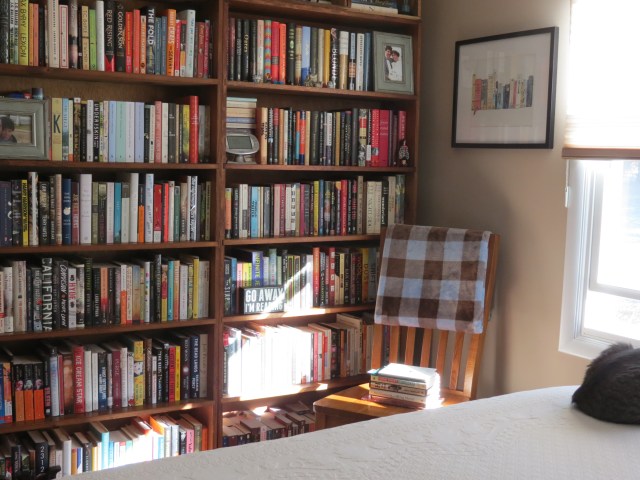
From the opening of Michael Robbins’ article “In defense of book collecting” (Chicago Tribune, June 26):
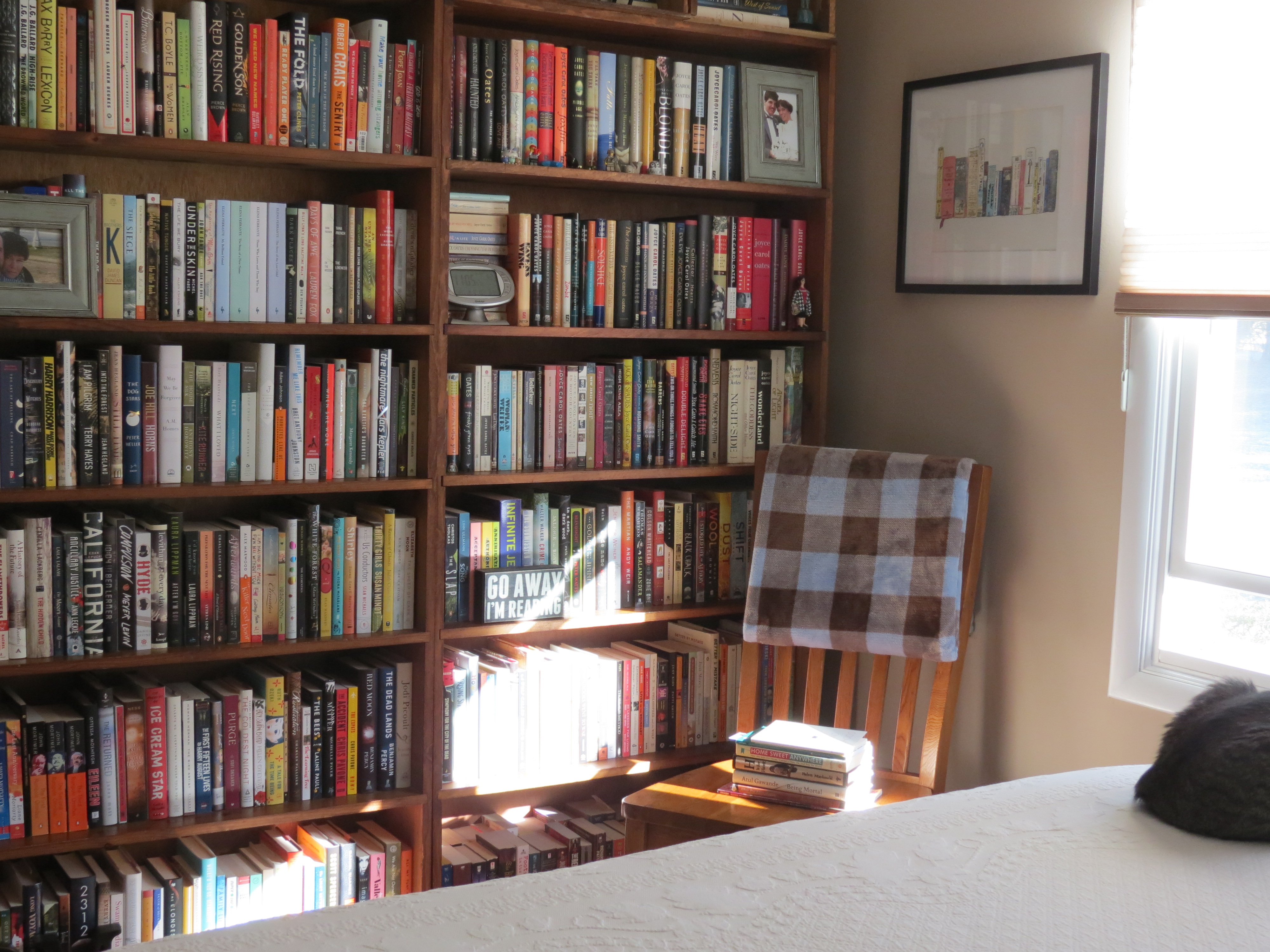
As of this writing there are 1,790 books in my apartment, some couple hundred in my campus office, and an unknown number floating about on loan to various friends and students. This represents a decrease of probably 20 percent from the height of my mania. Over the past few years, I have embarked on culling operations, boxing up hundreds of books and carting them to used bookstores. Spilling off shelves, piled in tottering stacks on every flat surface and a few angular ones, the books are snowing me under.
He had me at “Hello,” of course, but this bit slayed me:
Even after my latest and severest cull, I own three translations of “War and Peace,” a book I read about 150 pages of in high school and never opened again. “Some day!” the sirens sing to the book collector.
In his December 17, 2008 column for the Sun-Times, Neil Steinberg described reading War and Peace aloud to his son:
I am currently reading War and Peace, out loud to my older son, and we’re both loving it, not because it gives us something to brag about, but because it’s great. When Tolstoy describes a horse, it’s like an actual horse canters into the room, twitching and snorting. When Natasha jumps into her mother’s bed to tell the old countess about Prince Andrei, it could be any 16-year-old girl gushing about her dreamboat. It’s real.
When I first shared the link to that piece, I confessed to having acquired three translations of the tome:
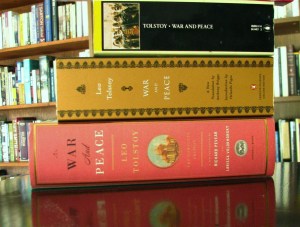 1. Translated by Rosemary Edmonds; acquired in 1991
2. Translated by Anthony Briggs; acquired in February 2007
3. Translated by Richard Pevear and Larissa Volokhonsky; acquired in December 2007
Eight years, a move, and several culling operations later, I still have the Briggs and the Pevear/Volokhonsky, and, as Robbins suggests, the sirens still sing “Some day!’ to this book collector. At nearly seven thousand volumes, my collection has decreased about thirty-five percent since the height of my mania. Our move to the forever home resulted in the greatest cull, to date: It was the one in which the Edmonds translation was released. In the next major cull in 2014, I jettisoned more than ninety percent of the remaining home education materials and all but the treasured volumes in the children’s literature collection. Although I was once interested in YA trends, the genre has lost most of its appeal, which resulted in a mini-cull late last year and will likely result in another in the fall. And some books are now released soon after being read — for example, my “beach books.”
“You live in a library!” the mail carrier admired as he handed me another stack of deliveries. Well, yes. Sort of. It’s actually more of an antilibrary, though, as more than half of its contents are books I haven’t yet read. This once embarrassed me. Now it alternately enlivens and frightens me. From early in Nassim Nicholas Taleb’s The Black Swan: The Impact of the Highly Improbable:
The writer Umberto Eco belongs to that small class of scholars who are encyclopedic, insightful, and nondull. He is the owner of a large personal library (containing thirty thousand books), and separates visitors into two categories: those who react with “Wow! Signore professore dottore Eco, what a library you have! How many of these books have you read?” and the others — a very small minority — who get the point that a private library is not an ego-boosting appendage but a research tool. Read books are far less valuable than unread ones. The library should contain as much of what you do not know as your financial means, mortgage rates, and the currently tight real-estate market allows you to put there. You will accumulate more knowledge and more books as you grow older, and the growing number of unread books on the shelves will look at you menacingly. Indeed, the more you know, the larger the rows of unread books. Let us call this collection of unread books an antilibrary.
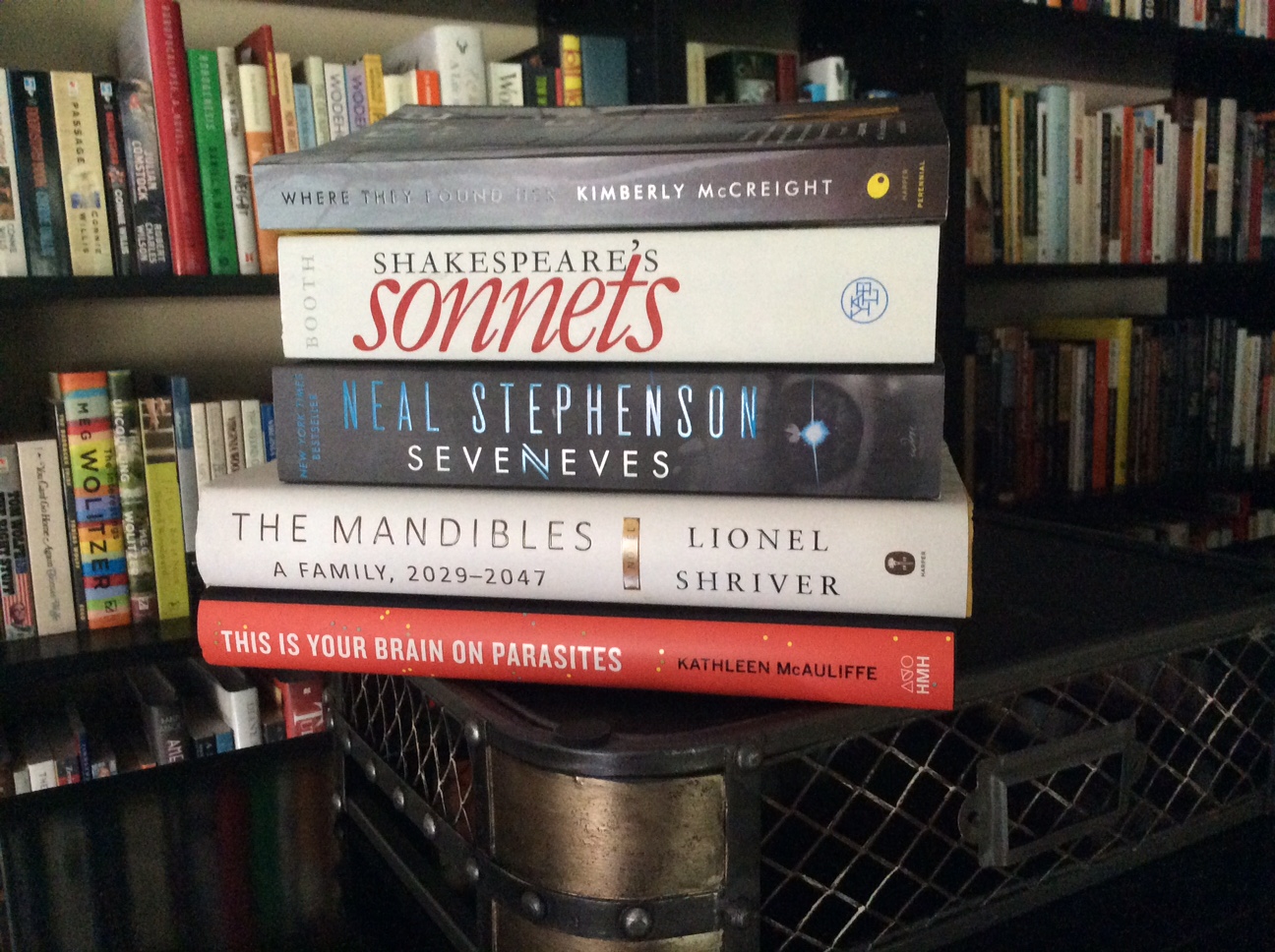
All of this book talk reminds me of another bit from Lionel Shriver’s The Mandibles:
The Stackhouses had also banished the busy clunk of books that cluttered all three stories of her parents’ jumbled brick house in Carroll Gardens. Nothing betrayed you as a fuddy-duddy like parallels of shabby spines junking up the walls. Once you’d read a book, why retain it in three dimensions, save as a form of boasting? Now that you could balance the Library of Congress on your fingertip, dragging countless cartons of these spent objects from home to home was like moving with your eggshells.
And that reminds me of our move from Southern California to Chicago just before Christmas 1993. The movers were delayed twice and were rough with our belongings once they arrived in the city. Among other offenses, they tore our mattress, chipped two bookcases and a chest of drawers, and bent the handle of our new refrigerator. When they were finally, finally gone, we began unpacking in the kitchen. In the second box we found, carefully wrapped in paper towel and bubble wrap, the eggshells from the muffins I was making when the movers arrived to pack up our home two weeks earlier.


![IMG_6775[1]](https://nerdishly.com/wp-content/uploads/2016/07/img_67751.jpg)




 Nerdishly