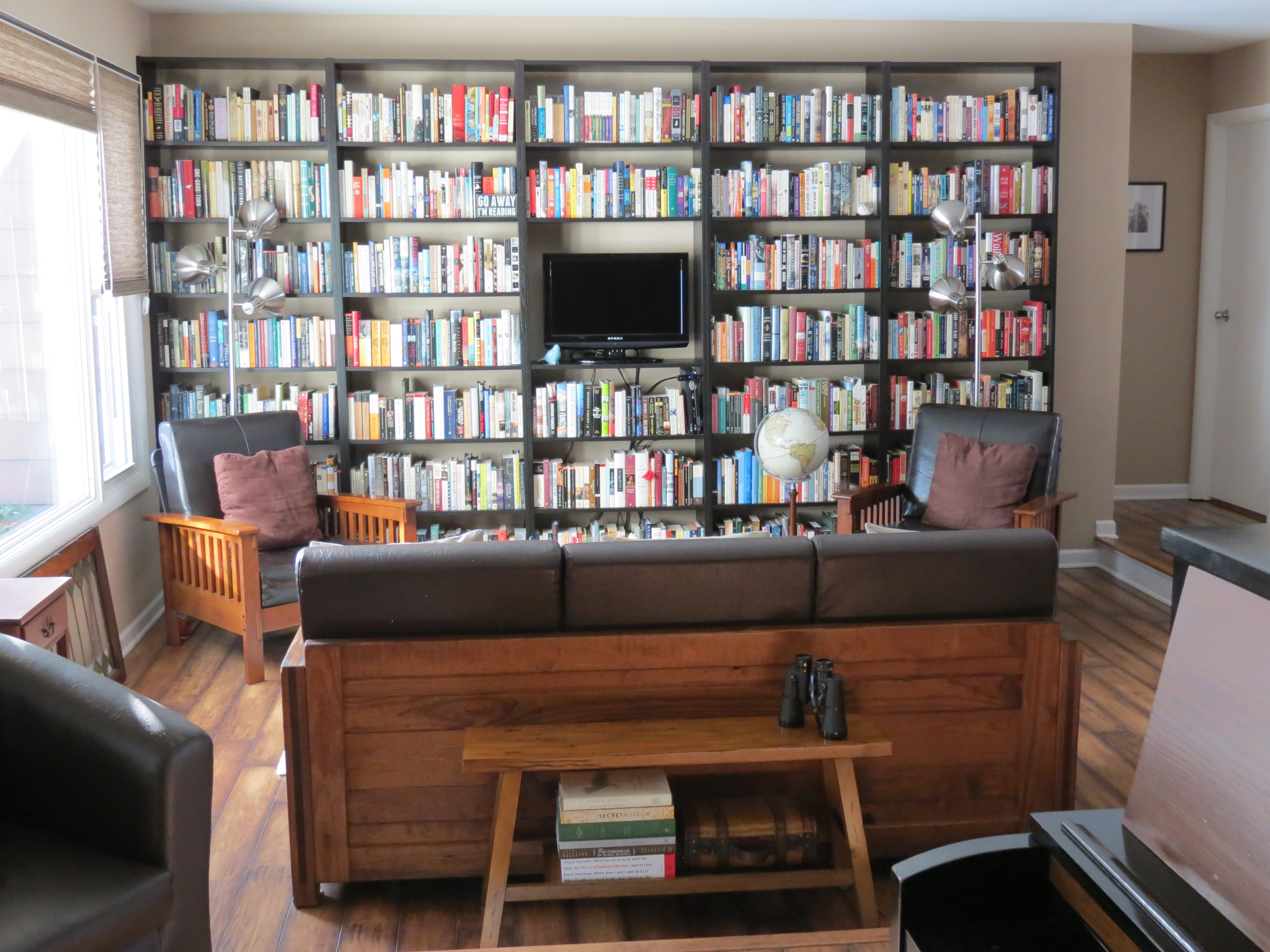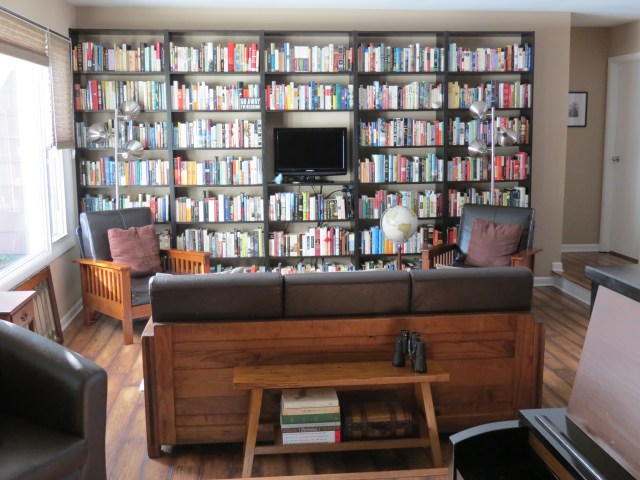
My chief reading goal for 2015 was to read from the shelves of my home library. Although I’ve certainly reduced my, ahem, acquisition habit, I have much room for improvement. Enough said.
I completed 137 books this year. The complete list can be found here. I actually read many, many more (I am an unrepentantly promiscuous reader, bouncing from one book to another, leaving a trail of only just begun, unfinished, and nearly finished books in my wake), but I have listed only books read cover-to-cover. Of those 137 books, 57 were novels (excluding graphic works), nine were plays, 30 were non-fiction titles (again, excluding graphic works), and 41 were graphic works – three of which were non-fiction.
Best Fiction Read in 2015:
■ Did You Ever Have a Family (Bill Clegg; 2015. 304 pages. Fiction.)
■ The Other Side of the Mountain (Michel Bernanos; 1967 (2007 edition). 116 pages. Fiction.)
■ Hermine (Maria Beig; 1984 (2004 translation). 186 pages. Fiction.)
■ Fates and Furies (Lauren Groff; 2015. 400 pages. Fiction.)
■ The One and Only Ivan (Katherine Applegate; 2012. 336 pages. Fiction.)
■ My Wish List (Gregoire Delacourt; 2014. 176 pages. Fiction.)
■ Passing (Nella Larsen; 1929 (2003). 160 pages. Fiction.)
■ The Expendable Man (Dorothy B. Hughes; 1963 (2012). 264 pages. Fiction.)
Honorable Mention in Fiction:
■ The Strange Case of Dr. Jekyll and Mr. Hyde (Robert Louis Stevenson; 1884 (2012). 144 pages. Fiction.)
■ Private Peaceful (Michael Morpurgo; 2003. 202 pages. Fiction.)
■ The Water Knife (Paolo Bacigalupi; 2015. 384 pages. Fiction.)
■ The Subprimes (Karl Taro Greenfeld; 2015. 320 pages. Fiction.)
Best Play Read in 2015:
■ Marjorie Prime (Jordan Harrison; 2013. Drama.)
Best Non-fiction Read in 2015:
■ Being Mortal: Medicine and What Matters in the End (Atul Gawande; 2014. 304 pages. Non-fiction.)
■ Somewhere Towards the End: A Memoir (Diane Athill; 2009. 192 pages. Non-fiction.)
Honorable Mention in Non-fiction:
■ The Psychopath Test (Jon Ronson; 2011. 288 pages. Non-fiction.)
■ So You’ve Been Publicly Shamed (Jon Ronson; 2015. 304 pages. Non-fiction.)
Best Graphic Work Read in 2015:
■ The Collected Essex County (Jeff Lemire; 2009. 512 pages. Graphic Fiction.)
Honorable mention in Graphic Work:
■ Killing and Dying (Adrian Tomine; 2015. 160 pages. Graphic Fiction.)
Random comments:
● Naked Statistics: Stripping the Dread from the Data was certainly a book far afield of my usual choices. This book was really quite terrific, though – informative, accessible, and interesting. Charles Wheelan’s gift is presenting difficult material in a “sticky” manner: Long after I had read Naked Statistics, I remembered concepts and examples.
● Quite simply, Maria Beig’s 1984 novel Hermine is perfect.
From page 154:
Earlier, years earlier, she had tried to tell that kind of story, to explain that kind of experience to other people and herself. In the best cases she had reaped incomprehension for her trouble, more usually disapproval, ridicule most often of all. Inside of her she had a secret chamber for such things. What had happened to her today was already within, and the door shut tight.
● It is said that each of us experiences grief differently. Agreed. No judgment. Let’s just say that I had thought Roger Rosenblatt (Kayak Morning: Reflections on Love, Grief, and Small Boats) and I would have more in common than we actually do.
● I would like to recommend that any reader who has decided graphic works are not for her must read one or both of the following two books:
■ The Collected Essex County (Jeff Lemire; 2009. 512 pages. Graphic Fiction.)
■ Killing and Dying (Adrian Tomine; 2015. 160 pages. Graphic Fiction.)
Folks who already appreciate graphic works but missed these two titles are also urged to add them to their library holds.