Progress

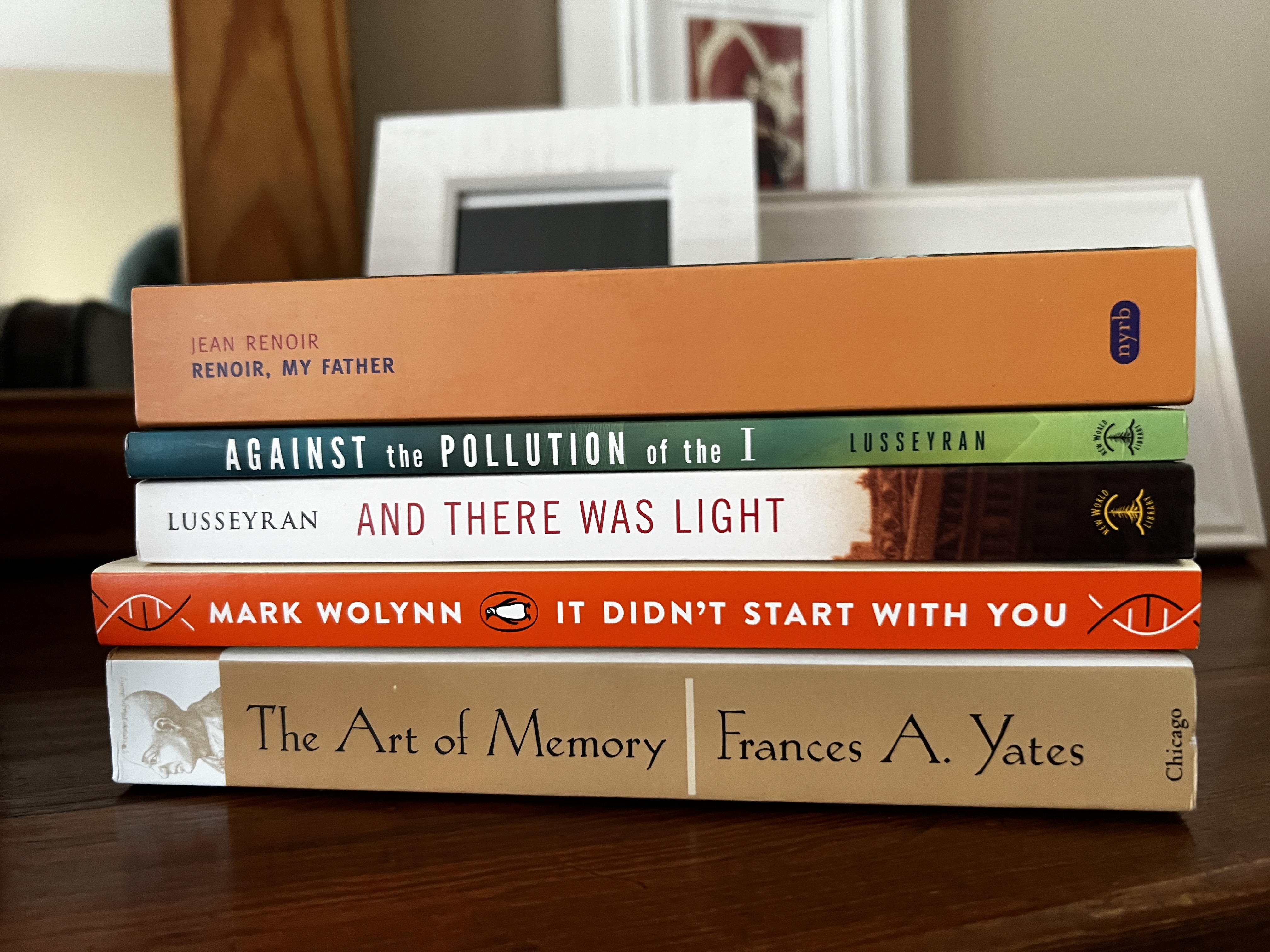
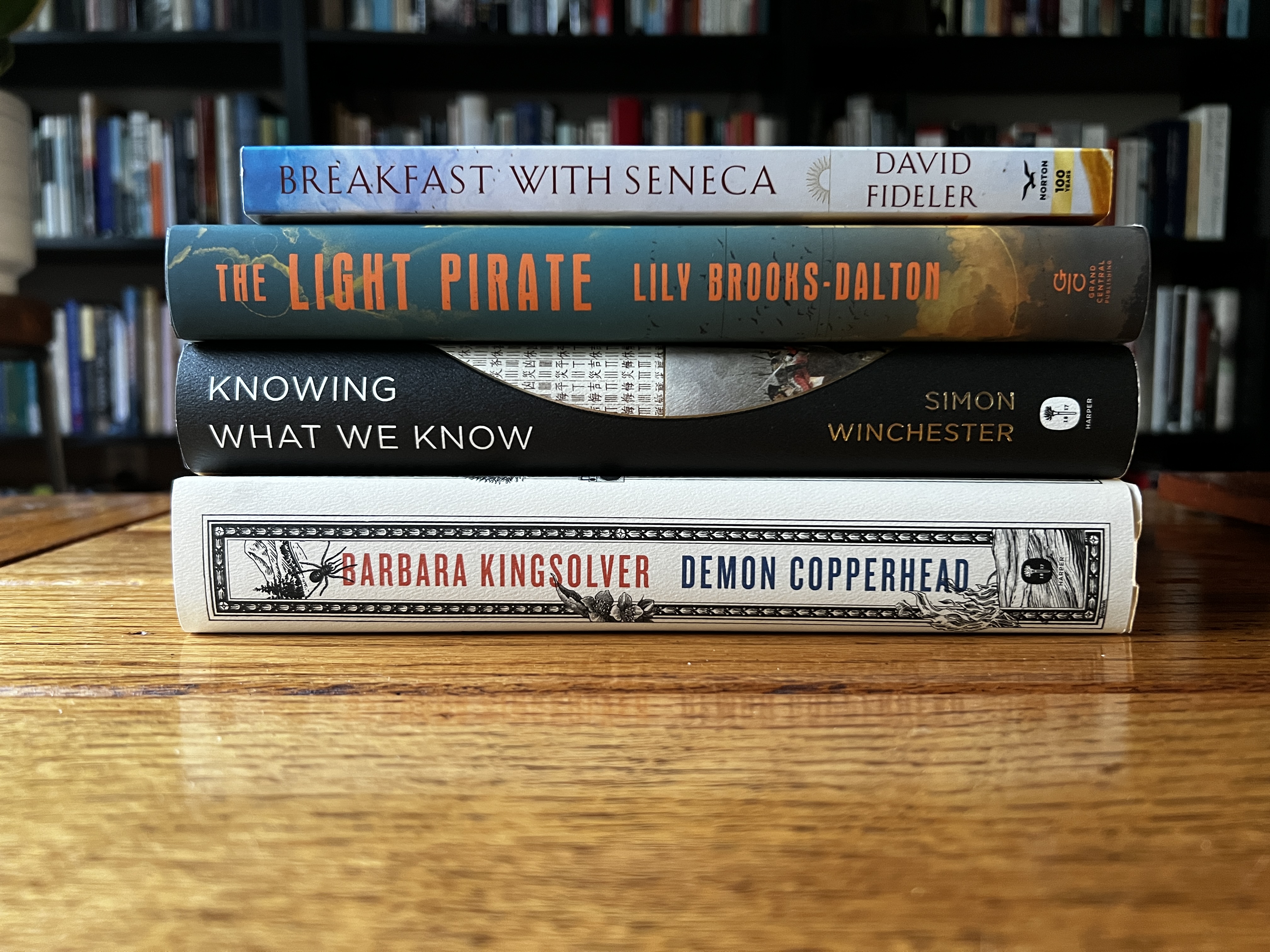
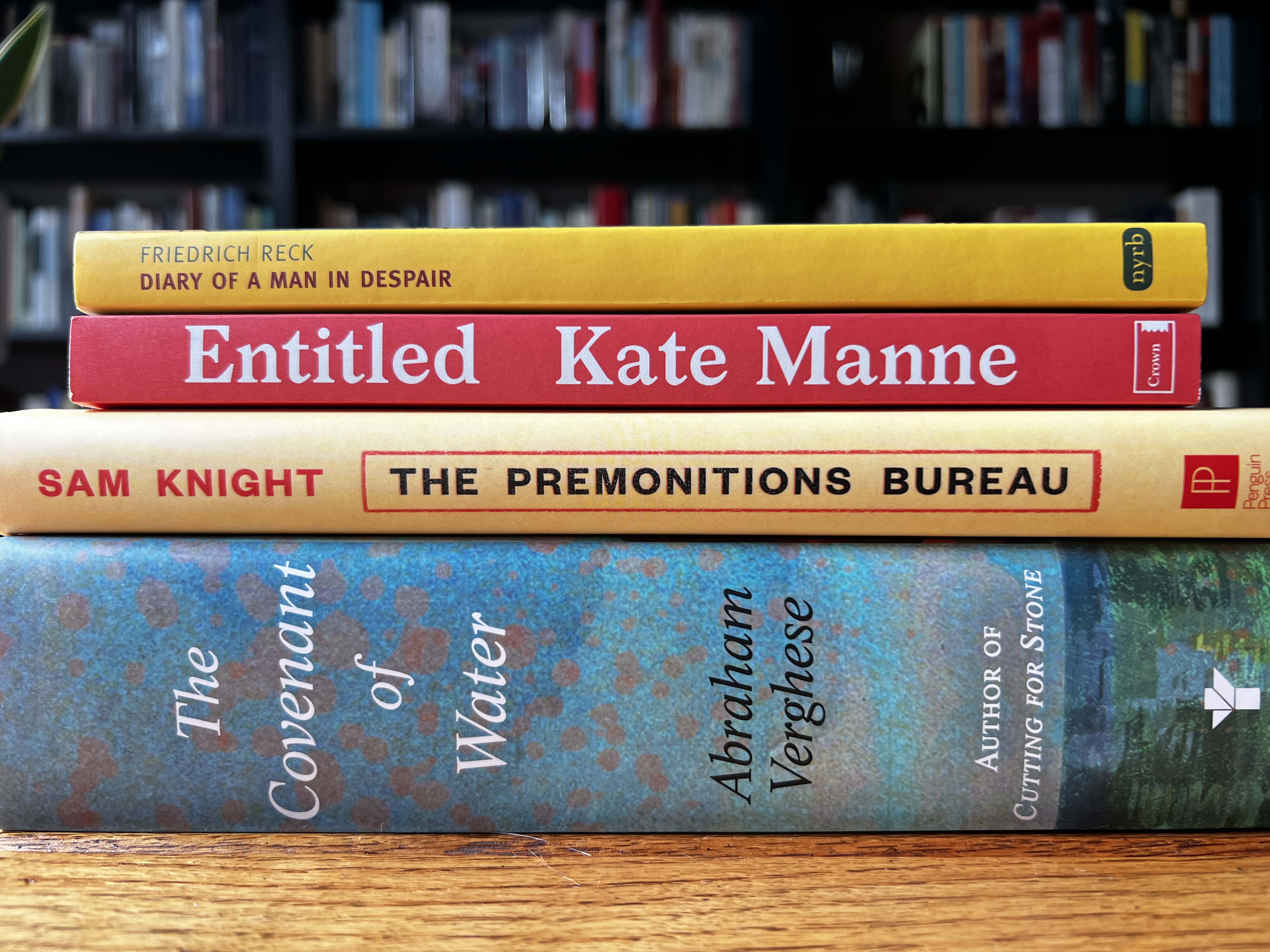
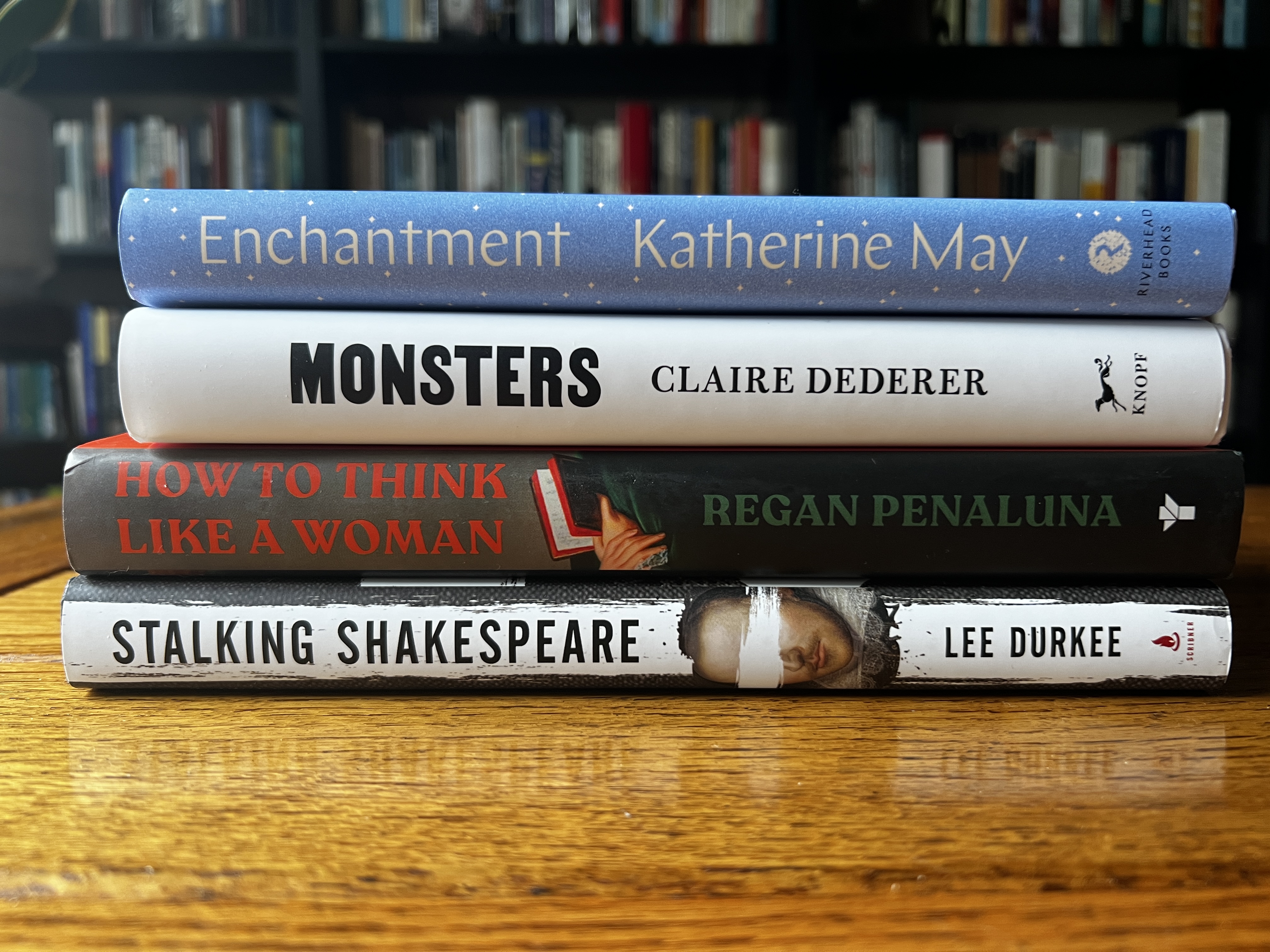
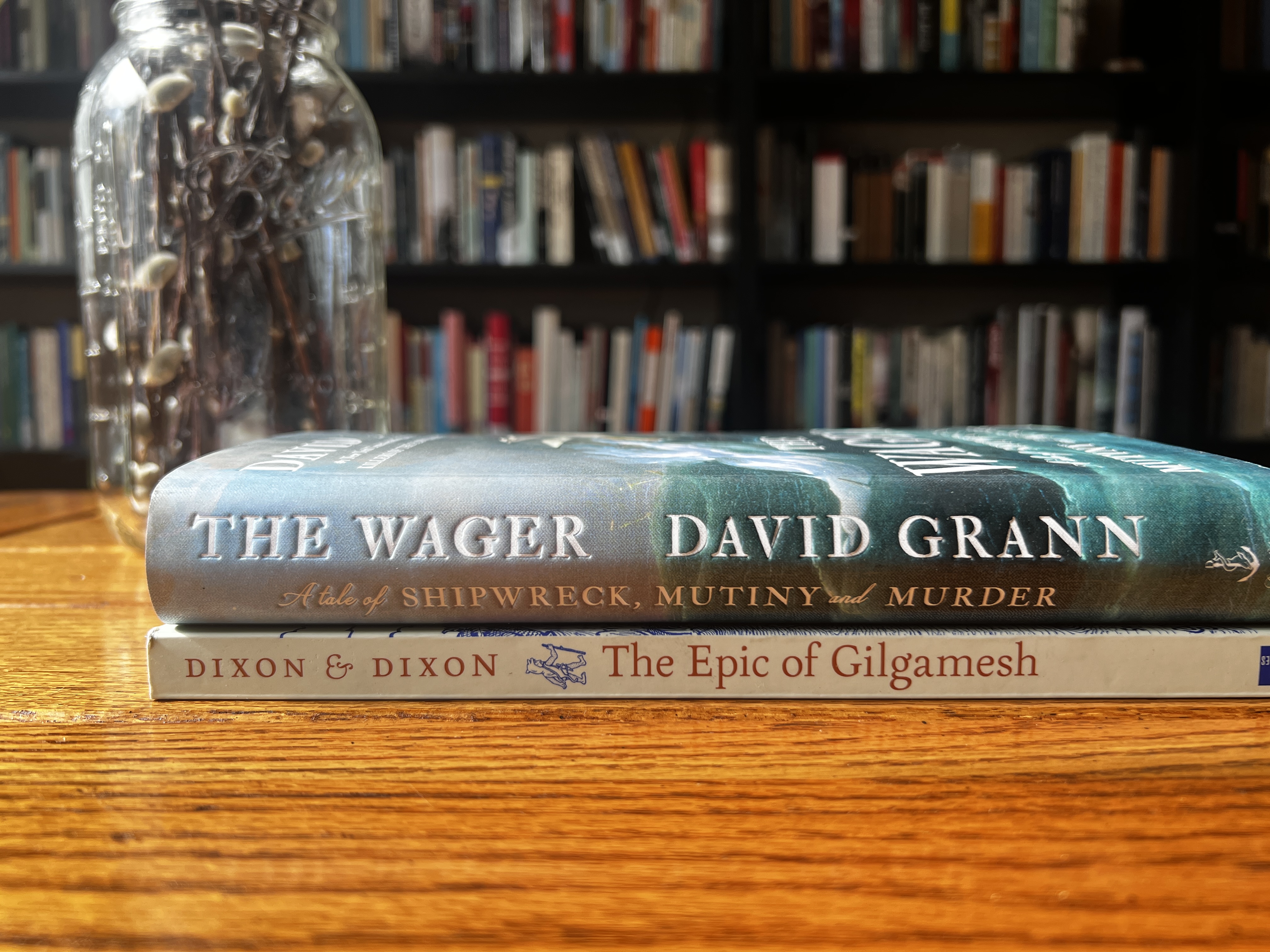
Reading: The TBR shelf has become unwieldy, and it doesn’t even include all of the active titles. Not pictured: Blood Meridian (Cormac McCarthy), Babel (R.F. Kuang), SPQR: A History of Ancient Rome (Mary Beard). In the past, when the stack has become this overwhelming, I’ve simply shelved most of it, figuring (hoping?) that I will return to the books. Eventually. This summer, though, I’m leaning into the “chaos,” letting the shelf remain as it is — in fact, adding to it. Let’s see what I get through before August’s subtle shift of light across my floor.

So far this year, I’ve read fifty-five books, which is a slower pace than the last couple of years. Today I am in the process of finishing Jeremy Denk’s memoir, Every Good Boy Does Fine.

Latin: After a long hiatus, I returned to my Latin studies this week. In January, I submitted my work on CAPVT V with every intention of dovetailing Latin into my spring semester once the assorted classes and groups in which I participated had gotten underway, but the required reading (and writing, in the case of one tutorial) reduced my time for Latin to a few vocabulary review sessions each week. Not ideal. Last night, I submitted my work on CAPVT VI; now all that remains is to read and outline the sixth chapter of SPQR. My goal is to finish CAPVT VII and CAPVT VIII by mid-July. This is a doable rather than rigorous goal.

Other studies: This week was the fourth of eleven meetings for the Catherine Project’s summer reading group on Plato’s Republic. I am pairing my reading with David Roochnik’s lectures (The Great Courses). And I’ve finished seven of the twenty-four lectures in Professor Roberto González Echevarría’s “Cervantes’ Don Quixote” (Open Yale Courses). 

Music: In mid-May, following my last music lesson of the spring semester, I did what I usually do: played a bit of hooky from my daily practice schedule, which, naturally, made my return to regular practice alternately embarrassing (Ugh! What’s with my intonation and tone?) and exhilarating (Wow! Listen to how much of that piece I remembered!). I am not participating in the summer recital, so I’ve scheduled one long lesson for June and one for July. (Weekly lessons and community band rehearsals resume in mid-August.) Yes, I am still cutting myself some slack, but I am practicing. By spring semester’s end, we had reached the Rondo and Allegro molto of the Mozart Duetto No.1, K.378, so I’ve been polishing that for this month’s lesson, as well as the Allegro on page 13 of Robert Cavally’s Melodious and Progressive Studies from Andersen, Gariboldi, Koehler, and Terschak for Flute, Book 2. I’ve also begun working on 113 in P. Bona’s rhythmical articulation studies and the second movement of the Stamitz Concerto in G major, Op.29. (Why the second and not the first? Quite simply, the Andante non troppo moderato seemed like a much kinder, gentler place to begin this long project than the Allegro.)

Participating in the community band (and, yes, my teacher’s encouragement) moved me to invest in a piccolo this spring. Because I’ve been working on exercises and short pieces for the piccolo following my flute practice, I have had much less time for the alto flute. I am interested to see what, if any, piccolo work, I am assigned for this fall’s concerts, but I do miss the alto. Working to find a balance….

(For those who are interested in this sort of thing, the concert flute is a handmade Miyazawa 602 with the MX-1 cut headjoint (14K riser), offset G, heavy wall tubing, C# trill key and D# roller; the piccolo is a Hammig 650/3 with a modified wave thin headjoint; and the alto is a Trevor James copper alloy with both the curved and straight headjoints.)

Gardening: We added two more “pollinator pockets,” for a total of four 3×6 raised beds. Four large barrels and numerous other containers also brim with flowers. Maybe we will enjoy this sort of success later in the season? Drought conditions continue here, although the temperatures have been mild. (Hey, would someone dump a cup of iced tea on those who are playing with firecrackers in this weather? Not too bright, folks.)

Health: When I re-retired in February 2020, my goals were to read and study more, practice more, and pay more attention to my health. Check, check, and check. As I think I’ve shared, I’ve lost more than forty pounds since March 2020 — this, thanks to a near-daily walking habit coupled with stretching, some weight work and stationary cycling, and much more mindful meal planning. I still have some work to do, but yard work, the return to long bike rides on the weekend, and kicking up our walking pace is starting to get me there.

Acquisitions

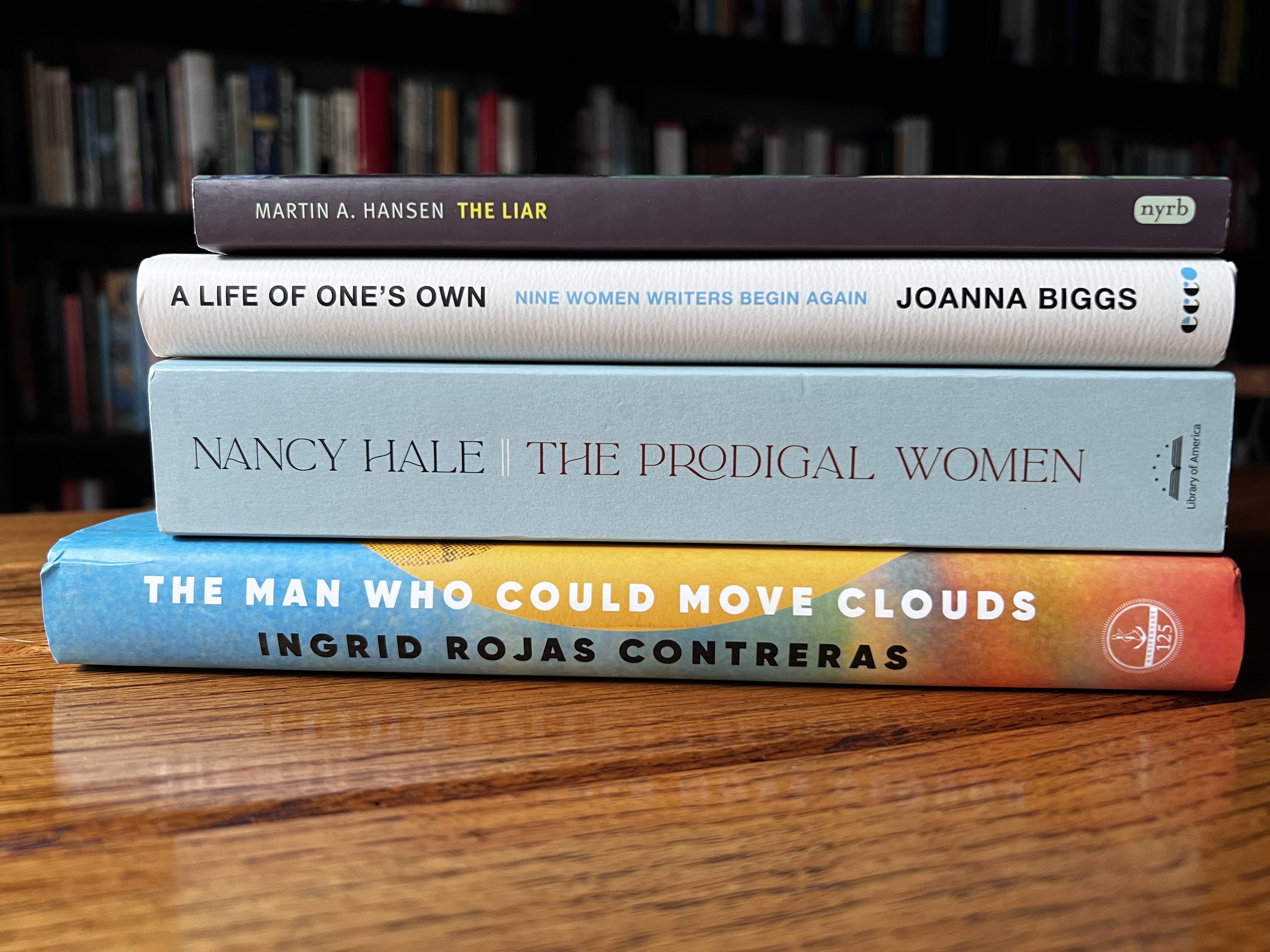
My birthday usually brings a number of new books to my house;
I think one or two more boxes are due.

Today after our walk to the lake, we readied the bikes for the first ride of the season — maybe tomorrow? Apart from that, my day comprised the remaining weekly chores, a terrific meal, and reading.

It’s late, but I’m about to begin a short practice session with a focus on my current étude, the allegro on page 13 of Robert Cavally’s Melodious and Progressive Studies from Andersen, Gariboldi, Koehler, and Terschak for Flute, Book 2. Since January, I’ve worked on a number of short solo pieces by French composers, including the delightful “March of the Jolly Fellows” (Henri Gagnebin). I “retreated” to (somewhat) less challenging solo selections because this semester’s duet work was demanding, as were the selections for band. But my teacher has announced that after Fauré’s “Après un rêve” and Debussy’s “Arabesque No. 1,” I will begin preparing a (*gulp*) concerto. Tonight it’s the Fauré, though, and continuing work on the Mozart duet.

Acquisitions

In the readerly restlessness that has followed the conclusion of Don Quixote, I finished All the Beauty in the World: The Metropolitan Museum of Art and Me (Patrick Bringley; 2023) and Project Hail Mary (Andrew Weir; 2021). While visiting my daughters last week, I started reading Lessons in Chemistry (Bonnie Garmus; 2022), but I haven’t touched it since returning home. Nothing is “sticking” right now, which is fine. The weather has finally turned, so garden and yard work await me; I’ve already mowed and trimmed several times. May and September are generally the months I schedule healthcare appointments. And the spring semester is concluding, so I’m finishing up some pieces in my music lessons and choosing projects for the summer months, as well as preparing to play two graduation concerts with the community band.

While walking, I have been listening to the bird chorus and Cervantes’ Don Quixote, a Open Yale Courses program comprising twenty-four lectures delivered by Professor Roberto González Echevarría. 

“[T]here is very little difference between a man who is sleeping and a man who is dead….”

If Don Quixote truly regains his sanity (as opposed to, say, capitulating to the machinations of those around him), has it anything to do with the fact that in succumbing to his exhaustion and illness, he finally sleeps? Yes, this is fiction, but if we are still, quixotically, seeking the reason for his madness, perhaps the chief clue appears on page 21: “In short our gentleman became so caught up in reading that he spent his nights reading from dusk till dawn and his days reading from sunrise to sunset, and so with too little sleep and too much reading his brains dried up causing him to lose his mind” (emphasis added). Over the course of the novel, Don Quixote continues to spend little time sleeping. Even when he is abed nursing wounds, he frets, he dwells, he thinks and rethinks. An obsession with chivalric romances may not be healthy, but contemporary readers know that the perils of sleep-deficiency include deleterious physical, psychological, and neurological effects. Perhaps Cervantes knew, too. In this week’s reading, at the beginning of Chapter LXX, Sancho knows his sleep will be disturbed if he shares a room with his agitated master. Sure enough, once they have retired, the knight plies him with questions about “the strangest and most remarkable event to befall Don Quixote in the entire course of this great history” (p. 907). Before that, Chapter LXVIII opens with the observation that Don Quixote’s first sleep never yields to his second, “unlike Sancho, who never had a second sleep because his sleep lasted from nightfall until morning, proving he had a strong constitution and few cares” (p. 902). Later Sancho says:

“I only understand that while I’m sleeping I have no fear, or hope, or trouble, or glory; blessed be whoever invented sleep, the mantle that covers all human thought, the food that satisfies hunger, the water that quenches thirst, the fire that warms the cold, the cold that cools down ardor, and, finally, the general coin with which all things are bought, the scale and balance that make the shepherd equal to the king, and the simple man equal to the wise. There is only one defect in sleep, or so I’ve heard, and it is that it resembles death, for there is very little difference between a man who is sleeping and a man who is dead” (p. 903; emphasis added).

As the novel hurtles toward its inevitable conclusion, the melancholic, low-spirited knight returns to his village and home and finally sleeps “more than six hours at a stretch, as they say, so long that his housekeeper and his niece thought he would never open his eyes again” (p. 935). When he awakens, his “judgment is restored, free and clear of the dark shadows of ignorance imposed on it by [his] grievous and constant reading of detestable books of chivalry” (p. 935).

At the beginning of Part II, we are presented with “a Don Quixote who is, at the end, dead and buried, so that no one will dare tell more tales about him, for the ones told in the past are enough” (p. 458), so passages such as, “‘There is a remedy for everything but death,’ responded Don Quixote” (p. 884), and the verses the knight sings “to the sound of his own sighs” (p. 905) do not foreshadow so much as remind us – emphatically –that we already know how this will end.* Restored to himself by sleep, Alonso Quixano the Good renounces his obsession and calls his friends and family to his side. And in the end, the hasty and heavily foreshadowed death leaves this reader dissatisfied. I’m with Sancho: “[T]he greatest madness a man can commit in this life is to let himself die, just like that, without anybody killing him or any other hands ending his life except those of melancholy” (p. 937).

Marginalia

On page 876: “Sancho’s wingless flight” mirrors the ignominy of the blanket-bouncing incident. Had time permitted, I would have recorded more of the symmetries and similarities that the structures of the novel’s two parts share. 

On page 889: “‘Oh, Señor,’ said Don Antonio, ‘may God forgive you for the harm you have done to the entire world in wishing to restore the sanity of the most amusing madman in it! Don’t you see, Señor, that the benefit caused by the insanity of Don Quixote cannot be as great as the pleasure produced by his madness?’” I would add, restoration of his sanity apparently means death.

On the same page I couldn’t help but mark “this true history.” Over the course of these fourteen weeks, I have not resolved what, precisely, we are to make of the repetition of “true” and “truth.”

_______________________________

* Because I read the work in translation, I am uncertain if the brilliant pun that concludes the song is intentional: “Mine is a novel state: I go on living, and constantly die.” Just. Brilliant.