

A long walk. Music. Latin. Reading.
A long walk. Music. Latin. Reading.

For UChicago Graham School and Night School Bar courses.
This entry was adapted from previously published posts.
In her paean to birding, Rare Encounters with Ordinary Birds, Lyanda Lynn Haupt writes:
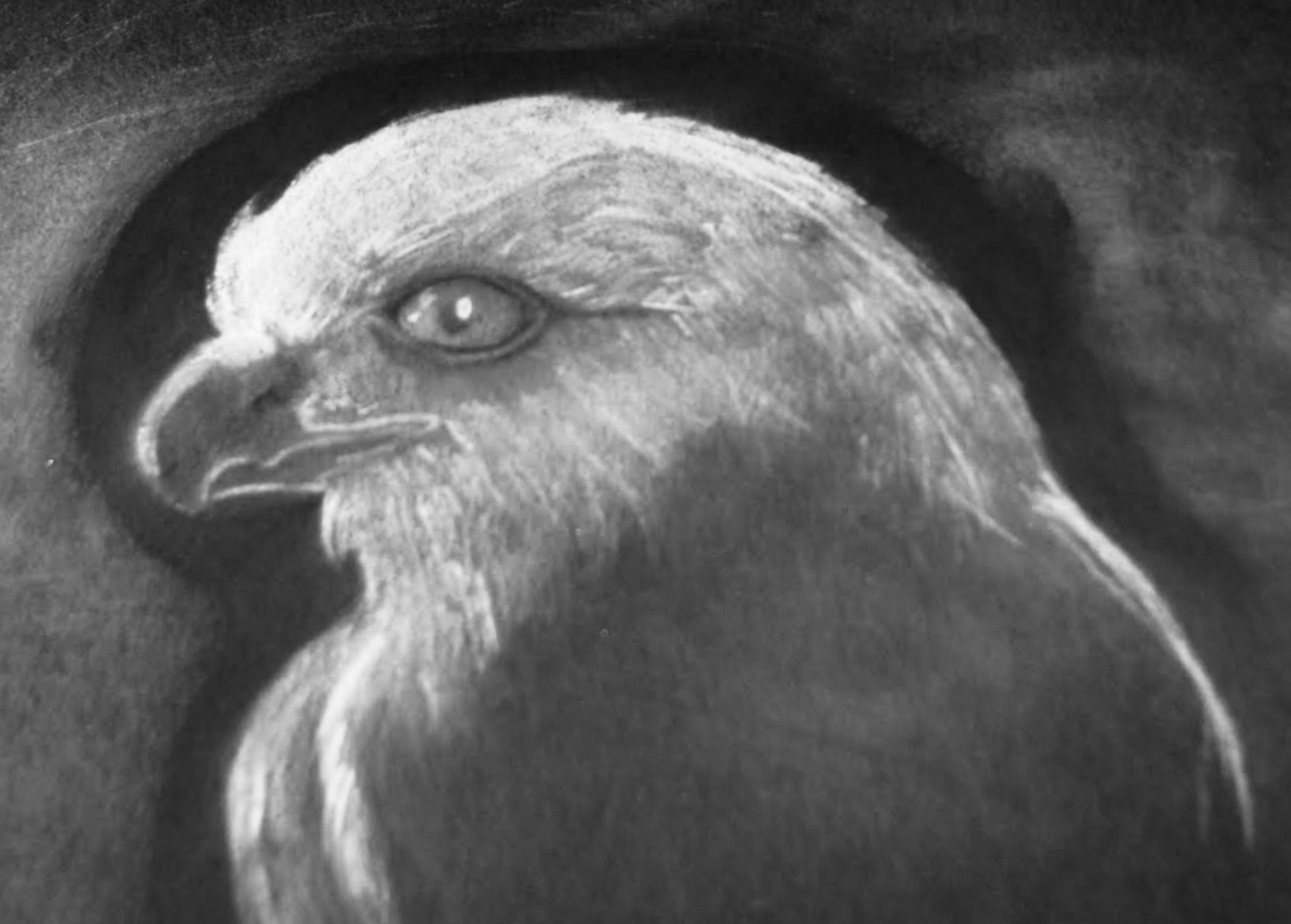
There is a game birders play on New Year’s Day called “Bird of the Year.” The very first bird you see on the first day of the new year is your theme bird for the next 365 days. It might seem a curious custom, but people who watch birds regularly are always contriving ways to keep themselves interested. This is one of those ways. You are given the possibility of creating something extraordinary — a Year of the Osprey, Year of the Pileated Woodpecker, Year of the Trumpeter Swan. This game is an inspiration to place yourself in natural circumstances that will yield a heavenly bird, blessing your year, your perspective, your imagination, your spirit. New year, new bird.
Our family has played this game long enough that we needed to rework the rules a bit or risk getting the same birds again and again. And again. This year, my husband and I decided to choose the first birds we espied on our first walk of the new year. He has embraced a Year of the Canada Goose. And I? Imagine my delight when a red-tailed hawk flew across my path.
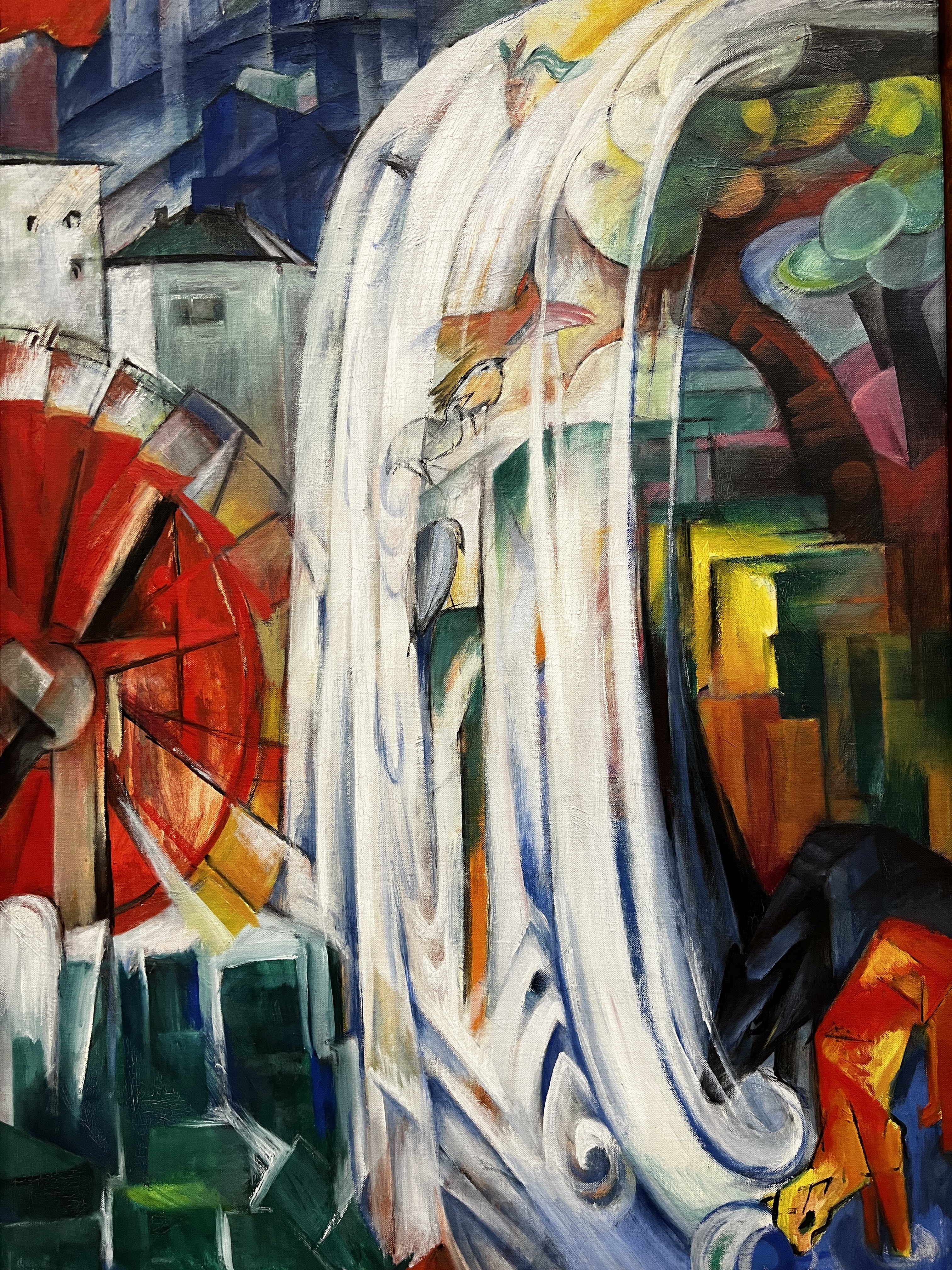
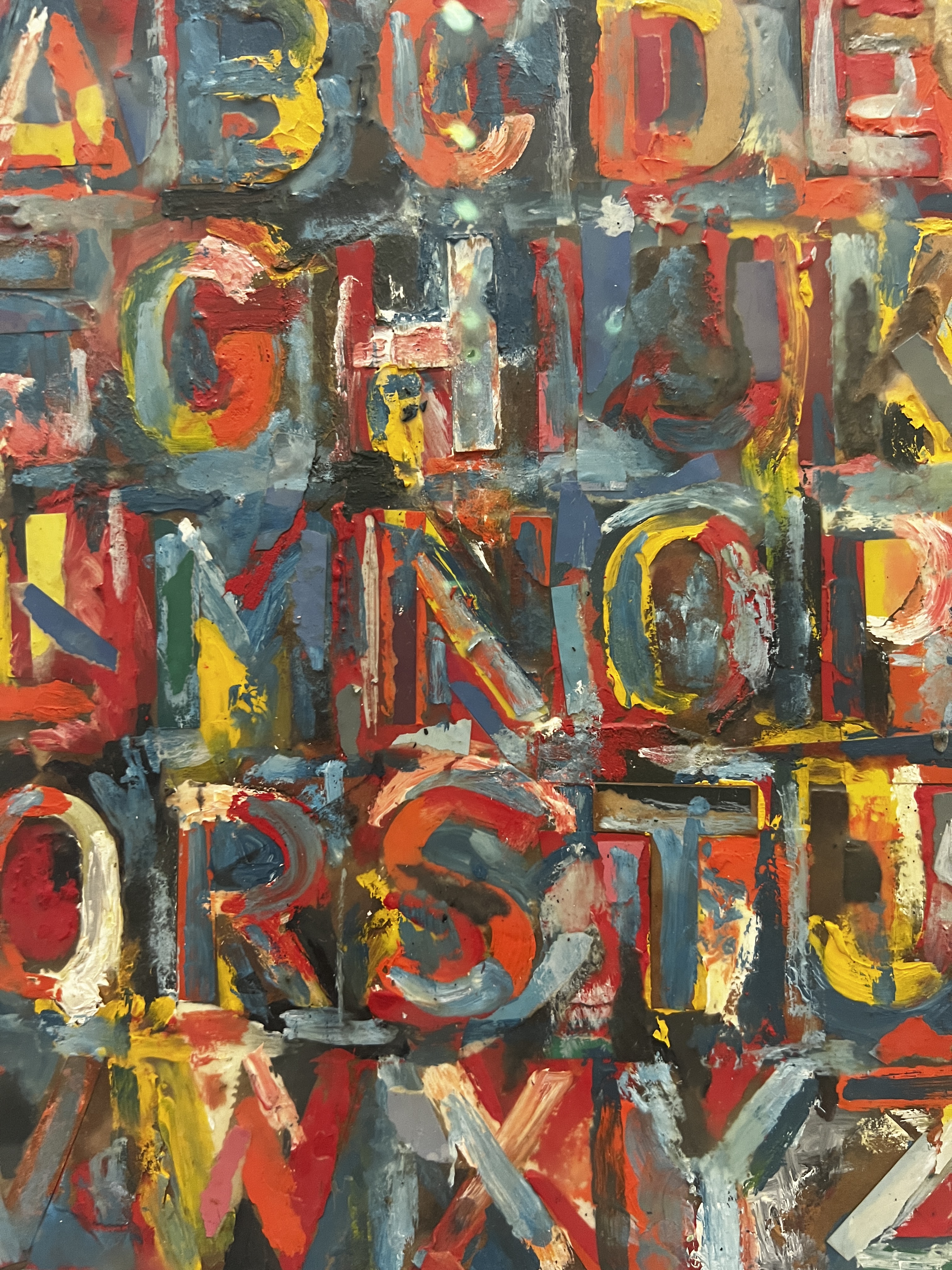
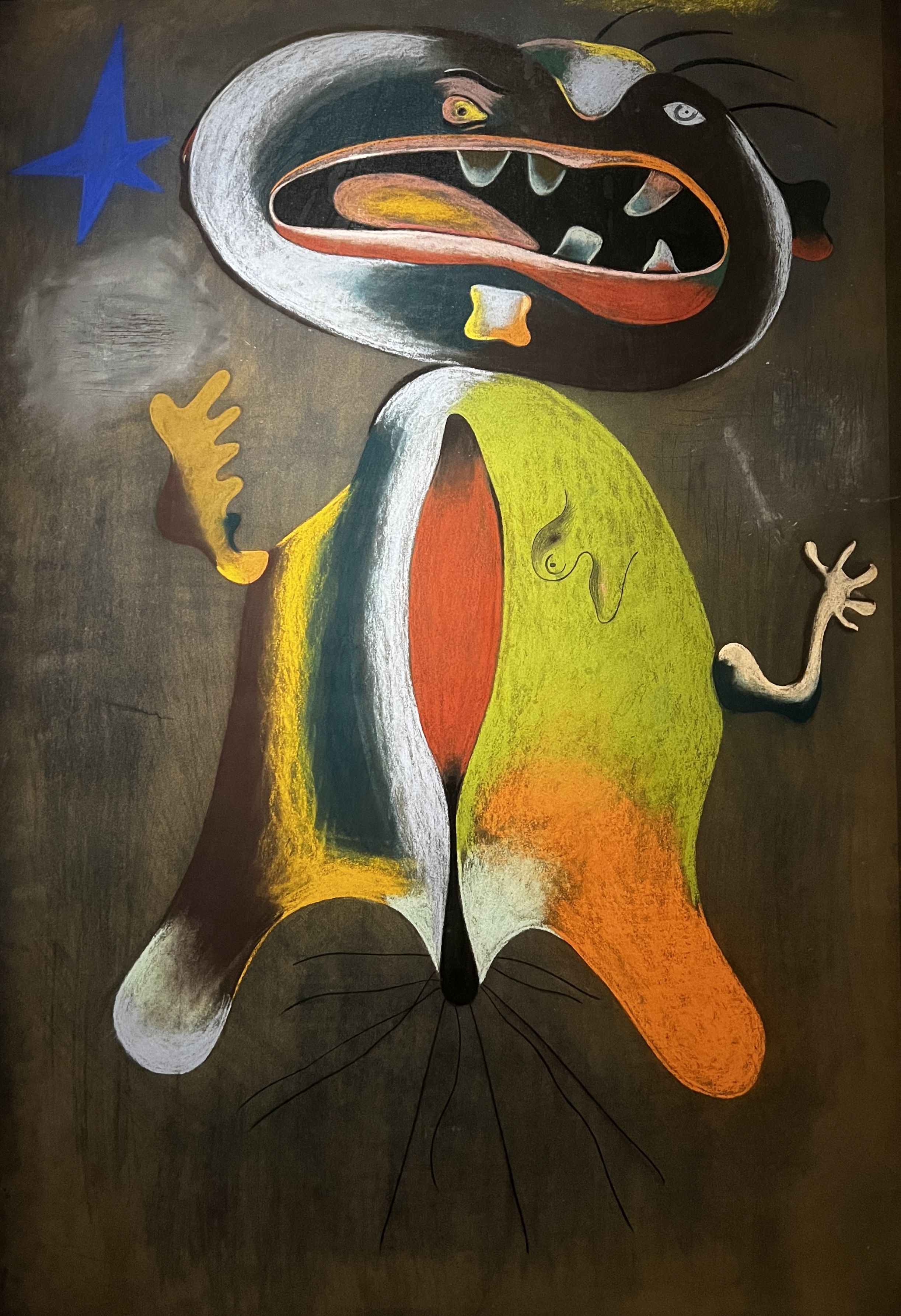
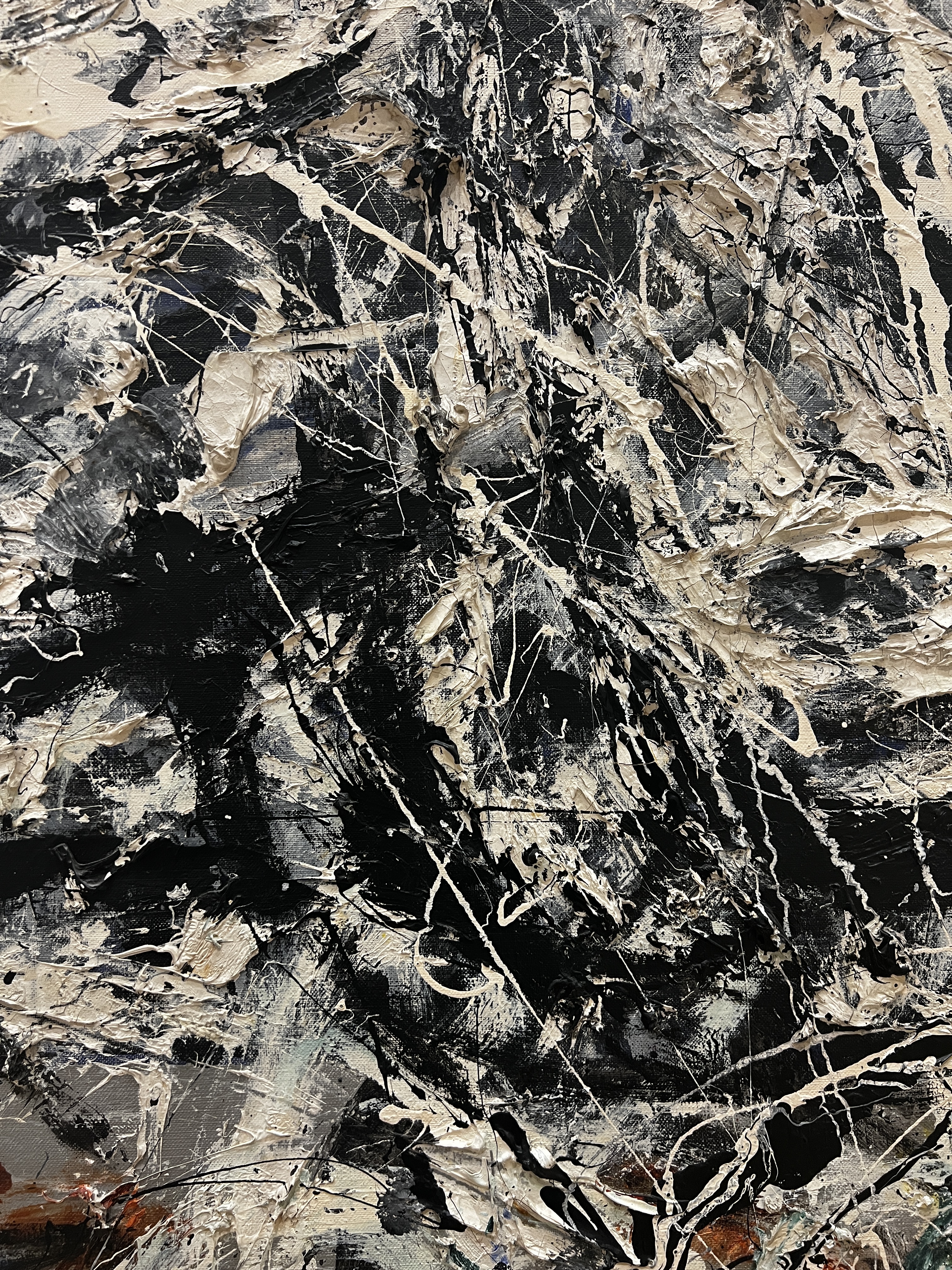 My images of detail from
__ “The Bewitched Mill” by Franz Marc (1913)
__ “Alphabet” by Jasper Johns (1959)
__ “Woman” by Joan Miró (1934)
__ “Greyed Rainbow” by Jackson Pollock (1953)”
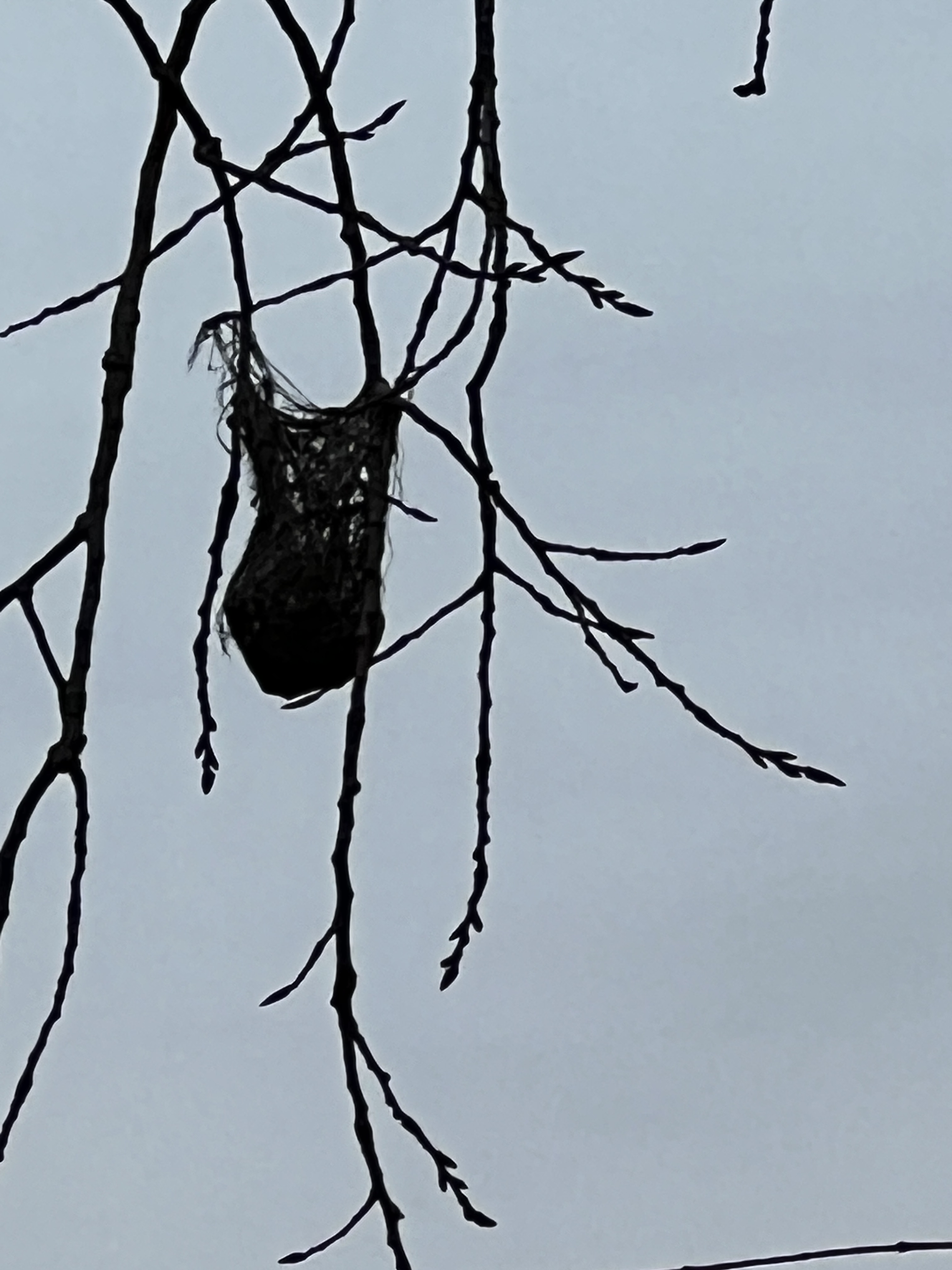
An oriole’s nest.
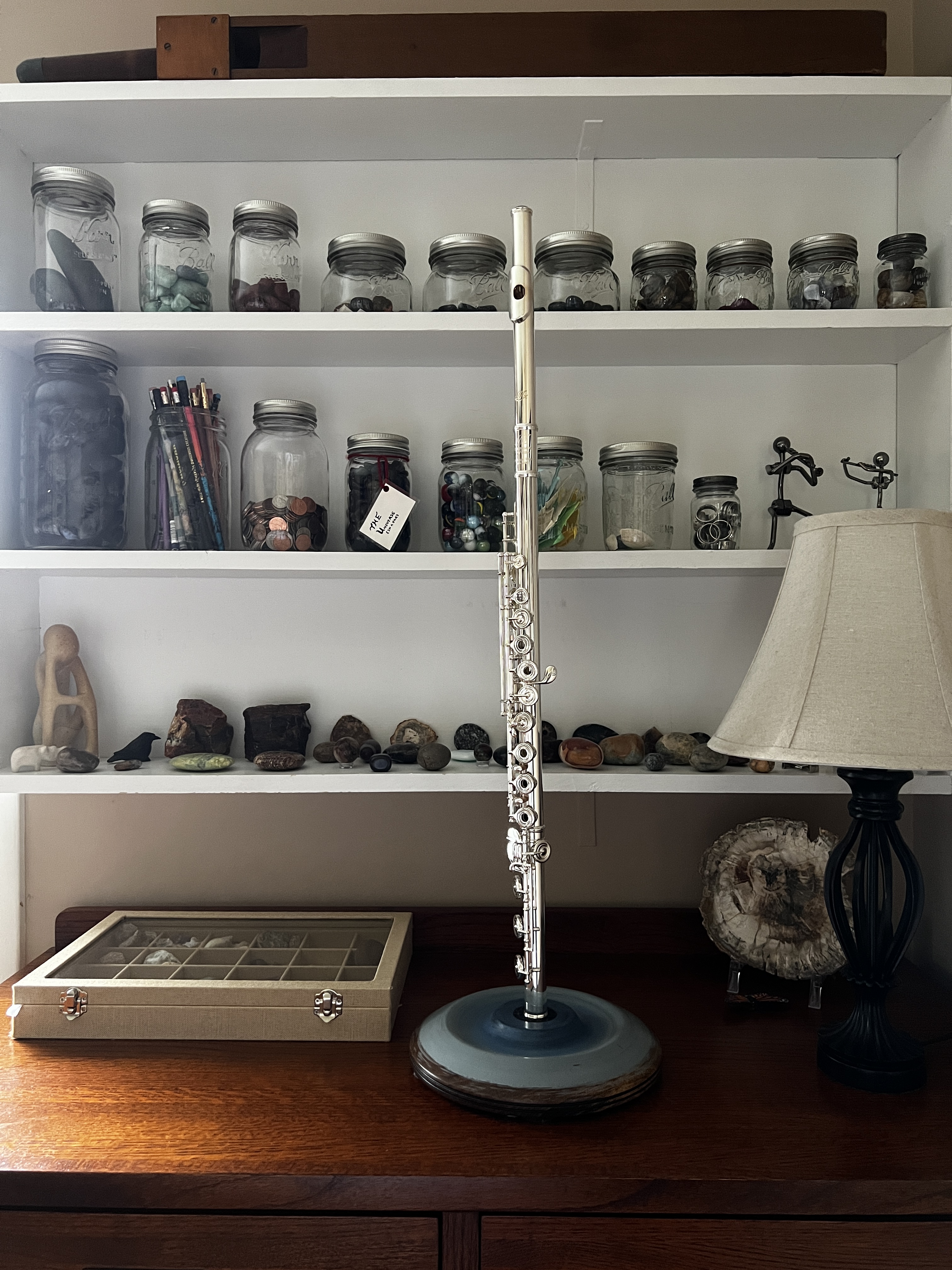 In late July, I played the Allegro Molto from Schubert’s Sonatine in D Major in my very first in-person recital — a solid performance. Soon after, I entrusted my wonderful flute to a new (to me) technician for its annual COA. (In July 2021, my previous technician closed his business and retired.) It was returned to me in beautiful condition, but in August, I visited Ollivanders, I mean, Flute World, where my new
 wand flute chose me. More experienced instrumentalists than I will attest to the fact that an upgrade can do remarkable things for one’s confidence playing. And they are so right.
My current solo piece is Gabriel Fauré’s “Pavane.” I’m also working on page 10 of Robert Cavally’s Melodious and Progressive Studies from Andersen, Gariboldi, Koehler, and Terschak for Flute, Book 2, and “Duetto No. I (based on Sonata in B flat, K. 378)” (Mozart) in Selected Duets for Flute, Volume II (Advanced). It’s been a long slog, but I’ve (finally) made it to 111 in P. Bona’s rhythmical articulation studies.
And after much discussion, my husband and I decided to change bands. Joining the local community band has saved us 2.5 hours a week of driving — and in one semester and three concerts, measurably improved our skills. Rehearsals start up again in a few weeks. Given my other pursuits, then, my practice schedule will remain largely unchanged:
— 15 minutes: long tones, scales, and/or exercises
— 20 minutes: Melodious and Progressive Studies
— 20 minutes: duet
— 15 minutes: rhythmical articulation
— 20 minutes: solo
— 20 minutes: band music or other
In May, I acquired a beautiful alto flute. What a sound! I took private lessons throughout the summer and fall with the idea that I might accept a few alto parts in flute ensemble. Because the flute ensemble remains fairly informal and still has no performance plans, I bowed out for a bit to focus on band music, but in the coming months, I will add the alto back into my practice at least twice a week.
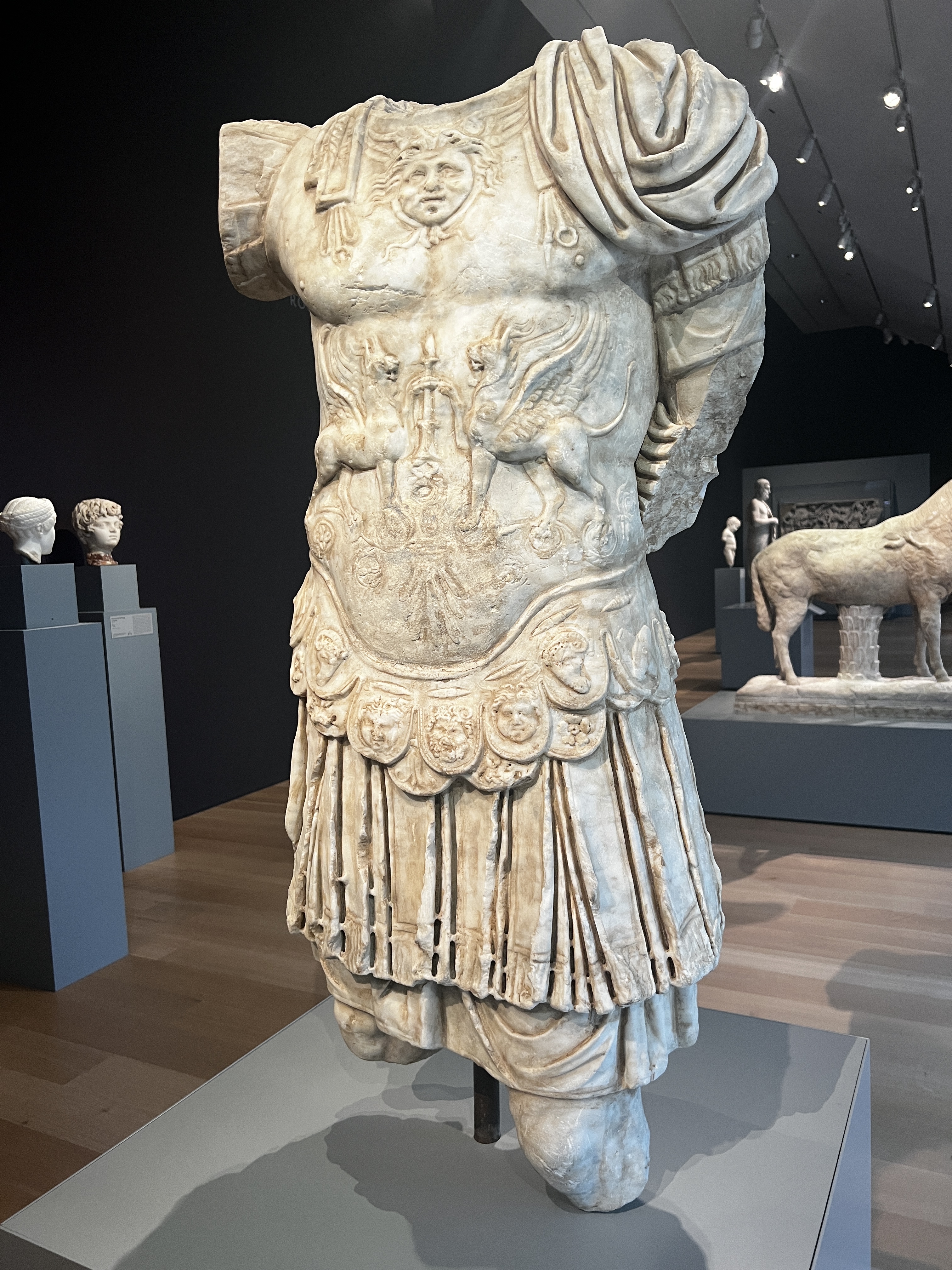
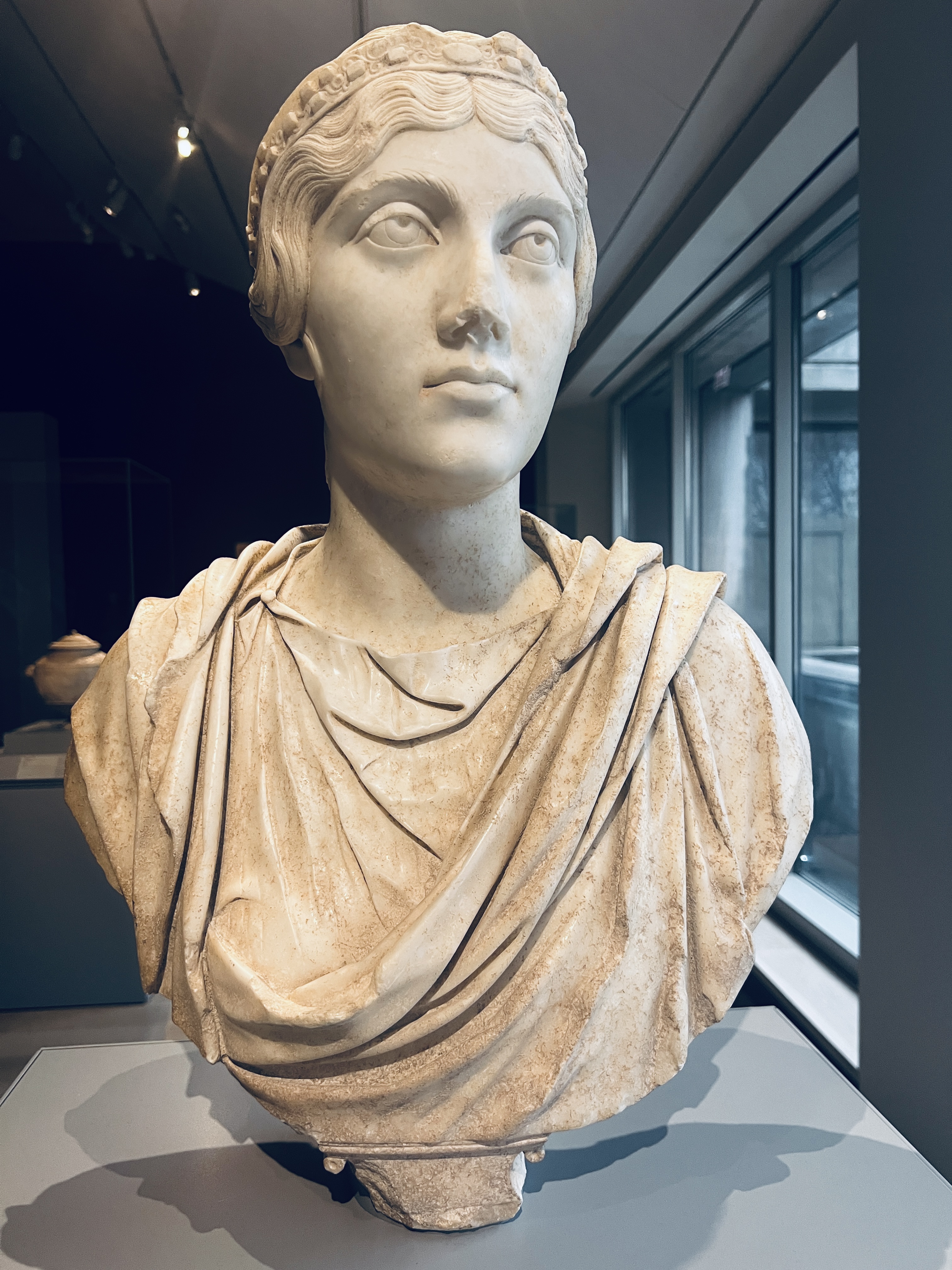
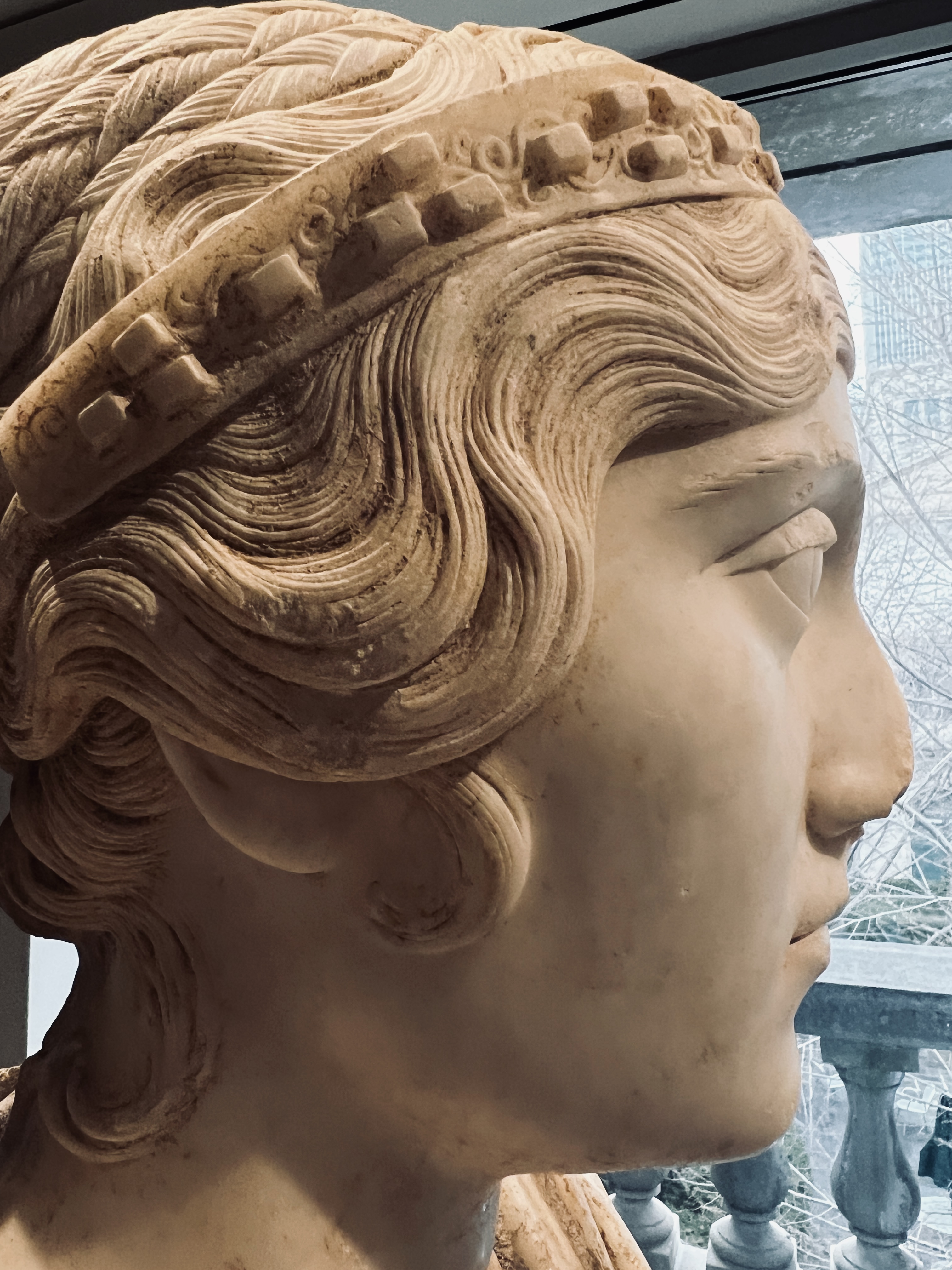

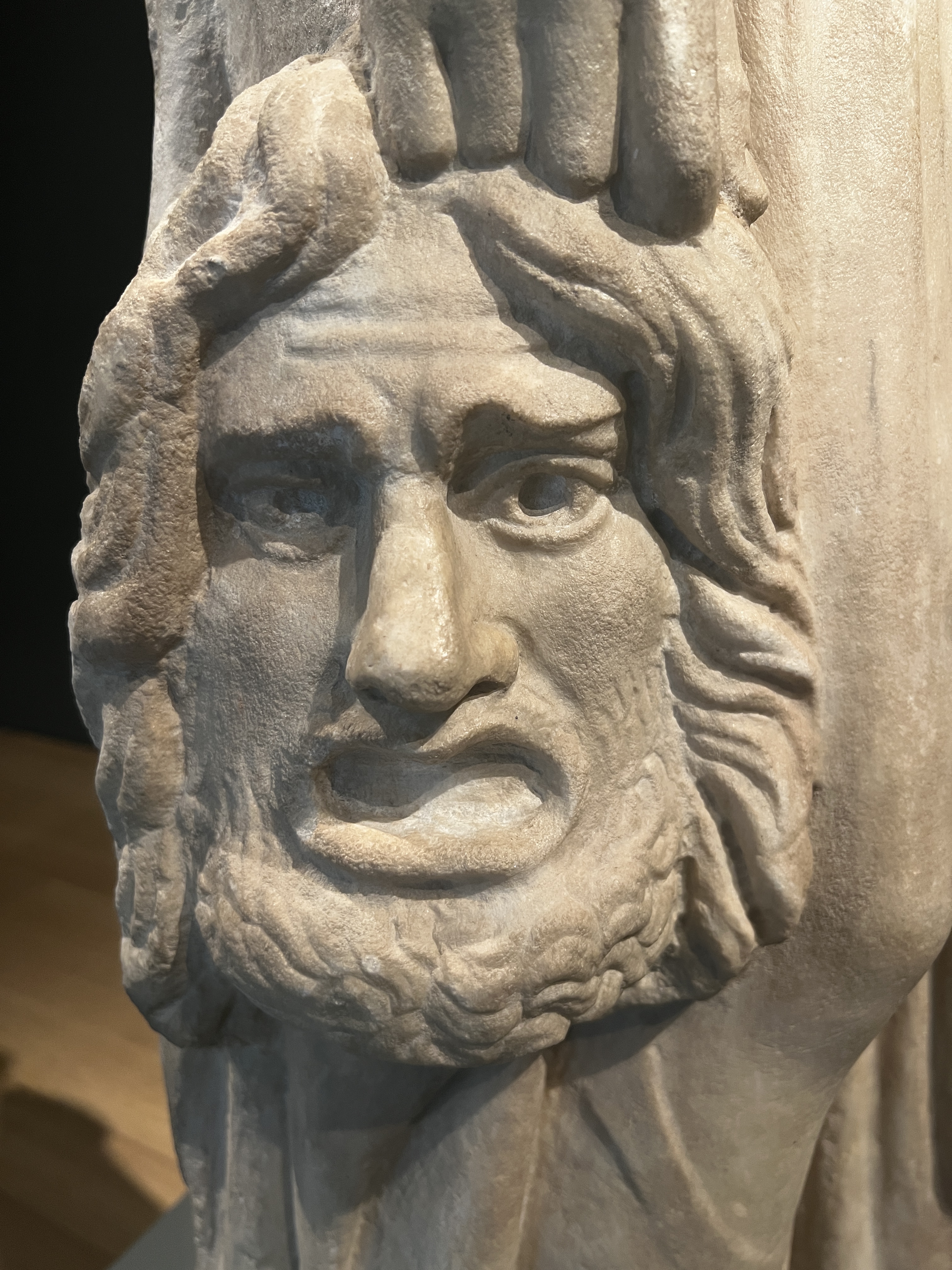 At the the Art Institute.
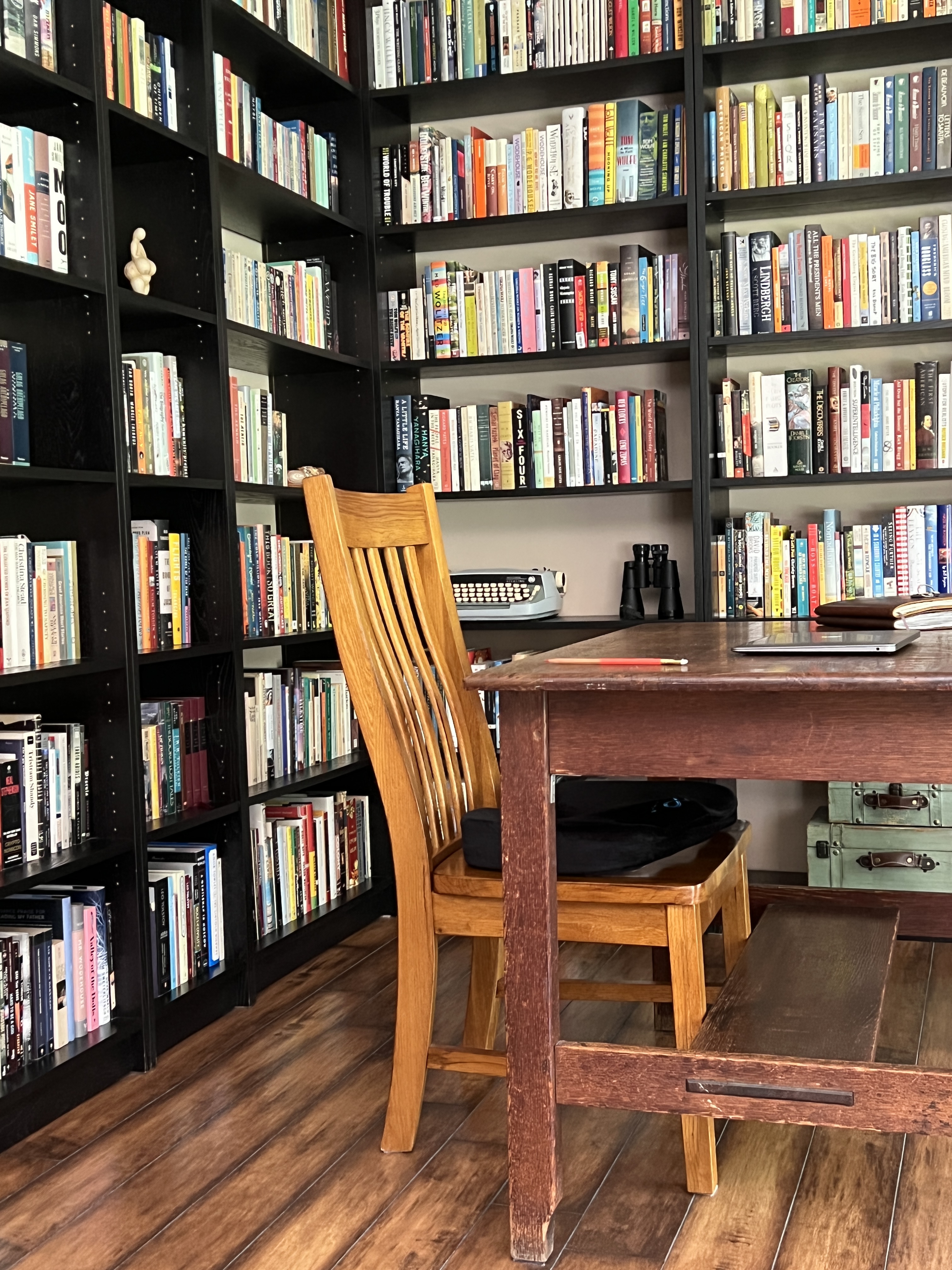 The year opened with the usual goal: read 100 books from my shelves (i.e., books in my collection before the end of 2021), including at least 24 non-fiction titles and at least one book from each of the following categories: Shakespeare (about or retold), poetry, NYRB, Kurt Vonnegut (by or about), Joyce Carol Oates, philosophy, art, and children’s / YA. As it turns out, I read 139 books in 2022, of which 76 were from the shelves. Of those read from the shelves, nineteen were non-fiction titles; and while I met the poetry, NYRB, philosophy, and art challenges, I missed Shakespeare, Vonnegut, Oates, and children’s / YA.
Still. It was a pretty spectacular year of reading, one that included (finally) the bible. Here are some of the other projects, courses, and groups that shaped my reading year.
With the Cardiff BookTalk, I read:
■ A Clockwork Orange (Anthony Burgess; 1962. Fiction.)
■ The Waste Land (Norton Critical Edition) (T.S. Eliot. 1922. Poetry.)
The 100 Days of Dante relaunched this year, but I participated in the first cycle, which began in 2021 and continued into 2022. In addition to Purgatorio and Paradiso, I read two related books (marked with asterisks):
■ Purgatorio (Dante Alighieri; 1320. (Trans. Robin Kirkpatrick; 2008.) Poetry.)
■ Paradiso (Dante Alighieri; 1320. (Trans. Robin Kirkpatrick; 2008.) Poetry.)
* Dante’s Divine Comedy (Seymour Chwast; 2010. Graphic fiction.)
* Dante (R.W.B. Lewis; 2001. Non-Fiction.) RFS
For two Guardian Live events:
■ Twelve Caesars: Images of Power from the Ancient World to the Modern (Mary Beard; 2021. Non-fiction.)
■ The Essex Serpent (Sarah Perry; 2016. Fiction.)
With A Public Space / APS Together:
■ Childhood (Tove Ditlevsen; 1967/2021. Fiction.)
■ Youth (Tove Ditlevsen; 1967/2021. Fiction.)
■ Dependence (Tove Ditlevsen; 1971/2021. Fiction.)
■ Moby-Dick; or, The Whale (Herman Melville; 1851. Fiction.)
■ Cane (Jean Toomer. 1923. Fiction.)
■ W-3: A Memoir (Bette Howland; 1974. Non-fiction.)
■ Villette (Charlotte Brontë; 1853. Fiction.)
For three Night School Bar courses:
■ Debt: The First 5,000 Years (David Graeber; 2011. Non-fiction.)
■ Caliban and the Witch: Women, the Body, and Primitive Accumulation (Silvia Federici; 2004. Non-fiction.)
■ Capital Realism (Mark Fisher; 2009. Non-fiction.)
For a Newberry Library course:
■ The Emigrants (W.G. Sebald; 1992/1996. Fiction.)
■ The Rings of Saturn (W.G. Sebald; 1995/1998. Fiction.)
■ Austerlitz (W.G. Sebald; 2001. Fiction.)
■ Speak, Silence: In Search of W.G. Sebald (Carole Angier; 2022. Non-fiction.)
With Catherine Project reading groups (supplementary texts are marked with asterisks):
■ Anna Karenina (Leo Tolstoy; 1878. (Trans. Richard Pevear and Larissa Volokhonsky.) Fiction.)
■ Apology (Plato; 399 BC. (Trans. G.M.A. Grube; 2002.) Non-fiction.)
■ Moby-Dick; or, The Whale (Herman Melville; 1851. Fiction.)
■ The Sun Also Rises (Ernest Hemingway. 1926. Fiction.)
■ The Old Man and the Sea (Ernest Hemingway; 1952. Fiction.)
■ A Farewell to Arms (Ernest Hemingway. 1929. Fiction.)
■ On the Origin of Species (Charles Darwin. 1859. Non-fiction.)
* Charles Darwin’s On the Origin of Species (Sabina Radeva; 2019. Graphic non-fiction.)
* The Tree of Life (Peter Sís; 2003. Graphic non-fiction.)
* Darwin: Portrait of a Genius (Paul Johnson; 2012. Non-fiction.)
* Charles Darwin’s On the Origin of Species: A Graphic Adaptation (Michael Keller. 2009. Graphic non-fiction.)
■ A Good Man Is Hard to Find (Flannery O’Connor; 1953. Fiction.)
■ Everything That Rises Must Converge (Flannery O’Connor; 1965. Fiction.)
Several readers in the Hemingway group decided to continue reading together:
■ A Moveable Feast (Ernest Hemingway; 1964. Non-fiction.)
■ For Whom the Bell Tolls (Ernest Hemingway. 1940. Fiction.)
■ East of Eden (John Steinbeck. 1952. Fiction.)
■ Fathers and Sons (Ivan Turgenev (Trans. Constance Garnett); 1862. Fiction.)
And three of us in that group decided to meet, too:
■ The Pearl (John Steinbeck. 1947. Fiction.)
■ Lolita (Vladimir Nabokov; 1955. Fiction.)
With the UCSC Deep Read:
■ Transcendent Kingdom (Yaa Gyasi; 2020. Fiction.)
With The Readers Karamazov:
■ The Name of the Rose (Umberto Eco; 1980. Fiction.)
* The Key to The Name of the Rose (Adele J. Haft, et al.; 1987/1999. Non-Fiction.)
■ A Canticle for Leibowitz (Walter M. Miller; 1959. Fiction.)
■ The Sign of Four (Sir Arthur Conan Doyle; 1890. Fiction.)
■ A Confederacy of Dunces (John Kennedy Toole. 1981. Fiction.)
For a course with the Premise Institute:
■ The Metamorphosis (Franz Kafka; 1915. (Trans. Ian Johnston.) Fiction.)
■ The Metamorphosis (Franz Kafka; 1915. (Trans. Susan Bernofsky.) Fiction.)
■ The Diving Bell and the Butterfly (Jean-Dominique Bauby; 1997. Non-fiction.)
■ The Bell Jar (Sylvia Plath. 1963. Fiction.)
■ Nausea (Jean Paul Sarte. 1938. Fiction.)
■ Lost Connections: Why You’re Depressed and How to Find Hope (Johann Hari; 2018. Non-fiction.)
In advance of a Theater of War event:
■ The Suppliants (Aeschylus; 460 BC. Drama.)
In November, I deleted my Twitter account, but I certainly miss the reading groups with whom I read:
■ Europe Central (William T. Vollmann. 2005. Fiction.)
■ A Mapmaker’s Dream (James Cowan. 1996. Fiction.)
■ A Lost Lady (Willa Cather. 1923. Fiction.)
■ Infinite Jest (David Foster Wallace. 1996. Fiction.)
■ Zeno’s Conscience (Italo Svevo; 1923. Fiction.)
With the T Book Club:
■ Desperate Characters (Paula Fox; 1970. Fiction.)
■ Specimen Days (Michael Cunningham; 2005. Fiction.)
With the SciFri Book Club:
■ Upgrade (Blake Crouch. 2022. Fiction.)
Looking ahead, this winter, I’m taking classes with the University of Chicago Graham School, the Brooklyn Institute for Social Research, and Night School Bar. The Premise Course in which I’m enrolled will meet once in January and conclude in February. I’m hoping to participate in a Catherine Project tutorial beginning later this month, and the band of merry readers who remained following Hemingway (and Steinbeck and Turgenev) is tackling Crime and Punishment over the next few months. If I manage to keep up with these exciting pursuits, I’d like to participate in the February SciFri Book Club. More another time.

Wishing you safe travels, good food, and great conversations!

Coupons, points, gift cards = new books.
 Nerdishly