Reading notes

Here are some passages for the commonplace book:

From Before the Fall (Noah Hawley; 2016. Fiction.):

p. 95
The machine he believed himself to be broke down. and Gus found himself immersed in an experience he had witnessed for years in his job with the NTSB, but never truly understood. Grief. Death was not an intellectual conceit. It was an existential black hole, an animal riddle, both problem and solution, and the grief it inspired could not be fixed or bypassed like a faulty relay, but only endured.

p. 101
Convergence. It’s one of those things that feels meaningful, but isn’t. At least he doesn’t think it is. How could it be? A batter in Boston fouling pitches into the stands while a small plan struggles through low coastal fog. How many millions of other activities begin and end at the same time? How many other “facts” converge in just the right way, creating symbolic connectivity?

p. 251
He breaks off, thinking, aware that he is not giving them what they wanted, but concerned that their questions are too important to answer in the moment, to define in passing, simply to meet some kind of arbitrary deadline. What was the experience like? Why did it happen? What does it mean going forward? These are the subjects for books. They are questions you meditate for years — to find the right words, to identify all the critical factors, both subjective and objective.

It’s unsurprising that the flow of this “thumping good read” reminds me of great television; Hawley is a television writer and producer.

From The Last One (Alexandra Oliva; 2016. Fiction.):

p. 58
This adventure I asked for, it’s not what I was expecting, not what I wanted. I thought I would feel empowered, but I’m only exhausted.

p. 90
For all her love of animals, for all her work with animals, she feels little remorse. She is comfortable in her knowledge that humans are omnivores and that securing reliable sources of protein is what allowed the species to evolve its current intelligence. She will not kill to kill, but she will kill to eat, and she sees little difference between the eyes of a dead fish and a live one.

Some reviews mentioned that the book erred in revealing its “twist” in the opening pages. They miss the point. Completely. A central conceit of a “reality” survival show is that the audience has information the participants do not. Here, the reader has knowledge the protagonist does not, so The Last One delivers its gut-punch not in a twist but rather in Mae’s eventual comprehension that what she had thought was the fakery of television is actual her new reality.

From The Hard Problem (Tom Stoppard; 2015. Drama.):

From Scene Five:
Hilary (roused) Being wrong about human behaviour half the time is our guiding star, Leo! It’s what’s telling us the study of the mind is not a science. We’re dealing in mind stuff that doesn’t show up in a scan — accountability, duty freewill, language, all the stuff that makes behaviour unpredictable.

We saw Stoppard’s latest play at the Court Theatre this past weekend. If you’re in the area, both it and TimeLine Theatre’s A Disappearing Number are must-see theater. Both run through April 9.

In other reading…
Election Day (April 4) was a long slog made bearable by Lucinda Rosenfeld’s Class, a book light enough that I could regularly look away but meaty enough that I didn’t feel like I had consumed the mental equivalent of Yodels.

Brian Wood’s The Massive is a pretty terrific post-apocalyptic tale. My daughters, both artists and readers of graphic fiction, say that I should remark on the art when I talk about graphic fiction. It’s generally all about the story for me, but in these volumes, I realized that I do know when a different artist takes over. In a medium dependent on image, why would one change artists partway through the story? Different styles change the narrative in subtle ways. Is that the point? Or is it simpler than that? Is one artist available when one issue or arc is being prepared for publication but unavailable for another? Well, in any event, Danijel Zezelj’s work in the “Sahara” arc was particularly powerful.

For my “Shakespeare in a Year” project, I have read through Sonnet 45 and Line 936 of Venus and Adonis, the latter of which I find the more satisfying endeavor. (No pun, Shakespearean or otherwise, intended.) Don Paterson’s commentary, however, quite nearly makes slogging through the sonnets worth it. Irreverent and insightful and highly recommended.

Since my last bookish post, I’ve also (re)read Richard II, a favorite of mine…

Let’s talk of graves, of worms, and epitaphs;
Make dust our paper and with rainy eyes
Write sorrow on the bosom of the earth,
Let’s choose executors and talk of wills….

… and Romeo and Juliet. Is it old(er) age that makes me increasingly immune to this story’s appeal? I must have muttered, “Overwrought,” two dozen or more times while reading and listening. Mercutio, though. What an invention! I think it was Bloom who posited that the Mercutio passages presage the verbal antics of Hamlet. I can believe it.

In advance of seeing the CST’s Tug of War: Foreign Fire last year, I read Edward III, which occurs in the reading plan between Richard III and The Comedy of Errors. I simply have not been able to bring myself to reread it. Since this admission does not appear to have gotten me booted from the group, I plan to move on to A Midsummer Night’s Dream this coming weekend.

A related aside: Over spring break I shared with my daughters my proposal for the CST’s 2017-18 season: Richard II with Scott Parkinson as the deposed king, Coriolanus with Timothy Edward Kane as the (to my mind) underappreciated noble, and Titus Andronicus with Larry Yando in the lead. You heard it here first, folks.
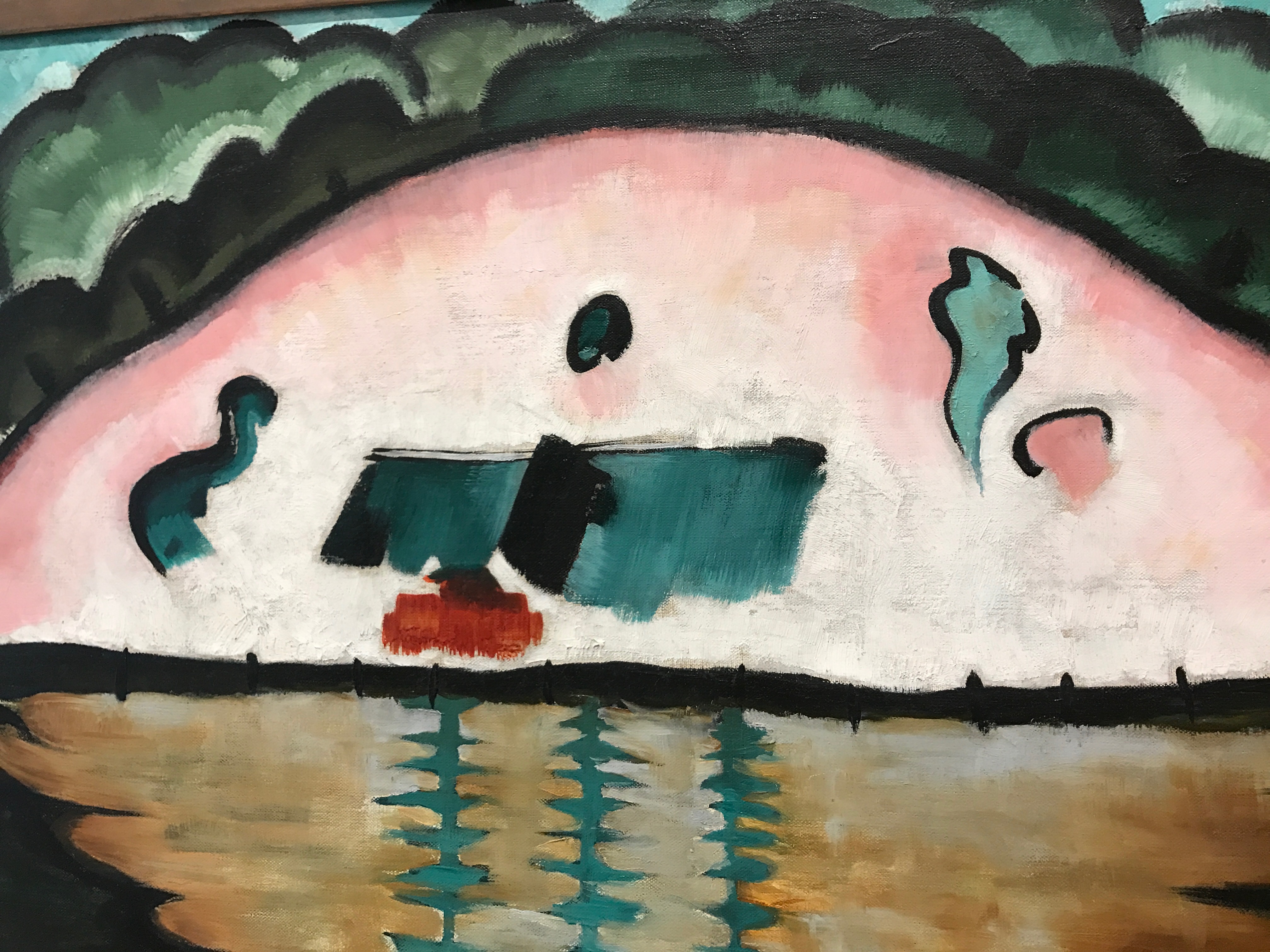
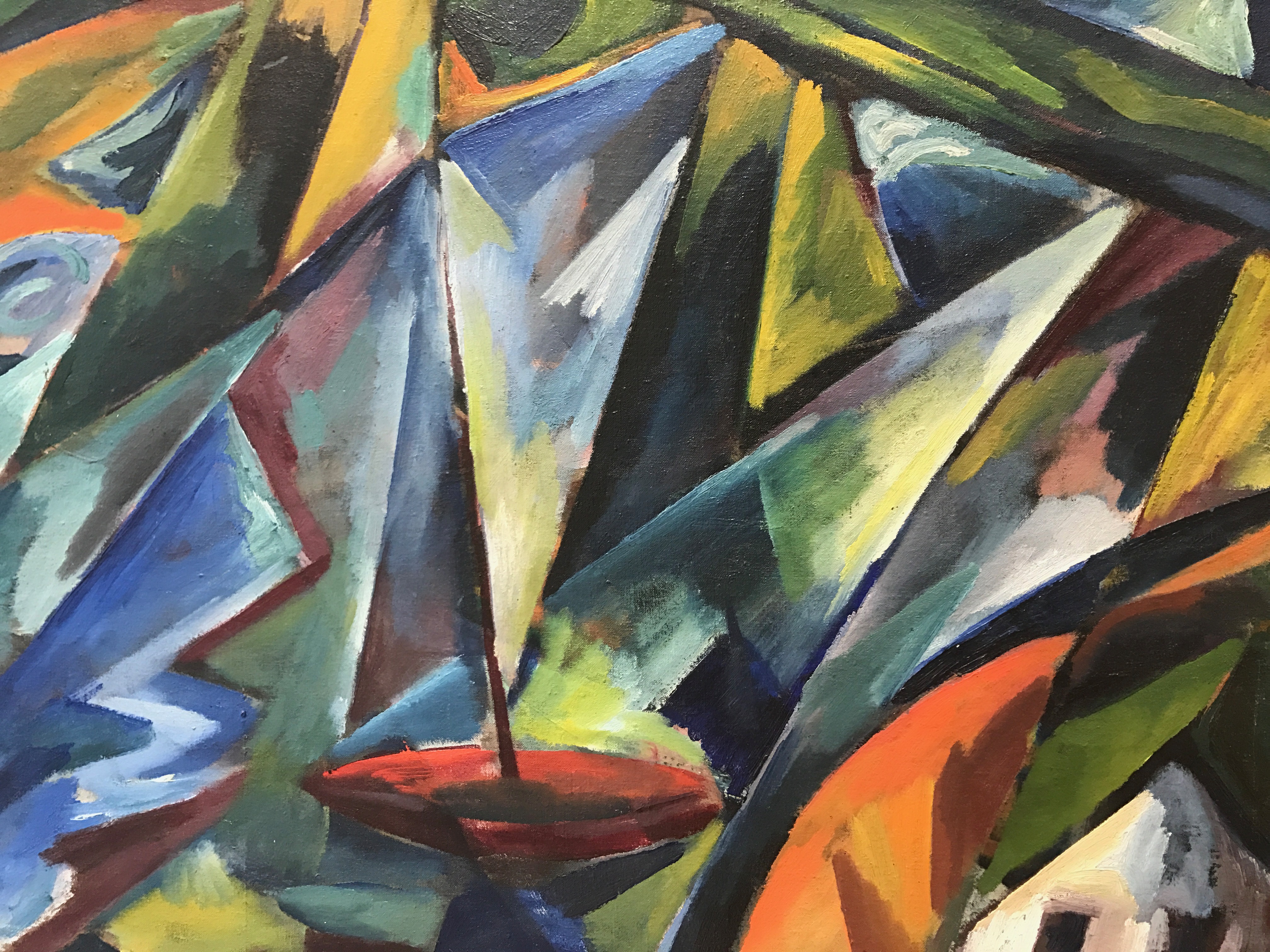
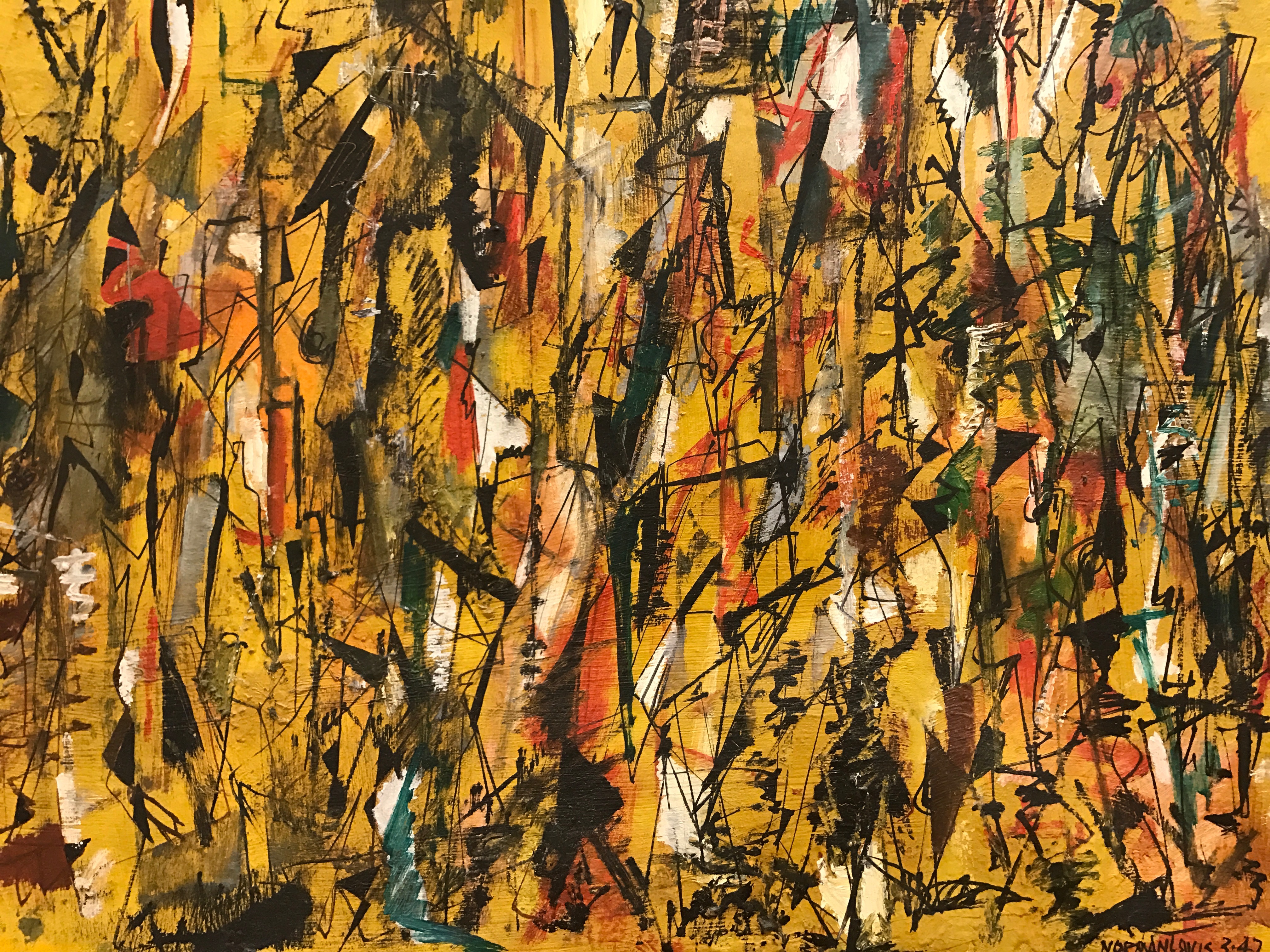
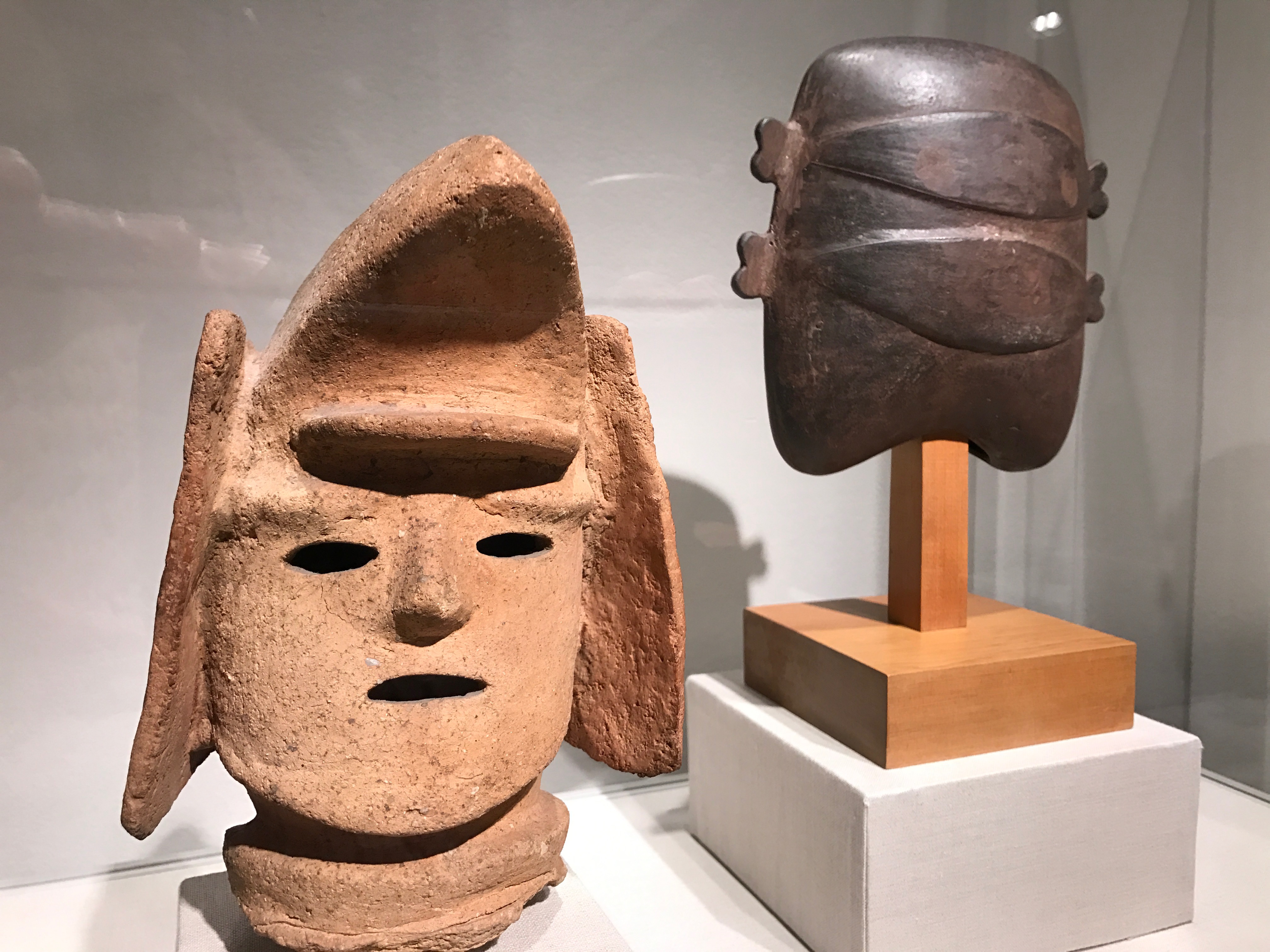
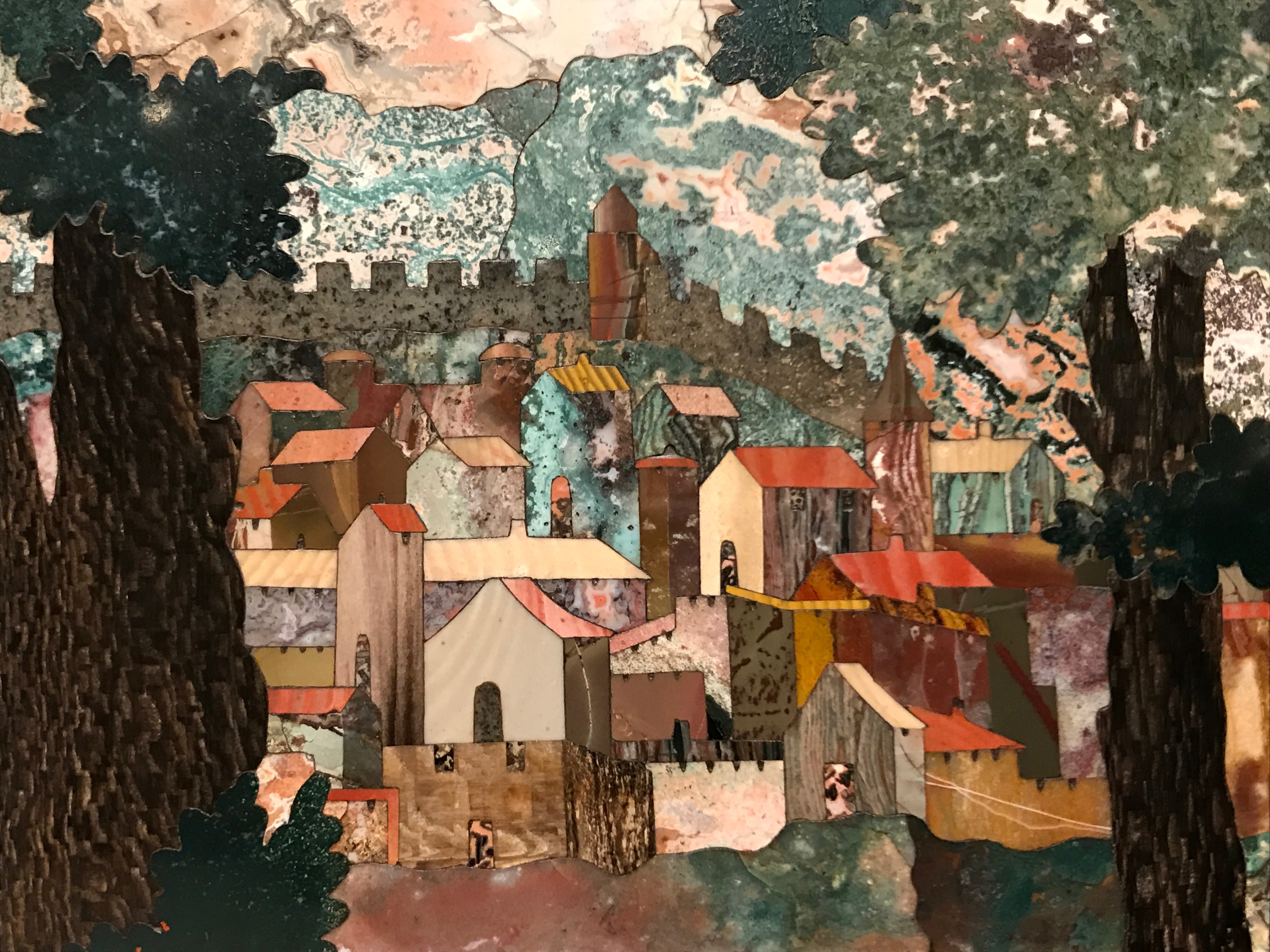
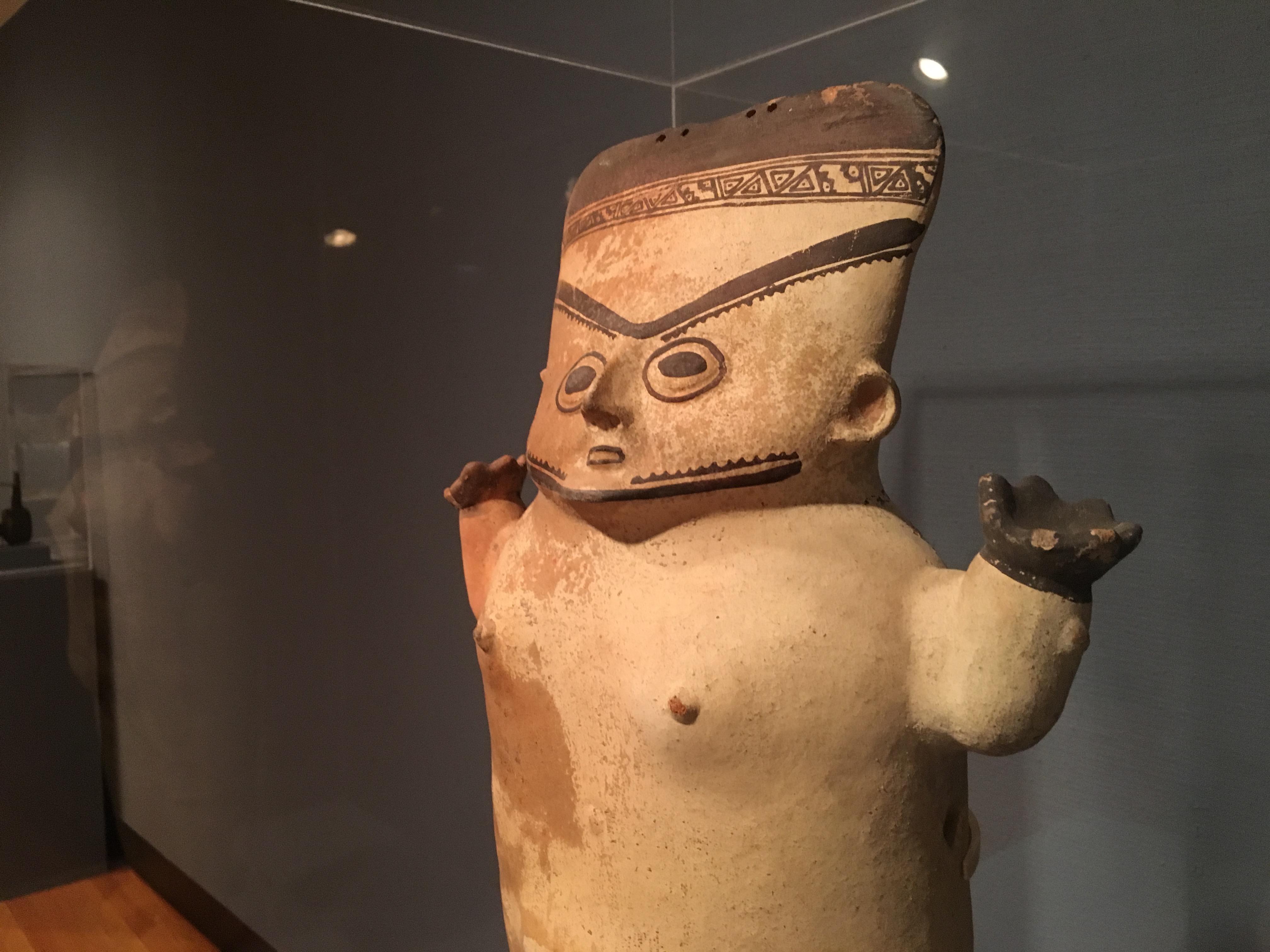
Smart Museum of Art

Arthur Dove. Harbor in Light. 1929.

Max Dungert. Landscape. Circa 1920.

Norman Lewis. Untitled. 1947.

Chinese, Shang Dynasty. Ritual Tripod Cooking Vessel. Circa 1300-1200 B.C.E.

Chinese, Northern Song Dynasty. Guardian Figures. 1056-63.

R: Japanese, Kofun Period. Haniwa: Warrior Head. Circa 5th century.
L: Isamu Noguchi. Iron Wash. 1956.

Pierre-Henri de Valenciennes. Cloud Study. 1817.

Giovanni Castrucci. Wooded Landscape with Crenellated Wall. Circa 1600-07.

I took the above images this afternoon at the Smart Museum of Art. My husband and I were able to visit before seeing Tom Stoppard’s The Hard Problem at the Court Theatre. (Yeah, it was pretty much a perfect day.)

By the numbers

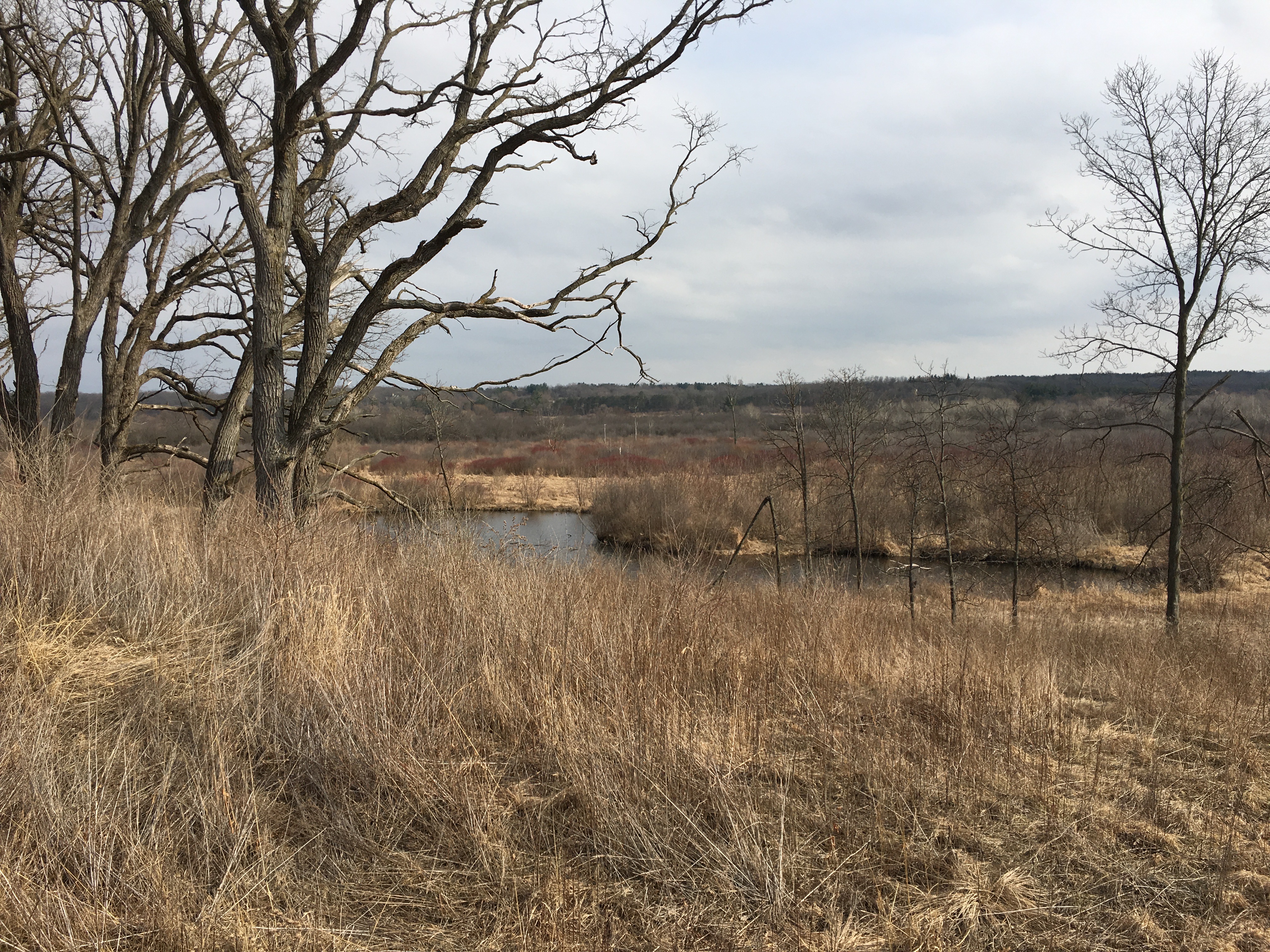
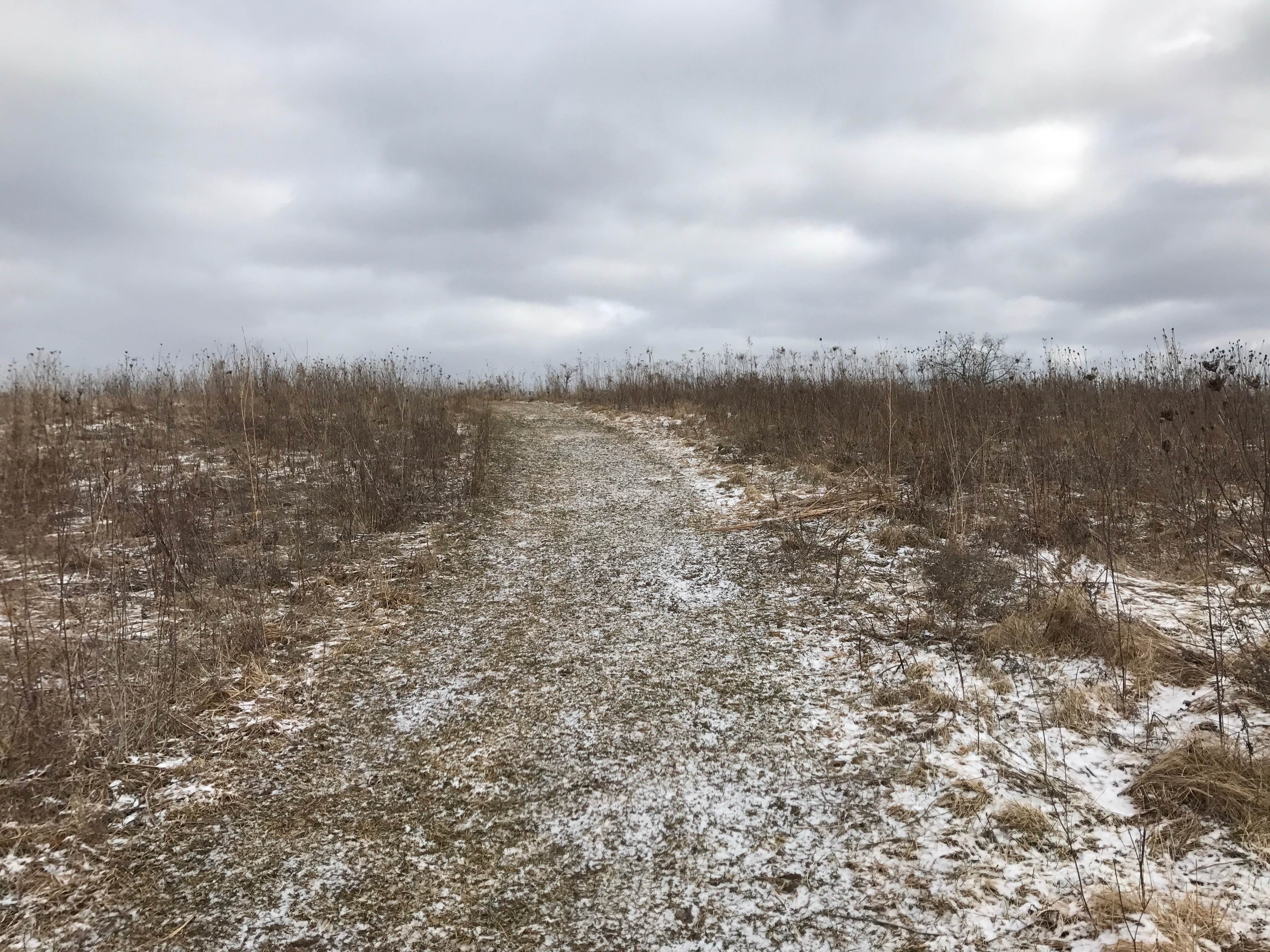
The 2.75-mile trail along which we logged five geocaches.

3
Number of weeks, more or less, since my last post.

10
Number of days in our daughters’ spring break, during which they studied, researched, and recharged at home.

5
Number of geocaches we logged during their break. What a delight to share this new pursuit with them!

2
Number of trips into Chicago during spring break: one for the Lyric Opera’s Eugene Onegin (review here) and one for Love’s Labor’s Lost at the Chicago Shakespeare Theater (review here).

88
Number of hours I will have worked (early voting and Election Day) for the Consolidated Primary and the Consolidated Election. The turnout was much larger in October and November, which is both normal (Presidential Election) and puzzling (when you consider that local elections have an immediate impact on a voter’s life).

3
Number of weeks I’ve completed in my latest MOOC. (Three to go.) This one concerns reading in the digital age and has sent me to the shelves for my copies of The Shallows (Nicholas Carr) and The Gutenberg Elegies (Sven Birkerts).

44
Number of books I’ve already read this year. This is shaping up to be the first “Big (Reading) Year” I’ve posted since adopting a “reading slowly” approach. I haven’t moved away from that; rather, I simply have even more time to read. Book notes to follow.

Boxing with Death

This entry, which first appeared on my previous site five months after my son died, is posted here at the request of a former reader. There are no words, but please know that you have been in my thoughts.

Because he died the weekend before Thanksgiving, we were pummeled by the first of “the firsts” (i.e., the first Thanksgiving without him, the first Christmas without him, the first trip to the Brookfield Zoo without him, etc.) in quick succession — One! Two! Three! Left! Right! Another left! — before we had even risen to our knees from the near-knockout punch delivered by three grim-faced Marines at 5:10 on a gray Monday morning.

Know this: No referee can or will intercede. So raise the gloves; absorb the blows. Fall to the mat; rise again.

We’ve endured five months of firsts now, and we’re still standing. Sometimes we stagger. Sometimes we grip the ropes. But sometimes we deliver our own punches, too. One! Two! Three! Left! Right! Another left! It seems that humor — dark, silly, ribald, sophisticated, Seuss-inspired, or Shakespearean — is our best offense. Laughter has certainly prevented us from remaining down for the count.

It’s too early to say, I suppose, but our sense of humor may, in fact, cause a majority draw in this boxing match between Death and our family. Death has certainly beaten us up, make no mistake. But it won’t beat us. And if I’m right about humor’s role in our ability to stay on our feet during this fight, then it’s a damned shame that laughter, sardonic or otherwise, isn’t more thoroughly endorsed by those involved in the death-ritual business (e.g., funeral directors). A hundred times, nay, a thousand and a hundred, I have thought, Boy-boy would have thought this was hysterical! And he would have. Because it usually is. After all, so much of what we humans say and do — especially what we say and do in times of stress — is funny. Silly. Humorous. Ridiculous. Stupid. Clueless.

Laughable.

Tears are expected, but sometimes laughter feels like the much more appropriate — and the much more restorative, healing, even — response. Laughter mixed with tears works, too. And laughter takes the edge off those times when tears are, in fact, unavoidable.

I suppose I began thinking about all of this because I will celebrate my birthday soon. My first since he died. And then it’s Mother’s Day. The first since he died. And soon after that, summer swim season will begin. The first since….

And perhaps the only way I can make any sense of the days, the months, the years that will follow, that will have the balls to occur even though my son has died, is to remember how he laughed and how he made us laugh.

And to laugh, even if it’s through tears.

Pursuits

Site of our seventh geocache.

In the week since I last posted, I

■ saw Captain Fantastic — and loved it;
■ caught up on all of my comics, including the final issue of Revival (which was lame);
■ realized that Season Five of The Americans begins this week and set my DVR (Woot!);
■ counted the days until my daughters return home for break (Woot! again); and
■ thrice-dreamed that I was mowing the lawn. It cannot be time for that already, can it?

This weekend, I read and then saw Harold Pinter’s No Man’s Land. National Theatre Live’s rebroadcast of the production featuring Patrick Stewart and Ian McKellen as Hirst and Spooner, respectively, earned two enthusiastic thumbs up from us.

From early in Act I:

HIRST: Tonight… my friend… you find me in the last lap of a race… I had long forgotten to run.

Pause.

SPOONER: A metaphor. Things are looking up.

Later in the act:

FOSTER: We protect this gentleman against corruption, against men of craft, against men of evil, we could destroy you without a glance, we take care of this gentleman, we do it out of love.

And from the play’s conclusion:

SPOONER: No. You are in no man’s land. Which never moves, which never changes, which never grows older, but which remains forever, icy and silent.

Silence.

HIRST: I’ll drink to that.

If I were a drinker, I’d toast our seventh geocache find. Yes, we made two entries in our log this weekend, one of which occurred before a leisurely walk/hike in a new-to-us park. We arrived at geocaching long after its surge in popularity, but we are thoroughly enjoying this mini-adventure.

If I were a drinker, I’d also toast my new flute. On the recommendation of my teacher, I’ve graduated from a perfectly delightful student instrument to a bold, responsive intermediate instrument that was designed to surpass a player’s needs through college studies. It’s a treasure.

My flute lessons began two years and five months ago, when my daughters, now juniors, began college. My current studies center on Rubank Advanced Method: Flute, Vol. 1. and Pares Scales. I am also preparing the solo “Song of India” from Rimsky-Korsakov’s opera Sadko. Hadyn’s “Serenade,” which is the fortieth of Louis Moyse’s Forty Little Pieces in Progressive Order, preceded this and is technically more difficult, but working on expression in “Song of India” has been developmentally appropriate for me, and I will be sorry to set aside this beautiful piece. Speaking of Forty Little Pieces, although I’ve already presented the most difficult, we continue to pepper my list of open assignments with the remaining songs. For this week’s lesson, I have prepared No. 33.

As an adult student and a retiree, I bring two things to this pursuit most of my teacher’s other students do not have: experience and time. Experienced learners tend to question, clarify, synthesize, and study — a lot. All of this requires time. During my first year of lessons, I once confessed to having only thirty minutes each day to practice before that week’s meeting. Usually, I made time for at least three fifteen-minute practice sessions daily; often, four. “Forty-five minutes?” my teacher responded, wistfully. “I’m happy to hear that students [in Rubank Elementary Method: Flute] have done fifteen minutes a day.” These days, I’m deeply chagrined when I haven’t put in at least four twenty-minute sessions daily, and I aim for six or more.

Of course, younger students rarely struggle, as I most certainly do, with velocity, and they have fewer problems “translating” unfamiliar music. Generally, too, they will travel further and do more with their music, including performances, than an adult learner will be able to do. Still, this is a worthwhile pursuit, and I am grateful for the opportunity.

Coming up: My progress on the “Shakespeare in Year” project; what else I’ve been reading; and more.

Hills on the prairie

img_0338img_0432Ah, the weather. From 65 degrees last Saturday to 29 this. It must be Chicago or thereabouts, no?

Well, we didn’t let a bit of snow or wind deter us from our walk / hike — or from our fifth geocaching find. After attempting four and  coming away with two while visiting our daughters at university, we were pleased to find the more traditional geocache at the site pictured above. It was a lovely walk, too.

Krannert Art Museum

img_1569

img_1575

img_1625

img_1618

img_1596

img_1588I took the above images during a recent visit to Krannert Art Museum. The first two capture detail from Lorado Taft’s “The Blind” (1908). The next two images feature items in the permanent collection “Arts of Ancient Peru.” The grave post is dated circa 1000 – 1470 and the female effigy figure, circa 1100 – 1470. Charles Turzak’s “Oak Street Beach” (1933-1934) and Hugh Pearce Botts’ “Nana” appear in a temporary exhibition “Enough to Live On: Art of the WPA.”

Getting outside

The state natural area at which we located our first geocache. It was 62 on Saturday.

The state natural area at which we located our first geocache. It was 62 on Saturday.

As it did in 2012, spring appears to be arriving early. Many folks love this, I know, and for a few days, I, too, appreciate it. But — and there’s always a but — fall and winter have my heart. I love being chilly while I ride on the trails, walk through the woods, or work on the yards. In fact, I bike further, walk longer, and generally work harder when it’s cool or cold. More, an early spring, especially if it is followed by the drought conditions that defined 2012, will likely spell the end of the oak out back.

It was weakened five years ago and has struggled ever since. Also weakened in the summer of 2012, the spruce finally succumbed to the effects of the drought in the spring of 2014. Despite a sizeable investment in the services of a professional arborist, the previous owner’s horrific pruning cost me the gorgeous maple in 2014, too. Then a terrible summer storm in 2015 took the ornamental tree out front. I’ve invested in one treatment after another to restore the oak out back and protect the oak out front, but these temps and the lack of rain worry me. The yew, arborvitae, and holly seem durable, but the “big trees” were one of the forever home’s selling points. I wept over the maple and am losing sleep over the oaks.

If it’s not too much to ask, Spring, please go home for now. I’ll see you in late March. Oh, and when you return? Please bring an appropriate amount of gentle rain.


The Shakespeare Project of Chicago

The Changeling
By Thomas Middleton and William Rowley
Directed by Steve Scott
February 24-28, 2017

She that in life and love refuses me,
In death and shame my partner she shall be.

From the Shakespeare Project of Chicago‘s performance announcement: Lady Beatrice has a problem: she is unhappy about the husband her father has selected for her to marry. With her wedding looming, she devises a solution with the help of DeFlores, her father’s servant. The price for murder is never cheap, and never higher than what is revealed in this Jacobean classic from Thomas Middleton (The Revenger’s Tragedy) and William Rowley. The Goodman Theatre’s Steve Scott makes his Shakespeare Project directing debut with a cast that includes Gary Alexander, Theo Allyn, Jordan Brodess, Tony Dobrowolski, Kurt Ehrmann, Jose Antonio Garcia, John Green, Torrey Hanson, Andrew Jessop, Patty Malaney, Jeff Parker, Matt Penn, Christopher Prentice, Rebecca Spence and Randy Steinmeyer. Music and sound design by George Zahora.

Friday, February 24, 2017 at 7 p.m.
The Niles Public Library*, 6960 W. Oakton Street, Niles, Illinois

Saturday, February 25, 2017 at 10 a.m.
The Newberry Library, 60 W. Walton Street, Chicago, Illinois

Saturday, February 25, 2017 at 2 p.m.
The Wilmette Public Library, 1242 Wilmette Avenue, Wilmette, Illinois

Sunday, February 26, 2017 at 2 p.m.
The Highland Park Public Library, 494 Laurel Avenue, Highland Park, Illinois

Monday, February 27, 2017 at 6:30 p.m.
Vernon Area Public Library*, 300 Olde Half Day Road, Lincolnshire, Illinois

Tuesday, February 28, 2017 at 7:15 p.m.
Mount Prospect Public Library*, 10 S. Emerson Street, Mount Prospect, Illinois

An introduction to the play commences 15 minutes prior to curtain.
Admission is free, but seating is limited.

* Pre-registration required; call the library.

Reading notes

img_1546Books about books appeal to me, and in 2012, Will Schwalbe’s The End of Your Life Book Club proved to be an amiable enough contribution to the genre, as did his recent Books for Living. One of the delights of the books about books genre is adding to one’s TBR pile, so what a pleasure it was to find that the recommendations that most interested me were already on my shelves.

To read: The Importance of Living (Lin Yutang); A Little Life (Hanya Yanagihara); A Fine Balance (Rohinton Mistry); Valley of the Dolls (Jacqueline Susann)
To reread: Stuart Little (E.B. White); David Copperfield (Charles Dickens); Reading Lolita in Tehran (Azar Nafisi); The Prime of Miss Jean Brodie (Muriel Spark)

The only purchase I made while reading Books for Living was The Confession, a John Grisham novel about the death penalty, which, because I read Just Mercy earlier this month, touched a chord of serendipity / synthesis / synchronicity.

For the commonplace book:

p. 188
The world is filled now with huggers. Maybe that’s because we live in such a technological age that people crave human touch. Men and women whom you barely know hug you hello and goodbye. Kids in school hug each other. Even in business meetings, people will give you a hug if they’ve sat with you in meetings a few times before (though not if they work at the same company). I really don’t like being hugged by anyone other than my husband. People regard this as a character flaw. One friend even devoted an hour of time with his analyst to discussing why I didn’t like to hug. I gather he takes it personally.

p. 255
Reading is a respite from the relentlessness of technology, but it’s not only that. It’s how I reset and recharge. It’s how I escape, but it’s also how I engage. And reading should spur further engagement.

(This entry from late last year discusses an excerpt of Books for Living: On reading.)

Speaking of the commonplace book, much of Eugene Ionesco’s Rhinoceros might be pressed into mine, but I will content myself with the following bits from Act III, when Dudard and Berenger discuss the way things are:

p. 75
BERENGER: I understand what you mean, at least I’m trying to. But you know — if someone accused me of being a bad sport, or hopelessly middle class, or completely out of touch with life, I’d still want to stay as I am.

p. 78
BERENGER: If only it had happened somewhere else, in some other country, and we’d just read about it in the papers, one could discuss it quietly, examine the question from all points of view and come to an objective conclusion. We could organize debates with professors and writers and lawyers, and blue-stockings and artists and people. And the ordinary man on the street, as well — it would be very interesting and instructive. But when you’re involved yourself, when you suddenly find yourself up against the brutal facts you can’t help feeling directly concerned — the shock is too violent for you to stay cool and detached. I’m frankly surprised, I’m very very surprised. I can’t get over it.

The Remy-Bumppo Theatre Company hosted a staged reading of this oft-read but rarely seen play last night, and as I did when watching the Shakespeare Project of Chicago’s King John last month, I thought, This is a play for our time, to be sure. From the conclusion:

People who try to hang on to their individuality always come to a bad end. [He shakes himself out of it.] Oh well, too bad! I’ll take on the whole lot of them! I’ll put up a fight against the lot of them, the whole lot of them! I’m the last man left, and I’m staying that way until the end.

I’m not capitulating!

I first read Rhinoceros in high school and thought myself so clever for “getting” it and Sartre’s No Exit and Beckett’s Waiting for Godot. As so many of us discover when we return to the books we swallowed whole as younger readers, though, I “got” little more than the tattered texts I purloined from the shelves of the English department — well, that and the tacit promise that I would return to the treasures at some point, (which, happily, I have).

On the topic of returning to books, as I mentioned here, The Last Policeman (Ben H. Winters) so pleased me that I was reluctant to begin Countdown City, fearing the second in the trilogy would disappoint. It did not. I plan to read the third book later this week.

Much of the “Shakespeare in Year” project also represents a return of sorts, although I find that I am less chagrined by these past readings than, say, by that of Rhinoceros. This is probably because I have been (re)reading Shakespeare for the last fifteen years; as an adult and an autodidact (as opposed to a cocky, know-it-all, “I ‘get’ it” teen), I have approached the plays and now the sonnets and long poems knowing that so much remains for me to learn.

Other commitments require that I continue to read ahead in order to keep up with the schedule, so at this writing, I have read through Sonnet 27 and Line 576 of Venus and Adonis and completed the following plays:

The Taming of the Shrew
The Two Gentlemen of Verona
Henry VI, Part 1
Henry VI, Part 2
Henry VI, Part 3
Richard III
Titus Andronicus
The Comedy of Errors
Love’s Labour’s Lost

A few notes: I appreciated Titus Andronicus much more than I had thought I would, but that doesn’t mean it was an easy read. Even if one accepts the idea that the plot is willfully over-the-top, it’s still horrifying. Given the graphic sound effects in the Arkangel recording, I had unhappily anticipated close-ups of violence and bloodletting. The film featuring Anthony Hopkins in the title role was, however, rather restrained, for which I was most grateful. Not all of the production choices appealed to me (frankly, I just didn’t understand a few), but overall, it earned a thumbs-up for both acting and restraint.

Maybe it was my mood, but The Comedy of Errors fared much better in this, my third or fourth, reading. Would that I could say the same about my second reading of Love’s Labour’s Lost. I’m actually a little concerned because we will see the Chicago Shakespeare Theater production next month; can they make this seem less… ridiculous? Again, maybe it was my mood.

The Sonnets. Sigh. Don Paterson’s commentary, though, makes the journey bearable. And perhaps I am too old to encounter Venus and Adonis for the first time because I have, several times, wondered, Kissing is a polite euphemism, right? What this work has made me realize is that I must read Ovid’s Metamorphoses. (I read some early in our home education days and some more before seeing the Lookingglass Theatre presentation of Mary Zimmerman’s play.) This year’s reading plan is already wildly ambitious, but Ovid is moving up.

Well before I get to Ovid, though, I will reread Edward III for “Shakespeare in Year” and finish The Changeling (Thomas Middleton and William Rowley), which the Shakespeare Project of Chicago will present later this month.

I will also read a few more books about geocaching. To explain: As an election judge, I have met some interesting folks with whom “What are you reading?” has been the perfect way to step around both banalities and (most) politics. Last week, a fellow election judge mentioned a popular fiction novel I had tossed across a hotel room in disgust three years ago, but rather than going there, we moved onto EMPs and emergency preparedness, which is not my usual fare, but in confirming via Amazon that, yes, he was talking about the tossed book, I saw Ted Koppel’s Lights Out, a book I knew was already on my shelves. It was clear-sighted, but I was glad to finish. Since early November, I have felt, well, not unlike Berenger: If only it had happened somewhere else, in some other country, and we’d just read about it in the papers….

The same judge also talked about his family’s interest in geocaching. When I first heard about this pursuit years ago, it seemed like a perfect fit for our family, but our days were already so full. The rhythm of our lives has changed a great deal since then, though, and the judge’s enthusiasm was contagious, so as we parted, he extracted a promise that I would tell him about our adventures when we work together again this week. On the way home from the polling place, I borrowed The Joy of Geocaching (Paul and Dana Gillin) from the library. That evening, I created an account at geocaching.com and downloaded the app to my phone, and this weekend my husband and I found our first cache. Actually, the truth? I found the cache on Friday afternoon, but I didn’t understand what I was looking at. When I brought my husband to the same spot on Saturday afternoon, he indicated that I had read the map and the app’s compass properly (I defer to him in such matters; he is an Eagle Scout), so it should be here…. “I’ve got it!” I hooted softly. “I’ve got it!” Aware that I needed to be discreet, I showed him the contents and the ingenious hiding spot, and we logged the cache in hard copy and in the app. We are late to this but, oh, how it dovetails current pursuits: biking (we took the first ride of the year on Saturday, by the way: thirteen easy miles; it was beautiful), walking / hiking in the county and state parks and conservation areas, and archery.

In addition to Rhinoceros, Books for Living, and The Joy of Geocaching, Calculating God and Diary of a Provincial Lady are pictured above. The latter is a reread. In recommending it recently, I suggested that if one thought Downton’s Dowager Countess was the primary reason to sit through any episode of Downton Abbey after the middle of Season Two, if one fancied the idea of British Bombeck, and if one craved a book that would take him or her completely and utterly out of this place and time, then one might be advised to reach for Diary of Provincial Lady.

Calculating God arrives on my stack via one of those “blind date with a book” gimmicks that popped up around Valentine’s Day. I answered a flurry of questions and landed on this. I read and enjoyed Sawyer’s WWW : Wake in 2010, so I am actually looking forward to my date.